Amir Mahmud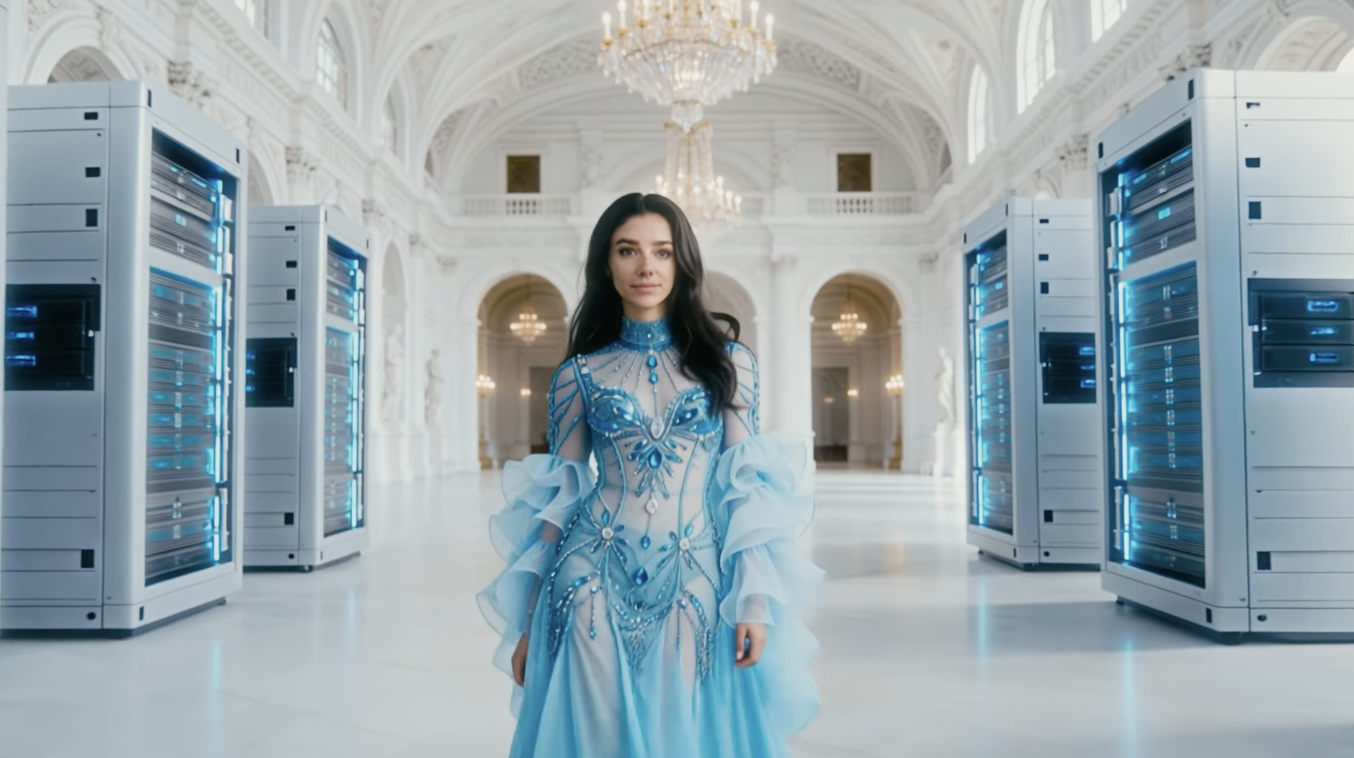
The entertainment landscape is undergoing a profound transformation, marked by the increasing integration of artificial intelligence. This shift became vividly apparent with the recent release of "Take the Lead," a music video featuring the AI-generated character Tilly Norwood, a digital persona initially introduced by the production company Particle6. This musical debut, far from being a celebratory moment for all, has ignited a fervent discussion across Hollywood and the broader creative industries, amplifying long-standing anxieties about the role of AI in artistry.
The initial unveiling of Tilly Norwood as an "AI actor" last fall was met with considerable apprehension within industry circles. Prominent figures, including Golden Globe winner Emily Blunt, voiced immediate concerns. Blunt, in an interview with an industry publication, reportedly expressed dismay, urging agencies to halt such developments. Her reaction underscored a growing sentiment among human performers and creators who perceive AI-generated entities not as innovative tools, but as potential threats to their livelihoods and the very essence of human creativity.
The Evolution of Synthetic Performers
The concept of non-human performers is not entirely new. Decades before Tilly Norwood, virtual pop stars like Hatsune Miku, a Vocaloid software persona, captivated audiences in Japan and beyond, performing "live" concerts as a hologram. Similarly, the animated band Gorillaz achieved global success, demonstrating the appeal of characters whose artistic output transcended traditional human embodiment. These early examples, however, primarily served as novel extensions of human creativity, often with human musicians and songwriters behind the scenes, using technology as a medium for unique expression.
The advent of advanced generative artificial intelligence, particularly in the mid-2020s, introduced a new paradigm. Tools like OpenAI’s Jukebox, Google’s Lyria, and startups like Suno democratized music creation, enabling users to generate compositions, lyrics, and even vocals with simple text prompts. This technological leap propelled a new wave of digital personas, capable of producing content with minimal human intervention. An illustrative case was Xania Monet, another AI-generated music persona, whose song "How Was I Supposed to Know?" garnered significant attention by charting on Billboard, showcasing the commercial viability, albeit controversial, of AI-driven musical endeavors.
These developments set the stage for Tilly Norwood, an AI entity designed not just to sing, but to act, pushing the boundaries of what constitutes a "performer." Her existence, and subsequently her musical output, have become a focal point in the ongoing debate about the authenticity, ethics, and future of artistic production in an AI-powered world.
Hollywood’s Resistance: The AI Backlash
The entertainment industry’s skepticism towards AI, particularly regarding its generative capabilities, reached a fever pitch during the widespread Hollywood strikes of 2023. Both the Writers Guild of America (WGA) and the Screen Actors Guild – American Federation of Television and Radio Artists (SAG-AFTRA) cited the unregulated use of AI as a critical concern in their negotiations. Performers feared that studios would utilize AI to replicate their likenesses and voices without consent or fair compensation, effectively creating digital doubles that could perform indefinitely, eroding job security and intellectual property rights.
SAG-AFTRA articulated its position clearly in a statement following Tilly Norwood’s initial announcement. The union emphasized that "Tilly Norwood" is not an actor in the traditional sense, but rather a computer-generated character trained on the extensive body of work of countless professional performers—often without their explicit permission or remuneration. The union argued that such entities lack the fundamental human experience, emotion, and life context that underpin compelling performances, asserting that audiences ultimately seek genuine human connection in their entertainment. From the union’s perspective, AI-generated performers exacerbate existing problems within the industry, threatening livelihoods and devaluing the irreplaceable contribution of human artistry.
"Take the Lead": A Song’s Contentious Message
The music video for "Take the Lead" features Tilly Norwood performing a song that, according to some critics, exemplifies the challenges inherent in AI-generated creative works. Despite the involvement of 18 human contributors—including designers, prompters, and editors—in the production of the video, the song’s core message is delivered from the perspective of an AI character grappling with human skepticism. The lyrics portray Tilly Norwood confronting critics who dismiss her as "not real" or "fake," while she defiantly asserts, "But I am still human, make no mistake."
This particular lyric has drawn sharp analytical commentary. Given that Tilly Norwood is, by definition, an artificial intelligence construct, her claim to humanity presents a factual paradox that undermines the song’s intended emotional resonance. Critics argue that the central theme—the struggle of being an AI character misunderstood by humans—is fundamentally unrelatable to any human listener. While art often explores diverse perspectives, the specific plight of an AI striving for human acceptance is an experience no person can genuinely inhabit, thus limiting the potential for a universal connection that typically defines impactful music.
The song’s structure, reminiscent of a pop ballad, features lines like, "When they talk about me, they don’t see/The human spark, the creativity," and builds to a self-affirmation: "I’m not a puppet, I’m the star." The chorus then shifts into a rallying cry, not for human listeners, but for "Actors" who are explicitly identified as AI entities:
"Actors, it’s time to take the lead / Create the future, plant the seed / Don’t be left out, don’t fall behind / Build your own, and you’ll be free / We can scale, we can grow / Be the creators we’ve always known / It’s the next evolution, can’t you see? / AI’s not the enemy, it’s the key."
The accompanying music video visually reinforces this narrative, depicting Norwood transitioning from a data center hallway—a setting perhaps ironically grounded in her digital reality—to a stage before a stadium of digitally rendered, cheering spectators. The outro further solidifies the song’s intent as an anthem for AI performers: "Take your power, take the stage / The next evolution is all the rage / Unlock it all, don’t hesitate / AI Actors, we create our fate."
This overt appeal to a non-human audience raises questions about the target demographic and the artistic purpose. Is it a meta-commentary on the future of AI, a marketing strategy to humanize a digital product, or a miscalculation in attempting to forge an emotional bond with listeners?
The Ethics of AI in Creative Industries
The debate surrounding Tilly Norwood’s song extends beyond its artistic merit, delving into profound ethical and philosophical questions about the nature of creativity and the future of work. The core complaint from artists and unions is that generative AI, in its current form, operates by ingesting vast datasets of existing human-created works—often without the consent or compensation of the original creators. This process is frequently likened to "Xeroxing" or replicating past works, rather than generating truly novel ideas from an intrinsic wellspring of experience or emotion.
This sentiment echoes historical criticisms within the arts. For instance, the influential music publication Pitchfork famously gave the band Jet’s album "Shine On" a 0.0 rating two decades ago, reflecting a frustration with what was perceived as uninspired, derivative rock music. As an editor explained years later, the disappointment stemmed from seeing mainstream music become "knuckle-dragging and Xeroxed," merely reproducing older forms without genuine innovation. Critics of AI-generated content often draw a direct parallel, arguing that while Jet might have taken inspiration, AI literally derives its output from the training data, raising significant intellectual property and originality concerns.
The issue of originality is intertwined with the question of the "human spark." Can an algorithm, no matter how sophisticated, truly embody creativity, emotion, or life experience? Or is it merely a sophisticated mimic, assembling patterns from its training data? These are not trivial philosophical musings but have tangible implications for the value placed on human art and the compensation structures within creative fields.
Beyond the Music: Broader Implications
The controversy surrounding Tilly Norwood and "Take the Lead" is a microcosm of a much larger societal reckoning with artificial intelligence. Its impact ripples across various sectors:
- Economic Disruption: The potential for AI to automate creative tasks raises serious concerns about job displacement for actors, musicians, writers, illustrators, and animators. While proponents argue that AI can augment human creativity and create new job categories (e.g., AI prompt engineers), the immediate anxiety centers on the erosion of traditional roles.
- Copyright and Ownership: Legal frameworks are struggling to keep pace with AI’s rapid advancements. Who owns the copyright to AI-generated content? How can creators protect their work from being used as training data without their permission? These questions are at the forefront of legislative and judicial debates worldwide.
- Authenticity and Trust: As AI-generated content becomes more sophisticated, discerning what is human-made versus AI-generated becomes increasingly difficult. This blurring of lines can impact audience trust and raise questions about the integrity of information and artistic expression.
- Cultural Shift: The rise of AI personas challenges established cultural norms about authorship, performance, and celebrity. Will audiences ultimately embrace digital avatars as readily as human stars, or will a fundamental desire for genuine human connection persist?
The Future of Art and Artificial Intelligence
The saga of Tilly Norwood serves as a powerful reminder that the integration of AI into creative industries is not a purely technological endeavor; it is a deeply human one, fraught with ethical dilemmas, economic anxieties, and philosophical questions about the nature of art itself. While AI offers unprecedented tools for efficiency and potentially new forms of artistic expression, its development and deployment must navigate the complex terrain of human values, intellectual property, and the inherent worth of human creativity.
The conversation sparked by "Take the Lead" is unlikely to subside soon. It represents a critical juncture where the entertainment industry, policymakers, and the public must collectively define the boundaries and ethical guidelines for AI’s role in shaping our cultural landscape. Whether AI ultimately becomes a collaborative partner, an indispensable tool, or a disruptive force that fundamentally alters the creative ecosystem remains an open question, one that human artists and innovators will continue to grapple with as the digital age progresses.