Amir Mahmud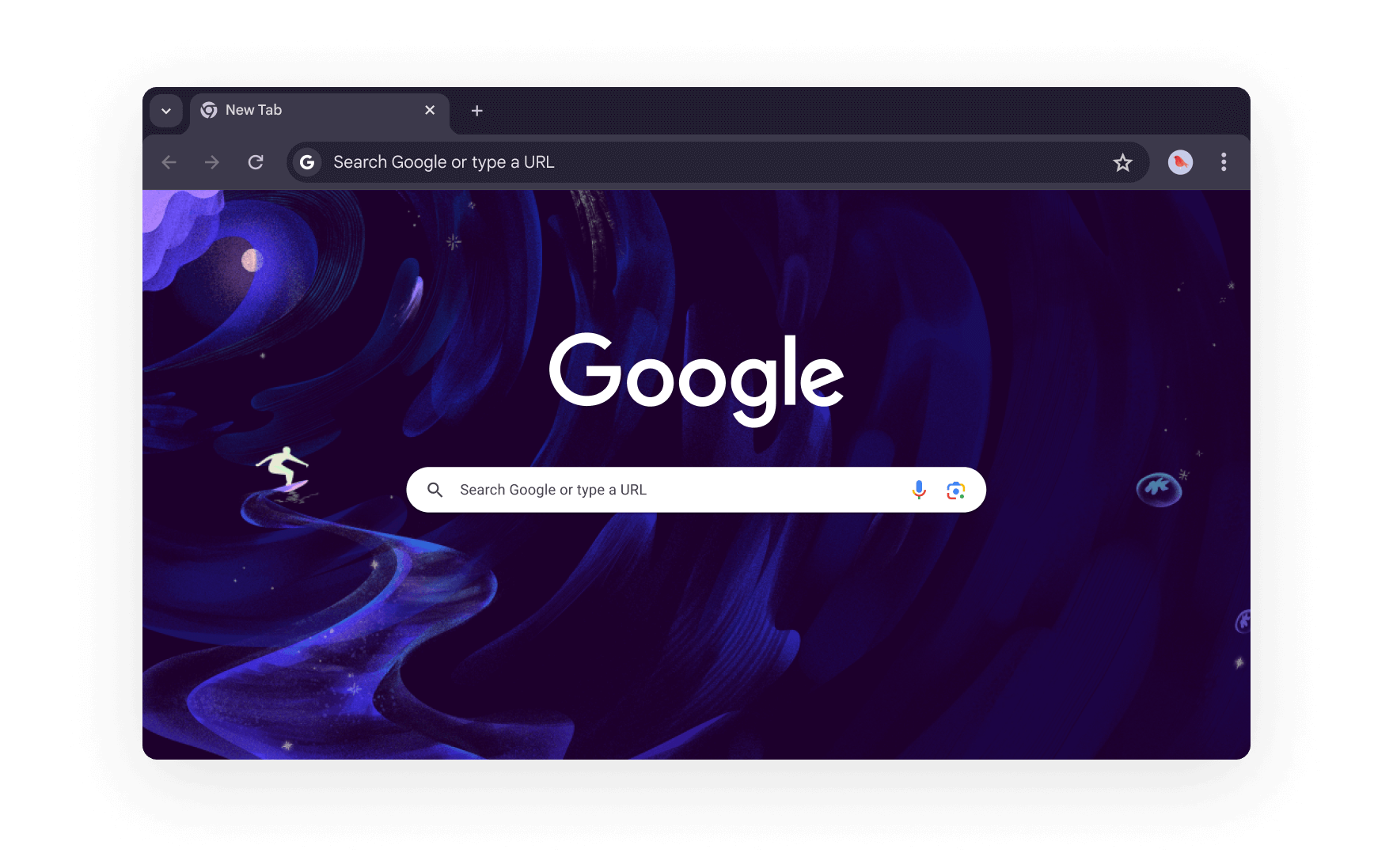
In a decisive strategic maneuver, Google has announced a significant acceleration of its Chrome browser’s release schedule, moving from a four-week cycle to an expedited two-week cadence. This rapid pace, set to commence in September with version 153, is a clear indication of the escalating competition in the browser market, particularly from a new wave of artificial intelligence-powered entrants challenging Chrome’s long-standing dominance. The shift reflects a broader industry trend towards faster innovation and responsiveness, driven by the transformative capabilities of AI.
A Historic Shift in Chrome’s Update Cadence
For years, Google Chrome has been the undisputed heavyweight champion of the internet browser landscape, capturing an overwhelming share of the global market. Its journey began in 2008, launching into a browser environment then largely dominated by Microsoft’s Internet Explorer and Mozilla Firefox. Chrome rapidly gained traction due to its minimalist design, speed, and tight integration with Google’s burgeoning ecosystem of services. Over time, its release schedule evolved, initially with less frequent, larger updates, then settling into a more predictable four-week cycle that became standard for many modern software applications. This rhythm allowed for a balance between feature development, bug fixing, and ensuring system stability across its vast user base.
The announcement on Tuesday marks a departure from this established pattern. Starting September 8, 2026, with the beta and stable versions of Chrome 153, users across desktop, Android, and iOS platforms will experience new milestone releases twice as frequently. Google asserts that this intensified schedule is primarily aimed at aligning with the "ever-changing web platform" and providing developers with more immediate access to the latest tools and improvements. These milestones are committed to delivering advancements in crucial areas such as stability, speed, and ease of use, augmenting the weekly security updates that have been a standard practice since 2023. This dual-pronged approach aims to fortify Chrome’s position both in terms of security posture and feature parity.
The New Frontier: AI-Powered Browsers Emerge
While Google’s official statement emphasizes developer benefits and platform evolution, industry analysts widely interpret the accelerated release schedule as a direct response to a burgeoning threat: AI-powered browsers. For over a decade, the browser market, often referred to as the "browser wars," saw established players like Firefox, Safari, and Edge (formerly Internet Explorer) vying for a share against Chrome. However, the current challenge represents a paradigm shift, introducing an entirely new category of competitors built from the ground up with artificial intelligence at their core.
Leading this charge are innovative offerings such as OpenAI’s ChatGPT Atlas, Perplexity’s Comet, and The Browser Company’s Dia. These browsers are not merely integrating AI as an add-on feature; they are fundamentally rethinking how users interact with the internet. OpenAI’s ChatGPT Atlas, for instance, offers a deeply embedded AI assistant, actively experimenting with various automations designed to streamline online tasks. Perplexity’s Comet similarly provides a powerful "sidecar" AI assistant accessible to all users, with premium features like email assistance and meeting scheduling for its paid subscribers. The Browser Company’s Dia, often characterized as an "AI-first" browser, also aims to redefine the browsing experience by anticipating user needs and automating workflows.
These new entrants are attempting to carve out a niche by promising an "agentic web"—a future where more tasks are automated on behalf of the user, moving beyond simple information retrieval to proactive task execution. This vision contrasts sharply with the traditional browser model, which primarily serves as a window to the internet, requiring manual navigation and interaction. The rise of generative AI, particularly over the past few years, has created the technological backbone for these agentic capabilities, enabling browsers to understand context, synthesize information, and perform complex actions with unprecedented efficiency.
Chrome’s Strategic Counter-Move: Gemini Integration and Agentic Features
Google, acutely aware of the disruptive potential of these AI-native browsers, has not been idle. Alongside its accelerated update cycle, the tech giant has been aggressively rolling out deeper integrations of its own advanced AI model, Gemini, into Chrome. These integrations include a suite of "agentic features" designed to facilitate autonomous tasks, allowing Chrome to anticipate user needs and execute multi-step processes without constant manual input. This direct counter-offensive positions Google to compete head-on with the new guard, leveraging its vast resources and established ecosystem.
While a Google spokesperson reportedly stated to TechCrunch that the latest move to a two-week release schedule is not directly "AI-related," the confluence of events makes it difficult for observers to decouple the two. The need to innovate faster, to deliver new features, security enhancements, and particularly AI capabilities, is undoubtedly magnified by the intensifying competitive landscape. The speed-up allows Chrome to iterate more rapidly on its Gemini integrations and agentic functionalities, ensuring it remains at the forefront of browser innovation rather than playing catch-up. This proactive stance is critical for a company whose core business model is deeply intertwined with its search and advertising dominance, both of which are intimately linked to how users access and interact with the web.
Impact on Users, Developers, and the Web Ecosystem
The shift to a two-week release schedule carries significant implications across various stakeholders. For the average Chrome user, the most immediate impact will be a more frequent influx of new features, performance enhancements, and security patches. This could lead to a more dynamic and responsive browsing experience, with improvements appearing more rapidly. However, it also introduces the potential for "update fatigue" or minor disruptions as users adapt to more frequent changes. The trade-off between rapid innovation and absolute stability will be a key area of focus for Google’s engineering teams.
For web developers, the accelerated schedule presents both opportunities and challenges. On one hand, developers will gain quicker access to new web platform APIs and tools, enabling them to build cutting-edge applications faster. This can foster a more vibrant and innovative web ecosystem. On the other hand, maintaining compatibility with a browser that updates every two weeks demands increased vigilance and adaptation. Developers will need to stay abreast of changes more frequently, potentially requiring more rapid testing cycles for their web applications to ensure seamless functionality across new Chrome versions.
From a market perspective, Google’s move is likely to intensify pressure on other browser developers, including Mozilla Firefox, Microsoft Edge, and Apple Safari. These competitors may feel compelled to evaluate their own release strategies to keep pace with Chrome’s accelerated innovation. The emergence of AI browsers, coupled with Chrome’s aggressive response, signals a new era in the browser wars, one where intelligence and automation are as crucial as speed and security. This competition could ultimately benefit users by driving greater innovation and more sophisticated features across the board.
Navigating the "Agentic Web": The Future of Digital Interaction
The concept of the "agentic web" is central to understanding the motivations behind these shifts. It envisions a future where the browser transforms from a passive content viewer into an active, intelligent agent that understands user intent and performs tasks autonomously. Instead of a user manually navigating to multiple websites, gathering information, and then composing an email or scheduling an appointment, an AI-powered browser could handle these multi-step processes with a single prompt.
This evolution represents a profound cultural and social shift in how individuals interact with digital information and services. It moves beyond the current paradigm of "search" to one of "delegation." This has implications for digital literacy, productivity, and even the very nature of online work. The browser, traditionally a utility, is now poised to become a personalized assistant, capable of synthesizing information from across the web, making recommendations, and automating complex workflows. The implications for commerce, education, and personal productivity are vast, potentially ushering in an era of unprecedented digital efficiency.
Challenges and Opportunities of Accelerated Development
While the benefits of faster releases are clear, Google faces significant engineering and operational challenges in maintaining quality and stability. A two-week cycle demands highly efficient development pipelines, rigorous automated testing, and a robust quality assurance framework to prevent increased bugs or regressions. The risk of introducing unforeseen issues rises with the frequency of updates, requiring Google to invest heavily in its testing infrastructure and developer support.
However, the opportunities are equally compelling. Faster releases mean quicker responses to emerging security vulnerabilities, allowing Google to patch threats more rapidly. It also enables the company to experiment with new features and gather user feedback more frequently, accelerating its product development cycles. Crucially, it allows Chrome to push out its advanced Gemini integrations and agentic features at a pace that can genuinely challenge the AI-first competitors, ensuring its platform remains relevant and competitive in a rapidly evolving technological landscape.
It’s also important to note that not all Chrome users will immediately transition to this rapid cycle. The "Extended Stable" release, a crucial option for enterprise administrators and Chromium embedders who require more time for update management and compatibility testing, will retain its eight-week cycle. This thoughtful approach ensures that critical business environments and specialized applications can maintain stability without being forced into the faster update cadence. Chromebook users will also continue to have access to this extended option, highlighting Google’s commitment to diverse user needs. Similarly, early release platforms like the Dev and Canary channels, designed for developers and power users willing to test cutting-edge and potentially unstable features, will maintain their existing rapid update schedules, serving as experimental ground for future stable releases.
Looking Ahead: The Evolving Browser Wars
The acceleration of Google Chrome’s release schedule, coupled with its aggressive integration of AI capabilities, signals a new chapter in the ongoing browser wars. The competition is no longer just about speed, security, or features; it’s about intelligence and automation. As AI-powered browsers push the boundaries of what a browser can be, Google is clearly committed to defending its dominant position by not only matching but attempting to outpace the innovation curve.
The next few years will likely see an intense period of innovation, as browser developers across the spectrum strive to deliver more intelligent, personalized, and efficient web experiences. Users stand to benefit from these advancements, gaining access to more powerful tools that reshape how they interact with the vast expanse of the internet. Google’s move, starting this September, is not just about a faster Chrome; it’s a foundational step in redefining the very essence of digital interaction in the age of artificial intelligence.