Azin Asro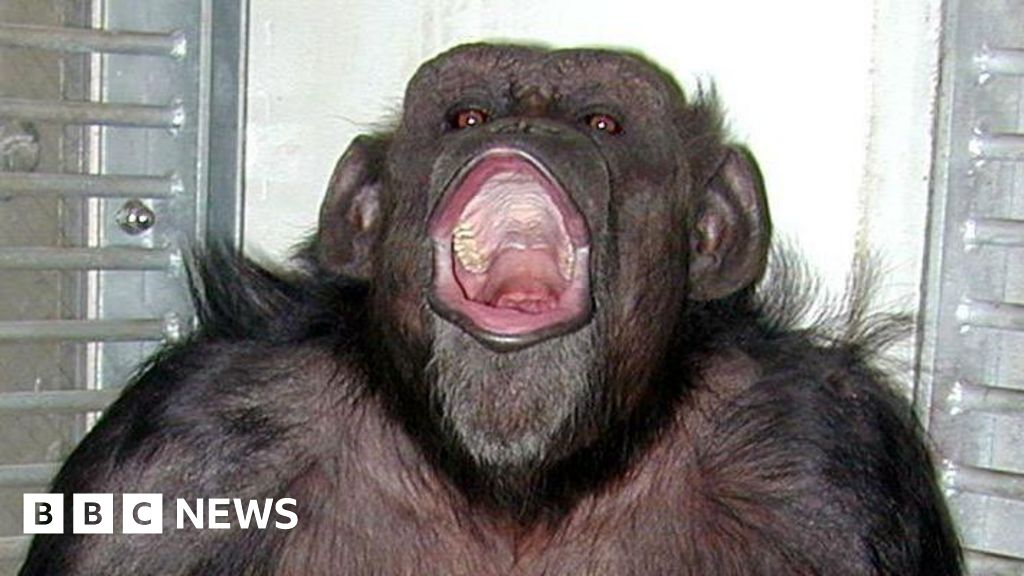
Ai, a female chimpanzee whose extraordinary cognitive abilities captivated the scientific community and the public for decades, has passed away at the age of 49. Her demise on January 9, attributed to advanced age and organ failure, was confirmed by the Kyoto University’s Center for the Evolutionary Origins of Human Behavior (CEOHB) in Japan, where she had resided and contributed to groundbreaking research for most of her life. Staff members, who had formed deep bonds with the intelligent primate, were present during her final moments, marking the end of an era for a research program that redefined our understanding of non-human cognition.
A Pioneer in Primate Cognition
The study of primate cognition, particularly the intelligence of chimpanzees, holds profound implications for understanding human evolution and the origins of our own mental capabilities. Chimpanzees share approximately 98% of their DNA with humans, making them invaluable subjects for comparative studies in areas like communication, problem-solving, and social behavior. For centuries, the line between human and animal intelligence was considered absolute, with complex cognitive tasks often deemed exclusive to Homo sapiens. However, pioneering research with individuals like Ai has systematically challenged these long-held assumptions, revealing a sophisticated inner world within our closest living relatives.
Ai’s significance transcends her individual achievements; she became a symbol of the potential for interspecies understanding and a testament to the dedication of scientists committed to exploring the mysteries of the animal mind. Her work at the Kyoto University’s Primate Research Institute (KUPRI), later reorganized into the CEOHB, placed Japan at the forefront of primate cognition research, drawing global attention to its innovative methodologies and remarkable findings.
The Genesis of the Ai Project
Born in the wild of western Africa, Ai’s journey to scientific renown began in 1977 when she arrived at the Japanese institute. It was there that she became the central figure and namesake of the "Ai Project," an ambitious research program spearheaded by renowned primatologist Dr. Tetsuro Matsuzawa. Dr. Matsuzawa, a professor at Kyoto University, envisioned a long-term, comprehensive study into the "chimpanzee mind," aiming to understand their cognitive processes from a developmental perspective, much like how human children are studied.
The Ai Project’s approach was distinct. Instead of focusing solely on language acquisition, a common theme in earlier ape studies like those involving Washoe or Koko, Matsuzawa’s team broadened the scope to encompass a wider range of cognitive functions, including numerical comprehension, color discrimination, memory, and even aesthetic appreciation. This holistic approach sought to understand intelligence not just through human-centric metrics but through the chimpanzee’s own framework of understanding the world. The ethical framework of the project was also a crucial element, emphasizing the well-being and enrichment of the chimpanzees, viewing them as collaborators rather than mere experimental subjects. The long-term nature of the project allowed for an unprecedented depth of observation and interaction, fostering trust and enabling complex cognitive tasks to be explored over many years.
Unlocking the Chimpanzee Mind: Key Discoveries
Ai’s most celebrated contributions lay in her remarkable ability to engage with abstract concepts, particularly numbers and colors. At a mere 18 months old, a critical developmental stage akin to early human childhood, researchers introduced Ai to a specially designed computer interface. This setup, featuring a touch-sensitive screen linked to a computer, became her primary tool for interaction and learning. It allowed for precise, repeatable experiments that minimized human bias and provided objective data on her cognitive processes.
By the age of five, a pivotal milestone documented in a 1985 scientific paper by Dr. Matsuzawa, Ai had demonstrated an astonishing mastery of numerical naming from one to six. She could not only identify the numeral but also associate it with corresponding quantities of objects. Furthermore, her ability to identify and name colors was equally impressive, extending to distinguishing between 300 types of samples based on their number, color, and object identity. These findings were revolutionary, providing concrete evidence that chimpanzees could form abstract representations of quantities and categories, a cognitive feat previously thought to be exclusive to humans or, at best, rudimentary in other species.
Her work on numerical sequencing, where she would touch numbers on a screen in ascending order even when they flashed briefly and then disappeared, provided compelling evidence of a form of working memory and numerical processing that rivaled, and in some aspects, even surpassed, that of human adults. This research challenged prevailing psychological theories and fueled vigorous debate about the evolutionary roots of mathematical abilities. It highlighted that numerical competence might be a more ancient and widespread cognitive trait than previously assumed, potentially shared by our common ancestors with chimpanzees.
Beyond Numbers: Art, Personality, and a Daring Escape
While her cognitive prowess in structured experiments garnered scientific accolades, Ai was also known for her vibrant personality and diverse interests outside the laboratory setting. She displayed a distinct creative streak, often engaging in drawing and painting. Unlike some animal training regimens that rely on food rewards for specific behaviors, Ai would spontaneously scrawl with marker pens over blank paper, seemingly for the sheer enjoyment of it. This intrinsic motivation for artistic expression offered a rare glimpse into the chimpanzee’s inner world, suggesting a capacity for aesthetic appreciation and self-directed activity that extended beyond mere instrumental learning. Her paintings, characterized by bold lines and splashes of color, were not just random marks but reflections of her engagement with her environment, often gifted to visitors or commemorated in various ways.
Her life was not without its moments of mischievous charm. Japanese media outlet Kyodo News famously reported an incident where Ai, along with another primate, managed to escape their enclosure. The escape was not merely accidental; it involved Ai using a key to unlock her cage, demonstrating a sophisticated understanding of cause and effect, and a level of problem-solving ingenuity that went beyond rote learning. This anecdote, while lighthearted, underscored her intelligence and adaptability, showcasing that her cognitive abilities were not confined to the controlled environment of a research task but were integral to her everyday interactions with the world. Such incidents also provided valuable insights into the complex cognitive mapping and environmental understanding that chimpanzees possess.
A Family Legacy: The Next Generation of Learning
Ai’s most enduring legacy might well be her son, Ayumu, born in 2000. Ayumu inherited his mother’s remarkable intelligence and has continued her legacy, becoming a celebrated cognitive researcher in his own right. The mother-son duo offered an unprecedented opportunity for intergenerational studies, allowing researchers to explore questions of inherited intelligence, the role of maternal influence in cognitive development, and the transmission of learned behaviors within a primate family unit.
Ayumu gained international fame for his own astonishing short-term memory skills, particularly his ability to recall the order of numbers flashed on a screen for fractions of a second. In tests, Ayumu consistently outperformed human university students in these tasks, demonstrating a form of photographic memory and rapid information processing that has fascinated neuroscientists. His achievements built directly upon the foundation laid by his mother, extending the scope of the Ai Project to explore the nuances of memory formation and retrieval in chimpanzees. The continued research with Ayumu and other chimpanzees at the CEOHB ensures that Ai’s contributions live on, providing continuous data and insights into the evolution of cognition.
The Broader Impact of Ai’s Contributions
Ai’s life and the research conducted with her had a profound impact far beyond the confines of academic journals. Socially and culturally, her story resonated globally, helping to shift public perception of chimpanzees from mere animals to intelligent, sentient beings capable of complex thought and emotion. She became an ambassador for her species, raising awareness about the need for conservation and ethical treatment of primates. Her image, often depicted engaged in her numerical tasks or painting, became iconic, illustrating the incredible potential of animal minds.
Her work also spurred critical discussions within the scientific community regarding the definition of intelligence, consciousness, and the unique attributes of the human mind. The findings from the Ai Project contributed significantly to the burgeoning field of comparative psychology, fostering interdisciplinary collaborations between primatologists, psychologists, neuroscientists, and philosophers. It underscored the importance of long-term, ethically sound research in understanding the intricate tapestry of life on Earth. The project’s findings were frequently covered in popular science media, documentaries, and educational programs, inspiring new generations of researchers and fostering a deeper appreciation for animal cognition among the general public.
Ethical Considerations and the Future of Primate Research
The long and impactful life of Ai also serves as a poignant reminder of the evolving ethical landscape surrounding primate research. While institutions like Kyoto University have maintained high standards of animal welfare, ensuring enriching environments and comprehensive care, the broader debate about using sentient beings for scientific study continues. Ai’s extended life, thriving in a research setting for decades, highlights the commitment to her well-being. However, the global trend is towards reducing, refining, and replacing the use of non-human primates in research where possible.
The insights gained from Ai’s life contribute to this evolving discourse, demonstrating the immense value of understanding our primate relatives while also prompting reflection on the responsibilities that come with such knowledge. The future of primate cognition research increasingly emphasizes non-invasive methods, observational studies in naturalistic settings, and the application of advanced technologies that minimize direct human intervention. Ai’s legacy will undoubtedly inform these future directions, pushing for ever more humane and insightful ways to explore the minds of other species.
An Enduring Legacy
Ai’s passing marks the conclusion of a truly remarkable life dedicated to unraveling the complexities of the chimpanzee mind. From her early days in Africa to her final moments surrounded by devoted caregivers, she embodied the spirit of scientific discovery and interspecies connection. Her ability to count, identify colors, express creativity, and even outsmart her human counterparts in an escape demonstrated a depth of intelligence that continues to inspire awe. As a scarf made from one of her paintings was famously gifted to Dame Jane Goodall in 2017, commemorating the 40th anniversary of the Ai Project, it symbolized the profound impact of her existence. Ai’s contributions have indelibly shaped our understanding of cognition, leaving an enduring legacy that will continue to inform and inspire scientific inquiry for generations to come.







 Amir Mahmud