Amir Mahmud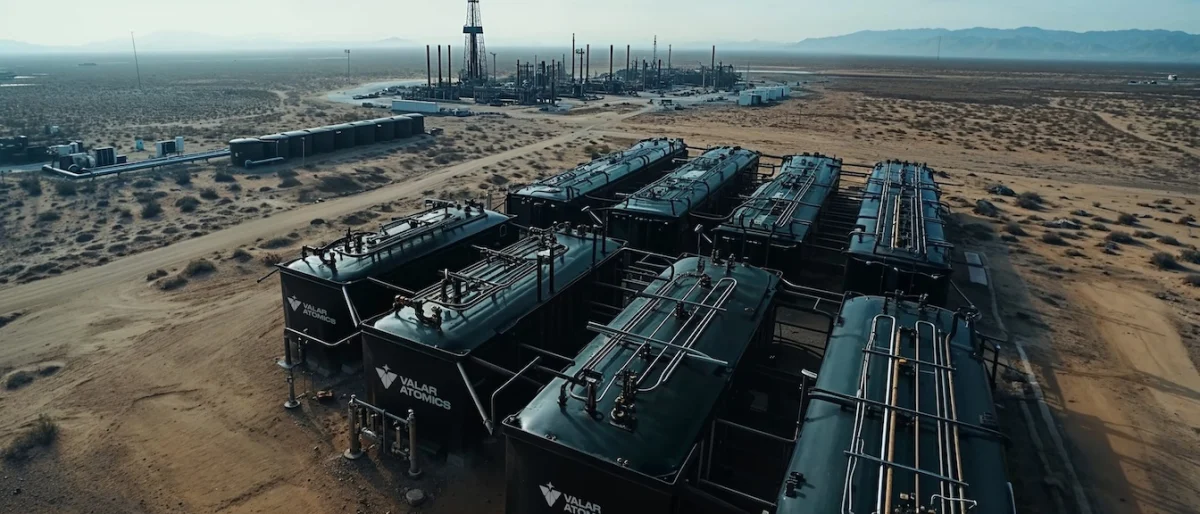
Valar Atomics, an emerging leader in the development of small modular nuclear reactors (SMRs), is reportedly engaged in discussions to secure a substantial new funding round that would elevate its valuation to approximately $6 billion. This potential capital infusion, with prominent venture capital firm Sequoia expected to spearhead the investment, underscores a growing investor appetite for innovative energy solutions, particularly those poised to address the escalating power demands of artificial intelligence infrastructure. The three-year-old company, based in El Segundo, California, is reportedly targeting a $1 billion equity raise to accelerate its ambitious plans.
The Quest for Capital in a Deep Tech Era
The reported funding discussions for Valar Atomics arrive amidst a complex and dynamic venture capital landscape. While many sectors have experienced a tightening of investment capital in recent years, specific "deep tech" areas, such as advanced energy and artificial intelligence, continue to attract significant interest and valuations. Valar Atomics has already demonstrated its ability to draw substantial investment, having previously secured $450 million—comprising $340 million in equity and $110 million in debt—at a $2 billion valuation, as reported earlier.
This funding trajectory exemplifies a contemporary trend in venture capital, where large capital raises for high-growth startups are often structured in multiple tranches or installments. These arrangements can involve varying valuations across different stages or even within the same nominal "round," sometimes executed at disparate times. This strategy allows companies to bring in capital incrementally while potentially optimizing terms with different investor groups. However, it can also complicate the perception of a company’s true market valuation, making it more challenging for external observers to benchmark these rapidly scaling enterprises against one another, especially in fast-moving, competitive fields like AI and advanced energy. The significant jump from a $2 billion to a potential $6 billion valuation in a relatively short period highlights the intense speculation and belief in Valar Atomics’ future potential.
Powering the Future: AI’s Insatiable Energy Demand
The burgeoning interest in Valar Atomics and its SMR technology is inextricably linked to the unprecedented energy requirements of the artificial intelligence revolution. As AI models become increasingly sophisticated and pervasive, the data centers that house the necessary computing infrastructure are consuming electricity at an exponential rate. Industry projections indicate a sharp increase in data center electricity needs over the next several years, creating a significant "demand crunch" that conventional power generation methods are struggling to meet. Utilities in many regions are years away from adding sufficient new capacity to keep pace, leading to concerns about grid stability, reliability, and the environmental footprint of digital technologies.
This energy vacuum has propelled nuclear power, long plagued by historical cost overruns, construction delays, and complex regulatory hurdles, back into the spotlight. Its promise of consistent, carbon-free baseload power, capable of operating 24/7 independently of weather conditions, makes it an attractive, albeit challenging, solution for the high-density, uninterrupted power demands of AI data centers. The partnership between Valar Atomics and Nvidia, demonstrated by Valar’s reactor providing a small amount of power to an Nvidia AI chip, and their subsequent announced collaboration to explore nuclear energy for future AI data centers, vividly illustrates this convergence of technological needs and energy innovation. For major tech companies like Nvidia, securing a stable, sustainable, and scalable energy supply is becoming as critical as chip design itself.
Small Modular Reactors: A Nuclear Renaissance?
Valar Atomics is at the forefront of developing Small Modular Reactors, a concept designed to revolutionize nuclear power generation. Unlike traditional, gigawatt-scale nuclear power plants that are custom-built on-site over many years, SMRs are miniaturized, factory-built reactors. The modular design allows for standardized manufacturing processes, which proponents argue can significantly reduce construction costs, shorten deployment times, and improve safety through inherent design features and economies of scale. These reactors are typically rated at less than 300 MWe (megawatts electrical) per unit, making them suitable for deployment in a wider range of locations and for specific industrial applications, rather than solely large national grids.
The concept of smaller reactors is not entirely new; naval reactors have powered submarines and aircraft carriers for decades. However, the commercialization of SMRs for civilian power generation represents a significant departure from the large-scale nuclear plants that dominated the 20th century. The historical context of nuclear power has been marked by a cyclical journey of hope, skepticism, and resurgence. Following the oil crises of the 1970s, nuclear energy saw a boom, but high costs, public safety concerns (exacerbated by incidents like Three Mile Island and Chernobyl), and complex regulatory frameworks led to a significant slowdown in new plant construction in many Western countries. The Fukushima Daiichi accident in 2011 further dampened enthusiasm globally.
However, renewed concerns about climate change, the intermittency of renewable energy sources, and the escalating demand for reliable baseload power have sparked a "nuclear renaissance." SMRs are central to this resurgence, aiming to address the very issues that hampered traditional nuclear power. Valar Atomics’ specific technology is based on a helium-cooled, high-temperature gas reactor (HTGR) design. HTGRs are known for their enhanced safety features, higher thermal efficiency, and potential to operate at higher temperatures, which could enable applications beyond electricity generation, such as industrial process heat or hydrogen production. The company’s vision includes eventually building hundreds of these SMRs to specifically power the energy-intensive data centers of the future.
Navigating the Regulatory Labyrinth
Despite the technological promise and market enthusiasm, the path to widespread SMR deployment is fraught with challenges, particularly on the regulatory front. The Nuclear Regulatory Commission (NRC) in the United States, responsible for ensuring the safe use of nuclear materials, has traditionally applied a rigorous and lengthy licensing process designed for large-scale commercial power plants. This process, while critical for public safety, can extend over many years and incur substantial costs, posing a significant hurdle for smaller, innovative reactor designs.
Recognizing this bottleneck, Valar Atomics has taken an assertive legal stance. Last year, the company joined several U.S. states and rival startups in a lawsuit against the NRC. Their argument centers on the contention that the agency wrongly applies the same exhaustive licensing process to small test reactors and advanced SMR designs that it uses for full-size commercial plants. Proponents of SMRs argue that their inherent safety features, smaller scale, and modular design warrant a more streamlined, or at least tailored, regulatory pathway. The lawsuit remains unresolved, with both sides having repeatedly paused litigation, suggesting that a potential settlement or compromise might be under negotiation. A successful outcome for the SMR industry in this legal challenge could significantly accelerate the deployment timeline for new nuclear technologies by establishing more appropriate and efficient regulatory frameworks for advanced reactor designs.
The Competitive Landscape of Advanced Nuclear
Valar Atomics operates within an increasingly competitive field of companies vying to develop and commercialize next-generation nuclear reactors. Among the notable players are Kairos Power and TerraPower, the latter backed by Microsoft co-founder Bill Gates, both of which are also building advanced reactors aimed at tech and industrial customers. Kairos Power, for instance, focuses on fluoride salt-cooled high-temperature reactors (FHRs), another innovative design.
Perhaps the most established player in the U.S. SMR space is NuScale Power. NuScale holds the distinction of being the only SMR developer with U.S. regulatory design approval from the NRC, a monumental achievement that validates its technology and significantly de-risks its path to deployment. Last year, NuScale secured approval for an upgraded, higher-output reactor design, further solidifying its lead. This regulatory approval highlights the significant hurdle that Valar Atomics and other advanced reactor developers still face. While Valar Atomics’ technology and business model, particularly its focus on AI data centers, differentiate it, NuScale’s regulatory head start provides a crucial advantage in a sector where licensing timelines can make or break a company. The competition isn’t just about technology; it’s also about navigating the complex interplay of engineering, economics, and regulatory approval.
Vision and Challenges Ahead
At the helm of Valar Atomics is Isaiah Taylor, a 27-year-old entrepreneur with a remarkable background. Taylor, who reportedly dropped out of high school at 16, has founded two startups prior to Valar Atomics, demonstrating a consistent drive for innovation. He proudly notes his familial connection to the nuclear field, with his great-grandfather having worked as a nuclear physicist on the Manhattan Project, lending a historical resonance to his current endeavors. This narrative of a young, ambitious founder with a deep family legacy in nuclear science adds a compelling human element to the company’s story. Backers like Palmer Luckey, founder of defense tech company Anduril, and Shyam Sankar, Palantir’s chief technology officer, further underscore the company’s appeal to influential figures within the broader technology and national security sectors, suggesting a vision that extends beyond mere energy provision.
Despite the significant investor confidence and promising technological demonstrations, the journey for Valar Atomics and the SMR industry as a whole is still in its early stages. While SMRs are theoretically more cost-effective to manufacture than traditional reactors due to standardization and factory production, the technology is nascent. The timeline for achieving industrial-scale deployment remains uncertain. Challenges include securing stable fuel supplies, establishing robust manufacturing infrastructure, navigating public perception and acceptance, and addressing long-term waste disposal solutions. The capital being raised will undoubtedly be crucial for advancing reactor design, conducting further testing, and pushing through the complex regulatory gauntlet. Valar Atomics represents a bold bet on the future of energy, one that seeks to marry the urgent demands of the AI era with the enduring promise of nuclear power, but the path from concept to widespread reality is still being forged.