Amir Mahmud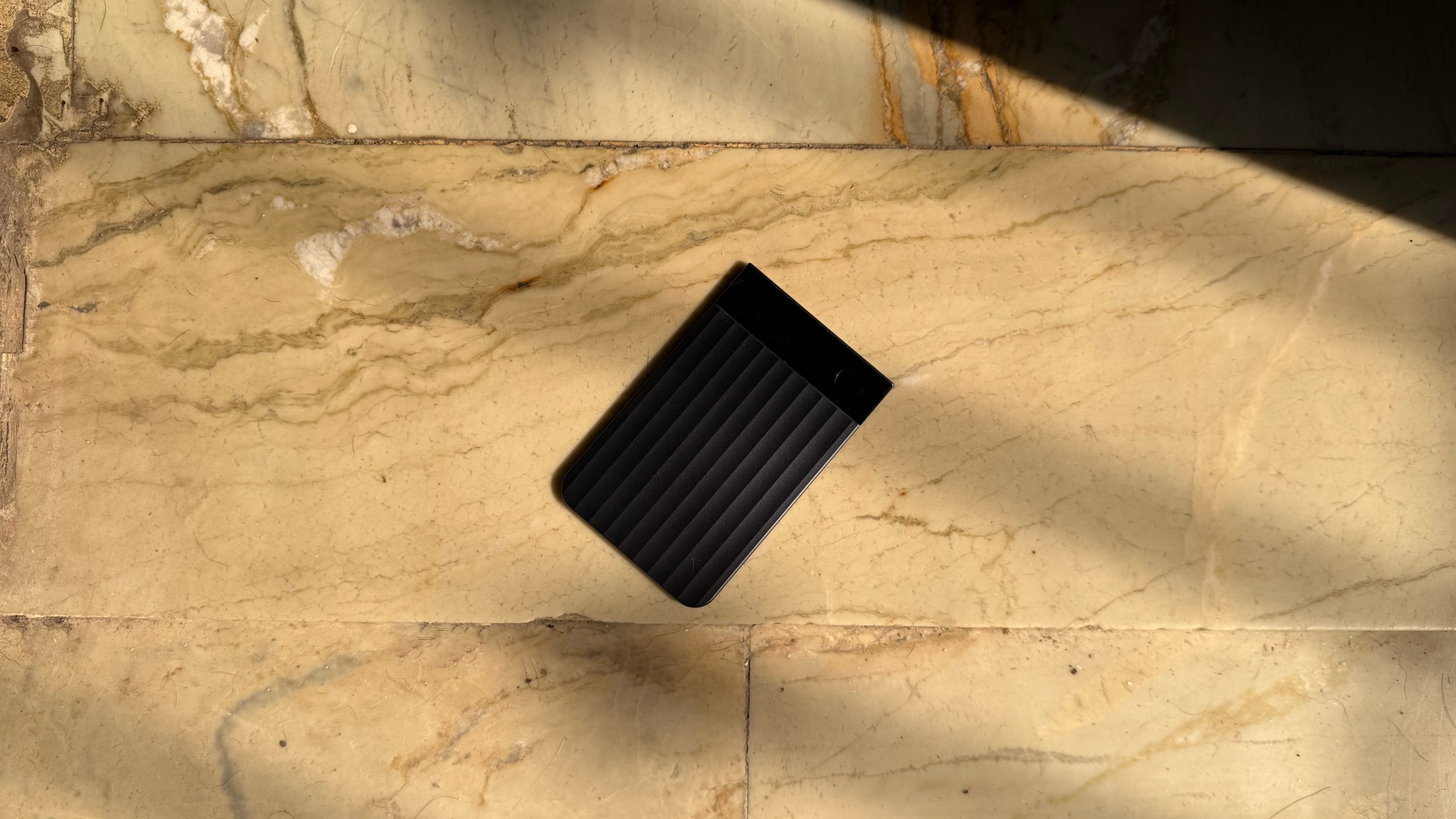
The persistent challenge of accurately capturing and summarizing discussions, whether in a bustling boardroom or a remote video conference, has long plagued professionals across industries. While software-based artificial intelligence (AI) notetakers have gained traction for their ability to transcribe and distill virtual meetings, a new wave of dedicated physical devices is emerging, offering a tangible solution for both digital and in-person interactions. These compact, AI-powered recorders are designed to listen, transcribe, and synthesize spoken words into actionable insights, fundamentally reshaping how individuals and teams manage information.
The Evolution of Meeting Documentation
For centuries, the act of documenting meetings relied on manual methods: quill and parchment, then pen and paper, eventually evolving into typewritten minutes. The advent of audio recording technology in the 20th century provided a more complete capture of spoken exchanges, but the sheer volume of raw audio presented its own challenge, demanding laborious transcription and review. The digital age brought us dictaphones and digital voice recorders, making audio capture more convenient, yet the bottleneck of manual processing remained.
The real shift began with the integration of artificial intelligence into natural language processing (NLP). Early AI models could perform basic speech-to-text conversion, but the breakthrough of sophisticated algorithms, particularly with the rise of generative AI in recent years, propelled transcription accuracy and contextual understanding to unprecedented levels. This innovation first manifested in the form of virtual meeting bots and software applications like Read AI, Fireflies.ai, Fathom, and Granola. These digital assistants seamlessly integrate with online conferencing platforms, automatically joining calls, transcribing dialogue, identifying speakers, and generating summaries, action items, and follow-up tasks. They revolutionized remote work by ensuring no crucial detail was lost in the digital ether.
However, the proliferation of hybrid work models and the enduring importance of face-to-face interactions highlighted a gap. Software-only solutions often require a laptop or smartphone to be actively present and recording, which can be intrusive, battery-intensive, or simply impractical in certain physical settings. Concerns around privacy, data security, and the desire for a discreet, purpose-built tool also spurred demand for alternatives. This context set the stage for the next logical step: standalone, physical AI notetaking devices.
Why Dedicated Hardware? Bridging the Physical-Digital Divide
The appeal of physical AI notetakers lies in their specialized design and focused functionality. Unlike a general-purpose smartphone, these gadgets are engineered specifically for audio capture and intelligent processing. They typically feature multiple high-fidelity microphones optimized for various acoustic environments, capable of picking up nuanced speech from several meters away. This dedicated hardware often results in superior audio quality compared to a phone, which is critical for accurate transcription, especially in noisy or echo-filled rooms.
Furthermore, physical devices offer a distinct advantage in terms of user experience and perceived control. A discreet pin or a credit card-sized recorder feels less intrusive than placing a laptop in the middle of a meeting table. Many also boast on-device memory, allowing for local storage of recordings and transcriptions, which can address certain privacy concerns or compliance requirements in sensitive environments. The ability to function independently of a smartphone or computer provides operational flexibility, ensuring that critical information can be captured even when other devices are unavailable or undesirable. These devices transform raw audio into structured data, offering summaries, identifying key discussion points, and even extracting specific action items, allowing participants to remain fully engaged in the conversation rather than distracted by note-taking.
Key Players in the AI Notetaker Ecosystem
The market for these intelligent recording tools is rapidly expanding, with several companies introducing innovative designs and feature sets. These devices generally fall into categories based on their form factor and primary use case, ranging from pocketable cards to wearable pins and even integrated earbuds.
Compact & Versatile Designs
Leading this segment are devices that prioritize portability and ease of use, often resembling everyday items. The Plaud Note and its enhanced Plaud Note Pro iteration, first launched in 2023, exemplify this trend. These credit-card-sized notetakers are designed for inconspicuous placement. The Pro version notably features a small display, four microphones capable of recording audio within a three to five-meter radius, and the ability to seamlessly switch between in-person and call recording. Priced at $159 for the Plaud Note and $179 for the Pro, both models include an initial allocation of 300 free transcription minutes each month, signaling a subscription-based model for extended usage.
Mobvoi’s TicNote presents another rectangular form factor at $159, distinguishing itself with 600 complimentary transcription minutes. This device boasts real-time transcription and translation capabilities, supporting over 120 languages, making it a powerful tool for multinational teams or individuals engaging in diverse linguistic exchanges. With three microphones, it offers up to 25 hours of continuous recording. Its software features are particularly strong, including automatic highlight extraction and the capacity to generate concise audio clips or podcast-style summaries from conversations.
A notable challenger in the hardware AI notetaker space is the Comulytic Note Pro, also priced at $159. Its key differentiator is the promise of unlimited basic transcription without requiring an additional subscription, a significant value proposition for users with extensive recording needs. This device is engineered for endurance, providing up to 45 hours of continuous audio recording on a single charge and an impressive standby time exceeding 100 days. For those seeking more advanced features, Comulytic offers a premium plan at $15 per month or $119 annually, unlocking instant AI summaries, customizable summary templates, automated action item lists, and unrestricted interaction with an AI assistant.
The Pocket device offers a similar credit-card-style form factor but is designed to magnetically attach to the back of a smartphone, offering an integrated yet discreet solution. Priced at $199, though often available at a discount, Pocket also offers core transcription features without a mandatory subscription and supports over 120 languages. Weighing a mere 52 grams and equipped with 64GB of onboard memory, it boasts a four-day battery life on a single charge. Its two microphones are calibrated for a recording range of up to 15 meters. An optional $19.99 per month subscription enhances its utility with unlimited cloud storage, over 100 summary templates, AI-powered speaker identification, and convenient home screen widgets.
Wearable Innovations
Beyond card-sized devices, the market is also seeing innovations in wearable AI notetakers, designed for even greater discretion and hands-free operation. Plaud expands its offerings with the Plaud NotePin and NotePin S, smaller, more portable versions of its larger Note devices. These versatile pins can be worn as a wristband, a pendant, clipped to a bag, or magnetically attached to clothing, with the NotePin S specifically including lanyard and wristband accessories. Both feature two microphones and offer approximately 20 hours of continuous audio recording per charge. The NotePin S enhances user control with a physical button for starting/stopping recordings and capturing highlights, maintaining a similar price point to their larger counterparts at $159 and $179 respectively.
The Omi pendant provides a more budget-friendly entry into the wearable category at $89. Its affordability comes from its design, which necessitates a connection to a smartphone for transcription, as it lacks onboard memory. Equipped with two microphones, the Omi pendant delivers 10 to 14 hours of recording on a single charge. Notably, its hardware and software are open-sourced, encouraging a community of users to develop custom connectors and applications, fostering a unique ecosystem of innovation.
Anker’s Soundcore Work pin offers another wearable solution, a coin-sized AI notetaker paired with a puck-shaped battery pack. Priced at $159, this device provides eight hours of continuous recording and extends to 32 hours when docked in its charging case. Anker claims a five-meter recording range for the Soundcore Work, and users receive 300 minutes of free transcription monthly.
Integrated Solutions
Innovation also extends to integrating AI notetaking capabilities into existing personal audio devices. Viaim’s RecDot earbuds are a prime example, priced at $200. These earbuds offer real-time transcription during calls, with additional recording functionalities embedded within their charging case. Viaim asserts that the RecDot can transcribe audio in up to 78 languages in real time, and its accompanying application intelligently highlights key points within the generated transcripts, seamlessly blending communication and documentation.
Navigating the Landscape: Features, Costs, and Considerations
When evaluating these diverse AI notetakers, several factors come into play beyond the initial purchase price. The distinction between a one-time purchase and a recurring subscription model is paramount. While devices like Comulytic Note Pro and Pocket offer unlimited basic transcription without ongoing fees, many others bundle a limited number of free transcription minutes, requiring a monthly or annual subscription for expanded usage or advanced AI features. These premium plans often unlock functionalities such as unlimited cloud storage, a wider array of summary templates, advanced speaker identification, and AI assistant interactions.
Audio quality, microphone range, and battery life are critical hardware specifications. Devices with multiple microphones and longer recording ranges are better suited for larger rooms or dynamic discussions, while extended battery life ensures uninterrupted capture during long events. Language support and real-time translation capabilities are also crucial for global contexts. Finally, the integration with existing digital workflows, ease of use, and the intuitiveness of their companion mobile applications significantly influence the overall user experience.
The Broader Implications: Productivity, Privacy, and the Future of Work
The rise of AI-powered physical notetakers signifies more than just a technological upgrade; it represents a cultural shift in how we approach productivity and information management. By automating the tedious task of detailed note-taking, these devices empower individuals to be more present and engaged in meetings, fostering deeper conversations and more effective collaboration. This enhanced focus can lead to improved decision-making and a reduction in post-meeting administrative overhead, freeing up valuable time for more strategic work.
However, the proliferation of always-on recording devices also introduces complex ethical and social considerations, particularly concerning privacy and consent. The implicit expectation of privacy in conversations can be challenged when devices are actively recording without explicit awareness or permission from all participants. Companies deploying these tools must establish clear guidelines and ensure transparency regarding their use, adhering to data protection regulations like GDPR or CCPA. The security of recorded data, whether stored on-device or in the cloud, also becomes a critical concern, necessitating robust encryption and access controls.
Looking ahead, these AI notetakers are likely to become even more sophisticated, potentially integrating with other smart devices, offering more nuanced emotional intelligence analysis, and becoming seamless parts of a broader personal AI ecosystem. As AI capabilities continue to advance, the line between human and machine note-taking will blur further, transforming meetings from often-forgotten exchanges into a structured, searchable, and instantly actionable knowledge base. The era of the intelligent personal recorder is here, promising a future where no valuable insight is ever lost.