Amir Mahmud
The world of venture capital, long defined by its unwritten rules and strategic allegiances, is witnessing a significant paradigm shift. Sequoia Capital, one of Silicon Valley’s most storied and influential investment firms, is reportedly poised to inject capital into Anthropic, a prominent artificial intelligence startup behind the Claude large language model. This move, as detailed by the Financial Times, is set to send ripples across the tech industry, challenging a deeply entrenched convention that has guided venture capitalists for decades: the reluctance to invest in direct competitors within the same sector.
The Traditional Venture Capital Ethos
Historically, the venture capital model has focused on identifying singular winners within a market segment, aiming for outsized returns if their chosen bet dominates the field. This strategy is rooted in practical considerations designed to mitigate potential conflicts of interest, ensuring that a firm’s guidance and proprietary information are not inadvertently shared or leveraged between competing entities. It also allows VCs to concentrate their expertise and networks on a singular vision, avoiding the dilution of effort that can arise from backing multiple horses in the same race. The implicit understanding has been that a venture firm acts as a dedicated partner, not an impartial financier across a competitive landscape. This conflict-averse approach is particularly paramount in nascent, high-growth sectors where market leadership can be fleeting and fiercely contested, and where early access to strategic insights can be a decisive advantage. The AI sector, with its rapid advancements and winner-take-most dynamics, epitomizes this environment, making Sequoia’s latest move all the more striking.
Sequoia Capital itself boasts a legendary history of identifying and nurturing transformative companies. Founded in 1972, the firm has been an early investor in technological behemoths like Apple, Google, Oracle, Cisco, LinkedIn, and Nvidia. Its reputation was built on backing audacious founders and guiding them to market dominance, often through deep engagement and strategic counsel. This track record cemented its image as a firm that picks a champion and commits fully, making its current diversification across the AI landscape a profound departure from its established legacy.
Anthropic’s Ascent and the AI Landscape
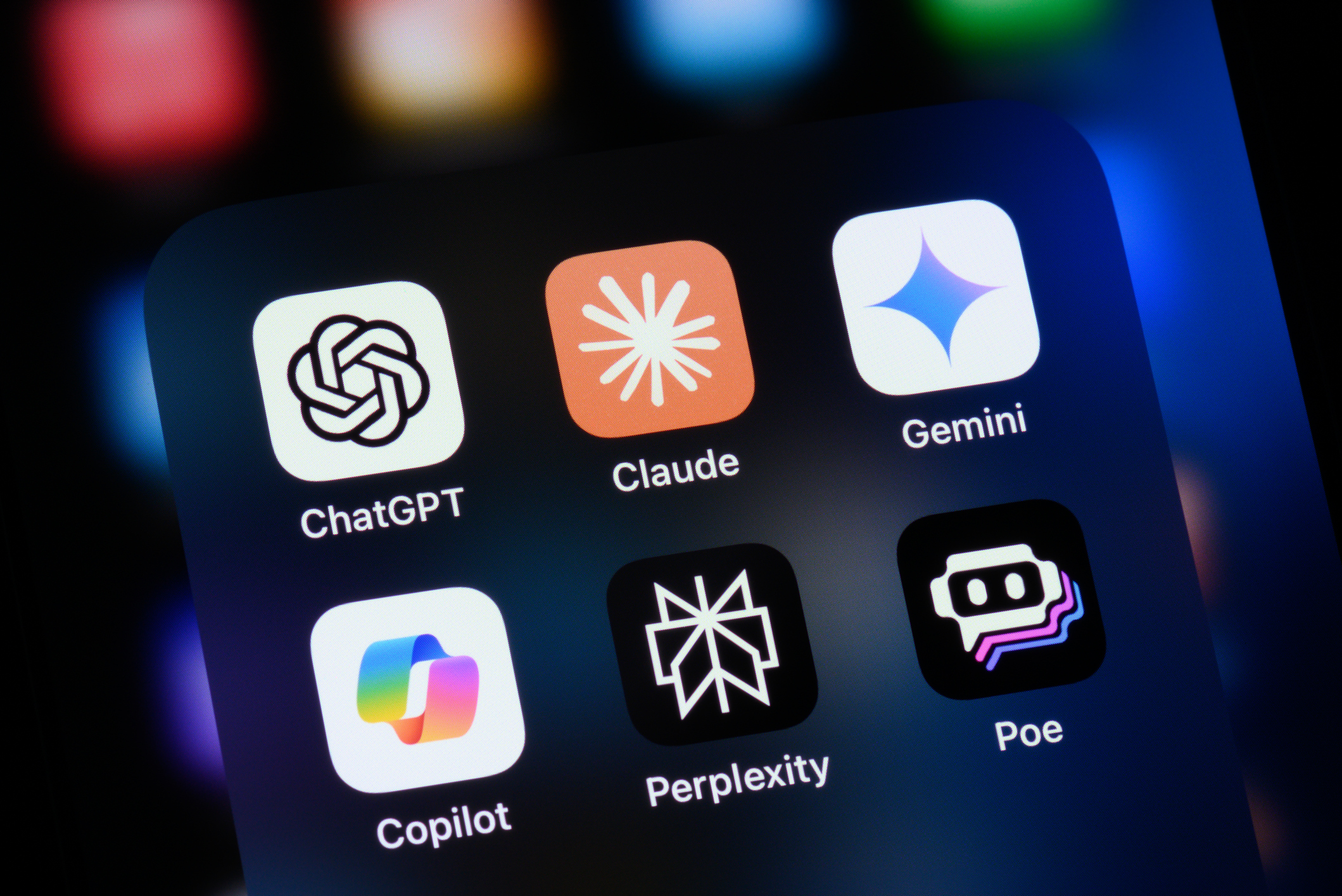
Anthropic, founded by former OpenAI researchers including siblings Dario and Daniela Amodei, emerged onto the scene with a mission to develop reliable, interpretable, and steerable AI systems. Their flagship product, Claude, has quickly established itself as a formidable competitor to OpenAI’s ChatGPT, lauded for its advanced reasoning capabilities, safety-focused architecture, and conversational fluency. The startup’s genesis itself is intertwined with the broader narrative of AI development, having spun out of OpenAI in 2021 amid differing philosophical approaches to AI safety and commercialization. This origin story highlights the intensely competitive and ideologically charged environment within the AI frontier, where talent and ideological alignment play crucial roles.
The current funding round for Anthropic, which Sequoia is reportedly joining, is ambitious, targeting upwards of $25 billion at a staggering $350 billion valuation. This valuation, more than double its previous $170 billion just four months prior, underscores the explosive investor appetite for generative AI companies. Led by Singapore’s GIC and U.S. investor Coatue, each committing $1.5 billion, the round also reportedly includes significant commitments from tech giants Microsoft and Nvidia, together pledging up to $15 billion, with other venture capitalists and investors expected to contribute an additional $10 billion or more. This influx of capital positions Anthropic to further accelerate its research, development, and market penetration in a sector where computational power, data access, and top-tier talent are critical differentiators. The rapid escalation in valuations across the AI sector reflects a broader market conviction that generative AI represents a foundational technological shift, akin to the internet or mobile computing, with vast economic and social implications.
Sequoia’s Complex Web of AI Investments
Sequoia Capital’s reported investment in Anthropic is not an isolated incident but rather the latest in a series of strategic decisions that signal a departure from traditional VC norms. The firm already holds significant stakes in OpenAI, the pioneer of the generative AI boom, and xAI, Elon Musk’s nascent artificial intelligence venture. While the xAI investment was often framed within Sequoia’s long-standing relationship with Musk, encompassing stakes in X (formerly Twitter), SpaceX, The Boring Company, and Neuralink, it nonetheless represented an investment in an early-stage competitor to OpenAI. The rationale behind Sequoia’s involvement with xAI was widely understood as a move to deepen its extensive ties to the prolific entrepreneur rather than a straightforward bet on an OpenAI rival.
However, the proposed Anthropic investment is different. Anthropic is a direct, established, and well-funded competitor, challenging OpenAI across multiple fronts in the large language model space. This creates an unprecedented dynamic for Sequoia, now backing three of the most prominent, and often rivalrous, players in the foundational AI market. This diversified approach suggests a strategic recalculation, perhaps acknowledging the vast potential of the AI market and the difficulty of predicting a single definitive winner in such a rapidly evolving and technologically complex domain. It reflects a potential shift from a "winner-take-all" mindset to one that recognizes the likelihood of multiple dominant players in a market of immense scale, especially as AI becomes an increasingly horizontal technology embedded across countless applications and industries.
Navigating Potential Conflicts: The Altman Angle
The implications of Sequoia’s move are particularly intricate given the public statements made by OpenAI CEO Sam Altman. Last year, during OpenAI’s defense against a high-profile lawsuit by Elon Musk, Altman addressed concerns regarding potential investor restrictions in OpenAI’s 2024 funding round. While he denied a blanket prohibition on investors backing rivals, Altman did confirm that those with ongoing access to OpenAI’s confidential information would have such access terminated "if they made non-passive investments in OpenAI’s competitors." He characterized this as "industry standard" protection against the misuse of competitively sensitive data.
The distinction between "passive" and "non-passive" investments is crucial in analyzing Sequoia’s position. A passive investment might imply a purely financial stake with no board representation or active involvement in strategic decisions, whereas a non-passive investment would entail deeper engagement, board seats, or information rights. The central question is whether Sequoia’s Anthropic investment would be deemed "non-passive" and the potential repercussions for its OpenAI relationship. This scenario poses a delicate balancing act for Sequoia, requiring meticulous management of information flow and potential conflicts to avoid alienating any of its portfolio companies.
The connection between Sequoia and Altman is historically deep-seated and personal. Sequoia backed Altman’s first startup, Loopt, after he dropped out of Stanford. He later served as a "scout" for the firm, famously introducing them to Stripe, which became one of Sequoia’s most valuable portfolio companies. Alfred Lin, a new co-leader at Sequoia, maintains a close relationship with Altman, frequently interviewing him at firm events. Lin’s public declaration of support for Altman during his brief ousting from OpenAI in November 2023, stating he would "eagerly back Altman’s next world-changing company," further underscores this bond. This intricate web of personal and professional relationships adds another layer of complexity to Sequoia’s decision, raising questions about how the firm plans to manage potential conflicts of interest and maintain trust across its diverse AI portfolio.
A Precedent Shattered: The Finix Case Revisited
Sequoia’s current stance on portfolio conflicts marks a dramatic departure from its well-documented historical precedent. In 2020, the firm took the extraordinary step of divesting from payments company Finix. This decision came after Sequoia determined that Finix directly competed with Stripe, another of its major portfolio companies. In an unprecedented move, Sequoia forfeited its entire $21 million investment in Finix, allowing the startup to retain the capital while the venture firm relinquished its board seat, information rights, and shares. This was the first time in Sequoia’s storied history that it had severed ties with a newly funded company specifically due to a conflict of interest, particularly after having led Finix’s $35 million Series B round just months earlier.
The Finix case became a benchmark, showcasing Sequoia’s commitment to conflict avoidance and prioritizing established portfolio companies. It signaled a clear message to the venture capital world about the firm’s integrity and its dedication to minimizing competitive overlaps within its portfolio. The stark contrast between that principled divestment and the current strategy of simultaneously backing OpenAI, xAI, and now Anthropic, suggests a fundamental re-evaluation of its investment philosophy, particularly in the unique context of the rapidly expanding AI market. This shift implies a belief that the AI market’s scale and strategic importance necessitate a different approach to portfolio construction, even if it means navigating complexities previously deemed unacceptable.
Leadership Transition and Strategic Reevaluation at Sequoia
This apparent strategic pivot at Sequoia unfolds against a backdrop of significant leadership changes within the firm. Roelof Botha, Sequoia’s former global steward, was reportedly sidelined in a surprise vote last fall. Following his departure, Alfred Lin and Pat Grady assumed co-leadership roles. Pat Grady, notably instrumental in the Finix divestment, previously underscored the firm’s commitment to avoiding portfolio conflicts.
The transition in leadership could be a crucial factor in understanding Sequoia’s evolving investment strategy. New leadership often brings fresh perspectives and a willingness to challenge long-held conventions. In a landscape as dynamic and transformative as generative AI, a re-evaluation of traditional investment principles might be deemed necessary to capture emerging opportunities and adapt to market realities. This change at the helm may have empowered a more aggressive, diversified approach to investing in foundational technologies, even if it means navigating unprecedented competitive overlaps. The decision could reflect a strategic bet that the potential returns from being invested across multiple AI leaders outweigh the risks associated with managing conflicts of interest.
Market Implications and the Future of AI Funding
Sequoia’s bold move carries significant implications for the broader venture capital industry and the future of AI funding. It could signal a shift from the traditional "winner-take-all" mentality, suggesting foundational AI markets might be vast enough for multiple multi-billion-dollar players. Other venture firms might observe Sequoia’s strategy and reconsider their own approaches to portfolio diversification, especially in high-stakes, high-growth domains where the ultimate market leader is yet to be definitively crowned. This could lead to a more fragmented and intensely competitive funding landscape, but also potentially accelerate innovation as more capital flows into diverse AI research and development initiatives.
For AI startups, this presents a double-edged sword: potentially opening more funding avenues but intensifying pressure to demonstrate clear differentiation and rapid growth to stand out in a crowded field of VC-backed rivals. The pursuit of significant capital, exemplified by Anthropic’s reported aim for a $350 billion valuation and a potential IPO as early as this year, reflects the immense belief in AI’s transformative power and its potential to reshape industries globally. The market is clearly signaling that the race for AI dominance is a marathon, not a sprint, and major investors are eager to participate in multiple facets of this technological revolution.
Sequoia Capital’s reported investment in Anthropic represents more than just another funding round; it signifies a potential inflection point in venture capital strategy. By embracing a diversified portfolio across key AI competitors, Sequoia is challenging deeply ingrained industry taboos and redefining the parameters of acceptable risk and opportunity in the age of artificial intelligence. How this strategy unfolds, particularly in managing the delicate balance of information, loyalty, and competitive advantage across its AI holdings, will be closely watched by entrepreneurs, investors, and industry analysts alike. The outcome could very well set a new precedent for how venture capital operates in the hyper-competitive, high-stakes arenas of future technological revolutions.