Amir Mahmud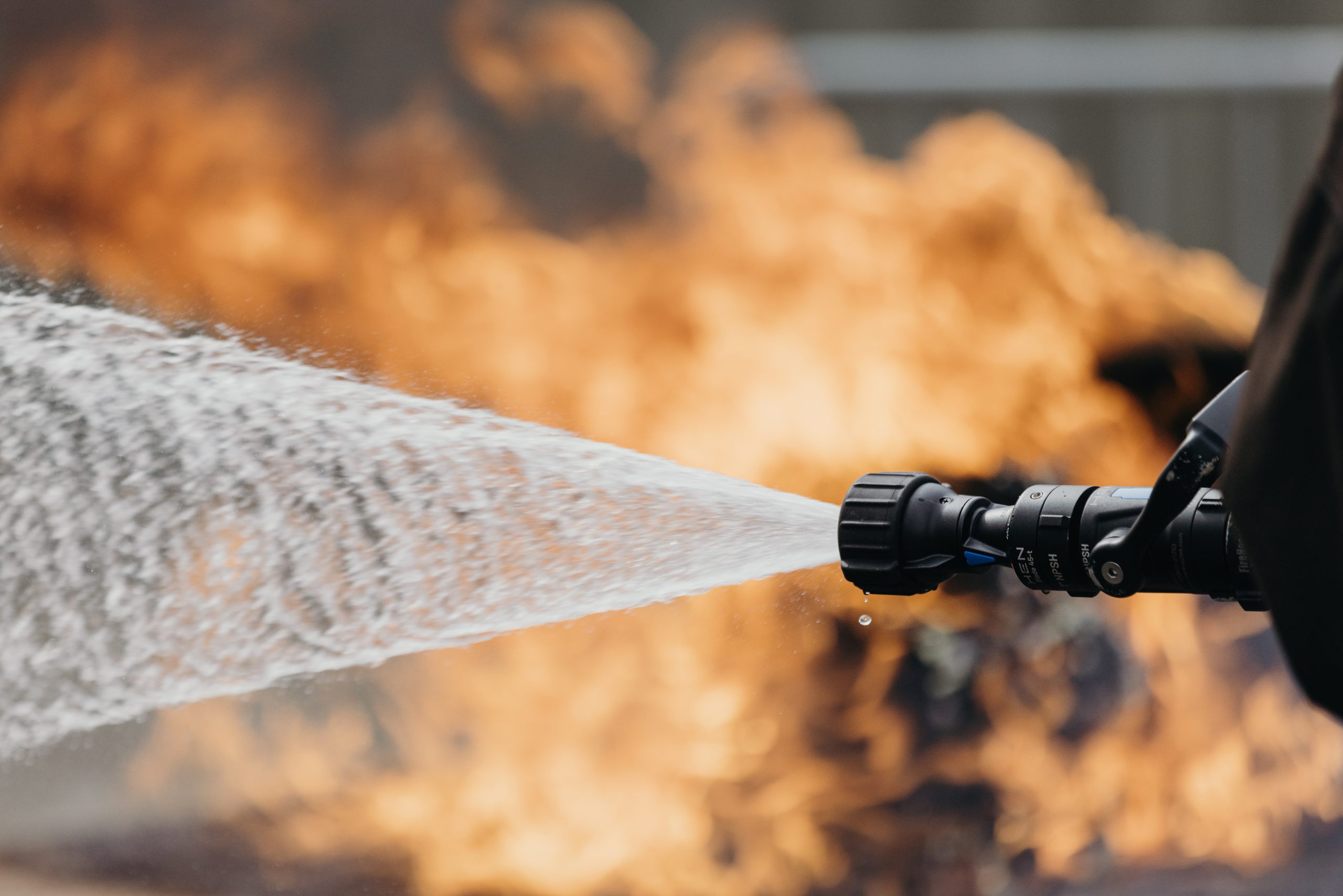
In a sector traditionally slow to adopt radical technological shifts, one company is fundamentally reimagining the future of firefighting, moving beyond conventional equipment to create an integrated ecosystem of smart devices and invaluable data. Sunny Sethi, the visionary founder of HEN Technologies, is at the forefront of this transformation, having initially disrupted the industry with advanced fire nozzles and now charting a course toward an unprecedented artificial intelligence-driven platform. His journey from materials science to emergency response highlights a growing trend of interdisciplinary innovation tackling some of humanity’s most pressing challenges.
The Stagnant Landscape of Firefighting Technology
For decades, the core tools and techniques employed in fire suppression have remained remarkably consistent, with advancements largely incremental since the mid-20th century. Traditional fire nozzles, while effective, often operate with inherent limitations in water efficiency and precise control, particularly in dynamic fire environments. This inertia in innovation meant that firefighters continued to rely on equipment that, while robust, hadn’t fully leveraged modern scientific breakthroughs in fluid dynamics or digital intelligence. This reality created a significant opportunity for disruption, especially as global climate patterns began to amplify the frequency and intensity of catastrophic blazes. The need for more effective, resource-efficient, and data-driven firefighting solutions became increasingly urgent.
A Multidisciplinary Maverick’s Path to Innovation
Sethi’s professional trajectory is anything but conventional, a mosaic of diverse scientific and engineering disciplines that ultimately converged on the seemingly unrelated field of fire suppression. Following his doctoral studies at the University of Akron, where he specialized in surface science and adhesion, Sethi ventured into nanotechnology. He founded ADAP Nanotech, securing Air Force Research Lab grants for his work on carbon nanotube-based portfolios—a testament to his early engagement with cutting-edge materials. His career then led him to SunPower, where he contributed to the development of novel materials and processes for shingled photovoltaic modules, a critical area in renewable energy. Subsequently, at TE Connectivity, he applied his expertise to adhesive formulations, accelerating manufacturing processes within the automotive industry. This extensive background across nanotechnology, solar energy, semiconductors, and automotive manufacturing endowed Sethi with a unique, "bias-free and flexible" problem-solving approach. Having navigated complex challenges in various high-tech sectors, he possessed the intellectual agility to critically assess an established industry like firefighting from an entirely fresh perspective.
A Personal Catalyst: California’s Wildfire Crisis
The impetus for Sethi’s pivot into firefighting was deeply personal, born from the escalating wildfire crisis that gripped California. After relocating to the East Bay area outside San Francisco in 2013, Sethi and his wife witnessed firsthand the devastating scale of these blazes. What they initially perceived as an anomaly—the Thomas Fire—soon became a grim recurring reality with the Camp Fire, followed by the Napa-Sonoma fires. The breaking point arrived in 2019 when Sethi was traveling amidst evacuation warnings, leaving his wife and their young daughter alone to potentially face an evacuation order without nearby family support. This terrifying experience ignited a powerful resolve. His wife’s challenge, "You need to fix this, otherwise you’re not a real scientist," resonated profoundly, transforming a personal fear into a professional mission. This personal connection underscores the human element driving technological advancements, particularly in fields directly impacting public safety and environmental resilience.
Reinventing the Nozzle: Precision and Efficiency
Motivated by this profound experience, Sethi founded HEN Technologies, an acronym for High-Efficiency Nozzles, in Hayward in June 2020. With critical seed funding from the National Science Foundation, the company embarked on intensive computational fluid dynamics (CFD) research. This advanced simulation technique allowed Sethi and his team to meticulously analyze the intricate physics of water suppression, examining how water droplets interact with flames and how external factors like wind influence their efficacy. The outcome of this rigorous scientific inquiry was a revolutionary fire nozzle designed for unparalleled precision. Unlike traditional nozzles that often produce a wide range of droplet sizes and struggle with wind dispersion, HEN’s innovation precisely controls droplet size and manages velocity in novel ways, ensuring a coherent and highly effective stream that penetrates fire more efficiently while minimizing water waste. Early demonstrations highlighted a stark difference: with the same flow rate, HEN’s technology could suppress fires up to three times faster than conventional products, achieving this while conserving two-thirds of the water—a critical factor in regions battling both fire and drought.
From Hardware to a Connected Ecosystem
The advanced nozzle, while a significant achievement, was merely the genesis of Sethi’s broader vision. He refers to it as "the muscle on the ground," a foundational component of a far more expansive, intelligent system. HEN Technologies rapidly expanded its product portfolio to include smart monitors, valves, overhead sprinklers, and various pressure devices. This year, the company is set to launch "Stream IQ," a sophisticated flow-control device, alongside comprehensive discharge control systems. What truly distinguishes these products is their inherent intelligence: each device integrates custom-designed circuit boards equipped with an array of sensors and embedded computing power. These 23 distinct designs transform what was once passive hardware into active, smart, and interconnected equipment, with some components leveraging powerful processors like Nvidia Orion Nano. This integration of advanced electronics and software into fire suppression tools represents a paradigm shift, moving the industry from reactive manual operations to proactive, data-informed responses. The company’s commitment to innovation is reflected in its filing of 20 patent applications, with several already granted, solidifying its intellectual property in this emerging space.
The Brain Behind the Brawn: An AI-Powered Cloud Platform
The true innovation lies not just in the individual smart devices, but in the intelligent network they collectively form. HEN’s proprietary cloud platform acts as the central nervous system for this ecosystem. By utilizing sensors strategically placed at the pump, the system creates a "virtual sensor" at the nozzle, providing real-time, granular data on critical operational parameters. This includes precise tracking of when a nozzle is active, the exact volume of water being deployed, the required pressure, the specific hydrant being utilized, and prevailing weather conditions. This level of comprehensive data capture is unprecedented in firefighting.
The implications for emergency response are profound. In the past, fire departments frequently faced critical water supply issues due to a lack of communication between water utilities and on-the-ground firefighters. Historical incidents like the Palisades Fire and the Oakland Fire decades earlier underscore the devastating consequences when pressure fluctuations lead to sudden water loss for an engine mid-operation. In rural areas, the logistical complexities of water tenders—tankers shuttling water from distant sources—are immense. HEN’s system provides the crucial data needed to integrate water usage calculations with utility monitoring, allowing for optimized resource allocation and preventing potentially catastrophic water shortages.
The cloud platform offers a suite of application layers tailored for different command levels—from fire captains to battalion chiefs and incident commanders. Analogous to how Adobe built its cloud infrastructure for creative professionals, HEN delivers customized, actionable intelligence. Equipped with real-time weather data and GPS capabilities embedded in all devices, the system can provide immediate alerts, such as an impending wind shift that necessitates repositioning engines or a specific fire truck running low on water. This predictive capability and real-time situational awareness dramatically enhance firefighter safety and operational effectiveness, transforming incident management from a reactive scramble into a strategically coordinated effort.
Addressing a Critical National Need: The NERIS Program
The Department of Homeland Security (DHS) has long recognized the critical need for such an advanced system through its National Emergency Response Information System (NERIS) program. NERIS is a forward-thinking initiative aimed at integrating predictive analytics into emergency operations to enhance national preparedness and response. However, as Sethi astutely observes, "You can’t have [predictive analytics] unless you have good quality data. You can’t have good quality data unless you have the right hardware." HEN Technologies directly addresses this fundamental challenge by providing the foundational hardware layer that generates the high-fidelity, real-world data necessary to fuel sophisticated predictive models. This alignment with national strategic priorities positions HEN as a crucial player in modernizing emergency services infrastructure.
Navigating the Complexities of Public Sector Sales
While the technical hurdles of developing such an innovative platform are considerable, Sethi asserts that the greatest challenge has been navigating the intricate market dynamics of the emergency services sector. He describes it as a unique "B2C play when you think of convincing the customers to buy, but the procurement cycle is B2B." This means a product must deeply resonate with the end-users—the firefighters themselves—while simultaneously successfully navigating the often lengthy and bureaucratic government purchasing cycles. HEN’s success in cracking both these fronts is a testament to its compelling value proposition and strategic market penetration.
The numbers vividly illustrate HEN’s impressive market traction. After launching its initial products in the second quarter of 2023, the company quickly secured 10 fire department customers and generated $200,000 in revenue. Word of mouth and demonstrated efficacy fueled rapid expansion, with revenue soaring to $1.6 million in 2024 and then to $5.2 million last year. For the current year, HEN, which now boasts 1,500 fire department customers, projects a remarkable $20 million in revenue. This exponential growth underscores the urgent demand for modern fire suppression solutions.
The Competitive Landscape and Global Reach
While HEN operates in a competitive environment, Sethi emphasizes its unique, integrated approach. Established players like IDEX Corp offer traditional hoses, nozzles, and monitors, while software companies such as Central Square and First Due (which recently secured a substantial $355 million funding round) provide software solutions for public safety agencies. However, Sethi insists that no other company offers the holistic hardware-to-cloud-data ecosystem that HEN provides. This integrated strategy, combining smart physical equipment with a powerful data platform, gives HEN a distinct competitive edge.
The company’s global footprint is expanding rapidly, serving prestigious clients including the U.S. Marine Corps, Army bases, Naval atomic labs, NASA, and the Abu Dhabi Civil Defense. HEN currently ships to 22 countries and operates through a network of 120 distributors. Furthermore, after a rigorous year-long vetting process, HEN recently achieved GSA qualification, a federal seal of approval that significantly streamlines procurement for military and government agencies. This qualification is pivotal, as fire departments nationwide replace approximately 20,000 aging engines annually from a national fleet of 200,000. Once qualified, HEN’s integration into this replacement cycle promises recurring revenue, further augmented by the continuous data generation from its hardware between purchase cycles.
Assembling a World-Class Team for a Complex Challenge
To execute such an ambitious dual strategy—building both cutting-edge hardware and a sophisticated software platform—HEN has meticulously assembled a diverse and highly skilled 50-person team. Its software lead previously held a senior director position crucial in building Adobe’s cloud infrastructure, bringing invaluable experience in scalable, robust platform development. The team also includes a former NASA engineer, reflecting the deep technical expertise required for fluid dynamics and sensor integration, alongside veterans from tech giants like Tesla, Apple, and Microsoft. Sethi humbly acknowledges that while he may not answer every technical question, the collective brilliance of his team is a profound asset, highlighting the collaborative nature of this complex undertaking.
The True "Gold Mine": Real-World Physics Data
Beyond the immediate revenue streams from hardware and software, the most profound value HEN Technologies is amassing lies in its unprecedented collection of data. Each deployment, every fire suppressed, every gallon of water discharged by a HEN device contributes to a vast, highly specific, and real-world dataset. This trove of information includes granular details on how water behaves under varying pressures, how flow rates interact with different materials and fire types, how fire responds to specific suppression techniques, and the complex interplay of physics within active, extreme fire environments.
This data is precisely what is needed by companies developing advanced artificial intelligence systems, particularly those focused on "world models." These sophisticated AI models aim to construct simulated representations of physical environments to accurately predict future states. Training such models, especially in the realm of physics and fluid dynamics, cannot rely solely on synthetic simulations; it requires vast quantities of real-world, multimodal data from physical systems operating under extreme, dynamic conditions. HEN’s continuous data collection directly addresses this critical need, offering an invaluable resource for advancing AI and robotics. While Sethi remains guarded about the specifics, the immense value of this real-world physics data to companies building predictive physics engines and training robotics is undeniable, representing a significant long-term asset for the company.
Investor Confidence Fuels Future Growth
The strategic importance of HEN’s integrated approach and its burgeoning data assets has not gone unnoticed by the investment community. Last month, HEN successfully closed a $20 million Series A funding round, complemented by $2 million in venture debt from Silicon Valley Bank. O’Neil Strategic Capital spearheaded the financing, with significant participation from NSFO, Tanas Capital, and z21 Ventures. This latest round brings the company’s total funding to over $30 million, signaling strong investor confidence in its disruptive potential and scalability. With this substantial capital infusion, Sethi is already planning for the next phase of growth, indicating that the company will return to fundraising in the second quarter of this year, poised to further accelerate its mission to redefine emergency response for a world increasingly threatened by fire.