Amir Mahmud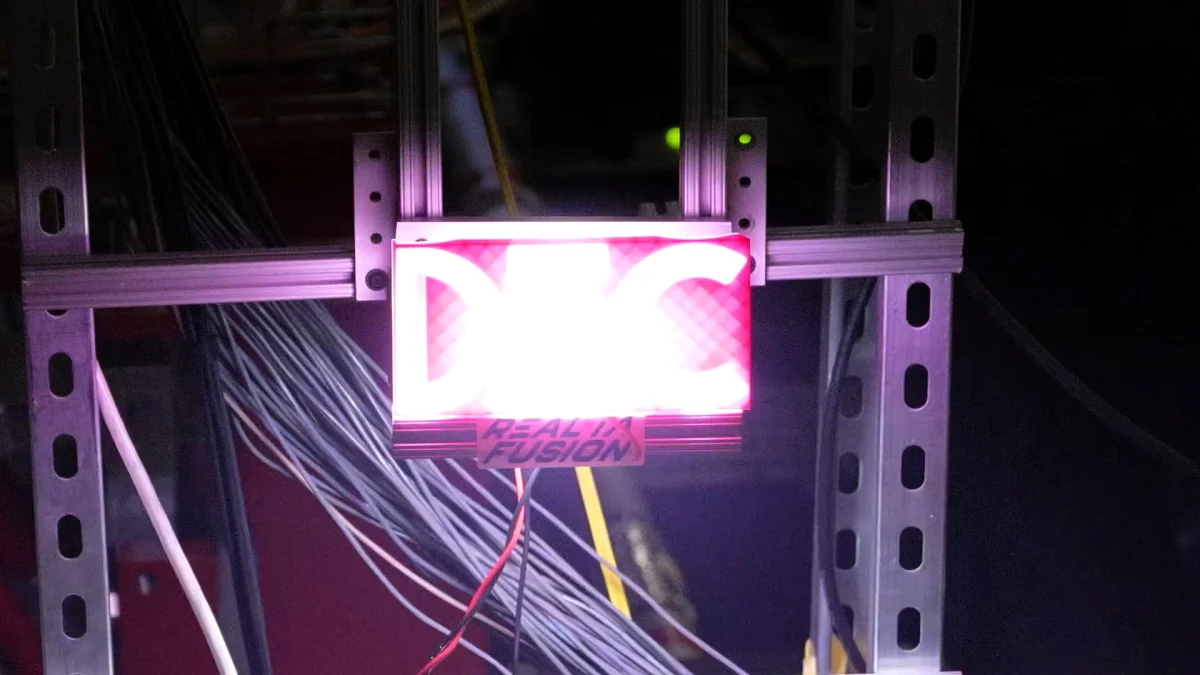
A significant advancement in the pursuit of clean energy has been announced, as Realta Fusion, a Wisconsin-based startup, successfully demonstrated the direct conversion of energy from a fusion reaction into electricity. This pivotal experiment, conducted on June 19, saw the company’s WHAM demonstration device power a lightbulb, an achievement Realta Fusion believes is an unprecedented public display by a private entity in the nascent fusion industry. This breakthrough represents a tangible step forward in developing more efficient and economically viable fusion power plants, moving beyond the traditional method of generating steam to drive turbines.
The Long Pursuit of Fusion Energy
For decades, nuclear fusion has been heralded as the ultimate clean energy solution, often dubbed the "power of the sun on Earth." Unlike nuclear fission, which splits heavy atoms, fusion combines light atomic nuclei, typically isotopes of hydrogen like deuterium and tritium, to release vast amounts of energy. The appeal is immense: fusion fuel is abundant (deuterium from seawater, tritium can be bred from lithium), it produces no long-lived radioactive waste, and it inherently poses a low risk of runaway reactions. However, replicating the conditions of the sun—extreme temperatures exceeding 100 million degrees Celsius and immense pressures—has proven to be one of humanity’s grandest scientific and engineering challenges.
The journey toward harnessing fusion power has been punctuated by numerous milestones. Early theoretical work laid the groundwork, followed by the development of various reactor concepts, most notably the tokamak and stellarator designs which use powerful magnetic fields to confine superheated plasma. A crucial turning point occurred in 2022, when the National Ignition Facility (NIF) at Lawrence Livermore National Laboratory achieved scientific breakeven, demonstrating for the first time that a fusion reaction could generate more energy than the laser energy used to initiate it. This historic experiment confirmed the fundamental physics of fusion gain, injecting renewed optimism and investment into the sector. While NIF’s achievement marked scientific success, the challenge for commercial ventures remains to achieve "engineering breakeven," where a fusion device produces more net electricity than it consumes to operate all its complex systems, from plasma heating to magnetic field generation.
Beyond Heat: The Promise of Direct Conversion
Traditionally, power generation, whether from fossil fuels, fission reactors, or even some early fusion concepts, relies on a thermal cycle. Heat generated by the reaction boils water to produce high-pressure steam, which then spins a turbine connected to an electrical generator. This multi-step process is inherently inefficient due to thermodynamic losses. For instance, even advanced fission reactors typically convert only about 33% of their thermal energy into usable electricity. This inefficiency is a significant hurdle for fusion, where maintaining the extreme conditions necessary for a reaction already demands substantial energy input.
Realta Fusion’s innovation lies in its direct energy conversion technology, which bypasses the steam cycle entirely for a portion of the reaction’s output. In deuterium-tritium (D-T) fusion, approximately 20% of the energy is released in the form of charged helium nuclei, known as alpha particles. These particles carry kinetic energy and, being charged, can be directly manipulated by electromagnetic fields. Instead of allowing these energetic particles to simply heat the reactor walls, Realta Fusion captures them. By guiding these charged particles through a carefully designed electromagnetic field, their kinetic energy is directly converted into electrical current, much like a particle accelerator in reverse. This method promises a dramatic increase in efficiency, with Realta Fusion estimating direct conversion to be around 90% efficient, a stark contrast to the conventional thermal methods.
Realta Fusion’s Landmark Demonstration
The breakthrough by Realta Fusion on June 19 involved its WHAM (Wisconsin High-field Axisymmetric Mirror) device, a demonstration fusion machine designed to explore the magnetic mirror approach to plasma confinement. Unlike the toroidal (donut-shaped) tokamaks, magnetic mirrors are linear devices where plasma is confined between strong magnetic fields at each end. This configuration can be particularly well-suited for direct energy conversion, as charged particles naturally "leak" out the ends of the mirror, making them accessible for capture.
During the experiment, Realta Fusion attached a prototype electricity converter to the end of the WHAM reactor. This converter successfully harvested "alpha power" from the escaping charged particles, generating multiple amps of electricity at 100 volts. This output was sufficient to illuminate several lightbulbs, offering a compelling visual proof-of-concept for the technology. Kieran Furlong, co-founder and CEO of Realta Fusion, underscored the significance of the event, telling TechCrunch, "We can take power from a plasma." He further elaborated that the milestone vividly demonstrates "what’s possible" in the realm of fusion energy. This public demonstration by a private company stands out, especially as other prominent fusion startups, such as Helion, also plan to integrate direct energy conversion into their reactor designs but have yet to publicly showcase such an achievement.
A Legacy of Innovation: Direct Conversion’s History
The concept of direct energy conversion in fusion is not entirely new; it has roots stretching back to the early days of fusion research in the mid-20th century. Visionaries in the field recognized the potential to directly harness the kinetic energy of charged particles. Early theoretical work and small-scale experiments explored various designs for electrostatic or magnetic direct converters. However, the immense technical challenges of achieving stable, high-performance plasma confinement often relegated direct conversion to a secondary consideration. Researchers primarily focused on simply getting fusion reactions to occur and sustain.
In recent years, as plasma physics has advanced and the engineering requirements for commercial fusion have become clearer, there has been a renewed interest in direct conversion. The increasing emphasis on economic viability and energy efficiency has brought these advanced concepts back to the forefront. Modern computational tools and material science innovations are enabling researchers to design and build more sophisticated direct conversion systems that were not feasible decades ago. Realta Fusion’s success can be seen as the culmination of this enduring scientific pursuit, translating a long-held theoretical ideal into a tangible, demonstrated reality.
The Economic Engine: Efficiency and Viability
The profound implications of direct energy conversion extend directly to the economics of fusion power. The estimated 90% efficiency of Realta’s direct conversion system is a game-changer when compared to the 33% efficiency of traditional steam turbines. This means a significantly larger portion of the energy produced by the fusion reaction can be converted into usable electricity, dramatically improving the overall net energy output of a commercial plant. Higher efficiency translates directly to lower operational costs and a faster path to profitability for fusion ventures, making them more attractive to investors and competitive with existing energy sources.
Furthermore, Realta Fusion plans to leverage this efficiency for a crucial internal purpose: heating the plasma in its reactor. Fusion reactions require immense energy to initiate and sustain the plasma at the necessary temperatures. By recirculating a portion of the directly converted electricity back into the plasma heating systems, a fusion plant can become more self-sufficient and require less external power input. Furlong estimates that this circularity, or "spinning a flywheel of electricity," could boost a commercial-scale power plant’s total output by an impressive 20% to 30%. This internal feedback loop is critical for achieving true engineering breakeven and generating a substantial surplus of electricity for the grid. The economic advantages derived from this efficiency and recirculation are critical for transitioning fusion from a scientific marvel to a practical, grid-scale energy solution.
The Accelerating Private Fusion Race
The landscape of fusion energy development has undergone a dramatic transformation in recent years, largely driven by a surge in private investment. What was once predominantly a realm of large, government-funded projects has now become a vibrant ecosystem of agile startups, each pursuing innovative approaches to fusion. Realta Fusion is a prominent player in this accelerating race, having secured $36 million in a Series A funding round in 2025, led by Future Ventures. The company is currently in the process of raising a new round, indicating strong investor confidence in its technological pathway.
This private sector momentum is fueled by the immense market potential of fusion power—a projected multi-trillion-dollar industry—and the increasing urgency of global climate goals. Investors are betting on a diverse range of fusion concepts, from magnetic confinement variations like tokamaks and stellarators to inertial confinement and magneto-inertial fusion. The competition is intense, but also collaborative in spirit, as breakthroughs by one company often inspire and inform others. The demonstration of direct energy conversion positions Realta Fusion as a frontrunner in developing a key technology that could significantly enhance the economic viability of fusion reactors across various designs, making the dream of abundant, clean energy a more realistic prospect.
Navigating the Road to Commercialization
While Realta Fusion’s achievement is a monumental scientific and engineering success, the journey from powering a lightbulb to illuminating cities is still long and complex. The next critical steps involve scaling up the direct conversion technology to handle the much larger energy outputs of commercial reactors and integrating it seamlessly into a sustained, net-positive fusion system. This will require continued advancements in materials science to withstand the extreme conditions within a fusion reactor, as well as sophisticated control systems to manage the plasma and energy extraction processes.
The path to commercial fusion also involves significant regulatory considerations. Governments worldwide are beginning to establish frameworks for licensing and overseeing fusion facilities, which are distinct from fission plants due to their inherently different safety profiles. Developing clear and predictable regulatory pathways will be crucial for attracting further investment and accelerating deployment. General expert commentary suggests that while commercial fusion power plants are still likely decades away, the rapid pace of innovation in the private sector, coupled with government support, is significantly shortening projected timelines.
The Broader Vision: Fusion’s Societal Impact
The successful commercialization of fusion energy holds the potential for profound societal and cultural impacts. It could fundamentally reshape the global energy landscape, providing a virtually limitless, carbon-free source of electricity that is not dependent on fossil fuels or vulnerable to geopolitical instability. This would have transformative implications for combating climate change, improving air quality, and enhancing energy security for nations worldwide.
Beyond environmental benefits, fusion power could drive economic growth by creating new industries, high-tech jobs, and opportunities for global collaboration. It could also play a critical role in addressing energy poverty, bringing reliable and affordable power to underserved communities. Realta Fusion’s direct energy conversion breakthrough is more than just a technical achievement; it is a powerful symbol of human ingenuity and perseverance in the quest for a sustainable future, offering a glimpse into a world powered by the same process that fuels the stars.