Amir Mahmud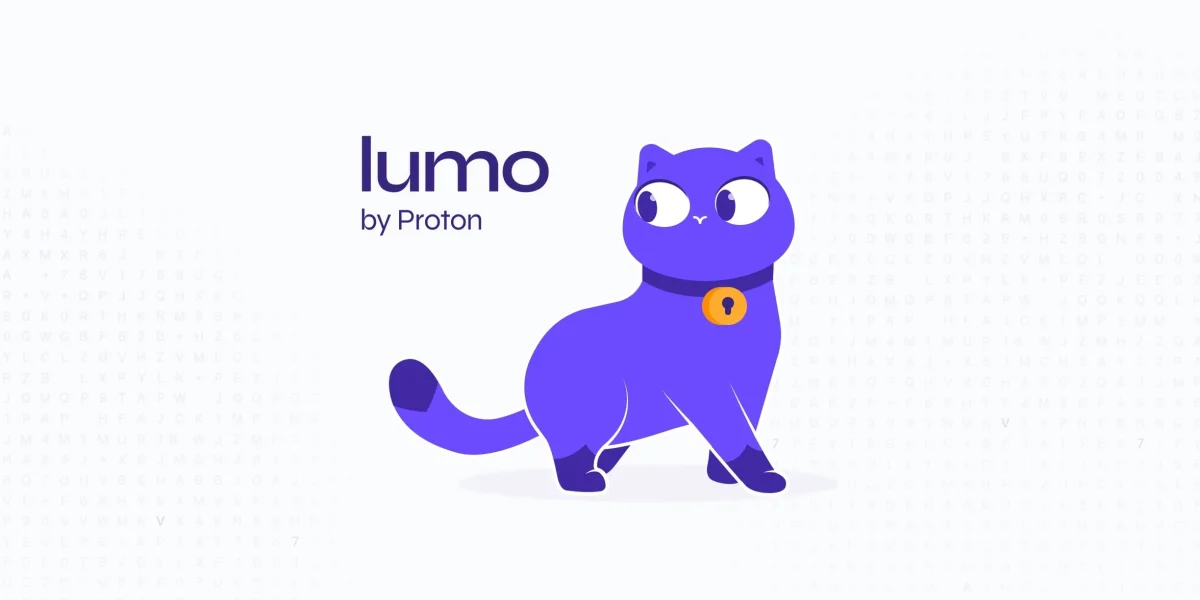
Proton, the technology company widely recognized for its suite of privacy-centric applications, has announced a significant upgrade to its artificial intelligence chatbot, Lumo. This latest iteration, Lumo 2.0, represents a substantial leap forward, introducing advanced capabilities such as image recognition and generation, alongside a suite of performance enhancements and deeper integration with Proton’s secure ecosystem. The update underscores a foundational commitment to delivering sophisticated AI tools without compromising the stringent privacy standards that define the company’s offerings.
The Evolving Landscape of AI and Privacy Concerns
The public introduction of Lumo last year marked Proton’s entry into the rapidly expanding field of generative AI, a domain that has seen explosive growth and adoption over the past few years. Large language models (LLMs) and AI-powered chatbots like OpenAI’s ChatGPT and Google’s Gemini have revolutionized how individuals and businesses interact with digital information, offering unparalleled abilities in content creation, data summarization, and complex problem-solving. However, this transformative power has also brought to the forefront critical discussions surrounding data privacy, security, and the ethical implications of AI development.
Many mainstream AI models operate by collecting and processing vast amounts of user data, often for model training, personalization, or other analytical purposes. This practice has fueled widespread concerns among users and regulators about how personal information is handled, stored, and potentially exposed. High-profile data breaches, concerns over surveillance, and a general unease about corporate access to private conversations have cultivated a growing demand for technology solutions that prioritize user control and confidentiality. Proton emerged from this landscape with a clear mission, initially gaining prominence through ProtonMail, an end-to-end encrypted email service founded in 2014 by scientists at CERN. Its subsequent expansion into secure VPN, cloud storage, and calendar services solidified its reputation as a champion of digital privacy. The development of Lumo, therefore, was a natural extension of this ethos, aiming to bridge the perceived gap between powerful AI utility and uncompromising user privacy.
Enhanced Capabilities and Performance
Lumo 2.0 introduces a suite of features designed to make the chatbot not only more versatile but also significantly more efficient. A standout addition is its new multimodal intelligence, specifically the integration of image recognition and image generation capabilities. Users can now upload images directly to Lumo, leveraging the AI to analyze visual content, extract information, or even perform edits. This functionality extends to generative art, allowing users to create imagery from text prompts, mirroring capabilities found in other leading AI platforms but with Proton’s distinct privacy layer. This expansion into multimodal AI signifies a move beyond text-only interactions, enabling a richer and more intuitive user experience for a broader range of tasks, from analyzing charts in a business report to generating creative visual concepts.
Beyond its visual prowess, Lumo 2.0 also significantly bolsters its "Projects" functionality. This feature, designed to integrate seamlessly with Proton’s existing productivity suite—including Proton Mail, Proton Drive (cloud storage), and Proton Calendar—allows users to upload documents and conduct complex work within a secure environment. A key innovation in Lumo 2.0’s Projects is the introduction of user-controlled persistent memory. This crucial function enables Lumo to recall a user’s preferences, context, and prior interactions across multiple conversational sessions. Unlike many conventional AI assistants where each interaction is often treated as a fresh start, persistent memory allows Lumo to develop a deeper understanding of individual users and their ongoing tasks, leading to more relevant and efficient assistance over time. The "user-controlled" aspect is paramount, ensuring that users retain explicit command over what information is remembered and how it is utilized, aligning perfectly with Proton’s privacy principles.
The upgrade also delivers substantial performance improvements. Proton reports that Lumo 2.0 responds to most queries up to 76 percent faster than its predecessor, a significant enhancement for users seeking immediate answers and assistance. For more intricate problems or complex questions requiring deeper processing, the chatbot now features a dedicated "thinking mode." This mode allows Lumo to engage in more elaborate reasoning, breaking down problems and formulating more comprehensive responses, thereby expanding its utility for demanding analytical and creative tasks. This combination of speed for routine queries and enhanced processing for complex ones aims to provide a fluid and highly capable user experience.
Andy Yen, Founder and CEO at Proton, emphasized the comprehensive nature of the update. "Lumo 2.0 has been re-engineered from the ground up, and the introduction of thinking mode gives it powerful new capabilities," Yen stated. He further articulated the company’s vision, asserting, "Lumo 2.0 demonstrates that users no longer need to choose between powerful AI capabilities and meaningful privacy protections." This statement encapsulates the core value proposition of Lumo 2.0: delivering cutting-edge AI functionality within a framework of robust privacy.
Unwavering Commitment to User Privacy
While Lumo 2.0’s functional enhancements bring it closer in utility to mainstream AI chatbots like Gemini and ChatGPT, its fundamental distinction lies in its unparalleled privacy architecture. Proton employs what it terms a "zero-access encryption architecture." This advanced security protocol ensures that all user data is encrypted not only while in transit across networks but also when it is at rest on Proton’s servers. Crucially, the encryption keys are held solely by the user, meaning that even Proton employees or any unauthorized third party cannot access the plaintext content of user conversations or data. This is a significant departure from many cloud-based services where providers often have theoretical or actual access to user data.
Further solidifying its privacy stance, Proton explicitly states that no server-side logging of Lumo sessions is retained. This means that once a conversation concludes, no record of the interaction is stored on Proton’s servers, preventing any historical tracking or analysis of user queries and responses. In an era where many AI models rely on user interaction logs to refine their algorithms, this commitment to ephemeral data processing is a powerful differentiator, ensuring that user conversations remain truly private and untraceable.
Moreover, Proton makes an unequivocal promise: it will never use customer data for AI training purposes or share it with third parties. This commitment directly addresses a major concern for many users regarding the monetization and potential misuse of their personal information. By abstaining from using customer data for model enhancement, Proton ensures that user interactions with Lumo are purely for the user’s benefit, without contributing to a data pool that could be exploited or compromised. This approach positions Lumo as a trusted digital assistant, operating solely under the user’s explicit control and consent.
Navigating the Future of AI with Privacy at its Core
The release of Lumo 2.0 arrives at a pivotal moment in the digital age, reflecting a broader societal shift towards greater awareness and demand for data privacy. Regulatory frameworks like the GDPR in Europe and CCPA in California have set precedents for data protection, prompting consumers to scrutinize how their personal information is handled by technology companies. In this climate, Proton’s consistent dedication to privacy-by-design in its AI offerings could serve as a model for ethical AI development.
The market impact of Lumo 2.0 extends beyond its immediate user base. It presents a compelling case study for the broader tech industry, challenging the notion that powerful AI must come at the expense of privacy. As AI continues to integrate deeper into everyday life, the availability of robust, privacy-respecting alternatives like Lumo could influence industry standards, encouraging other developers to adopt more transparent and secure data handling practices. From a social and cultural perspective, Lumo contributes to a narrative where individuals are empowered with tools that enhance productivity and creativity without sacrificing their digital sovereignty. It caters to a growing segment of users who are not just seeking functionality but also peace of mind.
While the technical challenges of building and maintaining a sophisticated AI model under such strict privacy constraints are considerable, Proton’s approach demonstrates that it is indeed possible to innovate responsibly. The absence of a vast, continuously updated user data pool for training might necessitate different model development strategies, but the trust earned through unwavering privacy commitments could prove to be a more valuable long-term asset.
Accessibility and the Road Ahead
Lumo 2.0 is available immediately, offering a free public version that provides users with a foundational set of features and capabilities. For those requiring more extensive access and resources, Proton also offers paid tiers, "Plus" and "Professional." These subscription plans likely unlock higher usage limits, advanced functionalities, and potentially more dedicated support, catering to power users and businesses seeking a secure and powerful AI assistant within their professional workflows.
The strategic integration of Lumo within Proton’s comprehensive ecosystem is a critical element of its long-term vision. By providing an AI assistant that can securely interact with encrypted emails, cloud files, and calendar events, Proton enhances the overall utility and stickiness of its product suite. This interconnectedness positions Lumo not merely as a standalone chatbot but as an intelligent, secure layer across all of a user’s digital interactions within the Proton environment. As artificial intelligence continues its rapid evolution, Lumo 2.0 signals Proton’s intent to remain at the forefront, consistently pushing the boundaries of what is possible when cutting-edge technology is built upon a foundation of user trust and uncompromising privacy. The journey of Lumo 2.0 represents a significant step towards a future where digital assistance is not only intelligent but also inherently secure and respectful of individual autonomy.