Amir Mahmud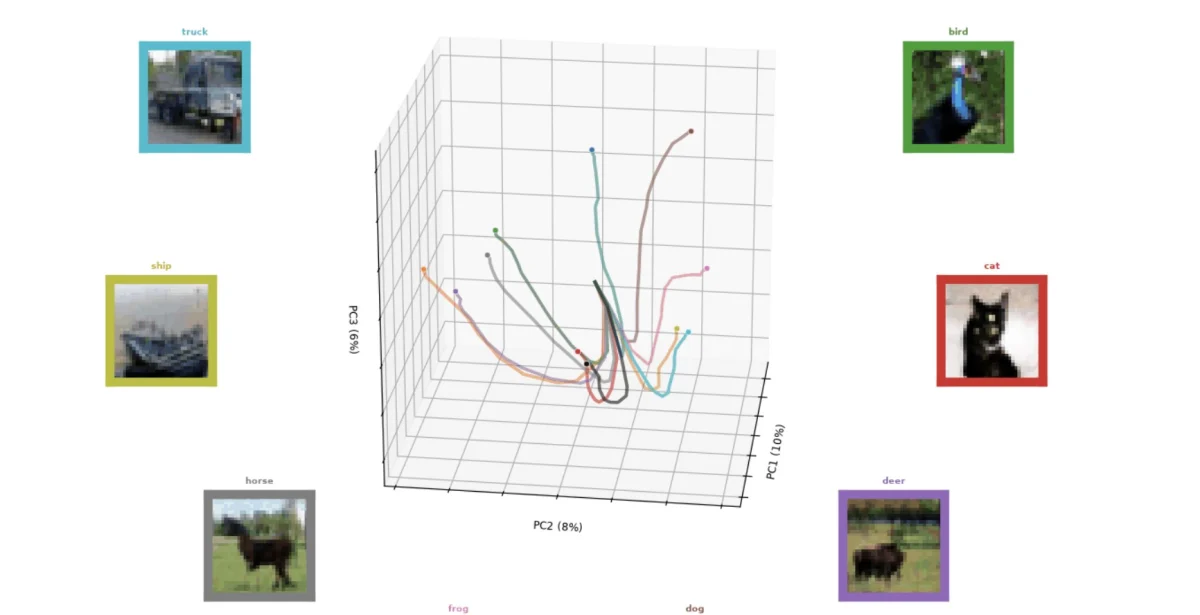
In the relentless pursuit of artificial intelligence breakthroughs, a significant challenge has emerged on the horizon: the escalating energy consumption of advanced AI systems. Addressing this critical bottleneck, a nascent company, Unconventional AI, led by Naveen Rao, the former head of AI at Databricks, is embarking on an ambitious endeavor to fundamentally redesign computing architecture. The firm’s audacious goal is to slash the power requirements for AI inference processing by an astounding factor of 1,000, promising a future where advanced AI operates with unprecedented energy efficiency.
Redefining Computing: The Oscillator-Based Paradigm
At the core of Unconventional AI’s groundbreaking proposition lies an entirely new form of computing architecture: one based on oscillators. This radical departure from conventional digital processors, such as the GPUs that power most modern AI, aims to unlock massive gains in efficiency. Unlike traditional silicon chips that rely on discrete voltage levels representing binary 0s and 1s, oscillator-based systems leverage the continuous, wave-like properties of oscillating electrical signals. These systems can encode and process information through phase, frequency, or amplitude modulation, potentially offering a more energy-efficient means of computation, particularly for tasks that involve complex pattern recognition and approximation, inherent to AI.
The theoretical advantages of such analog or quasi-analog approaches have been discussed in academic circles for decades, often under the umbrella of neuromorphic or analog computing. These methods seek to mimic the brain’s energy efficiency by avoiding the constant conversion of analog signals to digital and back, and by performing computation "in-place" with fewer data movements. Unconventional AI’s approach aims to translate these theoretical benefits into a practical, scalable architecture specifically tailored for the demanding workloads of modern AI inference. The company believes this paradigm shift can circumvent many of the energy inefficiencies inherent in the Von Neumann architecture, which has dominated computing for generations, by minimizing the energy-intensive movement of data between processing units and memory.
Un-0: A Tangible Demonstration of Potential
On a recent Thursday, Unconventional AI offered the first concrete glimpse into its technology with the release of its inaugural AI model, dubbed Un-0. This image-generation system serves as a proof of concept, demonstrating the company’s ability to replicate the capabilities of established, state-of-the-art AI systems using its novel architecture. Accompanying this release, the company’s research team published a detailed paper outlining the construction of a fully functional image-generation model running on a software simulation of their new architecture. Crucially, the paper asserts that Un-0 performs on par with leading diffusion models currently in use, such as Stable Diffusion or OpenAI’s DALL-E (often referred to as GPT Image 1 by some users).
Naveen Rao succinctly characterized this milestone as the "hello world" moment for a new class of computer, hinting at forthcoming developments. The performance parity achieved by Un-0, despite running on a simulated environment, is a significant indicator of the architecture’s potential. It suggests that the fundamental computational principles of the oscillator-based system can effectively handle the complex mathematical operations required for generative AI, a field known for its intensive computational demands. This initial success validates the core hypothesis that an alternative computing paradigm can indeed deliver competitive AI performance, laying the groundwork for future hardware implementations.
AI’s Insatiable Energy Appetite: A Looming Crisis
The urgency behind Unconventional AI’s mission is underscored by the rapidly escalating energy demands of the artificial intelligence industry. As AI models grow exponentially in size and complexity, their computational requirements soar, translating directly into a massive surge in power consumption. This issue manifests prominently in two main phases of AI deployment: training and inference. While training large language models (LLMs) and complex neural networks can consume vast amounts of energy over weeks or months, the continuous, distributed process of "inference"—where trained models are used to make predictions or generate content—represents an even larger long-term energy footprint as AI applications become ubiquitous.
Data centers globally are already consuming a significant and growing share of the world’s electricity, with AI workloads being a primary driver of this trend. Reports from various research institutions and environmental agencies indicate that the carbon footprint of AI is becoming a serious concern, prompting calls for more sustainable computing practices. The energy consumption of a single large language model training run can be equivalent to the lifetime emissions of several cars, and the proliferation of AI tools across industries is only set to exacerbate this problem. Without significant advancements in energy efficiency, the sheer power demand could become a prohibitive factor, limiting the scale and accessibility of future AI innovations. This looming energy crisis presents not just an environmental challenge but also an economic one, as operational costs for AI infrastructure continue to climb.
A History of Architectural Innovation and Bottlenecks
The history of computing is replete with efforts to overcome fundamental architectural limitations. For decades, the Von Neumann architecture, which separates the central processing unit (CPU) from memory, has been the dominant design. While robust, it suffers from the "Von Neumann bottleneck," where data transfer between CPU and memory becomes a limiting factor for performance and energy efficiency. This bottleneck is particularly acute in data-intensive workloads like AI, where vast amounts of data must be moved for processing.
The rise of AI in recent decades spurred the development of specialized hardware. Graphics Processing Units (GPUs), originally designed for rendering graphics, proved exceptionally adept at the parallel processing required for neural networks, quickly becoming the workhorse of AI. Subsequently, companies like Google introduced Tensor Processing Units (TPUs), custom-designed ASICs (Application-Specific Integrated Circuits) optimized specifically for machine learning workloads. More recently, the industry has seen the emergence of Neural Processing Units (NPUs) integrated into consumer devices, aiming to bring AI capabilities to the edge with greater efficiency.
Alongside these digital advancements, there have always been researchers exploring alternative, non-Von Neumann architectures. Neuromorphic computing, inspired by the brain’s structure, seeks to integrate processing and memory to reduce data movement. Analog computing, which uses continuous physical phenomena to represent data, has seen sporadic interest, particularly for specific tasks. Unconventional AI’s oscillator-based approach can be seen as a modern reinterpretation of these alternative paradigms, leveraging new materials and design principles to tackle the unique demands of contemporary AI. The ambition is not merely incremental improvement but a foundational shift akin to the transition from vacuum tubes to transistors, or from general-purpose CPUs to specialized GPUs for graphics and then AI.
Market Dynamics and Societal Impact
The successful realization of Unconventional AI’s vision could have profound implications across several sectors. For the burgeoning AI market, a 1,000-fold reduction in power consumption for inference would be a game-changer. Cloud service providers, who currently bear massive energy costs for running AI workloads, could see dramatic improvements in their operational expenditures and significantly expand their AI offerings. This could lead to a democratization of advanced AI, making powerful models more accessible and affordable for a wider range of businesses and developers, fostering innovation across industries.
The environmental impact would be equally transformative. A substantial decrease in the energy footprint of AI would be a major step towards making the technology more sustainable, aligning with global efforts to combat climate change. As AI becomes increasingly embedded in critical infrastructure, from healthcare to transportation, ensuring its ecological viability is not merely a corporate responsibility but a societal imperative. Furthermore, reduced power requirements could enable the deployment of sophisticated AI in environments where energy is scarce or expensive, such as remote locations or specialized edge devices, expanding the reach and utility of intelligent systems.
This efficiency could also spark a new wave of hardware innovation and investment. If Unconventional AI’s architecture proves viable, it could attract significant capital and talent, challenging the dominance of existing chip manufacturers and fostering a more diverse and competitive hardware ecosystem for AI.
The Road Ahead: Challenges and Potential
While the potential of Unconventional AI’s technology is immense, the path forward is fraught with significant challenges. The current Un-0 model operates on a software simulation, and the transition from simulation to a physical, production-ready chip is a monumental engineering feat. The company plans to release schematics for an actual chip soon, which would be the next crucial step. Following that, the formidable task of building an entire inference stack from the ground up, including compilers, development tools, and a robust software ecosystem, awaits. This involves not just designing the chip but creating the entire infrastructure necessary for developers to utilize it effectively, a process that typically requires substantial resources and time.
Furthermore, Unconventional AI, with a team of fewer than 50 employees, faces the daunting task of competing with established technology giants that command vast resources, manufacturing capabilities, and entrenched market positions. Convincing the industry to adopt an entirely new computing paradigm, moving away from deeply integrated ecosystems built around GPUs and traditional architectures, will require compelling demonstrations of both performance and reliability, alongside robust support infrastructure.
Despite these hurdles, Naveen Rao remains steadfast in his conviction that energy will be the ultimate limiting factor for AI scaling in the coming years. He posits that without radical innovation in power efficiency, the growth trajectory of AI will inevitably hit a wall. Unconventional AI positions itself as one of the few projects directly confronting this fundamental energy constraint. Should they succeed in bringing their oscillator-based architecture to fruition and achieve the promised 1,000x power reduction, it would not only reshape the future of AI hardware but also fundamentally alter the economic and environmental landscape of artificial intelligence, propelling the industry into a new era of sustainable and ubiquitous intelligence.