Amir Mahmud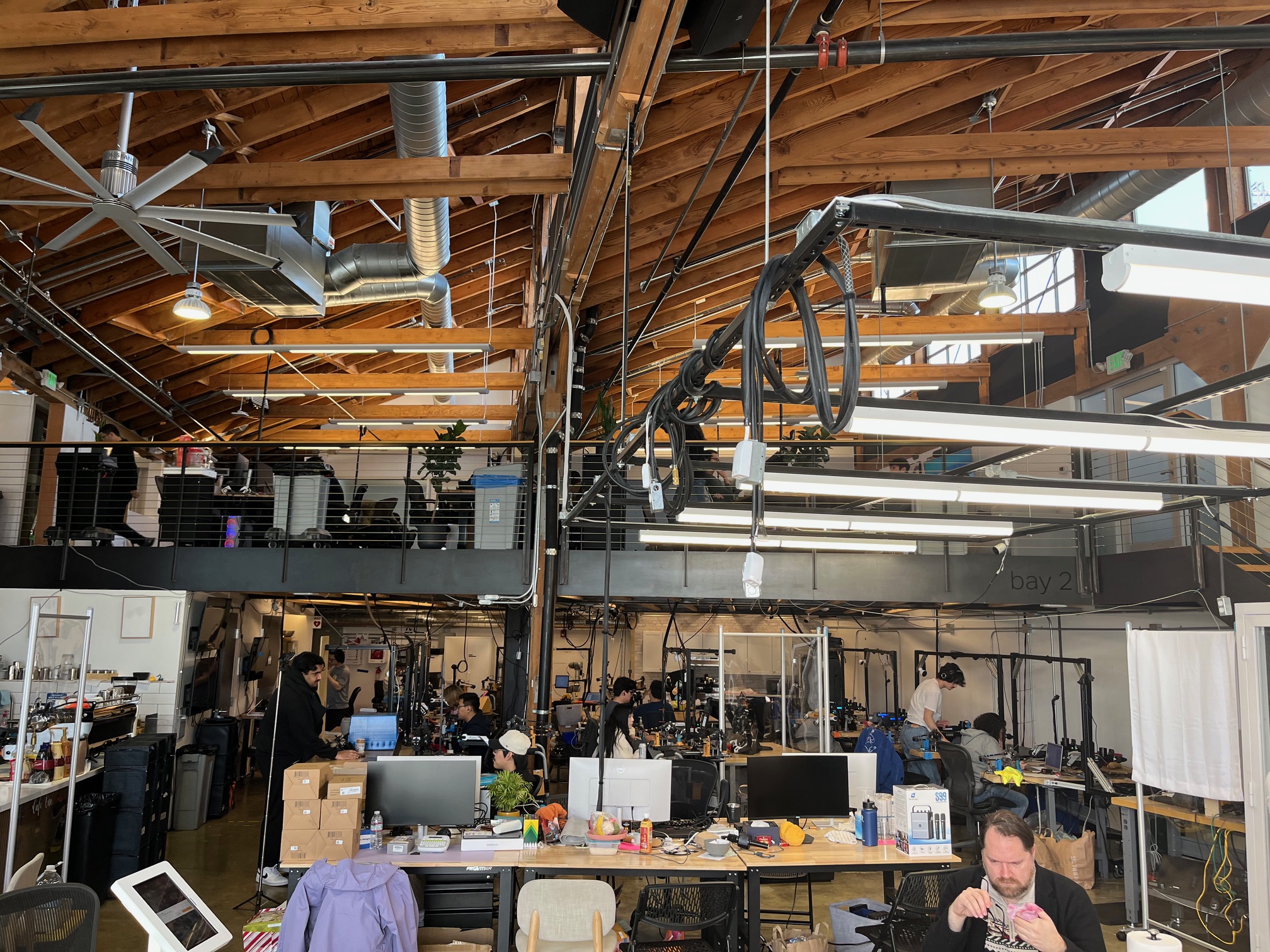
San Francisco-based startup Physical Intelligence, a company just two years old, is reportedly in advanced discussions to secure approximately $1 billion in new funding, a move that would propel its valuation beyond $11 billion. This potential investment round represents an extraordinary acceleration for the robotics firm, which saw its valuation reach $5.6 billion only four months prior. The rapid escalation underscores a prevailing enthusiasm among venture capitalists for groundbreaking advancements in artificial intelligence, particularly those poised to bridge the gap between AI models and real-world physical interactions.
The Ambitious Vision: "ChatGPT for Robots"
At the core of Physical Intelligence’s ambitious undertaking is the development of general-purpose AI models designed to empower robots with versatile capabilities. Co-founder Sergey Levine articulated the company’s vision in straightforward terms during a January visit by TechCrunch, likening their objective to creating "ChatGPT, but for robots." This analogy encapsulates a significant paradigm shift in robotics: moving beyond highly specialized machines programmed for singular tasks toward intelligent systems capable of adapting and performing a wide array of functions, from intricate household chores like folding laundry to delicate culinary preparations such as peeling vegetables. This broad applicability represents a substantial leap from the traditional, task-specific automation prevalent in industrial settings.
The founding team brings a wealth of experience from pioneering AI and technology companies. While the original article mentions "ex-DeepMind staffers" and "Stripe veteran Lachy Groom," it’s understood that the intellectual capital derived from these high-profile backgrounds significantly contributes to investor confidence. DeepMind, known for its breakthroughs in artificial general intelligence (AGI) and game-playing AI, provides a strong pedigree for the technical leadership. Stripe, a financial technology giant, suggests expertise in scaling complex systems and potentially, future commercialization strategies, even if distant.
A Rapid Ascent: Valuation Trajectory
The reported $11 billion-plus valuation marks a spectacular financial trajectory for Physical Intelligence. Starting from over $1 billion in initial funding, the company’s valuation effectively doubled in merely four months from its $5.6 billion benchmark. This kind of meteoric rise is indicative of several factors: the perceived scarcity of truly transformative AI ventures, the caliber of the founding team, and the sheer scale of the potential market disruption if their technology proves successful. Such valuations are typically reserved for companies nearing market dominance or those possessing proprietary technology with clear, defensible advantages. For a company without a stated commercialization timeline, this signals an extraordinary belief in its foundational research and development capabilities.
The investment landscape for AI startups has been characterized by intense competition and large capital injections, particularly in the wake of generative AI’s explosive public debut. Companies like OpenAI and Anthropic have commanded multi-billion dollar valuations and raised colossal sums, often predicated on future potential rather than immediate profitability. Physical Intelligence appears to be following a similar trajectory, albeit in the nascent field of embodied AI, where the challenges and rewards are arguably even greater.
The Investors’ Bet: Backing Potential Over Immediate Revenue
According to Bloomberg, prominent venture capital firms such as Founders Fund and Lightspeed Venture Partners are reportedly in discussions to participate in this latest funding round. They would join returning backers Thrive Capital and Lux Capital, signaling continued confidence from existing investors. The willingness of these top-tier firms to commit substantial capital to a company with no immediate commercialization roadmap speaks volumes about their long-term strategic outlook. Venture capital traditionally seeks high-growth opportunities, and in the current tech climate, AI and robotics represent one of the most compelling frontiers.
The investment thesis likely centers on the idea that the first company to achieve truly general-purpose robotic intelligence will capture an immense market. The founders’ explicit stance of having "no timeline for commercialization" might appear unconventional, but it aligns with a venture philosophy that prioritizes foundational breakthroughs over short-term revenue generation. This approach suggests a commitment to extensive research and development, unconstrained by immediate market pressures, allowing the team to focus purely on solving complex technical challenges. As co-founder Lachy Groom reportedly stated, "There’s no limit to how much money we can really put to work," emphasizing the capital-intensive nature of advanced AI research and the insatiable demand for computational resources.
Historical Context: AI and Robotics Evolution
The quest for intelligent machines capable of physical interaction is not new, but it has seen significant acceleration in recent years. Early robotics, dating back to the mid-20th century, focused primarily on industrial automation, with rigid, pre-programmed arms performing repetitive tasks in controlled environments. The "Shakey the Robot" project in the late 1960s at SRI International was an early attempt at a mobile robot that could perceive, reason, and act, embodying rudimentary AI principles.
The 1980s and 90s saw advances in machine vision and localized intelligence, but true general-purpose robotic control remained elusive. The advent of deep learning in the 2010s, particularly convolutional neural networks for vision and recurrent neural networks for sequence processing, provided powerful tools for perception and control. However, these often required vast amounts of domain-specific data and struggled with generalization.
The breakthrough with large language models (LLMs) like GPT-3 and subsequent iterations demonstrated the power of transformer architectures and massive datasets to create highly generalized, powerful cognitive agents. The leap from these digital models to physical embodiment, however, is fraught with unique challenges. Physical Intelligence aims to bridge this gap, leveraging lessons from LLMs to create "large action models" or similar architectures that can reason about and interact with the physical world. This represents a fusion of two distinct, yet converging, fields: advanced AI and sophisticated robotics engineering.
Technical Hurdles and Breakthroughs
Developing "ChatGPT for robots" involves surmounting immense technical hurdles. Unlike digital environments where actions are abstract and consequences are easily reversible, the physical world is messy, unpredictable, and unforgiving. Robots need robust perception (vision, touch, proprioception), fine motor control, real-time decision-making, and the ability to learn from sparse and noisy data. They must contend with friction, gravity, object manipulation, and human safety protocols.
One of the key challenges is data. Training general-purpose AI models typically requires colossal datasets. While text and image data are abundant on the internet, high-quality, diverse robot interaction data is scarce and expensive to collect. Companies like Physical Intelligence are likely investing heavily in simulated environments, synthetic data generation, and innovative data collection methodologies to overcome this bottleneck. Furthermore, the transfer of learning from simulation to the real world, known as the "sim-to-real gap," remains a significant research area.
The "compute" argument from Lachy Groom highlights another critical aspect. Training these complex models requires immense computational power, often involving thousands of high-end GPUs running for extended periods. Access to such infrastructure is a major competitive advantage, and the $1 billion funding round would ensure Physical Intelligence can acquire and maintain the necessary computational resources to push the boundaries of what’s possible.
Market Implications and Societal Impact
Should Physical Intelligence succeed in its mission, the market implications would be transformative. General-purpose robots could revolutionize industries far beyond traditional manufacturing. In logistics, they could handle diverse package types and navigate complex warehouse environments. In healthcare, they might assist with patient care, perform delicate tasks in operating rooms, or sanitize facilities. In the service sector, intelligent robots could staff restaurants, deliver goods, or perform maintenance. Domestically, they could become ubiquitous, transforming homes with capabilities extending far beyond current robotic vacuum cleaners or smart speakers.
The societal impact would be equally profound. The promise of offloading mundane, dangerous, or repetitive tasks to robots could free up human potential for more creative and fulfilling work. However, this also raises concerns about potential job displacement across various sectors, necessitating discussions around workforce retraining, universal basic income, and new economic models. Ethical considerations, such as robot accountability, decision-making biases, and data privacy, would also become paramount. Regulatory frameworks would need to evolve rapidly to keep pace with technological advancements, ensuring safe and equitable deployment of these powerful new tools.
The Compute Imperative
Groom’s assertion that "there’s always more compute you can throw at the problem" encapsulates a fundamental truth in the current era of deep learning. The performance of large AI models often scales with the amount of data and computational power applied. More compute enables larger models, more extensive training runs, and the exploration of more complex architectures and learning algorithms. For a company aiming to build foundational AI for physical systems, this access to immense computing resources is not just an advantage but a necessity. It allows for faster iteration, more comprehensive testing, and the ability to tackle problems that would be intractable with less powerful infrastructure. This focus on raw computational power aligns with the strategies of other leading AI labs, where multi-billion dollar investments in chips and data centers are commonplace.
Future Outlook and Challenges
While the reported funding round and soaring valuation paint a picture of immense promise, the road ahead for Physical Intelligence is undoubtedly challenging. The journey from sophisticated AI models in a lab to robust, reliable, and commercially viable general-purpose robots operating safely in diverse real-world environments is long and complex. The company will need to scale its team, refine its algorithms, overcome unforeseen engineering hurdles, and navigate a rapidly evolving regulatory and ethical landscape.
However, the significant capital injection provides the runway necessary to pursue these ambitious goals without the immediate pressure for profitability. With a talented team, substantial financial backing, and a clear, albeit challenging, vision, Physical Intelligence is positioning itself as a key player in the race to unlock the next generation of artificial intelligence: one that can not only think but also physically interact with and reshape the world around us. The coming years will reveal whether their "ChatGPT for robots" can indeed usher in a new era of embodied intelligence.