Amir Mahmud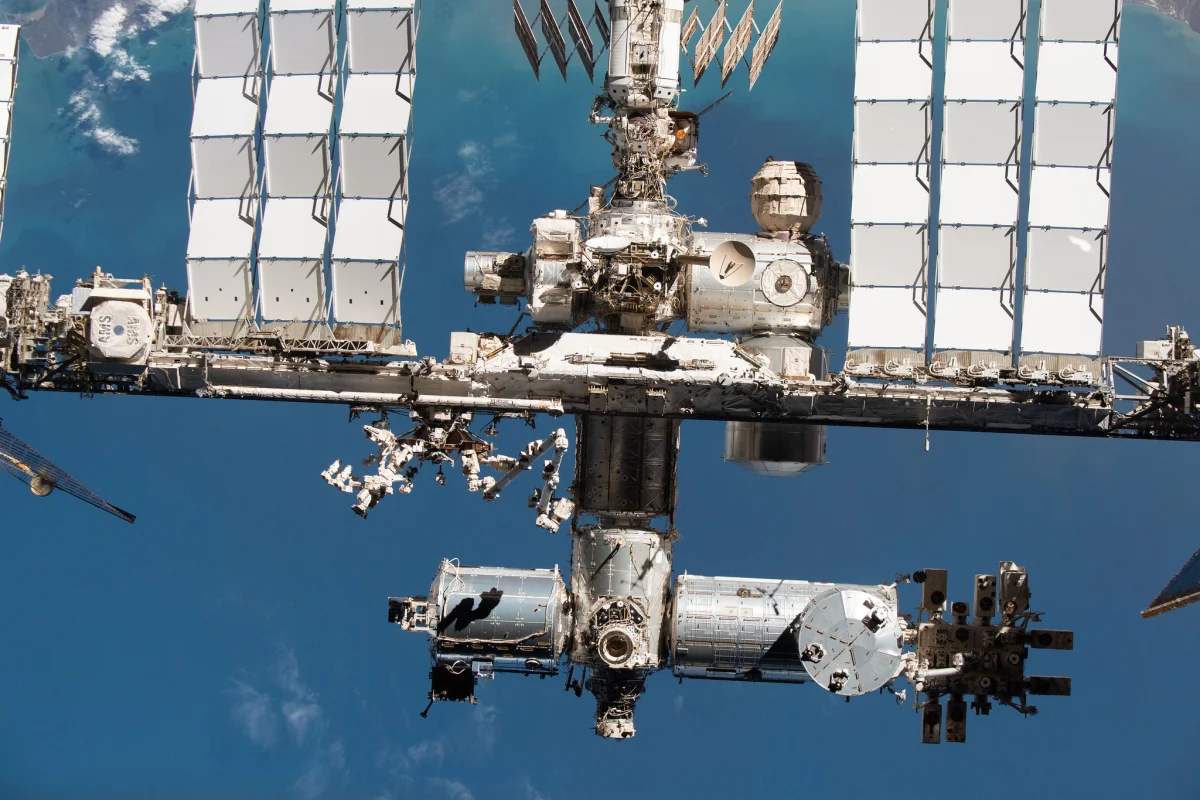
The serene vacuum of space, often perceived as an immutable frontier, once again presented an immediate challenge to its human inhabitants when five astronauts aboard the International Space Station (ISS) were directed to take refuge in a docked SpaceX Crew Dragon spacecraft. This precautionary measure, implemented on a recent Friday, arose as their Russian counterparts on the station grappled with new leaks emanating from a critical Russian service module. The incident, though brief, underscored the enduring complexities of maintaining an aging orbital outpost and highlighted the pivotal role of commercial space vehicles as essential lifeboats in the event of an emergency.
A Temporary Refuge in Orbit
The directive for the five astronauts to enter the SpaceX Crew Dragon was issued by NASA out of what the agency termed "an abundance of caution." Bethany Stevens, a NASA spokesperson, initially confirmed via social media that Russia’s space agency, Roscosmos, had detected new fissures within its service module and was initiating an "extensive repair operation." The five individuals who assumed this elevated safety posture included the four members of the SpaceX Crew-12 mission — typically comprising a mix of NASA, European Space Agency (ESA), and Roscosmos astronauts — along with an additional NASA astronaut. Their temporary relocation to the Crew Dragon, a spacecraft designed for both transport and emergency egress, exemplified the critical redundancy built into modern space operations.
However, the situation evolved rapidly. Approximately an hour after the initial alert, Stevens provided an update, indicating that Roscosmos had temporarily halted its repair efforts. The decision was made to gather and analyze "more measurements and data" before proceeding. Consequently, NASA rescinded the safe haven order, allowing the crew members to return to their regular duties aboard the orbiting laboratory. This swift de-escalation demonstrated the fluid nature of space station operations and the continuous assessment required for crew safety.
The Aging Sentinel of Space: The International Space Station
The International Space Station, a marvel of engineering and international cooperation, has served as a continuously inhabited microgravity research laboratory for over two decades. Launched in pieces beginning in 1998, with its first long-duration crew arriving in November 2000, the ISS represents the collaborative efforts of five space agencies: NASA (United States), Roscosmos (Russia), JAXA (Japan), ESA (Europe), and CSA (Canada). Its modular design, integrating various components from partner nations, has allowed for its gradual expansion and adaptation over time.
At the heart of the recent concern lies the Russian Zvezda Service Module, a crucial component launched in 2000. Zvezda provides living quarters, life support systems, electrical power distribution, and the station’s primary propulsion system. It also serves as the docking port for Soyuz and Progress spacecraft. The module’s long operational history has inevitably led to wear and tear, and it has been the site of recurring air leaks for several years. NASA has consistently monitored these cracks, acknowledging them as a "concern that NASA watches very closely," as stated by Stevens. These leaks, though generally minor and manageable, underscore the inherent challenges of maintaining complex machinery in the harsh environment of low Earth orbit.
A History of Orbital Challenges and Resilience
The ISS has faced numerous technical challenges throughout its operational life, from minor system glitches to more serious incidents requiring immediate crew intervention. Early in its history, issues with attitude control systems and computer failures tested the resilience of ground control teams and astronauts alike. More recently, the station has contended with increased orbital debris threats, requiring frequent maneuver adjustments to avoid collisions.
Air leaks, in particular, have been a recurring theme. Small, difficult-to-locate fissures have periodically emerged, prompting extensive efforts by the crew to pinpoint and seal them using various methods, including specialized sealants and even tea leaves to trace airflow. The leaks in the Russian segment have drawn particular attention, with initial reports of tiny cracks appearing as early as 2019 and subsequent discoveries in 2020. While Roscosmos has worked diligently to address these issues, their persistence highlights the challenges of aging spacecraft materials and the difficulty of conducting comprehensive repairs in orbit. These incidents serve as stark reminders of the unforgiving nature of space and the constant vigilance required to ensure crew safety.
International Cooperation Under Duress
The incident also subtly highlighted the delicate balance of international cooperation in space, especially given current geopolitical tensions. Despite strained relations between the United States and Russia on Earth, the ISS remains a remarkable testament to ongoing collaboration. The station’s operational success relies heavily on the seamless integration of systems and personnel from both nations, with each side possessing critical capabilities indispensable to the station’s functioning.
The immediate reaction to the leak – with U.S. astronauts taking refuge in a U.S.-built commercial spacecraft while Russian cosmonauts worked on their module – visually encapsulates this complex partnership. While the technical protocols prioritize crew safety above all else, the optics of such an event are not lost on observers. It underscores that, in space, the shared objective of human exploration and survival often transcends earthly political divides, even if the underlying tensions remain. The continued communication and coordinated response between NASA and Roscosmos in managing the leak demonstrate the deep-rooted operational trust built over decades, a trust that is vital for the station’s continued viability.
The Rise of Commercial Space Contingencies
The ability for astronauts to shelter in a SpaceX Crew Dragon is a relatively recent development in the history of the ISS. For many years, the Russian Soyuz spacecraft served as the sole "lifeboat" for the station, capable of carrying a limited number of crew members back to Earth in an emergency. The advent of commercial crew transportation, spearheaded by SpaceX’s Dragon capsule and Boeing’s Starliner, has introduced critical redundancy and flexibility.
SpaceX’s Crew Dragon, first launched with astronauts in 2020, was designed not only to transport crews to and from the ISS but also to remain docked as an emergency egress vehicle. This capability means that in scenarios where the station itself becomes compromised – whether by a major air leak, fire, or a significant debris strike – the crew has an immediate, alternative haven. This "safe haven" protocol significantly enhances the overall safety architecture of the ISS, providing multiple escape routes and temporary shelters for all crew members. The presence of multiple docked spacecraft from different providers ensures that even if one vehicle or segment of the station is affected, other options are available. This commercialization of crew transport has fundamentally reshaped risk management in low Earth orbit.
Looking Beyond the ISS: Commercial Futures
The incident occurred against a backdrop of ongoing discussions about the future of the International Space Station itself. With its operational life approaching its planned end date in 2030, NASA is actively pursuing a strategy to transition from a government-operated facility to commercially owned and operated space stations. The agency’s leadership has articulated a vision where private industry will develop and manage successor platforms in low Earth orbit, freeing up NASA resources to focus on deep-space exploration missions to the Moon and Mars.
This shift represents a significant paradigm change in human spaceflight. By fostering a commercial ecosystem, NASA aims to reduce operational costs, stimulate innovation, and expand access to space for a wider array of users, including private companies, researchers, and even space tourists. Companies like Axiom Space, Blue Origin, and Northrop Grumman are already developing concepts for commercial modules and free-flying stations. The ability of a commercial vehicle like the SpaceX Dragon to serve as a critical safety asset today offers a compelling preview of this future, where privately built and operated infrastructure will be central to maintaining a human presence in Earth orbit. The temporary sheltering in Dragon demonstrates the inherent resilience and adaptability that commercial solutions can bring to complex space operations.
Implications for Future Space Exploration
While the immediate crisis was averted, the incident serves as a salient reminder of the challenges inherent in long-duration human spaceflight. As humanity sets its sights on returning to the Moon and eventually venturing to Mars, the lessons learned from maintaining the ISS – particularly regarding structural integrity, life support systems, and contingency planning – become even more critical. Future deep-space habitats and vehicles will need to be incredibly robust, self-sufficient, and equipped with comprehensive emergency protocols.
The reliance on international cooperation, while challenging, remains indispensable for ambitious undertakings beyond Earth orbit. The sharing of resources, expertise, and responsibilities, as demonstrated daily on the ISS, will be foundational to future lunar bases and Martian expeditions. Furthermore, the growing role of commercial entities, providing not just transportation but also critical infrastructure and safety nets, signals a diversified and more resilient approach to space exploration. The brief moments of heightened alert on the ISS highlight the intricate dance between human ingenuity, technological advancement, and the enduring risks of the cosmos, reminding us that every step further into space demands meticulous planning and an unwavering commitment to safety.






 Azin Asro