Amir Mahmud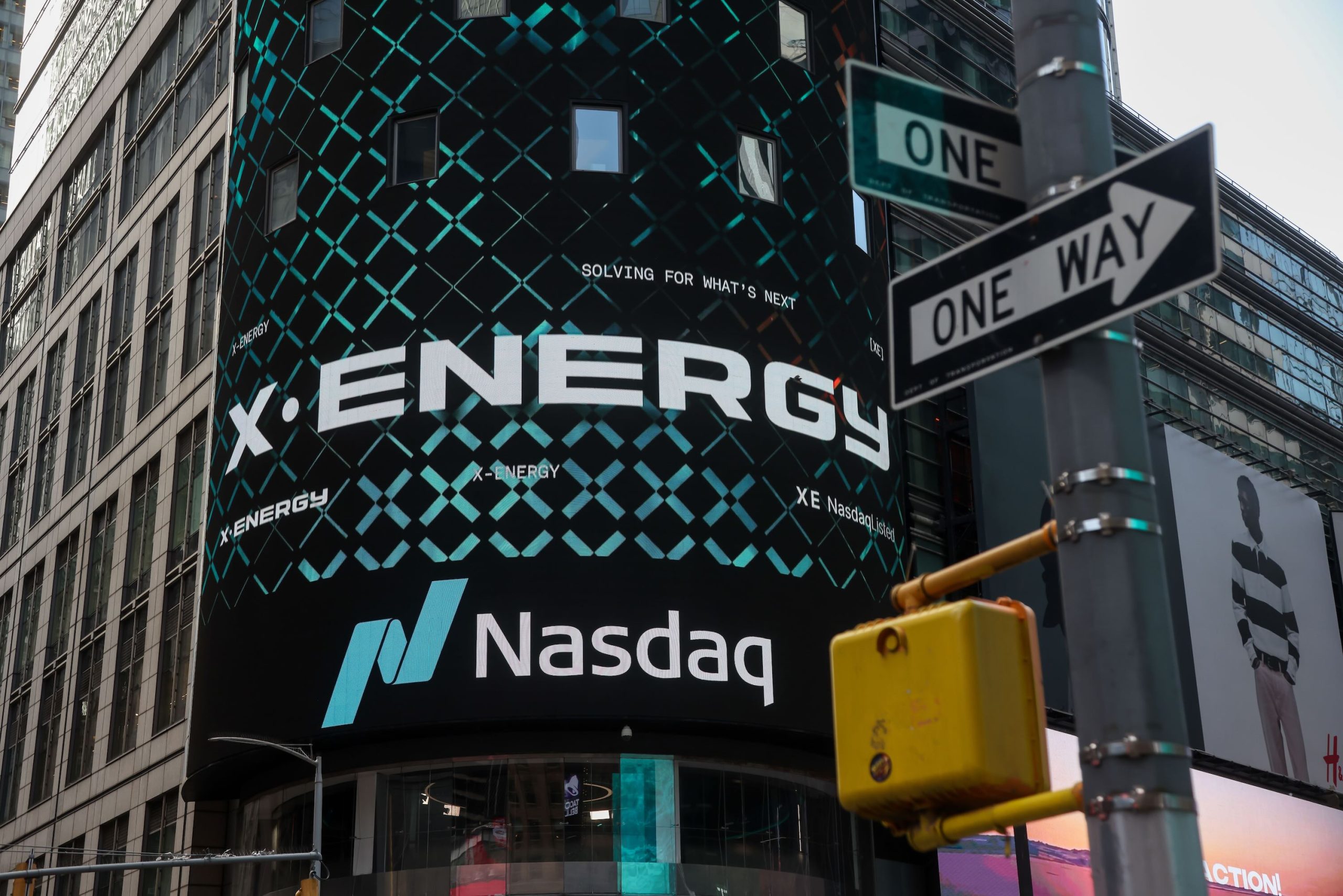
X-energy, a prominent developer of advanced nuclear reactors, experienced a remarkable debut on the Nasdaq exchange today, with its stock soaring by an impressive 27%. Shares commenced trading at $30.11 before settling at $29.20 by market close, significantly surpassing their initial public offering price of $23 per share. This robust performance, which saw the company valued at $11.5 billion at closing, underscores a dramatic shift in investor sentiment towards nuclear power, a sector that until recently faced considerable skepticism. The initial offering price itself had been upwardly revised from an earlier target range of $16 to $19, reflecting burgeoning investor confidence even before trading began.
From Stagnation to Revival: A Brief History of Nuclear Power
The enthusiastic reception for X-energy contrasts sharply with the nuclear industry’s narrative just five years ago. For decades, the sector has grappled with a legacy of monumental project delays and staggering cost overruns, challenges that cast a long shadow over its potential. The completion of two new power plants in Georgia, for instance, one in the late 2010s and another in the early 2020s, served as a stark reminder of these difficulties, collectively costing an estimated $30 billion. These projects epitomized the hurdles of building large-scale, conventional nuclear facilities, which often involved bespoke construction, extensive on-site labor, and complex regulatory approval processes stretching over many years, sometimes decades.
The history of nuclear power is one of immense promise often overshadowed by significant setbacks. Following its conceptualization in the mid-20th century, nuclear energy was initially heralded as a clean, abundant, and "too cheap to meter" power source, embodying the "atoms for peace" vision. The 1960s and 70s saw a rapid expansion of nuclear capacity, particularly in the United States and Europe. However, this period of optimism began to wane with a series of high-profile incidents. The partial meltdown at Three Mile Island in Pennsylvania in 1979, while causing no fatalities, severely damaged public trust and led to a dramatic tightening of safety regulations and a de facto moratorium on new plant construction in the U.S. This was followed by the catastrophic Chernobyl disaster in Ukraine in 1986, which amplified global fears about nuclear safety and radiation, further stifling the industry’s growth.
For many years, the industry entered a "nuclear winter," characterized by cancellations of new projects, early retirements of existing plants, and a general lack of investment. The Fukushima Daiichi accident in Japan in 2011, triggered by a massive earthquake and tsunami, dealt another severe blow, prompting several countries to reconsider or even abandon their nuclear programs. During this period, nuclear startups struggled to gain traction, with at least one prominent company facing significant regulatory hurdles in the early 2020s, sparking fears that the industry had yet to fully overcome its historical challenges. This long period of stagnation created an environment where investment in nuclear technology was seen as high-risk and speculative, a perception that X-energy’s IPO success now seeks to dismantle.
The Promise of Small Modular Reactors
The renewed optimism surrounding X-energy and its peers is largely attributed to the emergence of Small Modular Reactors (SMRs) and other advanced reactor designs. Unlike the gargantuan, multi-gigawatt conventional reactors that dominated the 20th century, SMRs are designed to be significantly smaller, typically generating less than 300 megawatts of electricity. Their defining characteristic, however, is modularity: components can be factory-fabricated, transported to a site, and assembled, drastically reducing on-site construction time and complexity. This approach aims to mitigate the very issues that plagued past projects—cost overruns, construction delays, and the financial risks associated with massive, one-off endeavors.
X-energy’s flagship design, the Xe-100, is an 80-megawatt electric (MWe) high-temperature gas-cooled reactor. It utilizes Tristructural-isotropic (TRISO) fuel, a type of advanced nuclear fuel characterized by multiple layers of ceramic materials that encase uranium particles. This innovative fuel design offers inherent safety advantages, including extreme resistance to meltdown even under severe accident conditions, and a higher capacity for heat retention. The modular nature of the Xe-100 means that multiple units can be deployed as a "fleet" to meet larger power demands, offering scalability and redundancy that large single reactors cannot. This flexibility is particularly appealing for diverse applications, from industrial process heat to electricity generation for remote communities or, critically, energy-intensive data centers.
The concept of SMRs addresses several critical limitations of traditional nuclear power. By moving much of the construction to a controlled factory environment, quality control can be enhanced, construction schedules can be streamlined, and costs can potentially be standardized and reduced through economies of series production. Furthermore, their smaller footprint allows for deployment in a wider range of locations, including industrial sites or existing power plant sites, minimizing the need for new infrastructure development. While regulatory frameworks for SMRs are still evolving, agencies like the U.S. Nuclear Regulatory Commission (NRC) are actively adapting their processes to accommodate these new designs, signaling a growing acceptance and understanding of their unique characteristics.
Powering the AI Revolution: Data Centers’ Insatiable Demand
Much of the recent momentum behind nuclear energy and companies like X-energy can be directly traced to the explosive growth of artificial intelligence (AI) and the corresponding boom in data center construction. The computational demands of AI, particularly for training large language models and performing complex inference tasks, are unprecedented. These operations require immense amounts of electricity, not only for the graphics processing units (GPUs) and other computing hardware but also for the extensive cooling systems necessary to prevent overheating.
While renewable sources like solar and wind, alongside battery storage and natural gas, have been instrumental in meeting current energy needs, tech companies are increasingly seeking to diversify their power portfolios. The intermittent nature of many renewables, coupled with the variability of natural gas prices and the strain on existing grid infrastructure, has highlighted the need for reliable, always-on, carbon-free power sources. Nuclear energy, with its high capacity factor and continuous baseload generation capabilities, presents a compelling solution. The compact form factor of SMRs, in particular, is seen as an ideal fit for the sprawling campuses of modern data centers, allowing for localized power generation that reduces transmission losses and enhances energy security.
Data center operators prioritize redundancy and stability above almost all else. A single power outage, even a brief one, can result in significant financial losses and service disruptions. The ability to power a large data center campus with a fleet of modular nuclear reactors offers unparalleled levels of reliability. If one reactor unit is taken offline for maintenance or refueling, others can continue operating, ensuring an uninterrupted power supply. This distributed, resilient energy architecture is a significant draw for hyperscale cloud providers and other tech giants, who are looking decades into the future to secure their energy supply in a sustainable and cost-effective manner.
X-energy’s Innovative Design and Strategic Partnerships
X-energy’s strategy is built on leveraging its advanced reactor technology and securing key partnerships. The company’s Xe-100 reactor is not just smaller; it represents a fundamental shift in nuclear design philosophy, prioritizing safety through passive systems and robust fuel technology. This approach aims to reduce operational complexity and enhance public acceptance.
Critically, X-energy has already forged significant alliances that validate its market potential. Chemical manufacturer Dow has committed to receiving X-energy’s first power plant. This partnership is particularly strategic because industrial processes, such as those in chemical manufacturing, often require both electricity and high-temperature process heat. The Xe-100, being a high-temperature gas-cooled reactor, is uniquely suited to deliver both efficiently, offering a decarbonization pathway for heavy industries that are notoriously difficult to electrify.
Furthermore, e-commerce and cloud computing giant Amazon has signaled its intent to purchase up to 5 gigawatts (GW) worth of capacity from X-energy over the next decade or so. This substantial off-take agreement from one of the world’s largest data center operators is a powerful endorsement of X-energy’s technology and its potential to meet the colossal energy demands of the digital economy. While construction is underway at X-energy’s fuel fabrication facility, the actual construction of a power plant has yet to commence. However, these foundational agreements and the ongoing development of its supply chain indicate a strong trajectory for the company.
Navigating Economic Realities and Regulatory Pathways
The journey for advanced nuclear developers like X-energy is not without its challenges. While investor optimism is high, the industry still faces hurdles related to cost competitiveness, regulatory approval, and supply chain development. Nuclear power, despite its reliability, has historically been one of the more expensive sources of electricity in the U.S., particularly when accounting for upfront capital costs and lengthy construction periods. However, with the rising urgency of climate change and the escalating demand for always-on clean power, the economic calculus is shifting. Government incentives, such as those provided by the U.S. Inflation Reduction Act (IRA), which offers significant tax credits for clean energy technologies including advanced nuclear, are crucial in making these projects financially viable.
The regulatory environment remains complex. Licensing new reactor designs, even SMRs, is an intensive process, and the industry needs a clear, predictable, and efficient pathway to deploy these technologies at scale. Standardization of SMR designs is key to streamlining this process and enabling serial production. The development of a robust supply chain for advanced nuclear components and specialized fuels, such as TRISO, is also critical to ensure timely and cost-effective deployment.
The Broader Impact and Future Outlook
X-energy’s successful IPO represents more than just a financial milestone for a single company; it signifies a potential turning point for the entire nuclear energy sector. It suggests that investors believe advanced nuclear technology, particularly SMRs, can finally break free from the decades-long malaise that has characterized the industry. This shift is driven by a confluence of factors: the urgent need for decarbonization, the escalating demand for reliable baseload power from energy-hungry sectors like AI, and technological innovations that promise safer, more cost-effective, and more flexible reactor designs.
The broader implications extend to energy independence, job creation, and environmental sustainability. By providing a carbon-free, dispatchable power source, advanced nuclear can play a pivotal role in achieving global climate goals while enhancing grid stability and resilience. However, the path forward requires continued innovation, effective regulatory frameworks, robust public engagement to address lingering safety and waste concerns, and sustained investment to scale up manufacturing and deployment.
While X-energy has yet to demonstrate its reactors in operation, the market’s response to its public offering is a powerful testament to the confidence that a new generation of nuclear technology can indeed deliver on its long-held promise. The coming years will be crucial in determining whether this optimism translates into widespread deployment, fundamentally reshaping the global energy landscape and powering the next era of technological advancement.