Amir Mahmud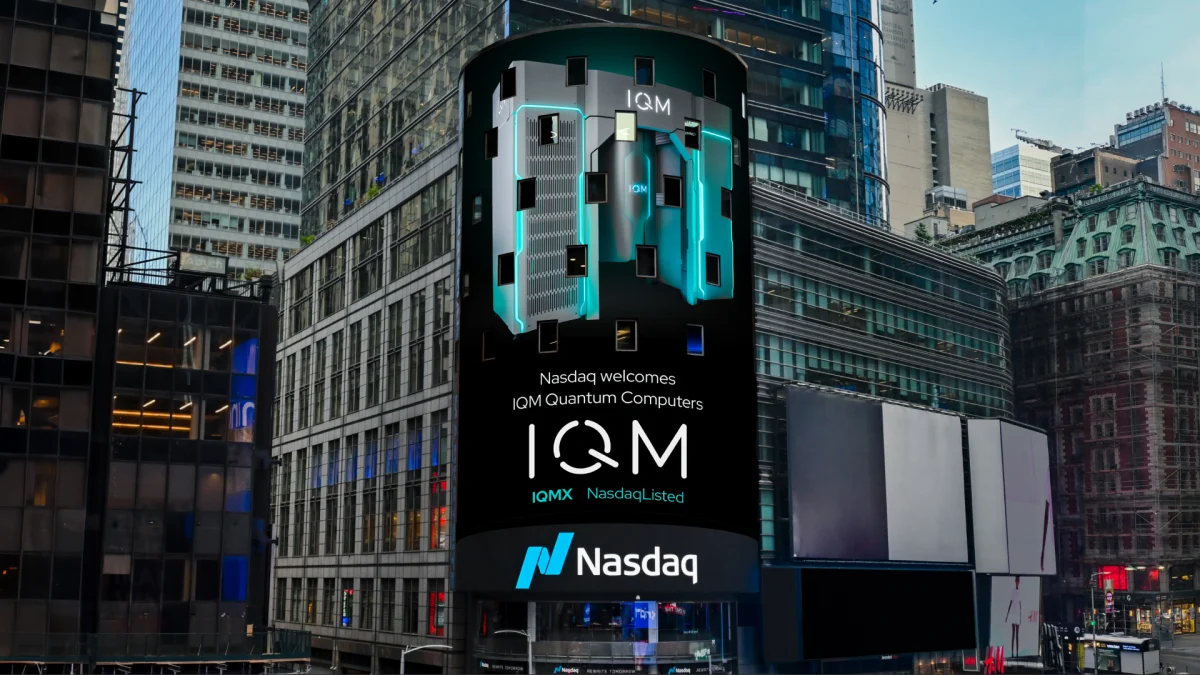
Finland’s IQM Quantum Computers, a prominent full-stack quantum technology firm, marked a significant milestone by becoming the first European quantum computing company to list on a major U.S. exchange, the Nasdaq, through a Special Purpose Acquisition Company (SPAC) merger. This highly anticipated public offering, which valued the company at approximately $1.9 billion, however, was met with a notably restrained reception from the market, with share prices frequently trading below their initial public offering (IPO) price throughout the first day. This lukewarm investor sentiment was, in part, attributed to a frank disclosure within IQM’s own prospectus, acknowledging the inherent uncertainty surrounding the technology’s future: "large-scale commercial traction of quantum computing technology may never occur."
The Mechanics of a Public Debut: SPACs and Investor Sentiment
IQM’s decision to go public via a SPAC, merging with RAAQ, a blank check company, places its market entry within a broader trend that has seen fluctuating investor enthusiasm. Special Purpose Acquisition Companies gained immense popularity during a period of abundant capital and high market liquidity, offering a faster and often less stringent route to public markets compared to traditional IPOs. They allowed private companies, particularly those in nascent or high-growth sectors, to bypass some of the more rigorous regulatory hurdles and lengthy roadshow processes typically associated with direct listings. However, the post-merger performance of many SPACs has been mixed, leading to increased scrutiny and skepticism from both institutional and retail investors. Concerns often revolve around potential dilution for existing shareholders, the quality of due diligence conducted by the SPAC sponsor, and the sometimes speculative valuations placed on companies that are still far from profitability or widespread market adoption. For IQM, a company operating at the bleeding edge of deep technology, the SPAC route offered a strategic pathway to access significant capital and enhance its global profile, yet it also exposed the firm to the prevailing market’s cautious appraisal of such vehicles.
Quantum’s Existential Question: The Path to "Advantage"
The candid admission in IQM’s prospectus, while seemingly counterintuitive for a company seeking public investment, is a standard and necessary legal disclosure for firms operating in highly speculative and unproven technological domains. It underscores the fundamental challenge facing the entire quantum computing industry: the elusive "quantum advantage," also referred to as "quantum supremacy." This critical inflection point signifies when quantum computers can demonstrably outperform even the most powerful classical supercomputers in solving certain complex problems that are intractable for conventional machines. Until this advantage is widely achieved and proven across a broad spectrum of real-world applications, the commercial viability and mass market adoption of quantum technology remain hypothetical. The industry is currently in the "noisy intermediate-scale quantum" (NISQ) era, where quantum processors have a limited number of qubits and are prone to errors, making them suitable primarily for research, experimentation, and specific, highly specialized computational tasks rather than broad commercial deployment. The journey from NISQ devices to fault-tolerant quantum computers capable of sustained, error-corrected operations is fraught with immense technical and engineering hurdles, including mitigating quantum decoherence, improving qubit stability, and developing robust error correction protocols.
Current Capabilities and Nascent Market Adoption
Despite the inherent uncertainties, the quantum computing sector, including IQM, is actively engaging customers and demonstrating the current capabilities of the technology. IQM, unique in its offering of both physical quantum computers and cloud-based access to its systems, has seen its customer base grow from eight in 2024 to 22 in 2025. This expansion includes prominent research institutions such as the VTT Technical Research Centre of Finland and the Leibniz Supercomputing Centre in Germany, alongside two recent private sector clients. These early adopters are leveraging quantum technology for highly specialized tasks like advanced simulations and complex optimization problems. For instance, quantum simulations hold immense promise in materials science for discovering new compounds, in pharmaceutical research for accelerating drug discovery by modeling molecular interactions, and in financial services for optimizing portfolios or risk assessment. Optimization algorithms powered by quantum processors could revolutionize logistics, supply chain management, and even artificial intelligence. While these applications represent significant advancements, they are still largely experimental and indicative of the technology’s potential rather than its widespread commercial utility. The modest number of customers, even with impressive growth, reinforces the notion that true demand will not scale dramatically until quantum advantage becomes a more tangible and accessible reality, unlocking transformative use cases across biotech, fintech, and potentially upending current cryptographic standards.
The Global Quantum Race: Geopolitical Stakes and Government Backing
The ambitious pursuit of quantum computing is not merely an academic or corporate endeavor; it has become a critical geopolitical imperative, often described as a "quantum arms race" among major global powers. The United States, China, and the European Union are all investing heavily in quantum research and development, recognizing its potential to reshape national security, economic competitiveness, and technological leadership in the 21st century. The prospect of quantum computers breaking current encryption methods poses a significant threat to global data security, prompting a parallel race in post-quantum cryptography. Conversely, the ability to design new materials, develop advanced AI, or create unbreakable communication networks offers unparalleled strategic advantages.
In the U.S., President Trump’s executive orders to accelerate quantum development have injected substantial momentum into the field. These orders, building upon legislative frameworks like the National Quantum Initiative Act, have translated into significant funding and strategic initiatives. The U.S. Department of Energy (DOE), for example, has committed to deploying "the world’s first fault-tolerant, scientifically relevant quantum computer" by 2028—an extremely ambitious target that underscores the urgency felt at the highest levels of government. This goal, while challenging, reflects a concerted effort to push the boundaries of quantum engineering and accelerate the transition from theoretical promise to practical application. IQM stands to directly benefit from these national initiatives, having already established a quantum technology center in Maryland and deployed one of its quantum computers at the Oak Ridge National Laboratory, a cornerstone of the DOE’s research infrastructure. Similar strategic announcements and substantial investments have been made by other nations, including France, Germany, and the United Kingdom, all vying for a leading position in this transformative technological domain. These government-backed programs often foster public-private partnerships, bringing together academic institutions, national laboratories, and private companies to pool resources, expertise, and accelerate innovation.
IQM’s European Identity and Transatlantic Strategy
Despite its growing footprint in the United States, IQM is deliberately maintaining its European roots and core identity. Unlike some European tech unicorns that shift their primary operational focus or even headquarters across the Atlantic to access larger capital markets and talent pools, IQM is committed to a dual-market strategy. In parallel with its Nasdaq listing in the U.S., where many of its quantum peers are traded, the company is also making its debut on Nasdaq Helsinki. This dual listing is a strategic move, allowing IQM to tap into the deep liquidity of American capital markets while retaining strong ties to its European investor base, including vital support from entities like Tesi, Finland’s sovereign wealth fund.
IQM’s story is deeply intertwined with Finland’s burgeoning technology ecosystem. Founded in 2018 as a spinout from Aalto University in Espoo, a vibrant tech and quantum hub near Helsinki, the company still maintains two-thirds of its staff in this region. The remaining hundred of its 420-person team are based in Munich, Germany, with others spread across various global locations to support its expansive deployment roadmap. This strategic distribution of talent and resources highlights a broader European ambition to cultivate indigenous quantum capabilities, fostering digital sovereignty and economic independence in a critical technological sector. The company’s European origins and its ability to operate effectively outside the continent were key factors that appealed to RAAQ, the SPAC that facilitated its public offering. As noted by the RAAQ board, over €200 million in public support for IQM from European sovereign states and companies has underscored its emergence as a prominent quantum computing force within Europe, while its international deployments demonstrate global operational prowess. This blend of strong domestic backing and international reach positions IQM as a significant player in the global quantum landscape, even as other European competitors, such as French firm Pasqal, also announce plans for U.S. SPAC listings, intensifying the race for market presence and capital.
The Long Horizon: Investment, Innovation, and Uncharted Territory
The public listing and associated capital raise represent a crucial step for IQM, generating approximately €198 million (or $226 million) in new liquidity after costs. This influx of capital builds upon substantial prior investments, including a $300 million funding round just the previous September. Such significant capital infusion is essential for a deep tech company like IQM, which requires immense, sustained investment in research and development, advanced manufacturing facilities, and a highly specialized workforce to tackle the formidable engineering challenges of quantum computing. The company’s CEO and co-founder, Jan Goetz, expressed pride in being the first European quantum company to list in the U.S., acknowledging the symbolic importance of pioneering in a nascent field while emphasizing that the ultimate goal is long-term success.
The journey ahead for IQM and the entire quantum computing industry remains characterized by a delicate balance of immense promise and profound uncertainty. While investor confidence, fueled by ambitious government initiatives and the allure of transformative applications, continues to drive funding into the sector, the fundamental question of when, and even if, quantum advantage will be achieved on a commercially relevant scale persists. Companies like IQM are not merely building machines; they are charting a course through uncharted technological territory, pushing the boundaries of physics and engineering. Their strategic positioning, ability to attract talent, and sustained investment will be critical factors in determining who ultimately succeeds in harnessing the revolutionary power of quantum mechanics for the benefit of humanity. The current era is one of intense innovation, strategic competition, and a patient, yet persistent, pursuit of a future that promises to redefine the very limits of computation.