Amir Mahmud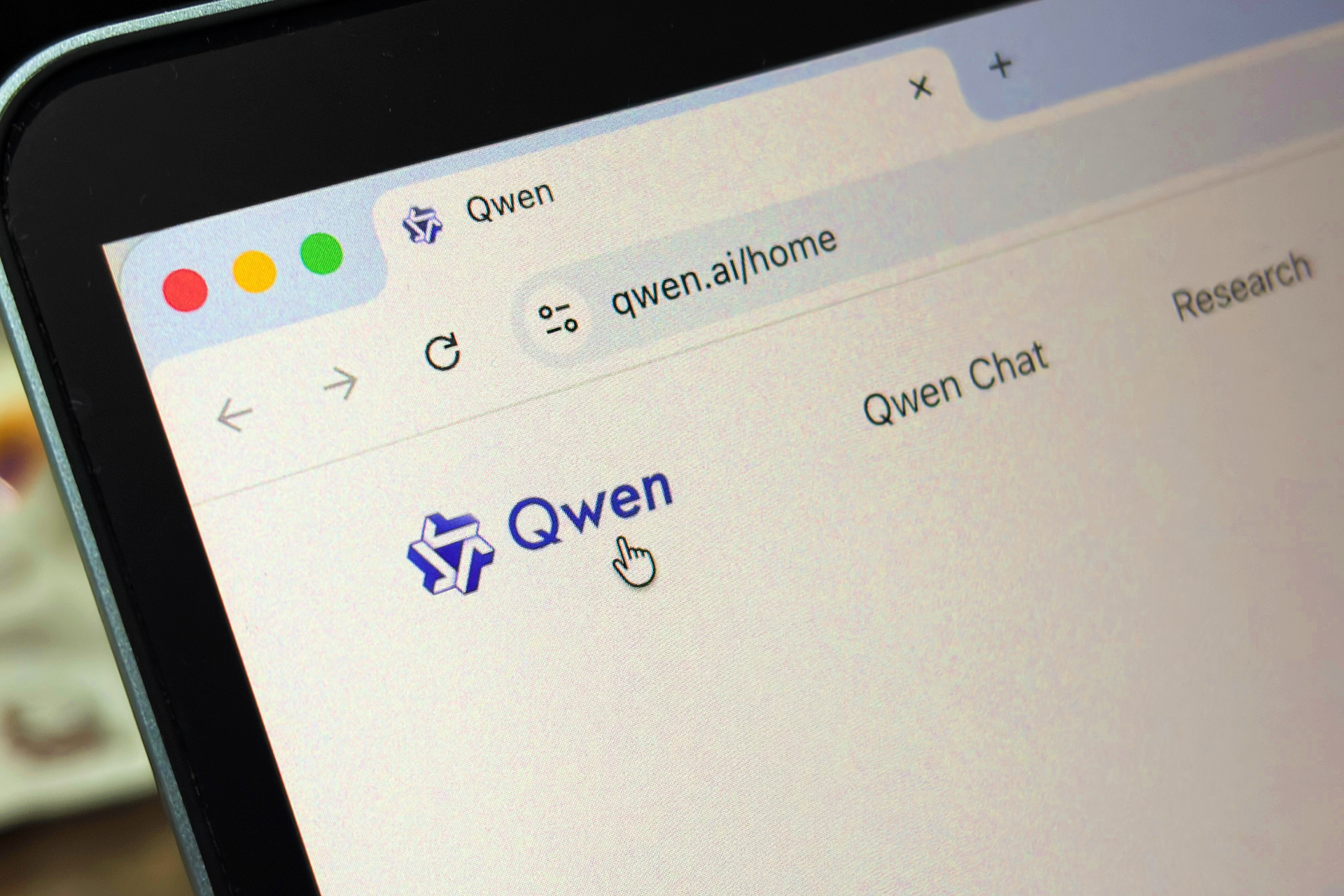
The artificial intelligence division at Chinese e-commerce titan Alibaba Group has experienced a significant leadership change, with Junyang Lin, a pivotal technical architect behind the company’s prominent Qwen AI models, announcing his exit. This departure unfolds just a day after Alibaba unveiled its latest iteration of open-weight small models, Qwen 3.5, signaling a crucial moment for the tech giant’s ambitious AI initiatives and raising questions about stability within its cutting-edge research teams.
Lin’s announcement, made via a post on X (formerly Twitter) on Tuesday, merely stated he was "stepping down" from the project, offering no further details regarding the circumstances or his future plans. His tenure at Alibaba commenced in July 2019, and he subsequently integrated into the nascent Qwen team in April 2023, according to his professional profile. The timing of this high-profile exit has generated considerable discussion across the global AI community, underscoring the fierce competition for talent and the rapid pace of development characterizing the generative AI landscape.
Alibaba’s Strategic Dive into AI and the Rise of Qwen
Alibaba’s foray into artificial intelligence is not a recent development but rather a long-term strategic commitment rooted in its extensive digital ecosystem. For years, the company has invested heavily in AI research through its DAMO Academy (Discovery, Adventure, Momentum, Outlook), established in 2017. This research arm has been tasked with exploring disruptive technologies, including machine learning, computer vision, natural language processing, and quantum computing, aiming to integrate these advancements across Alibaba’s vast array of services, from e-commerce and cloud computing to logistics and fintech.
The Qwen project, which translates to "Tongyi Qianwen" (meaning "truth from a thousand questions"), emerged as Alibaba’s flagship large language model (LLM) initiative, designed to rival leading models from international players like OpenAI, Google, and Anthropic. Introduced in April 2023, the Qwen family of models quickly garnered attention for its capabilities. A critical strategic decision by Alibaba was to adopt an "open-weight" approach, making the models’ parameters publicly accessible. This move, following regulatory clearance in September 2023, positioned Qwen as a key player in China’s drive to democratize AI development and foster an ecosystem of innovation.
The open-weight strategy carries significant implications. By allowing developers worldwide to download, modify, and deploy Qwen models, Alibaba not only accelerates research and application development but also cultivates a broader community of users and contributors. This contrasts with proprietary "closed-source" models, where access is tightly controlled. For Alibaba, it’s a dual strategy: contributing to the global AI commons while simultaneously showcasing its technological prowess and expanding the reach of its cloud computing services, which offer infrastructure for running these models.
The Launch of Qwen 3.5 Small Models
The backdrop to Lin’s departure was the highly anticipated release of the Qwen 3.5 Small Model series. Announced just days prior, these new models represent a strategic pivot towards more efficient and specialized AI. The series comprises four distinct models, ranging in size from 0.8 billion to 9 billion parameters. This "small model" paradigm is crucial for expanding AI applications beyond large data centers.
These compact models are explicitly designed for native multimodal capabilities and optimized for a diverse range of applications. Their smaller footprint makes them ideal for on-device AI deployment, enabling sophisticated AI functions directly on smartphones, smart home devices, and IoT gadgets without constant reliance on cloud connectivity. Furthermore, they are tailored for lightweight agents, capable of performing specific tasks with high efficiency and lower computational demands. This focus on "intelligence density," as highlighted by technologist Elon Musk in a public comment on X, underscores the industry’s shift towards making powerful AI more accessible and ubiquitous. Small models are often faster, cheaper to run, and can be fine-tuned for niche applications, potentially opening new markets and use cases where larger LLMs are impractical.
The success of these smaller, specialized models is vital for Alibaba, allowing it to embed AI deeper into its product ecosystem and offer tailored solutions to enterprises. They represent a tangible outcome of the intense research and development efforts, positioning Qwen as a versatile toolkit for developers globally.
The Intense Global Race for AI Talent
Junyang Lin’s unexpected exit serves as a stark reminder of the volatile and hyper-competitive nature of the global AI talent market. The demand for skilled AI researchers, engineers, and technical leaders far outstrips supply, creating an environment where top talent is highly sought after and mobility is common. Companies worldwide are locked in an arms race to recruit and retain the brightest minds capable of pushing the boundaries of machine intelligence.
This competition is particularly acute in the generative AI space, which has seen unprecedented investment and rapid innovation following breakthroughs like OpenAI’s ChatGPT. The talent pool for developing and deploying sophisticated large language models is relatively small, making individuals with Lin’s experience and expertise incredibly valuable. Researchers often move between major tech companies, startups, and academic institutions, driven by factors such as compensation, research freedom, access to computational resources, and the opportunity to work on groundbreaking projects.
For Chinese tech giants like Alibaba, the challenge is twofold: competing with global powerhouses for international talent and retaining top domestic talent who might be lured by opportunities abroad or by burgeoning local startups. The strategic importance of AI to China’s national technological ambitions further intensifies this pressure, making talent retention a critical geopolitical and economic concern. The "brain drain" phenomenon, where highly skilled professionals leave for perceived better opportunities, is a constant worry for any nation striving for technological leadership.
Industry Reactions and Unanswered Questions
The news of Lin’s departure elicited a swift and unusually strong wave of reactions from his colleagues and industry partners, highlighting his central role in the Qwen project’s success. Wenting Zhao, a research scientist on the Qwen team, characterized Lin’s exit as "the end of an era," expressing gratitude for his contributions to driving open-source AI and engineering advancements within the project. Yuchen Jin, the Chief Technology Officer of AI infrastructure startup Hyperbolic, recounted late-night collaborations with Lin during model launches, crediting him with fostering connections between Qwen and the global developer community. Tiezhen Wang, who heads the APAC ecosystem at Hugging Face, unequivocally labeled Lin’s departure an "immense loss" for the Qwen initiative.
These sentiments underscore not just Lin’s technical prowess but also his leadership in community engagement and project direction. The outpouring of appreciation suggests that his role extended beyond mere code development to strategic vision and external relations.
While Lin himself offered no explanation, a post from Chen Cheng, another contributor to the Qwen project, added a layer of intrigue. Cheng expressed being "heartbroken" and appeared to address Lin directly, stating, "I know leaving wasn’t your choice." This comment, made hours after the team had reportedly been working together on model launches, suggests that the departure may not have been entirely voluntary or a result of Lin seeking new opportunities. Such remarks, though not official statements, fuel speculation about potential internal dynamics, strategic shifts, or other unforeseen circumstances within Alibaba’s AI division.
Further adding to the uncertainty, Binyuan Hui, another member of the Qwen team, updated his X profile to reflect "formerly MTS @Alibaba_Qwen." It remains unclear whether Hui has also left the company or when this status change occurred, but it could hint at a broader restructuring or a more significant talent outflow. Alibaba Group has yet to issue an official statement addressing the reasons behind Lin’s departure or the current leadership structure of the Qwen team, leaving many questions unanswered for stakeholders and the wider AI community.
Potential Impact and Future Outlook for Alibaba AI
The exit of a key technical leader, especially one so deeply embedded in a flagship project, can have multifaceted impacts. In the immediate term, it could lead to concerns about team morale and continuity, particularly if the departure was unexpected or perceived as involuntary. Maintaining momentum in a fast-evolving field like generative AI requires stable leadership and a cohesive vision.
From a market perspective, a high-profile departure might briefly affect investor confidence or public perception of Alibaba’s AI stability, even if the company’s broader AI strategy remains robust. However, large organizations like Alibaba typically have deep benches of talent and established succession plans, allowing them to absorb such changes. The challenge will be to ensure a smooth transition and communicate a clear path forward for the Qwen project.
Alibaba’s strategic imperative in AI remains undiminished. The company is committed to leveraging AI to enhance its core businesses and expand into new frontiers. The Qwen models are central to this vision, powering internal services and offering competitive cloud AI solutions to external clients. The ability to attract and retain top-tier talent will be crucial for Alibaba to maintain its competitive edge against global rivals and contribute meaningfully to China’s technological sovereignty goals. The incident highlights the delicate balance between fostering innovation, managing intense internal and external pressures, and navigating the highly fluid landscape of top-tier AI talent. As the AI race intensifies, how Alibaba manages this transition and continues to advance its Qwen platform will be closely watched.