Amir Mahmud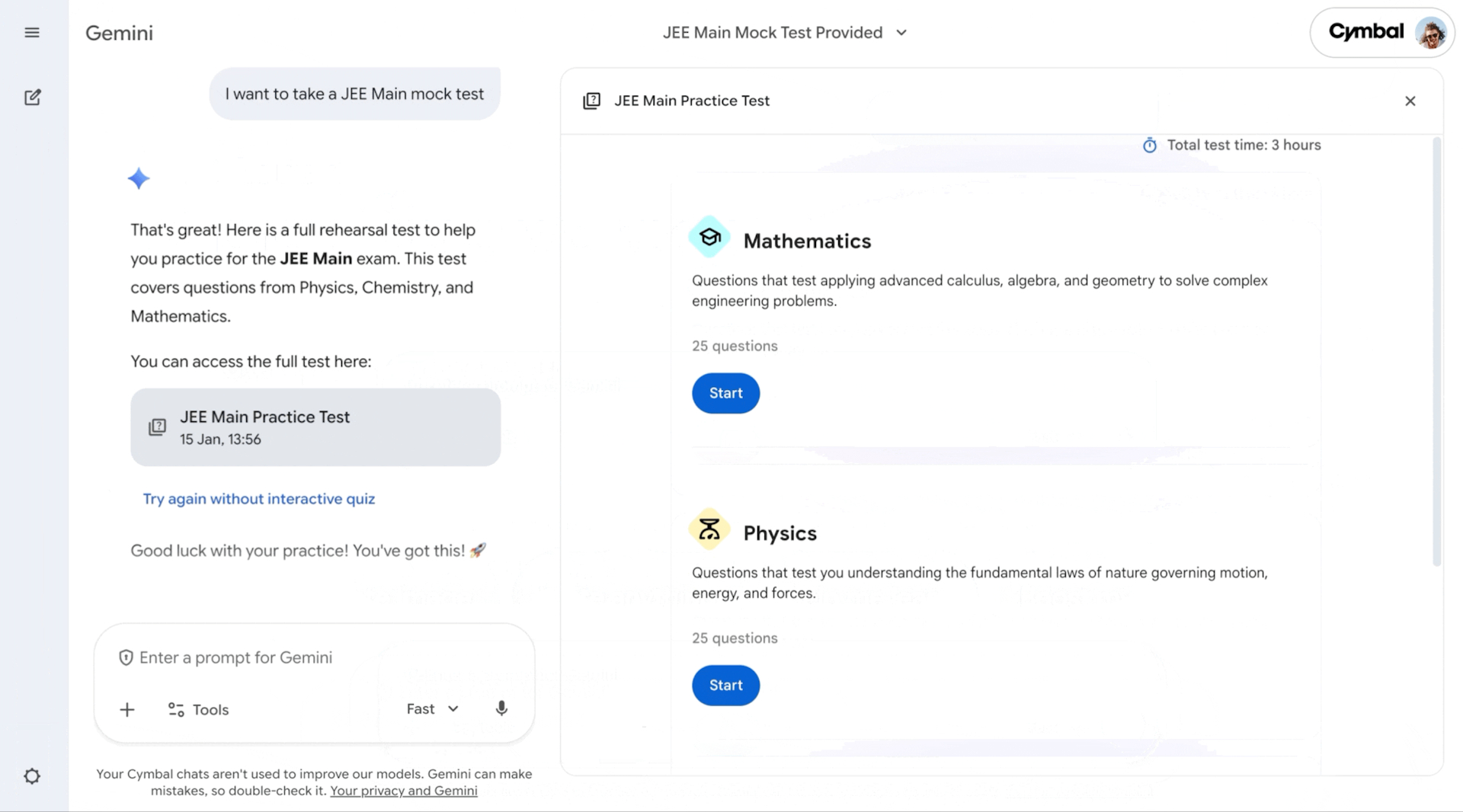
As artificial intelligence rapidly integrates into academic environments worldwide, a prominent technology giant is discovering that the most profound insights into scaling AI for education are not originating from the innovation hubs of Silicon Valley, but rather from the diverse and expansive school systems of India. This dynamic landscape is serving as an unparalleled proving ground, offering crucial lessons that are redefining how AI educational tools can be effectively implemented on a massive scale.
India: A Strategic Testbed for Educational AI
The subcontinent has emerged as a pivotal region for Google’s educational AI initiatives, particularly amidst an escalating rivalry with competitors like OpenAI and Microsoft in the burgeoning field of generative AI. With a digital footprint that now encompasses over a billion internet users, India stands out as the country with the highest global engagement with Gemini, Google’s multimodal AI, specifically for learning purposes. This remarkable adoption rate occurs within an educational framework characterized by decentralized, state-level curricula, significant governmental oversight, and widely varying access to digital devices and reliable internet connectivity.
Chris Phillips, Google’s Vice President and General Manager for Education, highlighted these observations during the company’s recent AI for Learning Forum in New Delhi. The event brought together key industry stakeholders, including administrators from K-12 institutions and high-ranking education officials, providing a vital platform to gather direct feedback on the practical application of AI tools within classrooms across the nation.
The Immense Scale and Inherent Diversity of India’s Education System
The sheer magnitude of India’s education sector intrinsically explains its critical role as a testing ground for AI. The nation’s school system alone caters to approximately 247 million students spread across nearly 1.47 million schools, supported by a vast network of 10.1 million teachers, according to the Indian government’s Economic Survey 2025–26. Beyond primary and secondary schooling, India’s higher education system ranks among the largest globally, enrolling over 43 million students in the 2021–22 academic year—a substantial 26.5% increase from 2014–15. This intricate web of institutions presents unique challenges for the seamless introduction of advanced AI tools, given its vast, decentralized nature and uneven distribution of resources.
Historically, India has grappled with the monumental task of providing universal education since gaining independence. The push for literacy and skill development has always been a national priority, often navigating complex socio-economic realities, linguistic diversity, and geographical disparities. Over decades, policies have aimed at both expanding access and improving quality, culminating in the recent National Education Policy (NEP), which explicitly champions the integration of technology and digital learning as foundational pillars for future pedagogical approaches. This historical context underscores why the successful deployment of AI here holds such significant implications.
Adapting to Local Realities: A Paradigm Shift for Tech Giants
One of the most profound lessons Google has gleaned from its engagement in India is the imperative that AI in education cannot be deployed as a monolithic, centrally designed product. In a country where curriculum decisions are primarily made at the state level and various ministries actively shape educational policies, Google has found it essential to design its educational AI with adaptability at its core. This means empowering schools and local administrators, rather than the technology company itself, to determine how and where these tools are best utilized. This represents a notable departure for Google, and indeed for many Silicon Valley firms, which have traditionally developed products for global scalability, often expecting institutions to conform to their solutions rather than vice versa.
This necessity for localization goes beyond mere policy alignment. India is home to hundreds of languages and dialects, diverse cultural practices, and varying pedagogical traditions. A "one-size-fits-all" approach, as observed by Phillips, is simply untenable. This diversity is also reshaping Google’s understanding of AI-driven learning itself. The company is witnessing a faster uptake of multimodal learning in India, which seamlessly integrates video, audio, and images alongside traditional text. This approach is critical for effectively reaching students across different linguistic backgrounds, varied learning styles, and disparate levels of access, especially in classrooms where instruction may not be primarily text-heavy. The cultural impact of visual and auditory learning, often prevalent in Indian educational practices, further reinforces this shift.
The Teacher at the Helm: Preserving Human Connection
A significant strategic adjustment for Google has been its deliberate decision to design educational AI tools with teachers as the primary point of control, rather than directly targeting students. The company’s focus has gravitated towards developing applications that support educators in critical areas such as lesson planning, student assessment, and overall classroom management. This approach consciously avoids bypassing teachers with direct-to-student AI experiences, which could potentially undermine the foundational role of the educator.
The rationale behind this human-centric design is deeply rooted in the Indian educational ethos. The teacher-student relationship, often revered as the "guru-shishya parampara," holds immense cultural and pedagogical significance. In many Indian classrooms, where student-teacher ratios can be high, the educator serves not only as an instructor but also as a mentor and guide. Google’s commitment to "help that grow and flourish, not replace it," as Phillips articulated, reflects an understanding that AI should augment, not diminish, this vital human connection. Analytical commentary suggests that this model could serve as a blueprint for responsible AI integration globally, balancing the efficiency of technology with the irreplaceable value of human mentorship.
Navigating the Digital Divide: Access and Infrastructure Challenges
The deployment of AI in Indian classrooms often confronts a stark reality: many schools have never experienced a one-device-per-student model, nor do they possess consistent internet access. Google is encountering environments where devices are frequently shared among students, connectivity remains sporadic, or the leap to AI tools is made directly from traditional pen-and-paper methods.
"Access is universally critical, but how and when it happens is very different," Phillips noted, emphasizing the prevalence of shared or teacher-led device usage over individual access. This infrastructural reality necessitates innovative solutions, such as developing lightweight applications, ensuring offline capabilities, and optimizing tools for low-bandwidth environments. The "Digital India" initiative, alongside projects like BharatNet, has been instrumental in expanding internet penetration, but significant disparities persist between urban centers and remote rural areas. The social impact of bridging this digital divide through accessible AI tools could be transformative, offering equitable learning opportunities regardless of geographical location or socio-economic status.
From Entertainment to Education: AI’s Evolving Purpose
Google’s intensified focus on education also reflects a broader societal shift in how generative AI is being utilized. While entertainment applications dominated AI usage in the preceding year, learning has rapidly emerged as one of the most prevalent ways individuals, particularly younger demographics, engage with this technology. As students increasingly leverage AI for studying, exam preparation, and skill development, education has transformed into an immediate and highly consequential domain for technology companies.
This evolving landscape has drawn significant attention from Google’s competitors. OpenAI, for instance, has begun establishing a robust local leadership presence in India with a strong focus on education. The company notably hired Raghav Gupta, former Managing Director of Coursera APAC, to head its India and APAC education division, and also launched its "Learning Accelerator" program last year. Similarly, Microsoft has substantially expanded its partnerships with various Indian institutions, government bodies, and prominent edtech players, including Physics Wallah. These collaborations aim to bolster AI-based learning initiatives and comprehensive teacher training programs, underscoring how education is becoming a fiercely contested arena as AI companies vie to embed their tools into public systems globally. The market impact of these strategic moves is immense, fueling innovation and competition within the EdTech sector.
Real-World Deployments and Future Implications
Google is already translating these early learnings from India into concrete deployments. Notable initiatives include AI-powered preparation for the highly competitive JEE Main examination via Gemini, a nationwide teacher training program encompassing 40,000 educators from Kendriya Vidyalaya schools, and strategic partnerships with government institutions for vocational and higher education, including supporting India’s first AI-enabled state university. These initiatives demonstrate a practical application of the localized, teacher-centric approach.
The experience gained in India is widely seen by Google as a prescient indicator of challenges likely to surface in other parts of the world as AI becomes more deeply entrenched in public education systems. Issues concerning local control, equitable access, and cultural localization, which are strikingly evident in India, are expected to increasingly define how AI in education scales globally.
Addressing the Ethical Imperatives and Future Trajectories
Despite the immense promise, the latest Indian Economic Survey also highlights potential risks associated with the uncritical adoption of AI. Warnings include concerns about students becoming overly reliant on automated tools and the potential negative impacts on fundamental learning outcomes. Citing studies from institutions like MIT and Microsoft, the survey notes that "dependence on AI for creative work and writing tasks is contributing to cognitive atrophy and a deterioration of critical thinking capabilities." This crucial commentary serves as a stark reminder that the rapid expansion of AI into classrooms must proceed with a thoughtful consideration of its profound effects on the very nature of learning and cognitive development.
Whether India’s pioneering "playbook" for AI in education will become a universal model remains an open question. However, as generative AI continues its deep integration into public education systems worldwide, the intricate pressures and innovative solutions currently unfolding in India are likely to resonate globally. The lessons Google is actively acquiring in this vibrant and complex environment will be difficult for the broader industry to overlook, offering a unique glimpse into the future of educational technology.