Amir Mahmud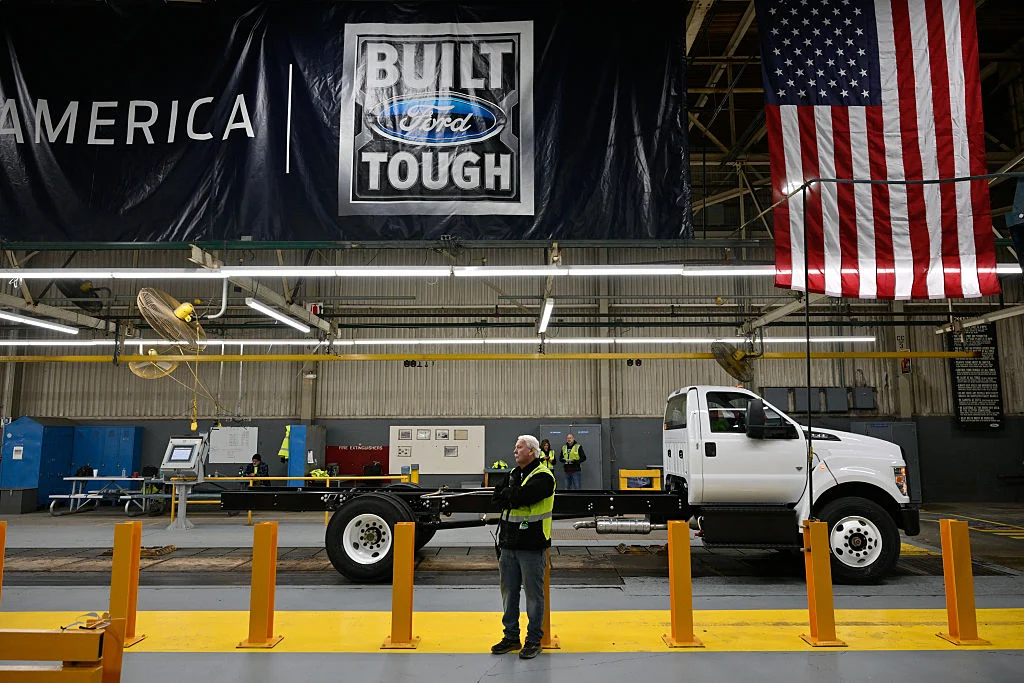
In a significant strategic recalibration, Ford Motor Company has brought back 350 veteran engineers, including former employees and specialists from its supplier network, to bolster its vehicle quality control efforts. This move comes after the automaker acknowledged that its reliance on artificial intelligence and advanced automated systems had not consistently delivered the anticipated level of quality. The decision highlights a growing recognition within the manufacturing sector of the indispensable value of human intuition and experience, even amidst the rapid advancement of digital technologies.
The Automotive Industry’s Quest for Flawless Production
For decades, the automotive industry has been at the forefront of adopting cutting-edge technologies to enhance efficiency, reduce costs, and improve product quality. From the assembly lines pioneered by Henry Ford himself to the sophisticated robotics and lean manufacturing principles of the late 20th century, the pursuit of perfection has been relentless. The advent of artificial intelligence promised a new frontier in this quest, offering the potential for machines to learn, adapt, and identify defects with a precision and speed purportedly beyond human capability.
In recent years, automakers globally have heavily invested in AI-driven solutions for various aspects of production, including design optimization, supply chain management, and most critically, quality assurance. The vision was compelling: AI-powered cameras and sensors, coupled with machine learning algorithms, could theoretically inspect every millimeter of a vehicle, identifying anomalies that might escape the human eye or occur too frequently for manual checks. This shift was also spurred by a drive to reduce labor costs, increase throughput, and ensure consistency across vast global manufacturing operations. Companies like Ford, facing intense competition and stringent consumer demands, naturally explored these avenues, hoping to leverage AI for a competitive edge and to address historical quality challenges that have sometimes plagued the industry.
The Promise and Pitfalls of AI in Manufacturing Quality
Ford’s chief operating officer, Kumar Galhotra, candidly informed journalists that the company’s increasing reliance on automated quality systems had yielded "disappointing results." This statement underscores a critical challenge many industries encounter when implementing advanced AI: the gap between theoretical capability and practical application, especially in complex, dynamic environments like automotive manufacturing. While AI excels at pattern recognition within well-defined parameters, the real world often presents unforeseen variables, subtle imperfections, and subjective judgments that current AI models struggle to fully comprehend.
For instance, identifying a paint blemish might seem straightforward, but distinguishing between a minor, acceptable variation and a critical flaw often requires contextual understanding, an awareness of material properties, and a nuanced assessment of visual impact that goes beyond simple pixel analysis. Similarly, detecting a slight misalignment in a complex assembly might require an understanding of how that minor deviation could cascade into larger functional problems down the line – a form of predictive intuition that human engineers develop over years of hands-on experience. Charles Poon, Ford’s vice president of vehicle hardware engineering, admitted to this oversight, stating, "Mistakenly we thought that by just introducing artificial intelligence and ingesting the design requirements that we had, that that would produce a high-quality product." This reflects a common misconception that feeding data into an AI system automatically translates into intelligent, reliable outcomes without extensive, iterative human refinement and oversight.
A Strategic Pivot: Revaluing Human Expertise
The decision to rehire 350 "technical specialists" — colloquially referred to as "gray beard" engineers due to their extensive experience — marks a significant philosophical shift. These seasoned professionals are tasked with "hunting for failure points before a part ever reaches the plant floor." This proactive approach emphasizes upstream quality control, preventing issues at the source rather than merely detecting them later in the process. Their role extends beyond simple inspection; it involves applying deep domain knowledge, understanding material science, anticipating potential failure modes, and leveraging years of practical problem-solving wisdom.
This move is not an outright rejection of AI but rather a re-evaluation of its optimal role. Ford intends to utilize these experienced engineers not only for direct quality assurance but also to train younger staff and, crucially, to reprogram and refine the existing AI tools. This hybrid strategy acknowledges that while AI can process vast amounts of data and perform repetitive tasks with consistency, it often lacks the nuanced understanding, adaptability, and critical thinking abilities that human experts bring. The "gray beards" can provide the invaluable tacit knowledge — the unwritten rules, intuitive judgments, and learned experiences — that is difficult, if not impossible, to codify into algorithms. They can teach the AI what to look for, how to interpret ambiguous data, and when to flag a potential issue that a purely data-driven system might overlook.
The Broader Context: Quality Challenges and Industry Trends
Ford’s experience is emblematic of a broader discussion occurring across various industries regarding the balance between automation and human labor. The push for efficiency and cost reduction often leads companies to adopt new technologies with an aggressive timeline, sometimes underestimating the complexity of human tasks they aim to replace. This is particularly true in manufacturing, where product quality directly impacts brand reputation, consumer safety, and financial performance.
Historically, the automotive industry has faced cycles of quality challenges. Ford, like many legacy automakers, has invested heavily in improving its quality metrics, particularly after periods where consumer confidence might have wavered. Surveys like the J.D. Power Initial Quality Study, which measures problems experienced by owners during the first 90 days of new vehicle ownership, serve as critical benchmarks for both manufacturers and consumers. Achieving a top spot in such a survey, as Ford recently did among mainstream brands, is a powerful indicator of progress and a significant marketing advantage. The company’s anticipation of $1 billion in reduced costs this year, directly attributed to these rehiring efforts, further underscores the tangible financial benefits of this human-centric approach to quality. This cost reduction likely stems from fewer warranty claims, less rework, and improved customer satisfaction, all of which contribute to the bottom line.
Tacit Knowledge vs. Algorithmic Precision
The Ford scenario offers a compelling case study in the enduring value of tacit knowledge—expertise that is difficult to articulate, codify, or transfer through formal instruction, but is acquired through extensive practical experience. While AI thrives on explicit data and quantifiable metrics, many aspects of quality control, particularly in complex engineered products like automobiles, involve subjective assessment and pattern recognition that goes beyond what current algorithms can fully grasp. A seasoned engineer might "feel" a vibration that indicates an impending mechanical issue, or "see" a subtle inconsistency in a material finish that an AI vision system, trained only on explicit defect examples, might miss.
This highlights a crucial limitation of many AI systems: they are only as good as the data they are trained on and the explicit rules they are given. They struggle with novelty, ambiguity, and the "unknown unknowns" that human experience is adept at navigating. The "gray beards" represent institutional memory, a living database of past failures, unexpected challenges, and innovative solutions that can inform both immediate problem-solving and long-term design improvements. Their ability to connect seemingly disparate observations, draw on a vast mental library of engineering principles, and apply critical judgment remains unparalleled in many industrial applications.
Market Reactions and Future Implications
Ford’s decision sends a clear message to the broader manufacturing sector and to AI developers: the path to advanced automation is not simply about replacing humans but about intelligently augmenting their capabilities. This incident could influence how other major manufacturers approach their own AI integration strategies, potentially leading to a more nuanced understanding of human-AI collaboration. It may also prompt a re-evaluation of the skills required in modern manufacturing, emphasizing the ongoing need for experienced technicians and engineers who possess a deep understanding of physical processes, material science, and design principles.
For the AI industry, this serves as a valuable lesson in the complexities of real-world deployment. It underscores the importance of developing AI systems that are not only powerful but also interpretable, adaptable, and capable of seamlessly integrating with human oversight. The focus may shift from full autonomy to "human-in-the-loop" or "human-on-the-loop" systems, where AI handles routine tasks and provides insights, while human experts retain ultimate decision-making authority and provide critical feedback for AI improvement.
The Path Forward: A Hybrid Approach
Ultimately, Ford’s strategic adjustment signals a maturing perspective on the role of artificial intelligence in industrial settings. It is a recognition that while AI offers immense potential for efficiency and analysis, it is not a panacea, especially when it comes to the intricate and often subjective demands of ensuring high-quality products. The company is now pursuing a hybrid model, where the power of advanced algorithms is complemented and guided by the irreplaceable wisdom of human experience.
This approach—leveraging the speed and data processing capabilities of AI while retaining the critical thinking, adaptability, and nuanced judgment of skilled human engineers—may well represent the most effective path forward for industries striving for both innovation and uncompromising quality. As technology continues to evolve, the most successful enterprises will likely be those that master the art of integrating human and artificial intelligence, creating synergistic systems where each enhances the other’s strengths to achieve outcomes that neither could accomplish alone. Ford’s journey highlights that sometimes, the most advanced solutions involve looking back at proven expertise while simultaneously looking forward to technological innovation.