Amir Mahmud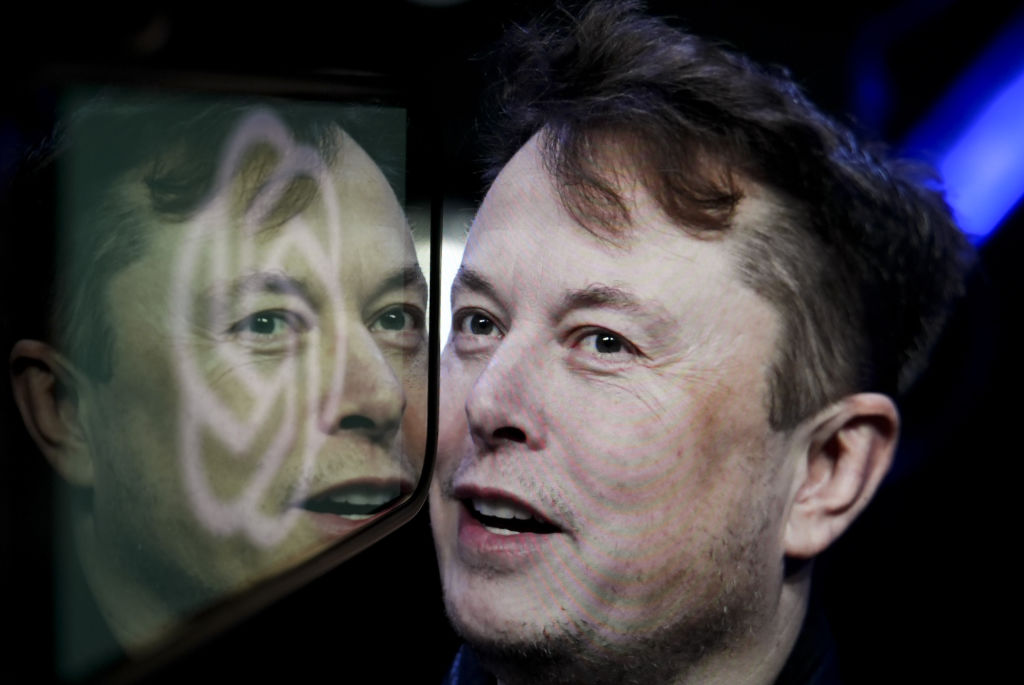
A California federal courtroom recently became the stage for a dramatic legal confrontation as entrepreneur Elon Musk faced intense cross-examination in his lawsuit against artificial intelligence powerhouse OpenAI. The proceedings laid bare the complex evolution of one of the world’s leading AI research organizations, from its origins as a non-profit dedicated to human benefit to its current hybrid, for-profit structure, while simultaneously highlighting the public figure’s often-contradictory statements across various digital platforms. Musk’s testimony on Wednesday revealed tensions between his stated ideals for AI development and the commercial realities of the industry, particularly as he grappled with past declarations that appeared to conflict with his current legal arguments and on-the-record statements.
The Genesis of a Groundbreaking AI Venture
OpenAI was founded in late 2015 with an ambitious, seemingly altruistic mission: to ensure that artificial general intelligence (AGI)—hypothetical AI capable of performing any intellectual task a human can—benefits all of humanity. This vision was born out of a perceived existential threat posed by unchecked AI development, particularly in the hands of large corporations. The initial cohort of founders, including Elon Musk, Sam Altman, Ilya Sutskever, Greg Brockman, and others, envisioned a collaborative, non-profit endeavor that would openly share its research and avoid the pitfalls of a profit-driven "AI race." Their collective aim was to develop AGI safely and responsibly, preventing any single entity from monopolizing or misusing such powerful technology. Musk himself was a significant early donor, contributing substantial funds and resources, driven by a deep-seated belief in the critical importance of AI safety and a desire to counter the AI dominance of tech giants like Google.
From Philanthropic Ideal to Commercial Imperative
The journey from a pure non-profit ideal to OpenAI’s current operational model is central to Musk’s lawsuit. While the initial vision was noble, the practicalities of developing cutting-edge AI quickly became apparent. The computational resources, specialized talent, and sheer scale of research required astronomical investments. Even with substantial donations, the non-profit structure struggled to keep pace with the burgeoning costs and the aggressive competition from well-funded corporate labs.
According to testimony and legal filings, discussions about transitioning to a more robust funding model began as early as 2016. Musk himself acknowledged under oath that he participated in conversations regarding a for-profit conversion. By 2017, the idea of creating a for-profit arm gained traction, with Musk exploring a scenario where he would hold a majority equity stake and exert significant control over the company. These plans, however, did not materialize, leading to his eventual departure from the OpenAI board in 2018 and a cessation of his regular financial contributions, though he continued to cover office space costs until 2020.
In 2019, OpenAI formally established a "capped-profit" entity, OpenAI LP, under its non-profit parent. This innovative structure aimed to attract large-scale investment necessary for its ambitious research goals while theoretically preserving its core mission. Investors in OpenAI LP would receive a capped return on their investment, ensuring that profits would not be unlimited and that the ultimate goal remained the benefit of humanity. This move was crucial for securing multi-billion-dollar investments from Microsoft, which became a strategic partner, integrating OpenAI’s technologies into its products. Musk’s lawsuit specifically targets the subsequent alleged rollback of these profit restrictions, claiming a fundamental breach of the original agreement and a deviation from the non-profit charter he helped establish.
The Core Allegations: "Stealing a Charity"
Musk’s lawsuit is founded on the assertion that Sam Altman and other co-founders misled him into backing a charitable endeavor, only to then pivot towards a for-profit model that prioritized financial returns over the original mission. He maintains that the shift to unlimited profit potential for investors constitutes "looting the nonprofit" and betrays the trust he placed in the organization’s leadership.
During cross-examination by OpenAI’s lawyer, William Savitt, the defense sought to demonstrate that Musk was not only aware of, but actively supported, various initiatives to transition OpenAI towards a for-profit status. Savitt presented evidence suggesting Musk understood the necessity of substantial capital to compete with industry titans and achieve the AGI mission. The defense’s strategy was to portray Musk as a proponent of for-profit models when it suited his interests, undermining his current claim that the for-profit structure is inherently detrimental. The distinction between "capped" and "unlimited" investor profits became a critical point of contention, with Musk arguing that the former maintains alignment with the original mission, while the latter fundamentally corrupts it.
Social Media as Legal Evidence: The "Tweets" Take the Stand
Perhaps one of the most compelling and unique aspects of Musk’s testimony was the repeated use of his own social media posts on X (formerly Twitter) as evidence. In an age where public figures frequently share unvarnished thoughts online, Musk’s digital footprint became a direct challenge to his sworn statements.
A notable instance occurred when Musk, under cross-examination, stated that Tesla’s AI development was solely focused on self-driving technology and not artificial general intelligence. Savitt immediately confronted him with a recent post on X, where Musk had explicitly claimed, "Tesla will be one of the companies to make AGI." This direct contradiction, made under oath, casts a shadow over the credibility of his testimony and highlights the perils of a prolific online presence for high-profile individuals facing legal scrutiny. For investors and the public, such discrepancies raise questions about the true strategic direction of his companies and the reliability of his public pronouncements.
Another point of contention involved the amount of his initial investment in OpenAI. Musk asserted he had invested $100 million, while financial records indicated a figure closer to $38 million. He argued that his "reputation and network" compensated for the financial disparity, a claim that prompted skepticism regarding its legal and financial equivalence.
Furthermore, Savitt introduced emails indicating Musk had encouraged efforts by Tesla and Neuralink, his brain-interface company, to recruit employees from OpenAI even while he served on OpenAI’s board. These discussions included attempts to poach key talent like Andrej Karpathy, who later led self-driving initiatives at Tesla, and Ilya Sutskever, a co-founder of OpenAI. Such actions, if proven, could suggest a conflict of interest or a desire to leverage OpenAI’s talent for his own ventures, further complicating his narrative of a purely altruistic commitment to OpenAI’s original mission.
The Broader Implications: AI Safety, Competition, and Corporate Ethics
The lawsuit extends beyond a mere contractual dispute; it delves into fundamental questions about the future of artificial intelligence, corporate governance, and the tension between philanthropic ideals and commercial pressures in the tech industry.
AI Safety and Ethical Development: Musk’s case largely rests on the premise that OpenAI’s transition to a for-profit model inherently compromises its focus on safety, making it a danger to society. He argues that the pursuit of unlimited profits incentivizes rapid deployment over cautious, ethical development. However, during cross-examination, Musk conceded that all AI companies, including his own ventures like xAI, face inherent risks regarding safety. Judge Yvonne Gonzalez Rogers, while halting direct questioning on specific AI-related incidents like the Tumbler Ridge shooting, made it clear that the court would consider the varying approaches to AI safety adopted by OpenAI and xAI. This aspect of the trial underscores the ongoing global debate about how to balance innovation with responsibility in the age of advanced AI.
The "AGI Race" and Market Impact: The legal battle unfolds amidst an intense global "AGI race," with tech giants and startups pouring billions into developing increasingly sophisticated AI systems. OpenAI’s partnership with Microsoft has positioned it as a frontrunner, competing with Google’s DeepMind, Meta, and Musk’s own xAI. The outcome of this lawsuit could influence future funding models and governance structures for other mission-driven tech startups, particularly those operating in capital-intensive fields. It highlights the immense financial requirements for AGI development, which often necessitates a departure from purely non-profit models to attract the necessary investment and talent.
Corporate Governance and Founder Intent: The case also raises critical questions about founder intent and the long-term governance of organizations. When initial agreements are made under one set of assumptions (e.g., non-profit status), how do those agreements evolve when the technological landscape and financial requirements change dramatically? The jury’s interpretation of the distinction between capped and uncapped profits, and Musk’s historical involvement in exploring for-profit models, will be crucial in determining whether OpenAI truly deviated from its founding principles or merely adapted to a new reality.
Looking Ahead: Further Testimony and Deliberations
Musk is expected to return for additional cross-examination, facing more rigorous questioning regarding his claims and past actions. The court will also hear from other key witnesses, including his family office manager, Jared Birchall; renowned AI safety expert Stuart Russell; and OpenAI president Greg Brockman. Their testimonies are anticipated to provide further insights into the founding discussions, the financial evolution of OpenAI, and the differing perspectives on its mission and governance.
The verdict in this high-profile case could have significant ramifications, not only for the parties involved but also for the broader AI industry and the ongoing discourse about responsible technology development. It serves as a stark reminder that in the digital age, every public statement, particularly from a figure as prominent as Elon Musk, can be scrutinized and brought to bear in a court of law, shaping not just public perception but also legal outcomes.