Amir Mahmud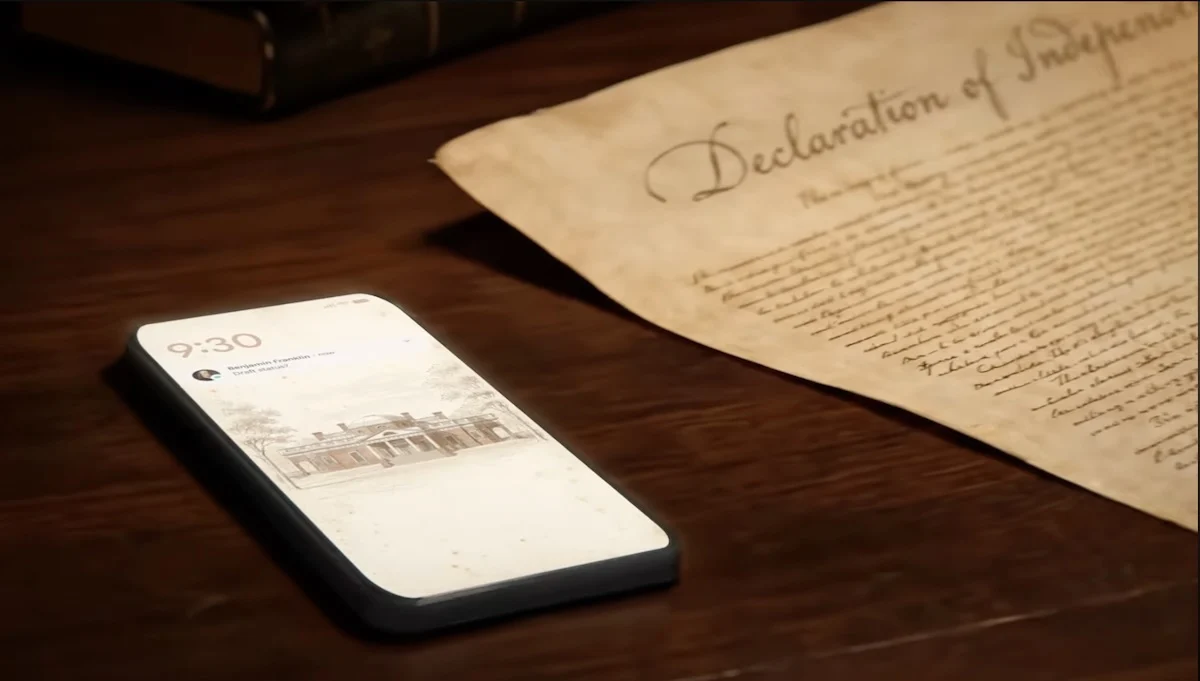
As the United States gears up to commemorate its 250th anniversary in 2026, tech giant Google has launched a new commercial that boldly re-imagines one of the nation’s most foundational moments: the drafting of the Declaration of Independence. The ad, titled "Group project, but make it 1776," playfully envisions Founding Fathers Thomas Jefferson, Benjamin Franklin, and their contemporaries leveraging Google Workspace and advanced artificial intelligence tools to craft the seminal document. This creative historical anachronism, while designed to showcase Google’s integrated suite of productivity and AI capabilities, has sparked a fascinating and often divided public reaction, igniting discussions about the role of technology in historical narratives and the evolving perception of artificial intelligence.
The Semiquincentennial and Brand Engagement
The year 2026 marks the United States Semiquincentennial, a significant national milestone that commemorates 250 years since the Declaration of Independence was signed. Such anniversaries traditionally serve as powerful catalysts for national reflection, historical education, and, inevitably, brand engagement. Companies often seize these opportunities to align themselves with patriotic themes, national values, and moments of shared cultural significance. Google’s commercial is a prime example of this strategic alignment, positioning its modern technological solutions within a revered historical context. By placing its products at the heart of the nation’s birth, Google aims to underscore their perceived indispensability and relevance, even across vast spans of time. The Declaration itself, a profound statement of human rights and self-governance, remains a potent symbol of American identity, making it a compelling, albeit potentially sensitive, subject for commercial adaptation.
A Modern Take on a Monumental Task
The commercial opens with a largely unseen Thomas Jefferson in the midst of drafting the Declaration, a task famously undertaken primarily by him, though heavily edited by his peers. The narrative quickly shifts to a digital collaboration, triggered by a "nagging text" from Benjamin Franklin. This initiates a meticulously choreographed sequence demonstrating how the Committee of Five – and eventually the broader Continental Congress – might have utilized Google’s ecosystem. Edits and suggestions flow through a Google Docs-like interface, mirroring contemporary collaborative document creation. A critical meeting, presumably to debate the document’s wording, is scheduled via Google Calendar and conducted remotely using Google Meet, humorously depicting every attendee with their camera off, a relatable modern meeting quirk. The finalization of the document is expedited with e-signatures, culminating in a celebratory fireworks display, a symbolic nod to the birth of a nation.
Beyond the familiar Workspace tools, the ad integrates Google’s AI capabilities, most notably through Gemini, its advanced chatbot. Gemini is depicted taking notes during the virtual meeting and offering advice to the founders, such as declining King George III’s hypothetical request for document access. Another AI tool, "help me visualize," is employed to experiment with different animals for the national seal, showcasing generative AI’s creative potential. The commercial maintains a distinctly "tongue-in-cheek" tone throughout, injecting historical figures with contemporary sensibilities. A memorable moment features Sam Adams asking, "Can we settle this over beers?" – a lighthearted touch designed to humanize the revered figures and make the technological integration more approachable. This blend of historical gravitas and modern levity forms the core of Google’s marketing approach.
The Actual Drafting: A Slower, Deliberate Process
To fully appreciate the commercial’s imaginative leap, it’s crucial to recall the painstaking reality of the Declaration’s creation. The Second Continental Congress, meeting in Philadelphia in the spring of 1776, appointed a "Committee of Five" – John Adams, Benjamin Franklin, Thomas Jefferson, Robert R. Livingston, and Roger Sherman – to draft a statement justifying the colonies’ separation from Great Britain. Jefferson, known for his eloquent prose, was tasked with producing the initial draft. He worked diligently in relative solitude, drawing upon Enlightenment philosophies and a growing body of colonial grievances.
The process was far from instantaneous or digitally collaborative. Jefferson’s draft was reviewed and revised by Adams and Franklin, then presented to the full Congress. Debates were lengthy, passionate, and conducted entirely in person, often spanning days or weeks. Communication between delegates and their respective colonies was slow, relying on couriers and horseback. There were no "text messages" or "remote meetings" to expedite consensus. Every word, every phrase, was carefully considered, debated, and often altered through meticulous manual transcription. The final version, approved on July 4, 1776, and formally signed by delegates on August 2, was the product of intense human intellect, moral conviction, and arduous, analog collaboration, a stark contrast to the swift, AI-augmented digital workflow presented in Google’s ad. This historical backdrop underscores the significant imaginative distance the commercial traverses, highlighting the transformative power of modern technology in comparison to 18th-century realities.
AI’s Subtle Role and the Authenticity Question
One notable aspect of Google’s commercial is its relatively understated approach to AI evangelism, especially when compared to other recent tech ads that have more overtly touted AI’s transformative capabilities. While AI features like Gemini’s note-taking and advice, and the "help me visualize" tool, are present, they are woven into the broader narrative of Google Workspace’s collaborative power. The ad notably avoids suggesting that AI would have improved the actual text or philosophical depth of the Declaration of Independence itself. This careful framing might be a strategic move by Google, perhaps learning from past public reactions to AI-centric ads that positioned AI as a creative replacement rather than a collaborative assistant. For instance, a previous Google commercial where a father used Gemini to write a fan letter for his daughter drew criticism for potentially undermining genuine human expression.
However, some observers have noted that the ad’s AI presence extends beyond the explicit on-screen features. There’s a subtle, yet persistent, undercurrent suggesting that the entire commercial’s aesthetic, particularly its visual texture, might itself be a product of AI-generated video. This speculative detail adds another layer to the discussion, blurring the lines between what is depicted within the AI narrative and what might be produced by AI in the commercial’s creation. This raises broader questions about authenticity and the increasing integration of generative AI into media production, prompting viewers to consider not just the message, but also the medium itself.
The Diverse Echoes of Public Reception
The commercial’s release has elicited a bifurcated response across various digital platforms, offering a microcosm of broader societal attitudes towards technology and history. On platforms like YouTube and Instagram, where a more general audience typically congregates, the reception has been largely positive. Viewers appear to appreciate the ad’s humor, its innovative reimagining of history, and its clever integration of modern tech into a familiar narrative. This demographic might be more inclined to view the commercial as an entertaining thought experiment, a testament to technological progress, or simply a clever marketing stunt that makes complex tools more accessible. The lighthearted tone and the nostalgic appeal of the Founding Fathers likely resonate well with this segment.
However, the sentiment shifts dramatically on platforms like Bluesky, a social media network often favored by tech-savvy users, journalists, and academics. Here, the commercial has faced significant backlash, with many users labeling it "cringey," "stunningly tone deaf," and deeply problematic. The primary target of their criticism is the AI angle, seen by many as either unnecessary, trivializing, or even disrespectful to the gravity of the historical event. Critics argue that inserting AI into such a pivotal human endeavor diminishes the intellectual and emotional labor involved in crafting the Declaration.
Historian Angus Johnston, a prominent voice in this critical chorus, observed that "it’s amazing how little of this is actually AI," despite the ad’s clear intent to highlight AI’s role. He further elaborated that "Even in a corny fantasy joke, it’s impossible to make the case that AI is a useful tool for political organizing, writing, or human collaboration." Johnston’s commentary encapsulates a core critique: the ad, despite its technological showcase, fails to convincingly demonstrate AI’s essential utility in tasks requiring profound human deliberation, political negotiation, and authentic expression. This perspective underscores a growing skepticism among certain segments of the population about AI’s true capabilities versus its marketing hype, particularly when applied to areas of complex human endeavor and historical significance.
Market Impact and Cultural Commentary
Google’s commercial, beyond its immediate advertising objectives, serves as a rich text for cultural analysis. From a marketing perspective, the ad aims to achieve several goals: enhance brand relevance by associating Google with a significant national moment, showcase the seamless integration of its Workspace suite, and subtly position Google at the forefront of AI innovation. By framing these tools as essential for even the most monumental "group projects," Google seeks to reinforce their value proposition for contemporary businesses and individuals. The choice of the 250th anniversary is strategic, aiming for a broad emotional appeal that transcends typical product feature lists.
However, the ad’s mixed reception highlights a broader cultural tension surrounding the rapid advancement of AI. On one hand, there’s an undeniable fascination with what AI can achieve, from enhancing productivity to generating creative content. On the other, there’s a palpable anxiety about AI’s potential to diminish human agency, trivialize historical narratives, or dilute the authenticity of human creativity and collaboration. The Bluesky criticisms, in particular, reflect a desire for a more nuanced and perhaps more cautious approach to integrating AI into culturally significant contexts. The debate also touches upon the ethics of re-imagining historical events through a modern technological lens, prompting questions about whether such portrayals enhance understanding or merely project contemporary values onto the past in an anachronistic fashion.
The commercial inadvertently sparks a valuable dialogue: what are the appropriate boundaries for AI in our collective memory and creative processes? Can AI truly "collaborate" in the profound sense that led to the Declaration, or is it merely a sophisticated tool that can assist, but not replicate, the uniquely human essence of such endeavors? Google’s ad, therefore, is not just a commercial for its products; it’s a cultural artifact that illuminates the ongoing societal negotiation with the promises and perils of artificial intelligence.
Conclusion: A Thought Experiment That Ignites Debate
Google’s "Group project, but make it 1776" commercial is a masterclass in modern marketing, blending historical reverence with futuristic technology to capture attention as the nation approaches its semiquincentennial. By imagining the Founding Fathers drafting the Declaration of Independence with Google Workspace and AI, the ad cleverly showcases the company’s integrated ecosystem and its vision for a technologically augmented future.
Yet, this imaginative leap has proven to be a double-edged sword. While it resonated positively with many, particularly those who appreciate its humorous and innovative spirit, it simultaneously drew sharp criticism from segments of the online community who found it historically insensitive or indicative of a superficial understanding of AI’s actual utility. The commercial thus transcends its primary function as an advertisement, becoming a touchstone for broader conversations about the role of technology in shaping historical narratives, the ethics of AI integration, and the delicate balance between innovation and preserving the sanctity of human achievement. As AI continues its inexorable march into every facet of life, Google’s Declaration ad serves as a compelling, if controversial, thought experiment, underscoring that while technology can reimagine the past, the fundamental human questions it raises remain timeless.