Amir Mahmud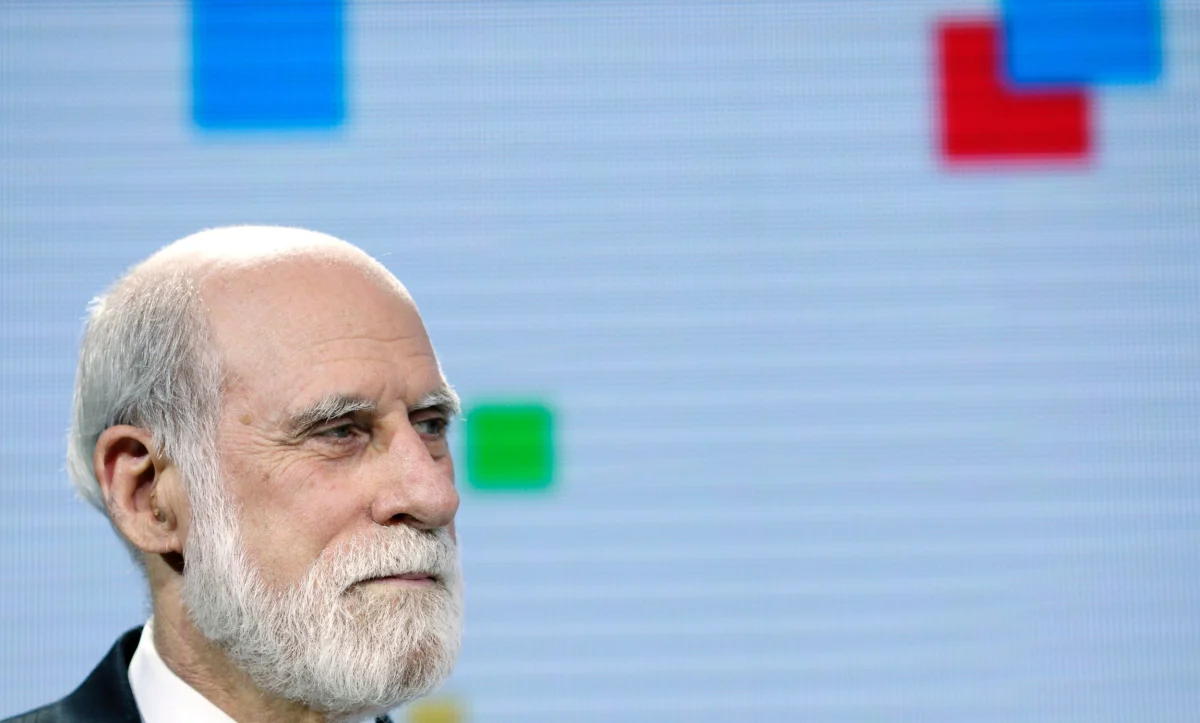
Vinton Cerf, widely recognized as one of the principal architects of the internet, is stepping down from his role as Google’s chief internet evangelist, concluding a remarkable two-decade tenure at the tech giant and an unparalleled career spanning over five decades. This transition marks the end of an era for a figure whose pioneering work fundamentally shaped the modern digital landscape. The announcement came during Cerf’s virtual participation at the Open Frontier conference, hosted by the Laude Institute, where he was lauded by fellow luminaries in the computing world.
During the conference, Dave Patterson, a distinguished UC Berkeley professor known for his co-development of the RISC processor architecture, acknowledged Cerf’s impending retirement. "Vint has been at Google more than 20 years, and he is retiring a week from today," Patterson remarked, prompting an ovation from attendees. This moment underscored the profound respect and admiration Cerf commands within the technology community, a testament to his enduring contributions. While Google did not provide an immediate comment, the significance of Cerf’s departure resonates deeply across the industry.
The Genesis of a Global Network: TCP/IP’s Foundation
Vinton Cerf, 83, alongside his esteemed collaborator Robert Kahn, is universally credited with co-inventing the Transmission Control Protocol/Internet Protocol (TCP/IP) suite, the foundational communication language that enables the global internet as we know it today. Their revolutionary work, initiated in the early 1970s, addressed the critical challenge of connecting disparate computer networks, each operating with its own unique communication standards. Prior to TCP/IP, networks were largely isolated silos, unable to seamlessly exchange information.
The intellectual environment of the late 1960s and early 1970s was ripe for such innovation. Cerf’s early career saw him involved with the Advanced Research Projects Agency Network (ARPANET), a pioneering packet-switching network developed by the U.S. Department of Defense. ARPANET demonstrated the feasibility of networked communication, but its architecture was proprietary and lacked a universal method for inter-network communication. This limitation spurred Cerf and Kahn to envision a more open and scalable solution.
Their breakthrough concept, detailed in a seminal 1974 paper titled "A Protocol for Packet Network Intercommunication," proposed a robust, decentralized, and flexible set of rules. TCP, or Transmission Control Protocol, was designed to ensure reliable, ordered, and error-checked delivery of data between applications. IP, or Internet Protocol, handled the addressing and routing of packets of data across various networks. Together, TCP/IP provided the "internetworking" capability, allowing different local networks to form a coherent global system. This modular design proved incredibly resilient and adaptable, allowing the internet to grow exponentially without requiring fundamental re-architecture. The adoption of TCP/IP as the standard protocol for ARPANET in 1983 marked a pivotal moment, effectively birthing the modern internet.
Architecting the Digital Age: Early Impact and Advocacy
Cerf’s influence extended far beyond the technical specifications of TCP/IP. He played a crucial role in advocating for the widespread adoption of these protocols and in shaping the early governance of the internet. After his foundational work at Stanford University and ARPA, Cerf held key positions that propelled the internet’s development. He served as Vice President of MCI Communications in the 1980s, where he oversaw the engineering of MCI Mail, the first commercial email service connected to the internet. This period was instrumental in demonstrating the commercial viability and public utility of the nascent network.
Later, he co-founded the Internet Society (ISOC) in 1992, an organization dedicated to promoting the open development, evolution, and use of the internet for the benefit of all people throughout the world. His leadership at ISOC helped establish principles of open standards, global accessibility, and decentralized governance that remain cornerstones of the internet’s philosophy. From 1997 to 2007, Cerf served as chairman of the board of the Internet Corporation for Assigned Names and Numbers (ICANN), the non-profit organization responsible for coordinating the global Internet’s systems of unique identifiers, further solidifying his role in shaping the internet’s operational framework.
The market and social impact of Cerf’s work is almost incalculable. TCP/IP’s open, non-proprietary nature allowed for an explosion of innovation. It enabled the World Wide Web, developed by Tim Berners-Lee, to flourish, transforming a niche academic network into a ubiquitous platform for information, commerce, and communication. E-commerce, social media, streaming entertainment, cloud computing, and countless other digital services owe their existence to the universal interoperability provided by TCP/IP. Without Cerf and Kahn’s foresight, the digital revolution might have unfolded very differently, perhaps fragmented into incompatible regional networks.
Two Decades at Google: Evangelizing the Future
In 2005, Vinton Cerf joined Google as its vice president and chief internet evangelist, a title that perfectly encapsulated his ongoing mission to promote, protect, and envision the internet’s future. For nearly two decades, Cerf acted as Google’s global ambassador for internet technology, engaging with policymakers, industry leaders, and the public on issues ranging from internet governance and accessibility to privacy and the ethical implications of emerging technologies. His role involved advocating for open standards, universal access, and the continued expansion of the internet to underserved populations worldwide.
During his tenure at Google, Cerf continued to be a vocal proponent for extending internet connectivity to remote areas, addressing the persistent "digital divide" that leaves billions without access to the opportunities afforded by the online world. He also championed initiatives like the Interplanetary Internet, exploring how internet protocols could be adapted for communication in space, reflecting his enduring commitment to pushing technological boundaries. His presence at Google lent significant credibility to the company’s efforts in internet infrastructure and policy, leveraging his unparalleled historical perspective and deep technical understanding.
Looking Ahead: AI, Interoperability, and the Next Frontier
Even as he prepares for retirement, Cerf remains keenly focused on the future of technology, particularly the burgeoning field of artificial intelligence. At the Open Frontier conference, a significant portion of the discussion revolved around the challenges posed by the centralization of advanced AI models within a few well-resourced laboratories. This trend stands in stark contrast to the decentralized ethos of the open internet that Cerf’s protocols facilitated.
However, Cerf offered a compelling prediction regarding the trajectory of AI, suggesting that the rise of "AI agents" – autonomous software entities capable of coordinating and interacting with other software – would necessitate a return to standardized protocols. "The agentic model of AI, with multiple agents from multiple sources interacting with each other, is going to force composability, and a requirement for interoperability and standardization," Cerf asserted.
This perspective draws a powerful parallel to the early days of the internet, where the proliferation of disparate networks eventually demanded a common language. Cerf warned that companies that define these interoperability standards early could wield disproportionate influence over the emerging "agentic economy," mirroring the "protocol wars" of the internet’s formative years. He emphasized that natural language communication between AI agents, while seemingly intuitive, would likely prove insufficient.
"I don’t think English is going to be the best choice," Cerf explained, highlighting the inherent flexibility and ambiguity of human language. "There’s a flexibility in it, but there’s ambiguity, and I think precision for interagent interaction is going to be very, very important. An agent really needs to be sure the other agent understands what it is that they just agreed to do together." He vividly illustrated this point with the analogy of the "telephone game," where messages become distorted through successive interpretations. "Imagine a bunch of agents talking to each other in natural language, you know, that’s kind of terrifying," he mused, underscoring the critical need for formal, unambiguous standards to ensure reliable and predictable AI interactions. This analytical commentary from Cerf, rooted in his foundational experience, provides invaluable foresight for the AI community.
A Legacy Beyond Code: Style and Influence
Vinton Cerf’s career has been punctuated by numerous accolades, including the U.S. Presidential Medal of Freedom, the Turing Award (often considered the Nobel Prize of computing), and dozens of honorary degrees, each recognizing his profound impact on technology and society. Yet, beyond the technical achievements and formal honors, Cerf is also known for his distinctive personal style. Dave Patterson humorously recalled meeting Cerf as a graduate student in the 1970s, noting his penchant for formal attire. "He’s always been the best dressed computer scientist I’ve ever met," Patterson quipped, remembering Cerf in a shirt and tie, even during the more casual academic environment of the era.
Cerf readily confirmed the anecdote, adding, "I even had a vest, and for some reason I always wanted to stick out, and instead of having long hair, and something in my nose, I thought just dressing differently was one way to do it." This anecdote, while lighthearted, speaks to a consistent character: a desire to stand apart, to forge a unique path, whether in fashion or in fundamental computer science.
As Vinton Cerf steps away from his daily responsibilities at Google, his legacy as the "Father of the Internet" remains firmly cemented. His work not only provided the technical backbone for the digital age but also imbued it with a spirit of openness, interoperability, and global connectivity. His continued engagement with critical issues like AI interoperability demonstrates that even in retirement, his insights will undoubtedly continue to shape the evolving landscape of technology. Cerf’s departure from a formal corporate role marks a moment for reflection on the incredible journey of the internet he helped create, and an anticipation of the next frontiers he continues to envision.