Amir Mahmud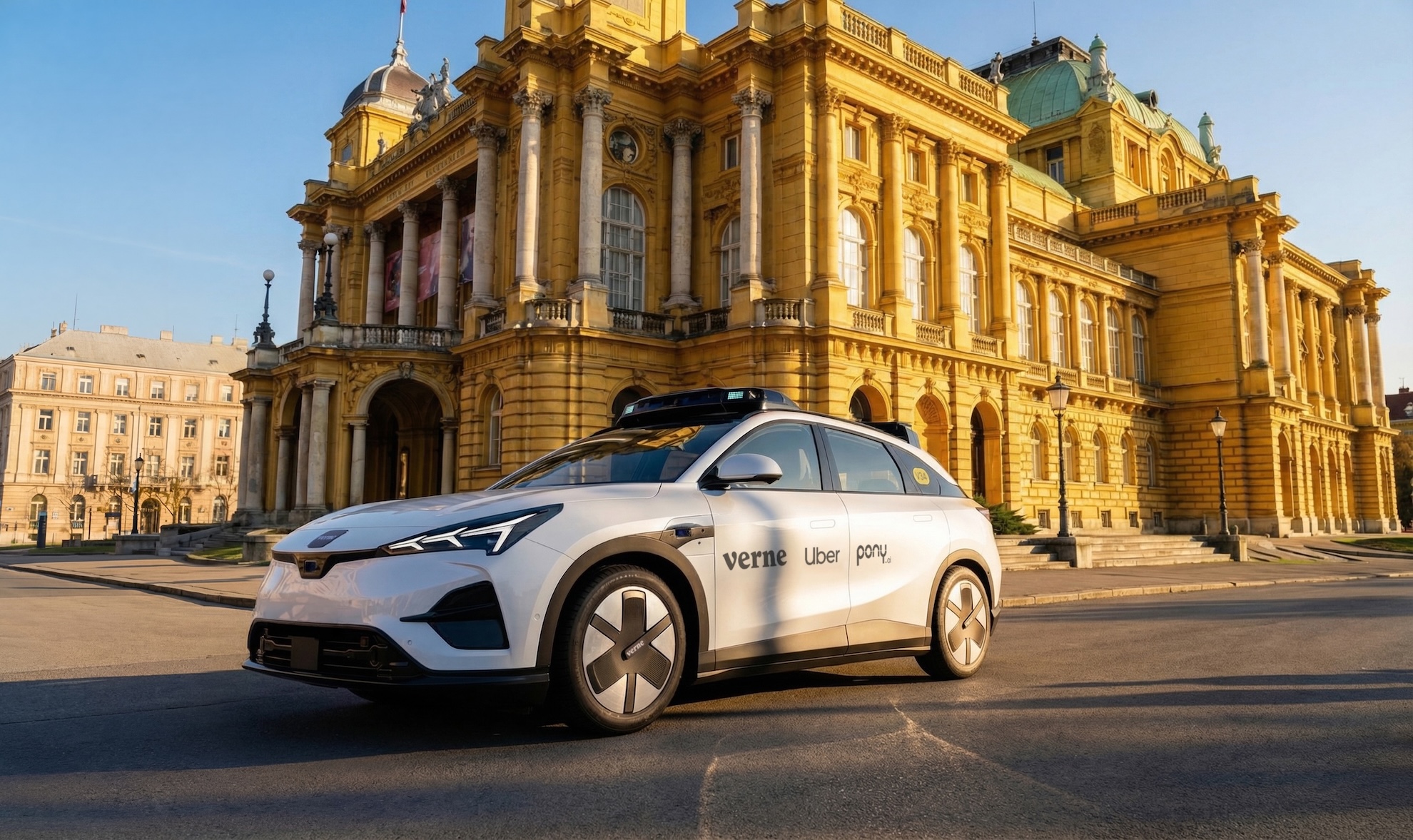
A significant collaborative venture is poised to redefine urban mobility in Europe, as a strategic alliance involving ride-hailing behemoth Uber, leading Chinese autonomous vehicle developer Pony.ai, and the innovative Croatian robotaxi startup Verne prepares to launch a commercial self-driving service. This groundbreaking partnership aims to deploy autonomous ride-hailing, commencing in Zagreb, Croatia, marking a pivotal moment for the continent’s nascent robotaxi market.
A Visionary’s Journey: Mate Rimac and the Genesis of Verne
At the heart of this ambitious project is Mate Rimac, the entrepreneurial force behind the Rimac Group, a conglomerate celebrated globally for its high-performance electric hypercars, notably the Nevera. While Rimac’s name is often associated with luxury and speed, his long-term vision for transportation has always extended beyond human-driven vehicles. Over seven years ago, Rimac embarked on a journey to explore electric robotaxis, driven by a conviction that autonomous technology would eventually render traditional, human-operated electric vehicles obsolete for urban transport. This forward-thinking perspective, seemingly paradoxical given his hypercar empire, underscores a deep commitment to the future of mobility.
Verne, originally conceived in 2019 as "Project 3 Mobility" (P3) within the broader Rimac Group ecosystem – which also includes Rimac Bugatti, Rimac Energy, and Rimac Technology – represents the culmination of this vision. Mate Rimac, holding a 23% stake in the group, has carefully nurtured this initiative, transforming it from an internal research endeavor into a fully-fledged startup. The company officially launched as Verne in July 2024, securing a substantial €100 million in funding, signaling its serious intent and attracting considerable investor confidence. This strategic capital infusion has positioned Verne to rapidly accelerate its operational capabilities and fleet development.
The Global Race for Autonomous Dominance
The autonomous vehicle (AV) industry has been a hotbed of innovation and investment for over a decade, with tech giants and automotive incumbents pouring billions into research and development. Companies like Waymo (Google’s self-driving unit) and Cruise (backed by GM) have been at the forefront, deploying limited commercial services in select U.S. cities, grappling with complex regulatory landscapes, technological hurdles, and the imperative of public trust. Tesla, with its "Full Self-Driving" (FSD) software, has pursued a different, driver-assist-focused approach, continuously refining its AI-driven capabilities.
However, the path to widespread commercial robotaxi deployment has been fraught with challenges. High development costs, the intricacies of navigating diverse regulatory frameworks across jurisdictions, and the need to ensure absolute safety have slowed progress. Public acceptance, often swayed by media narratives around incidents, remains a critical factor. Against this backdrop, Verne’s emergence, particularly with an asset-light model for the core autonomous driving system, represents a potentially agile strategy to penetrate new markets. Europe, with its dense historical city centers, diverse driving cultures, and fragmented regulatory environment, presents a unique set of opportunities and obstacles for autonomous mobility solutions.
A Tripartite Alliance: Roles and Synergies
The partnership structure is a testament to the complex requirements of deploying advanced autonomous services, leveraging the distinct strengths of each participant:
-
Uber’s Strategic Role: As a global leader in ride-hailing, Uber brings an unparalleled market reach and a vast, established customer network. Having previously invested heavily in its own autonomous driving initiatives, including a self-driving division that was later sold, Uber has pivoted to a partnership model for AV deployment. This strategy allows the company to integrate cutting-edge autonomous technology into its platform without bearing the full burden of its development and associated risks. Uber’s involvement provides Verne with immediate access to millions of potential users and a robust operational framework for dispatch, payment, and customer support. The undisclosed investment Uber intends to make into Verne further solidifies its commitment, positioning it as a strategic partner for future expansion beyond Zagreb.
-
Pony.ai’s Technological Prowess: Pony.ai, a prominent player in the autonomous driving space, particularly recognized for its Level 4 (L4) autonomous driving solutions, is the technological backbone of this alliance. The company has a strong track record of testing and deployment in both China and the United States, with significant operations in cities like Beijing, Guangzhou, and various Californian locations. Pony.ai will supply its advanced autonomous driving system, integrating it into the vehicle fleet. Crucially, it will also provide the initial robotaxi vehicle, the Arcfox Alpha T5, which was developed in collaboration with Chinese automaker BAIC. This infusion of proven Chinese AV technology into the European market highlights the increasing globalization of the autonomous sector and the pursuit of best-in-class solutions irrespective of their origin.
-
Verne’s Operational Core and Vision: Verne’s role is multifaceted and critical for the long-term success of the service. While Pony.ai provides the autonomous "brain" and initial vehicle, Verne is focused on the comprehensive operational aspects. This includes developing its proprietary urban electric vehicle, a purpose-built two-seater designed for efficiency and urban environments. Furthermore, Verne is responsible for the ride-hailing application (which will operate alongside Uber’s platform) and the essential back-end infrastructure required to manage a large-scale autonomous fleet. This encompasses everything from charging and maintenance facilities to meticulous cleaning protocols – all vital elements for a seamless and high-quality user experience. Verne plans to produce its custom robotaxi EVs at a new factory in Lučko, Croatia, expected to commence operations later this year, having already produced and tested 60 verification prototypes of its unique two-seater design.
Zagreb as the Pilot City: Strategic Considerations
The decision to launch the commercial service in Zagreb, the capital of Croatia, is a strategic one. As the home base for Rimac Group, Zagreb offers a familiar and supportive environment for initial deployment. This allows Verne to leverage local talent, infrastructure, and potentially navigate regulatory processes with greater ease compared to more established, larger European capitals. The on-road testing currently underway in Zagreb signifies the advanced stage of preparation, moving beyond theoretical models to practical application in real-world urban settings.
For Zagreb, this initiative represents a significant step forward in urban innovation and could have a notable cultural impact. Introducing a cutting-edge robotaxi service positions the city as a pioneer in adopting future mobility solutions, potentially attracting further technological investment and talent. It offers residents a novel, potentially more efficient, and environmentally friendly transportation option, subtly shifting urban planning dialogues towards smart city concepts and integrated public-private mobility solutions.
The Road Ahead: Scaling and Future Ambitions
While the initial commercial launch will utilize the Pony.ai-BAIC Arcfox Alpha T5, with users able to hail rides through both the Uber app and Verne’s dedicated application, Verne’s long-term aspirations extend far beyond. The company has articulated plans to scale its operations to a "fleet of thousands of robotaxis over the next few years," underscoring its aggressive growth strategy. Its vision is not limited to Zagreb; Verne intends to expand its services to new markets across Europe, indicating a broader continental ambition.
The eventual deployment of Verne’s own purpose-built two-seater electric vehicles will be a crucial differentiator. These vehicles are designed from the ground up for autonomous urban operation, prioritizing efficiency, compactness, and a tailored user experience for short-to-medium distance city travel. This focus on bespoke hardware, combined with robust operational management, aims to create a highly optimized and cost-effective service.
However, the path to widespread European deployment is not without its hurdles. Regulatory harmonization across the diverse European Union member states remains a complex challenge. Each country, and often individual cities, may have unique rules regarding autonomous vehicle testing and commercial operation. Infrastructure development, including dedicated charging and maintenance hubs, will also be critical for scaling. Public acceptance, which varies significantly across different cultures and demographics, will require sustained engagement and education.
This strategic collaboration, bringing together European innovation, Chinese technological prowess, and American market access, could serve as a powerful model for accelerating the deployment of autonomous mobility in Europe. It highlights a pragmatic approach to overcoming the immense challenges of the AV industry by forming alliances that distribute expertise and risk. Verne, though less recognized than some of its global counterparts, is clearly positioning itself as a formidable contender, driven by an ambitious vision to reshape urban transportation for millions.