Amir Mahmud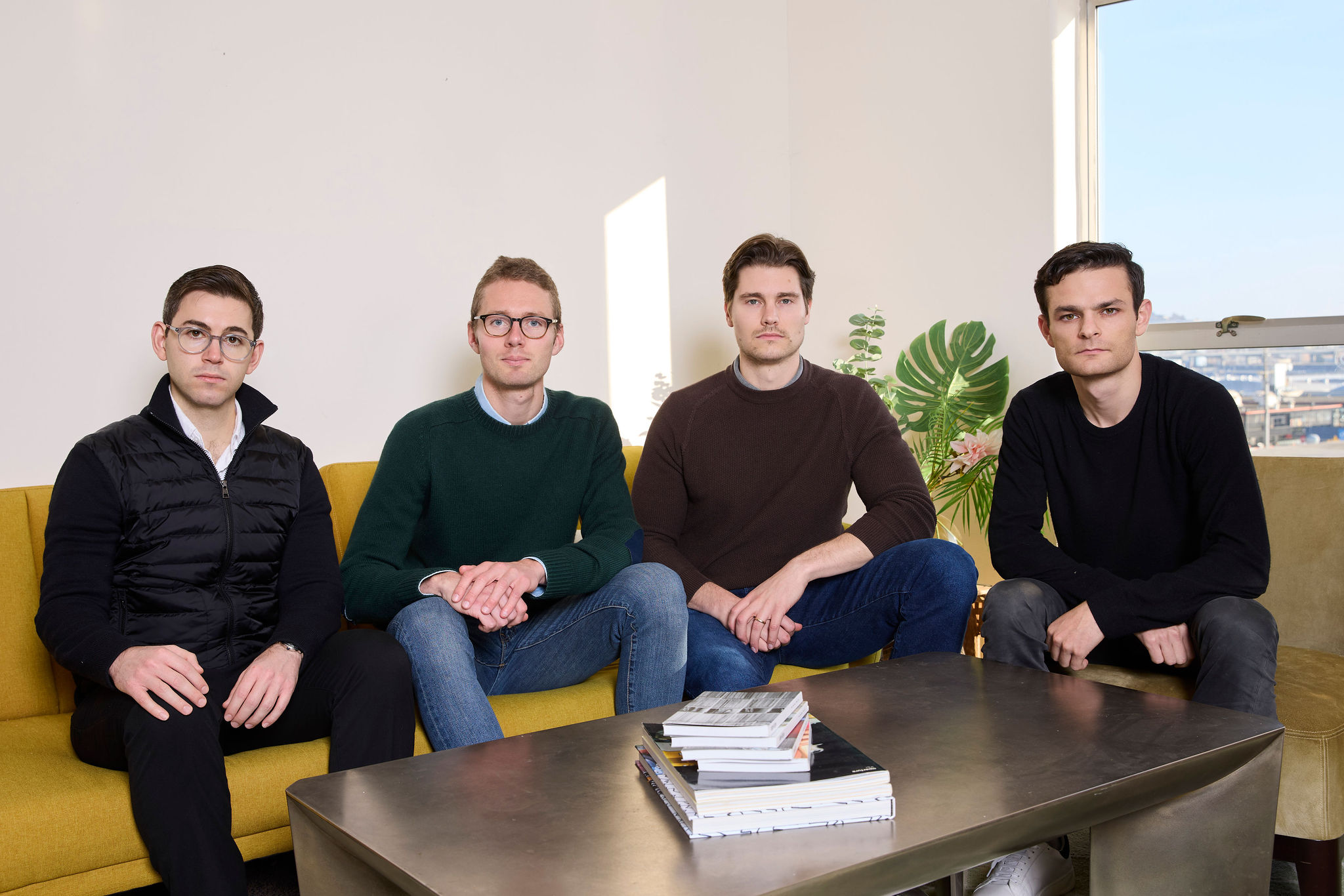
In a striking testament to the accelerating integration of artificial intelligence into critical sectors, Chai Discovery, a burgeoning AI startup established in 2024, has rapidly ascended to prominence within the biopharmaceutical landscape. The company recently announced a significant collaboration with pharmaceutical giant Eli Lilly, a deal poised to leverage Chai’s advanced software for the expedited development of novel medicines. This alliance, coupled with Chai’s recent Series B funding round that propelled its valuation to an impressive $1.3 billion, firmly establishes the firm as a leading innovator in the high-stakes realm of AI-driven drug discovery.
The Transformative Potential of AI in Drug Discovery
The traditional pathway for identifying and developing new therapeutic molecules is notoriously arduous, costly, and fraught with high failure rates. For decades, pharmaceutical companies have relied on labor-intensive and expensive techniques such as high-throughput screening (HTS). This method involves testing millions of compounds against biological targets in a "scattershot" approach, yielding only a minuscule fraction of viable candidates. The entire process, from initial discovery to market approval, can often span over a decade and incur billions of dollars in expenses, with no guarantee of success.
However, a new wave of biotechnology companies is fundamentally reshaping this paradigm by harnessing the immense power of artificial intelligence and sophisticated data technologies. AI promises to revolutionize every stage of drug discovery, from target identification and lead generation to optimization and preclinical testing. By employing machine learning algorithms, researchers can analyze vast datasets of chemical structures, biological pathways, and patient data with unprecedented speed and accuracy. This enables the prediction of molecular interactions, the de novo design of novel compounds with desired properties, and the more efficient optimization of drug candidates, thereby significantly streamlining a process historically characterized by trial and error. The shift from a broad, often inefficient screening process to a targeted, data-driven approach holds the potential to dramatically reduce both the time and cost associated with bringing life-saving medicines to patients.
Chai Discovery’s Swift Ascent and Strategic Alliances
Chai Discovery exemplifies this new breed of biotech innovators. In just over a year since its inception, the San Francisco-based startup has not only garnered hundreds of millions of dollars in investment but also secured the backing of some of Silicon Valley’s most influential venture capitalists, including General Catalyst and, notably, OpenAI. The company’s recent Series B round, which closed in December 2025, injected an additional $130 million into its operations, cementing its unicorn status with a $1.3 billion valuation. This rapid financial scaling underscores the intense investor confidence in Chai’s technological capabilities and market potential.
At the core of Chai’s offering is its proprietary algorithm, "Chai-2," specifically engineered to design and optimize antibodies. Antibodies are crucial proteins generated by the immune system to fight off diseases, and their therapeutic applications range from treating autoimmune disorders to combating cancer and infectious diseases. Chai envisions its software functioning as a "computer-aided design suite" for molecules, providing a digital workbench where scientists can rapidly iterate and refine molecular structures, predict their efficacy, and minimize potential side effects long before costly laboratory synthesis begins. This innovative approach promises to accelerate the discovery of biologics, a complex class of medicines that are increasingly vital to modern healthcare.
Eli Lilly’s Strategic Embrace of AI Innovation
The partnership with Eli Lilly marks a pivotal milestone for Chai Discovery, signifying a major pharmaceutical company’s direct endorsement of its AI platform. Under the terms of the agreement, Eli Lilly will integrate Chai’s software into its drug development pipeline, specifically to aid in the creation of new biologic therapies. This collaboration is particularly timely, as it was announced shortly before Eli Lilly revealed an even broader commitment to AI, unveiling a $1 billion partnership with Nvidia to establish an AI drug discovery lab in San Francisco.
This "co-innovation lab" with Nvidia, a powerhouse in accelerated computing and AI hardware, will combine massive datasets, cutting-edge computational resources, and deep scientific expertise. The dual announcements from Eli Lilly underscore a significant strategic pivot within the pharmaceutical industry: leading players are no longer merely exploring AI but are making substantial, multi-faceted investments to embed it as a core capability across their research and development efforts. For Chai, aligning with a pharmaceutical giant like Eli Lilly provides not only critical validation but also invaluable access to proprietary data, biological insights, and the resources necessary to translate theoretical designs into tangible medical breakthroughs. This trend signifies a shift where technological innovation is increasingly seen as a direct driver of pharmaceutical competitive advantage, with AI poised to redefine the pace and scope of therapeutic advancements.
The Genesis of a Vision: From OpenAI to Chai Discovery
Chai Discovery’s origins trace back further than its 2024 founding, rooted in conversations that began roughly six years prior between its eventual co-founders, Josh Meier and Jack Dent, and OpenAI CEO Sam Altman. Meier, who had previously worked on OpenAI’s research and engineering team in 2018, possessed a deep understanding of cutting-edge AI. Following his departure from OpenAI, Altman reportedly contacted Dent, Meier’s college friend from their computer science days at Harvard, to gauge Meier’s interest in a proteomics startup – a company dedicated to the study of proteins.
At the time, Dent was an engineer at Stripe, another company where Altman was an early investor. Dent confirmed Meier’s openness to collaboration, but Meier himself felt that the underlying AI technology for such an ambitious proteomics venture wasn’t yet mature enough to truly deliver on its promise. The field of AI, particularly in areas relevant to complex biological modeling and generative design, was still nascent. Meier subsequently joined Facebook’s research and engineering team, where he played a crucial role in developing ESM1, the first transformer protein-language model. This groundbreaking work was a critical precursor to the advanced capabilities Chai Discovery now leverages. After his impactful tenure at Facebook, Meier further honed his expertise over three years at Absci, another AI biotech firm focused on drug creation.
By 2024, with significant advancements in AI, particularly in large language models and generative AI, Meier and Dent concluded that the technology had finally reached the inflection point they had awaited. Reconnecting with Altman, they informed him of their decision to launch Chai Discovery. OpenAI not only became one of Chai’s initial seed investors but also provided the nascent startup with office space within its San Francisco Mission neighborhood headquarters, a clear indication of the deep, enduring ties and mutual belief in the founders’ vision. Alongside Meier and Dent, Matthew McPartlon and Jacques Boitreaud co-founded the company, completing the leadership team driving this innovative venture.
Navigating Skepticism and Championing Innovation
Despite the burgeoning excitement and significant investment in AI drug discovery, the sector is not without its critics. Some industry veterans, keenly aware of the inherent complexities and high failure rates of traditional drug development, express skepticism regarding the immediate and profound impact these new AI technologies will have. They argue that while AI can optimize certain steps, the fundamental biological challenges and regulatory hurdles remain formidable.
However, proponents of AI in biopharma are equally vocal in their optimism. Elena Viboch, Managing Director at General Catalyst, a key backer of Chai, articulated her firm’s confidence, stating that companies partnering with innovators like Chai will undoubtedly see tangible results. "We believe the biopharma companies that move the most quickly to partner with companies like Chai will be the first to get molecules into the clinic, and will make medicines that matter," Viboch commented, predicting that such partnerships could lead to "first-in-class medicines enter[ing] into clinical trials" by the end of 2027.
Aliza Apple, head of Eli Lilly’s TuneLab program, which itself focuses on applying AI and machine learning to drug discovery, echoed this sentiment regarding Chai’s product. "By combining Chai’s generative design models with Lilly’s deep biologics expertise and proprietary data, we intend to push the frontier of how AI can design better molecules from the outset, with the ultimate goal to help accelerate the development of innovative medicines for patients," she affirmed. Chai’s co-founder, Jack Dent, attributes the company’s rapid progress to its exceptional team and its commitment to developing highly customized, proprietary AI architectures. He emphasizes that "Every line of code in our codebase is homegrown. We’re not taking LLMs off the shelf… These are highly custom architectures," highlighting a deliberate strategy to build bespoke solutions tailored specifically for the intricacies of molecular design rather than adapting general-purpose AI models. This commitment to foundational, specialized AI development is seen by supporters as a key differentiator.
The Future Landscape of Pharmaceutical Innovation
The implications of companies like Chai Discovery and their collaborations with pharmaceutical giants extend far beyond immediate financial valuations. The successful integration of AI into drug discovery holds the potential to unlock entirely new classes of medicines that have historically been too complex or challenging to develop using conventional methods. This could lead to breakthroughs in treating currently incurable diseases, offering new hope to millions of patients worldwide.
The rapid advancements in AI are transforming pharmaceutical research from a largely empirical science into a more predictive and design-driven discipline. This shift will likely accelerate the development timelines for new drugs, reduce overall costs, and improve the success rate of clinical trials by enabling more precise candidate selection. As AI becomes an indispensable tool, biopharmaceutical companies that fail to adopt and effectively integrate these technologies risk falling behind in an increasingly competitive and innovation-driven market. Chai Discovery, through its strategic partnerships and cutting-edge technology, is positioned at the forefront of this transformative era, helping to define the future of medicine and offering a glimpse into a world where therapeutic breakthroughs are not just faster, but fundamentally reimagined.