Amir Mahmud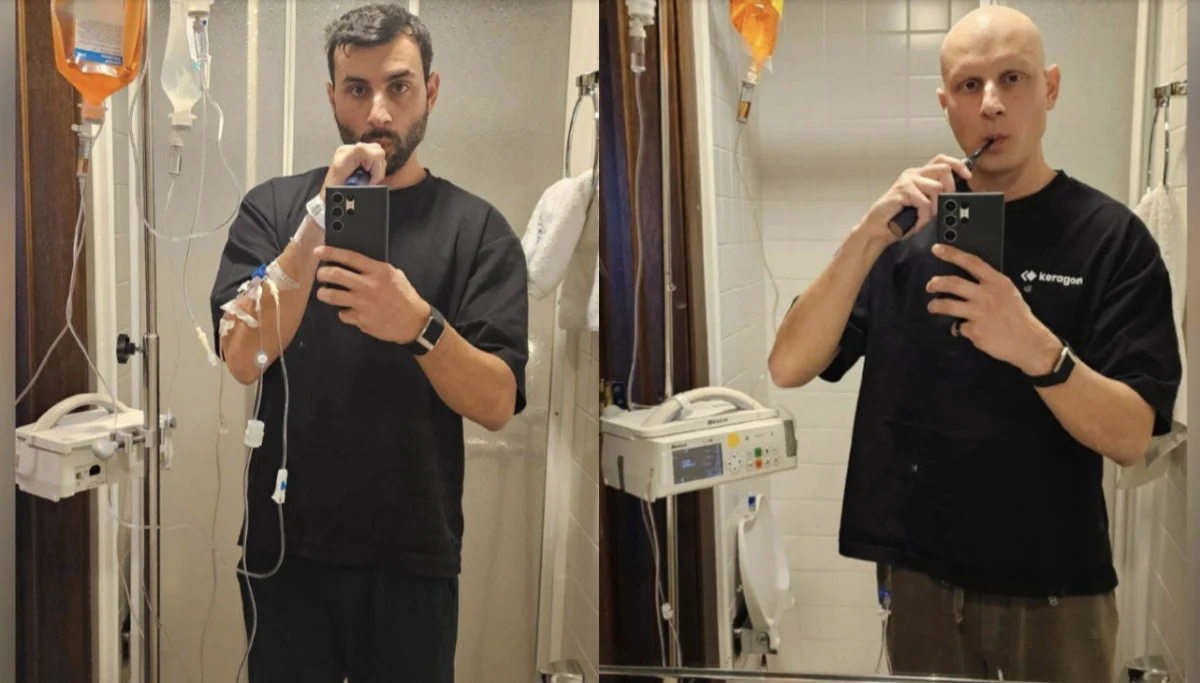
Conno Christou, a name synonymous with meticulous self-optimization within the tech and longevity circles, exemplified the modern pursuit of peak human performance. At 35, he was not merely building his second successful venture; he was meticulously architecting his personal health, adhering to a regimen inspired by leading longevity researchers like Peter Attia and Rhonda Patrick. His daily routine was a testament to data-driven wellness, involving the precise tracking of sleep cycles with a Whoop band cross-referenced by an Oura ring, alongside annual comprehensive biomarker checks—a practice he had consistently maintained for four years. This proactive approach involved fine-tuning everything from his supplement intake and circadian rhythm to his macronutrient ratios, aiming for an optimal state of being. Indeed, his last checkup in 2025 had yielded an impeccable report, indicating robust health across all metrics, a result he described as his best in years.
A Sudden, Unforeseen Diagnosis
The carefully constructed edifice of Christou’s health was unexpectedly challenged following a routine workout. A sudden swelling in his arm, initially dismissed as a minor issue, proved to be the harbinger of a far more serious condition. A week later, a medical consultation revealed two critical blood clots, necessitating immediate surgical intervention. However, the pre-operative examinations unearthed a shocking discovery that dramatically altered the course of events. A doctor, returning with an air of gravity, informed Christou that the planned procedure was being canceled due, not to the clots themselves, but to an enormous mass, measuring an alarming 11 by 11 by 8 centimeters, situated behind his sternum.
A subsequent biopsy confirmed the grim reality: an aggressive, rapidly proliferating form of non-Hodgkin’s lymphoma. This diagnosis was particularly jarring, as this rare type of cancer, affecting approximately one in 420,000 individuals, is understood to stem from a random genetic mutation, bearing no discernible link to lifestyle, diet, or stress—factors Christou had so diligently controlled. The tumor, a silent intruder, had likely developed over a mere three months, and according to medical estimates, was just three weeks shy of progressing to Stage Four. Reflecting on this narrow escape, Christou recounted from his home in Athens, where he spends part of his time, that he felt "lucky in my unluckiness," acknowledging that the life-threatening condition was only uncovered because he sought care for an unrelated ailment. This moment marked a profound turning point, initiating an intense period of self-education into the complexities and sometimes fragmented nature of the healthcare system, and a demonstration of what an empowered patient, equipped with modern tools, can achieve.
Navigating Medical Uncertainties: The Power of Multiple Perspectives
Christou’s initial foray into cancer treatment brought him face-to-face with the inherent variability in medical recommendations, even among highly respected specialists. His first oncologist, a renowned expert in the field, proposed a less intensive chemotherapy regimen, citing its effectiveness for his presentation. Christou promptly scheduled his first infusion. Yet, on the eve of his scheduled treatment, a deep-seated instinct, perhaps honed by his entrepreneurial drive to challenge assumptions, prompted him to seek a second opinion.
This pivotal decision proved prescient. The second oncologist offered a starkly different recommendation: a far more aggressive, continuous in-hospital infusion protocol, cycling every three weeks over a six-month period. This recommendation was specifically tailored to Christou’s unique pathology, promising an 85% success rate compared to the first doctor’s estimate of approximately 60% for the lighter treatment. The juxtaposition of two world-class physicians offering diametrically opposed treatment strategies highlighted a critical challenge within personalized medicine. For Christou, this underscored a fundamental principle he applied to his business ventures: "As founders, we hold the wheel." He emphasized that patients should not passively accept the first piece of advice, but rather actively engage in their treatment decisions.
However, Christou did not simply defer to the second physician’s counsel. Over the ensuing 48 hours, he embarked on an exhaustive quest for clarity, leveraging his extensive professional network to solicit a total of twelve opinions. He reached out to hematologists and oncologists across the United States and internationally, calling in every available favor. The consensus was overwhelming: eleven out of twelve specialists advocated for the more aggressive treatment path. For Christou, this decision was not born of bravery, but rather of logic and his deeply ingrained data-driven approach. With existential stakes, the choice became clear.
The Entrepreneurial Approach to Healing
Over the arduous six-month course of his chemotherapy, Christou approached his battle against cancer with the same strategic rigor he applied to building a company. He conceptualized the treatment as a "marathon of sprints," each cycle a finite challenge brimming with critical data points. Drawing upon his mandatory 25-month military service in Cyprus at age 18, he adopted a "good soldier" mentality, committing to trust the process, cycle by cycle.
His commitment to personal health tracking continued unabated. He wore his Whoop band throughout his treatment, finding it remarkably accurate in predicting the days his immune system would be at its lowest ebb, often flagging these vulnerable periods before any symptoms manifested. To capture the nuances of his physical and psychological state, he maintained a meticulous symptom journal, using voice transcription to log every subtle shift, side effect, medication, and counter-medication. His focus narrowed to three critical variables: sleep, nutrition, and, crucially, psychology. He underscored the profound impact of mental fortitude, stating that "It moves the needle more than anything." A testament to his resilience, he revealed, "I never asked ‘why me’—not once. That question has no useful answer."
The Dawn of AI in Patient Empowerment
Christou’s experience transcended traditional patient engagement through his pioneering integration of artificial intelligence into his personal healthcare journey. He meticulously fed all available data—blood results, scan reports, wearable device output, and detailed journal entries—into Claude, a leading large language model. This innovative application of AI places him at the forefront of a burgeoning trend. A public opinion poll released in March indicated that a significant one-third of American adults are now utilizing chatbots for health information and advice, with a growing number of anecdotal accounts online suggesting that AI is, for some patients, filling critical gaps in conventional medical care.
However, this emerging frontier is not without its caveats. Medical experts, including Danielle Bitterman, clinical lead for data science and AI at Mass General Brigham, have urged caution, highlighting in recent months that general-purpose chatbots can be "frequently wrong" and have not undergone thorough evaluation for personalized diagnoses. Christou himself readily acknowledges these limitations, affirming that AI "didn’t replace the doctors" but rather "helped me ask the right questions." For a condition as rare as his, one an oncologist might encounter perhaps once a year, accessing a model that had absorbed the entirety of available medical literature offered an unparalleled depth of insight, far surpassing the capabilities of a standard internet search.
AI’s Decisive Role in a Critical Juncture
The true transformative power of AI in Christou’s case became unequivocally apparent during a critical phase at the conclusion of his treatment. His final PET scan, the standard imaging modality used to detect active disease, returned an ambiguous result. This uncertainty led his oncologist to initiate discussions about a potential second line of therapy, including the alarming prospect of radiotherapy in the sensitive regions near his heart and lungs.
Unwilling to proceed without absolute clarity, Christou once again delved into comprehensive research. He uncovered a critical, yet often overlooked, statistic: for his specific type of lymphoma, the false-positive rate on end-of-treatment PET scans hovers around 60%. This astonishing figure, he remarked, still astounds him in an era of advanced medical technology. "It’s 2026," he observed, "Sixty percent."
This discovery prompted him to feed all three of his PET scans, alongside his MRI images, into Claude. The AI model, sifting through vast quantities of medical literature, flagged a known but easily missed phenomenon: in patients under 40 recovering from this particular lymphoma, the thymus gland can reactivate after chemotherapy. This reactivation often presents on imaging as what appears to be active disease, leading to potential misdiagnosis. Considering Christou’s age and the specific characteristics of his scans, the AI model calculated the probability of this explanation—thymus rebound—at approximately 90%. Armed with this compelling data, Christou sought three additional medical opinions. The fourth doctor he consulted definitively confirmed the AI’s assessment: thymus rebound. There was no active disease, and consequently, no radiotherapy was needed. He was officially clear.
A New Perspective and a Broader Vision for Healthcare
The past year has left an indelible mark on Conno Christou, reshaping his understanding of health, work, and the precious commodity of time. His current company, Keragon, an AI-powered platform designed to automate administrative operations for medical practices, was conceived and built prior to his diagnosis. However, experiencing the healthcare system as a patient has endowed him with an invaluable new perspective. He witnessed firsthand the pervasive administrative burden on nurses and doctors, diverting their attention from direct patient care. He also observed the often-generalized nature of treatment protocols, citing his own experience of receiving the same chemotherapy regimen as an 80-year-old woman, with side effects managed through a cascade of additional drugs, each introducing its own set of complications. He is certain that future generations will look back at this era of treatment with a sense of unease.
This profound personal journey has instilled a new set of priorities. Sundays are now largely reserved for rest and personal time. He consciously strives to be present—whether at lunch with friends, at home with his dog, or in conversations that might once have felt like a distraction from work. A piece of advice from a venture capitalist friend years ago—"Be happy now"—replayed in his mind throughout his treatment. He now deeply appreciates its profound importance, acknowledging it as one of life’s most challenging yet rewarding pursuits.
Christou, genuinely committed to sharing his insights, readily offers to connect with anyone undergoing a similar experience, to exchange notes and compare journeys. His message regarding the transformative potential of AI in patient care is unequivocal. "It’s not happening in 10 years," he asserts, speaking of what artificial intelligence can already accomplish for patients willing to harness its power. "It’s happening today." As healthcare continues its inevitable evolution, stories like Christou’s underscore the growing role of informed patient advocacy and the innovative application of technology in navigating complex medical challenges, pushing the boundaries of what personalized medicine can achieve.