Amir Mahmud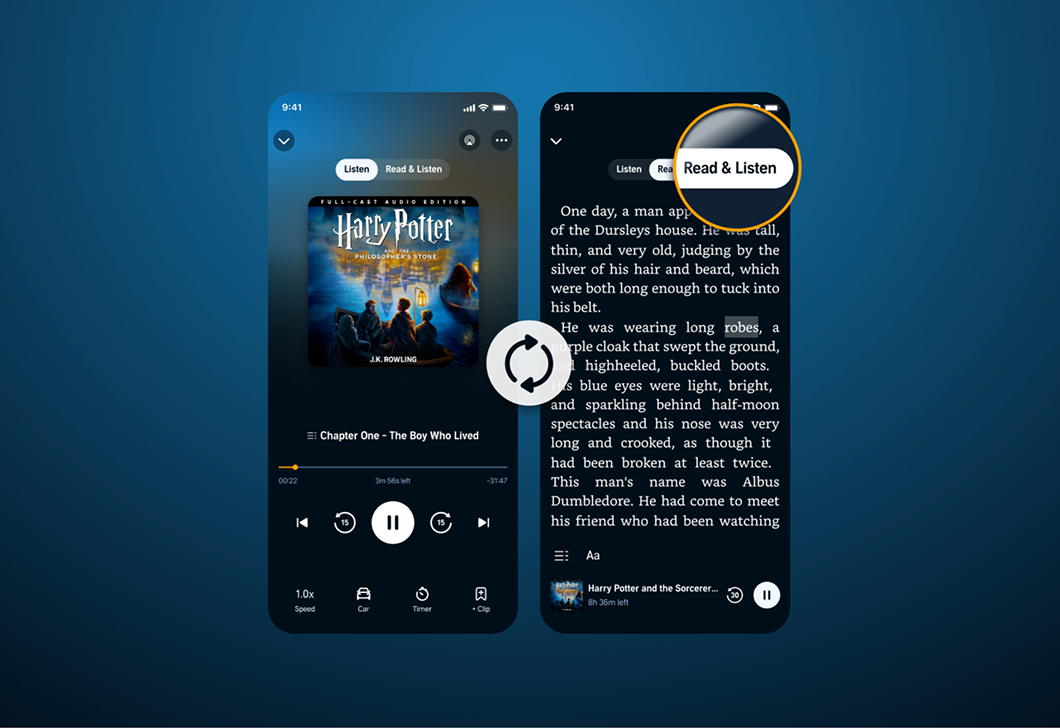
In a significant move poised to reshape digital literary consumption, Audible, the Amazon-owned audiobook and podcast giant, has introduced a new "Immersion Reading" feature within its application. This innovation allows users who possess both the ebook and audiobook versions of a title to seamlessly follow the text of the Kindle ebook while simultaneously listening to the professional narration, with the text highlighting in real-time to match the audio. The announcement comes just days after competitor Spotify signaled its own venture into physical book sales, alongside new audiobook features that include similar syncing capabilities, underscoring a growing industry trend towards integrated, multi-modal content experiences.
A Deeper Dive into the ‘Read & Listen’ Functionality
The newly launched "Read & Listen" mode, as Audible terms it, aims to bridge the gap between traditional reading and audio consumption. Functionally, it requires users to own both the Kindle ebook and the corresponding Audible audiobook. Once both formats are in a user’s digital library, the Audible app will automatically identify eligible titles. The core of the feature lies in its real-time text highlighting, which synchronizes with the narration, allowing for an intuitive visual and auditory experience. Furthermore, the system enables effortless switching between formats and across multiple devices, offering unparalleled flexibility for readers on the go or those who prefer to alternate their consumption methods.
To encourage adoption, Audible is offering discounted audiobooks to customers who already own the matching Kindle ebook, making the dual-format experience more accessible. At its initial rollout, hundreds of thousands of titles are supported, spanning multiple languages including English, German, Spanish, Italian, and French. The feature first debuted in the U.S., with plans to expand its availability to the U.K., Australia, and Germany in the subsequent months. This phased global launch strategy indicates a careful approach to integrating the complex technical backend required for such a sophisticated synchronization across diverse content libraries.
The Evolution of Digital Reading: A Brief History
The introduction of "Immersion Reading" is not merely a novel feature; it represents a significant milestone in the ongoing evolution of how humanity interacts with written and spoken narratives. The journey of digital reading began in earnest with the advent of dedicated e-readers in the late 1990s and early 2000s, such as the Rocket eBook and the Sony Librie. However, it was Amazon’s Kindle, launched in 2007, that truly popularized the ebook format, making digital libraries accessible to the masses. Concurrently, audiobooks, which originated on physical media like cassettes and CDs, were transitioning to digital downloads, propelled by platforms like Audible, acquired by Amazon in 2008.
For years, ebooks and audiobooks largely existed as separate, albeit complementary, mediums. Readers often found themselves purchasing both versions of a beloved title, managing their progress independently. Amazon itself made an early foray into integrating these formats with "Whispersync for Voice," a feature primarily housed within the Kindle app, which allowed users to switch between reading an ebook and listening to its audiobook counterpart, maintaining their place across devices. This earlier iteration, while innovative, primarily served to facilitate switching rather than enabling simultaneous, synchronized consumption within a single interface. The new Audible feature, by bringing the synchronized experience directly into the audiobook app, signals a strategic shift towards making the multimodal experience the default rather than an optional add-on. This development also comes at a time when competition in the digital audio space is intensifying, with major players like Spotify, traditionally known for music streaming, expanding aggressively into the audiobook market, signaling a broader industry pivot towards comprehensive content offerings.
Beyond Convenience: The Cognitive and Educational Benefits
Audible’s "Read & Listen" feature offers more than just convenience; it taps into established principles of cognitive science and learning, promising enhanced engagement and comprehension. The company itself cites internal data and industry research suggesting that combining reading and listening can significantly improve focus and understanding. Furthermore, Audible claims that customers who engage with both formats consume nearly twice as much content per month compared to those who only listen to audiobooks, indicating a potential for deeper immersion and greater literary throughput.
From an academic perspective, multimodal learning – the simultaneous processing of information through multiple sensory channels – is widely recognized for its effectiveness. When visual text is reinforced by auditory narration, the brain forms stronger neural connections, which can lead to better memory retention, improved vocabulary acquisition, and a more nuanced grasp of complex concepts. This makes "Immersion Reading" particularly beneficial for several distinct user groups. Students, for instance, can leverage the feature to enhance their study habits, improve reading speed, and solidify their understanding of academic texts. Language learners stand to gain immensely, as hearing correct pronunciation while seeing the corresponding text can accelerate vocabulary building and improve listening comprehension in a foreign language. Individuals with learning differences, such as dyslexia or ADHD, who may struggle with traditional reading, can find a more accessible and engaging pathway to literature through synchronized narration, which alleviates cognitive load and maintains focus. Moreover, for the casual reader, the feature offers a richer, more dynamic way to experience a story, particularly when performed by a skilled voice actor who brings characters and settings to life. This stands in stark contrast to the often monotonous, AI-generated narration offered by services like Alexa, which, while convenient, lacks the emotional depth and interpretative nuance of a professional human voice.
Market Dynamics and Industry Implications
The introduction of "Immersion Reading" is a strategic maneuver by Amazon to solidify its dominant position in the digital content landscape. By deeply integrating its Kindle ebook and Audible audiobook ecosystems, Amazon is not only enhancing user experience but also creating a more "sticky" environment that encourages users to invest further in its platforms. The discounted audiobook pricing for ebook owners serves as a powerful incentive to cross-sell, effectively converting single-format consumers into dual-format power users. This strategy aims to boost overall book sales across formats, leveraging Amazon’s vast customer base and sophisticated recommendation engines.
In a competitive market increasingly populated by new entrants like Spotify, which recently announced its own audiobook syncing features, Audible’s move is a clear statement of intent to innovate and differentiate. While Spotify’s entry diversifies the audiobook landscape, Audible’s deep integration with Kindle represents a unique competitive advantage rooted in Amazon’s extensive literary empire. The feature also has implications for publishers and authors. Audible has explicitly stated that the new functionality will not impact publishers’ royalty payments, a crucial reassurance in an industry sensitive to revenue models. This commitment helps maintain goodwill with content creators and ensures continued availability of a wide range of titles. Ultimately, this move reflects a broader market trend where digital content providers are striving to offer comprehensive, integrated experiences that cater to diverse consumer preferences, blurring the lines between different media formats to capture and retain user attention.
The Cultural Shift: Redefining "Reading"
Perhaps one of the most profound impacts of "Immersion Reading" lies in its contribution to a subtle yet significant cultural shift: the redefinition of what it means to "read." As Andy Tsao, Chief Product Officer at Audible, eloquently put it, "Audiobooks count as reading… But now at Audible, you can read with your eyes too. Read & Listen gives book lovers the best of both worlds." This statement challenges traditional notions that limit reading to visual text consumption, embracing the validity of auditory engagement with narratives.
This convergence of formats not only broadens the definition of reading but also enhances accessibility. For individuals with visual impairments, or those who find sustained visual reading challenging, synchronized narration offers an inclusive pathway to literature. It democratizes the experience of engaging with stories, ensuring that the richness of written works is accessible to a wider audience. Moreover, the feature enriches the storytelling experience itself. Professional narrators can imbue characters with distinct voices, convey emotions, and clarify pronunciations – a particularly thorny issue in genres like fantasy, where unfamiliar names and places can often disrupt the reading flow. The ability to see the text while hearing these nuances deepens immersion and connection to the narrative. In essence, "Immersion Reading" reflects a contemporary cultural inclination towards multitasking and flexible consumption, allowing individuals to integrate their literary pursuits seamlessly into various aspects of their daily lives, whether commuting, exercising, or simply relaxing at home.
The launch of Audible’s "Immersion Reading" feature marks a pivotal moment in the digital publishing landscape. By harmonizing the distinct advantages of ebooks and audiobooks, it offers a richer, more flexible, and potentially more effective way for individuals to engage with literature. As technology continues to evolve, innovations like this are not merely about convenience; they are about continually redefining and expanding the boundaries of how we connect with stories and information in an increasingly digital world.







 Azin Asro