Amir Mahmud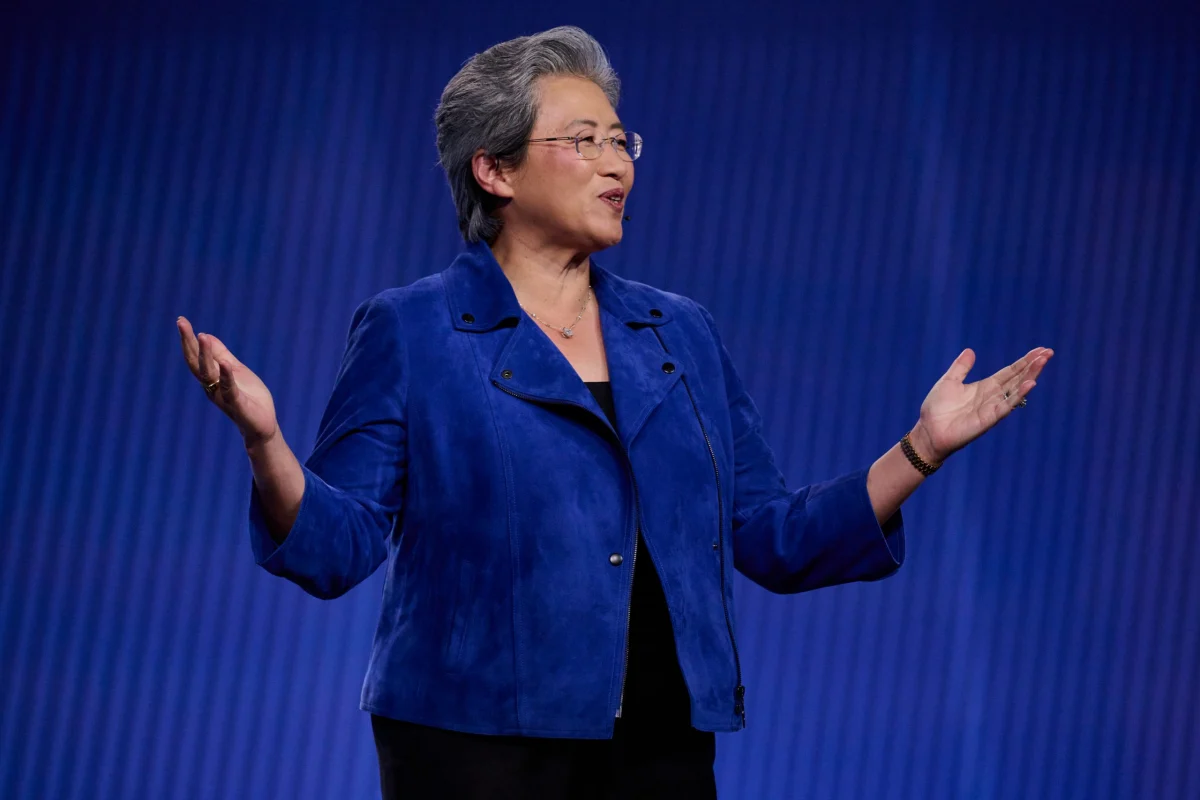
Advanced Micro Devices (AMD) has made a decisive move to challenge Nvidia’s long-standing dominance in the rapidly expanding artificial intelligence (AI) hardware sector with the unveiling of its groundbreaking rack-scale system, Helios. This sophisticated infrastructure solution is meticulously engineered to address the monumental computing demands of the world’s most advanced AI research laboratories and data centers. The strategic launch, a cornerstone of AMD’s sold-out Advancing AI conference held in San Francisco, showcased not only the potent capabilities of Helios but also an impressive roster of early adopters, including tech giants like Microsoft, OpenAI, and Meta, signaling a pivotal moment in the competitive landscape of high-performance AI computing.
The Dawn of a New Era in AI Infrastructure
The introduction of Helios represents AMD’s concerted effort to capture a significant share of the burgeoning market for AI accelerators. At the heart of this ambition is the Helios rack system, which AMD Chair and CEO Dr. Lisa Su emphatically promoted as the industry’s "highest performance AI rack." Designed specifically to train and execute "the most demanding frontier models in the world at massive scale," Helios integrates a multitude of processors and accelerators into a singular, high-powered unit. Such rack systems are indispensable components of modern data centers, providing the colossal computational horsepower required for training complex AI models and managing other intensive workloads that define the cutting edge of artificial intelligence. AMD has confirmed that these systems are slated for deployment by leading AI enterprises, operating at what the company describes as "gigawatt-scale," underscoring their immense power requirements and operational capacity.
Rack-scale systems are not merely collections of individual components; they represent a holistic approach to supercomputing. They bundle advanced Graphics Processing Units (GPUs), Central Processing Units (CPUs), high-speed interconnects, memory, and sophisticated cooling mechanisms into a standardized form factor designed for efficiency and scalability within data center environments. For AI applications, especially those involving large language models (LLMs) and generative AI, the ability to rapidly transfer data between thousands of processing cores is paramount. Helios is built to optimize this entire stack, from the silicon level up to the system architecture, aiming to reduce bottlenecks and maximize throughput for the most computationally intensive AI tasks.
A Historical Battle for Silicon Supremacy in AI
The contest for AI hardware leadership is not new, but its stakes have never been higher. For years, Nvidia has been the undisputed titan in this arena, largely thanks to its early recognition of the parallel processing capabilities of GPUs for scientific computing and later, for machine learning. Nvidia’s CUDA platform, a proprietary parallel computing platform and application programming interface (API) model, fostered a robust ecosystem that became the de facto standard for AI development. Its Vera Rubin and Grace Blackwell rack-scale systems have historically set the benchmark for AI supercomputing, enjoying widespread adoption among researchers and cloud providers.
AMD, while a formidable player in the broader semiconductor market, has faced an uphill battle in dislodging Nvidia from its entrenched position in AI. However, the company has been steadily investing in its Instinct series of GPUs and its ROCm software platform, an open-source alternative to CUDA. The development of Helios is the culmination of these efforts, positioning AMD as a credible alternative with a competitive product. The initial performance metrics, as reported by industry observers, suggest that Helios has the potential to outperform some of Nvidia’s established offerings in several key areas, indicating that AMD’s strategy of focusing on raw performance and an open ecosystem is beginning to bear fruit.
The journey to this competitive juncture began years ago. While GPUs were initially designed for graphics rendering in video games, researchers in the early 2000s discovered their immense potential for accelerating general-purpose computations, particularly in fields like scientific simulations and cryptography. By the early 2010s, with the advent of deep learning, the parallel architecture of GPUs proved exceptionally well-suited for the matrix multiplications central to neural network training. Nvidia capitalized on this, building not just powerful hardware but also a comprehensive software stack with CUDA that cemented its lead. AMD, despite having strong GPU technology, was slower to build out a comparable software ecosystem for AI, a gap it has been aggressively trying to close with ROCm and strategic partnerships.
Strategic Alliances and Market Penetration
The swift adoption of Helios by several high-profile customers underscores the system’s perceived value and AMD’s growing influence. Microsoft’s commitment to expanding its Azure infrastructure with Helios is particularly significant. As a leading cloud provider, Microsoft’s endorsement provides AMD with a massive channel for deployment and validation, directly challenging Nvidia’s stronghold in the cloud AI space. Microsoft CEO Satya Nadella’s announcement of this expansion signals a strategic diversification in AI compute suppliers for the tech giant.
Beyond cloud infrastructure, the commitment from AI pioneers like OpenAI and Anthropic further solidifies Helios’s market standing. OpenAI, creators of ChatGPT, and Anthropic, known for its Claude models, are at the forefront of developing advanced AI. Their decision to deploy Helios suggests that AMD’s system meets the rigorous demands of cutting-edge AI research and development. A notable strategic partnership announced between Anthropic and AMD involves the deployment of up to two gigawatts of AMD Instinct MI450 series GPUs through the new rack system. This massive scale of deployment highlights the profound trust these leading AI labs are placing in AMD’s hardware capabilities. Meta, the parent company of Facebook and a major investor in AI research, along with Oracle, a significant enterprise cloud provider, are also among the early customers planning to integrate Helios into their operations. These diverse customer commitments reflect a broad market acceptance and a clear signal that the AI industry is seeking alternatives to ensure supply chain resilience and foster competition.
The Trillion-Dollar Horizon: Dr. Su’s Vision for AI Accelerators
Dr. Lisa Su’s keynote address at the Advancing AI conference was not merely a product launch; it was a profound commentary on the future trajectory of the semiconductor industry. She articulated a bold vision, predicting that by 2030, chips powering AI will constitute a massive portion of the overall computing market, with the AI accelerator market alone projected to reach an astounding $1.4 trillion. This forecast positions the AI accelerator market by the end of the decade to nearly rival the size of the entire semiconductor market today, underscoring the unprecedented growth anticipated in this sector.
This exponential growth, according to Dr. Su, is driven by a "step change in compute demand," primarily fueled by the emergence of "agentic AI." Agentic AI refers to a new paradigm where AI models are not merely reactive but are capable of autonomous reasoning, planning, and executing multi-step tasks to achieve complex goals. For instance, when an agentic AI is tasked with solving a problem, it might involve dozens of sequential steps: reasoning through sub-problems, calling various tools and APIs, accessing and processing data, and iteratively refining its approach until a solution is found. Each of these steps, especially when performed at scale, demands immense computational resources, particularly a vast number of GPUs.
Dr. Su emphasized that GPUs are expected to comprise the "vast majority" of this colossal market. Her reasoning centers on the current "infancy" of AI algorithms and the continuous evolution of workloads. This dynamic environment favors the programmability offered by GPUs over more rigid, specialized ASICs (Application-Specific Integrated Circuits), allowing developers the flexibility to adapt to new models and optimize performance as the field rapidly advances. AMD’s strategy with Helios, therefore, is not just about raw power but also about providing a programmable and adaptable platform that can evolve with the ever-changing demands of AI research and deployment.
AMD’s Broader Portfolio and Future Outlook
Beyond Helios, AMD is also bolstering its broader portfolio to support the future of data center computing. The company introduced its Venice-X CPU, specifically designed for data centers and high-computing workloads, with an expected launch in 2027. This CPU, featuring innovations like 3D V-Cache and a high core count, is intended to complement AMD’s GPU offerings, providing a comprehensive compute solution for the most demanding applications. This holistic approach, offering "full-stack compute for the agentic AI era," aims to provide customers with integrated, high-performance solutions that cover both CPU and GPU needs, thereby simplifying deployment and optimizing performance.
The challenge for AMD remains substantial. Nvidia has cultivated a powerful ecosystem, not just in hardware but also in software tools, developer communities, and deep industry relationships. Overcoming this inertia requires not only superior hardware performance but also a compelling software story and robust customer support. AMD’s commitment to open standards and its aggressive pursuit of strategic partnerships are key components of this strategy, aiming to reduce vendor lock-in and offer more flexible solutions.
Market Dynamics and Societal Impact
The intensifying competition in the AI hardware market has profound implications beyond corporate balance sheets. The insatiable demand for AI compute capacity is driving unprecedented growth in data center construction and energy consumption, raising important questions about sustainability and infrastructure development. As AI models become more complex and widespread, the efficiency and accessibility of underlying hardware will directly influence the pace of innovation and the societal impact of AI technologies.
A more competitive hardware landscape, spurred by AMD’s aggressive entry with Helios, could lead to several positive outcomes. Increased competition often drives down costs, making advanced AI capabilities more accessible to a wider range of businesses and researchers. It also fosters innovation, as companies strive to differentiate their products through performance, efficiency, and new architectural designs. This dynamic environment is crucial for pushing the boundaries of AI, potentially accelerating breakthroughs in fields like medicine, climate modeling, materials science, and personalized education.
Moreover, the race for AI silicon supremacy has significant geopolitical implications. National security, economic competitiveness, and technological leadership are increasingly intertwined with the ability to design and manufacture cutting-edge semiconductors. Companies like AMD and Nvidia are at the forefront of this global technological contest, and their advancements play a critical role in shaping the future of AI development worldwide. The emergence of strong alternatives to existing market leaders helps to diversify the supply chain, reducing reliance on a single vendor and potentially mitigating risks associated with geopolitical tensions or supply disruptions.
In conclusion, AMD’s launch of the Helios AI rack-scale system marks a significant escalation in the battle for AI hardware dominance. Backed by compelling performance claims and an impressive list of early adopters, AMD is poised to capture a substantial share of the rapidly expanding AI accelerator market. As the industry hurtles towards a $1.4 trillion valuation for AI accelerators by 2030, the strategic moves by AMD, coupled with the relentless innovation from its competitors, promise an exhilarating period of technological advancement that will shape the future of artificial intelligence and its pervasive impact on society.