Amir Mahmud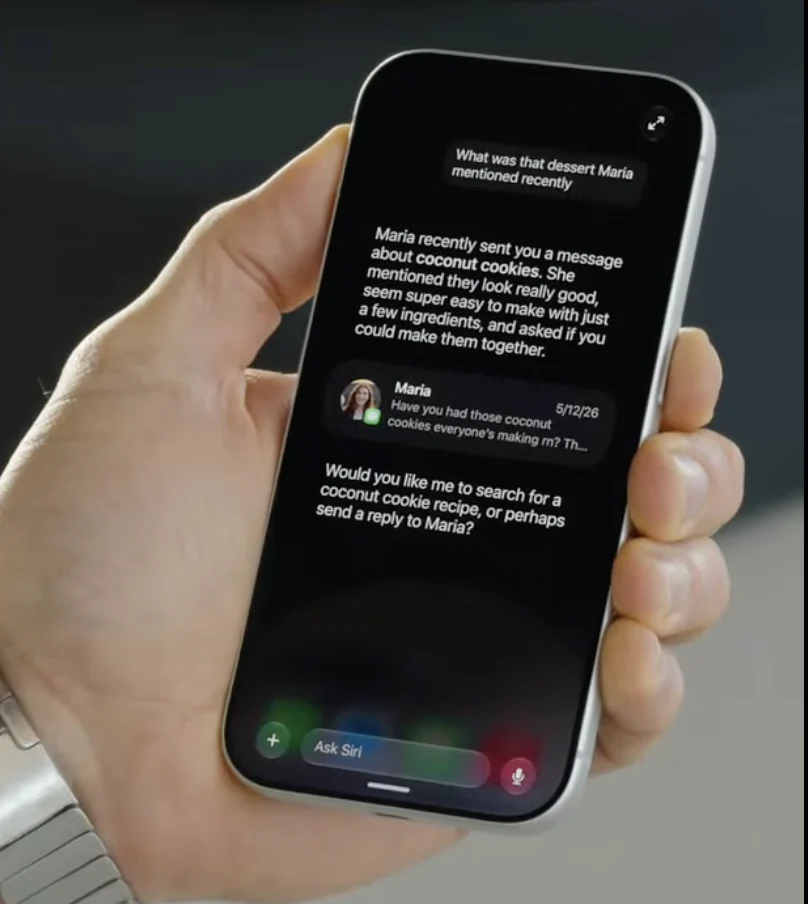
After years of anticipation, numerous reports of delays, and a significant investment in artificial intelligence, Apple has finally rolled out a substantially revamped version of its virtual assistant, Siri, to users participating in the iOS 27 public beta. Launched in July, this update ushers in a new era for Siri, fulfilling long-held promises of a more intuitive and capable AI helper that can deeply understand personal context, access extensive world knowledge, and seamlessly retrieve information stored across an iPhone. Yet, despite the demonstrable progress and impressive new functionalities, the arrival of this advanced Siri has been met with a nuanced reception, often characterized by a sense of quiet fulfillment rather than groundbreaking excitement, largely due to the rapid advancements occurring across the broader artificial intelligence landscape.
Siri’s Tumultuous Genesis and Evolution
To fully appreciate the significance of this current overhaul, it’s crucial to revisit Siri’s journey since its debut. Introduced in 2011 alongside the iPhone 4S, Siri was initially a revolutionary feature, positioning Apple at the forefront of voice-activated technology. At a time when interacting with devices primarily involved touch, Siri offered a glimpse into a future where natural language could bridge the gap between human intent and machine execution. Its initial capabilities, though rudimentary by today’s standards, captured the public imagination, allowing users to send texts, set reminders, and ask basic questions using only their voice. This early success solidified Apple’s reputation for innovation and intuitive user experiences.
However, as the years progressed, Siri’s development appeared to lag behind. While competitors like Amazon’s Alexa and Google Assistant entered the market with increasingly sophisticated natural language processing and integration capabilities, Siri often struggled with contextual understanding, multi-step commands, and even basic requests. Users frequently encountered frustrating responses like "I don’t understand that," or "I can’t do that yet," leading to a gradual erosion of confidence and a perception that Siri was perpetually stuck in a state of underperformance. This period saw Siri become a subject of frequent critique within the tech community, often highlighted as a significant area where Apple, typically a pioneer, was falling behind. Reports of internal restructuring, strategic shifts, and the inherent challenges of integrating advanced AI capabilities into a privacy-centric ecosystem further underscored the difficulties Apple faced in modernizing its flagship AI assistant. The long wait for a truly intelligent Siri became a recurring theme in discussions about Apple’s innovation trajectory.
A New Era of Intelligent Interaction
The current iteration of Siri, available through the iOS 27 public beta, marks a dramatic departure from its predecessors. Apple has meticulously addressed many of the assistant’s long-standing deficiencies, delivering a user experience that aligns more closely with contemporary expectations for AI. At its core, the new Siri boasts significantly enhanced natural language understanding, allowing for fluid, back-and-forth conversations that feel less like interacting with a rigid command-line interface and more like speaking to an actual assistant. Users can now fine-tune Siri’s voice responses, adjusting expressivity and pacing to suit their preferences, or opt to type their queries directly into a dedicated Siri app, which also maintains a history of past interactions for seamless continuity.
The most transformative aspect, however, is Siri’s newfound ability to comprehend and leverage personal context. This means the assistant can intelligently sift through the vast amount of data stored on an iPhone – photos, emails, contacts, messages, calendar events – to fulfill requests, even when the user isn’t entirely precise. For instance, a user might ask, "Find the last receipt I saved on my phone," without specifying the app, date, or content of the receipt. Siri can now locate and present that information, demonstrating a sophisticated understanding of user intent and data organization. This capability extends to extracting details from images, such as a driver’s license number from a photo of a license, or a QR code from a screenshot, making everyday tasks significantly more efficient.
Beyond retrieval, Siri is now deeply integrated into the operating system and various applications, empowering users to execute a wide array of actions through voice commands. This includes common tasks like getting directions, playing music, editing photos, drafting emails, or managing audiobooks. Crucially, a persistent complaint regarding Siri’s inconsistency in playing requested media on preferred apps appears to have been resolved, a seemingly low bar that nonetheless represents a significant improvement in user reliability. Furthermore, the assistant can engage in more complex, generative tasks like brainstorming ideas, learning about new topics, or even suggesting recipes based on available ingredients, showcasing its ability to tap into broader knowledge bases and apply reasoning. Its integration with the camera’s viewfinder for real-world object identification and practical utilities like splitting a restaurant bill further exemplify its expanded utility. In essence, the upgraded Siri embodies the comprehensive, intuitive assistant that users have long envisioned for their Apple devices, capable of answering diverse questions without defaulting to web searches.
The Paradox of Progress: Catching Up in a Fast-Moving Race
Despite these monumental improvements, the debut of the advanced Siri has elicited a unique sentiment – one of significant relief and satisfaction, yet curiously devoid of the "wow" factor that once accompanied Apple’s innovations. This paradox stems from the extraordinary pace of advancement in the broader artificial intelligence landscape. In the very years Apple was meticulously refining Siri, the AI industry experienced an unprecedented surge, spearheaded by the rise of large language models (LLMs) and generative AI. Tools like OpenAI’s ChatGPT, Google’s Bard (now Gemini), and other specialized AI agents have redefined expectations, demonstrating capabilities in coding, multi-step task completion, complex reasoning, creative content generation, and autonomous operation.
When Apple’s Siri AI finally arrives, it does so in a world where being a "functional chatbot" or a capable "AI helper" is no longer a groundbreaking feat but an expected baseline. The technological frontier has moved beyond mere conversational interfaces to intelligent agents capable of profound cognitive tasks. This context frames Siri’s impressive enhancements as a necessary catch-up, a successful effort to bring its assistant up to contemporary standards, rather than a pioneering leap that sets new benchmarks. It feels less like a revolution and more like a long-overdue fix to a persistent "bug" – the "forever-broken Siri" of yesteryear. The marvel, for many, is simply that it now reliably performs tasks it was always conceptually meant to handle.
Strategic Partnerships and Architectural Foundations
Underpinning Siri’s transformation is a strategic technical foundation, most notably Apple’s partnership with Google for the integration of its Gemini AI models. This collaboration is critical, allowing Apple to leverage Google’s cutting-edge AI research and computational power. However, it’s essential to understand that Apple hasn’t merely rebranded Google’s technology. Instead, it has utilized Gemini’s models to train and refine its own proprietary "Apple Foundation Models." These models are specifically optimized to run on Apple’s custom silicon, such as the A-series chips in iPhones and iPads, and its secure, private cloud compute infrastructure. This hybrid approach allows Apple to maintain tight control over the user experience, ensure seamless integration with its hardware and software ecosystem, and, critically, uphold its stringent privacy standards by processing as much data as possible on-device or within its private, encrypted cloud. This architectural choice is a significant differentiator, addressing growing societal concerns about data privacy in the age of pervasive AI.
Market, Social, and Cultural Implications
The revitalized Siri carries significant implications across various dimensions. In the competitive tech market, it allows Apple to re-assert its position in the AI assistant space, directly challenging rivals like Google Assistant, Amazon Alexa, and Microsoft’s Copilot. This renewed competition could spur further innovation across the industry, benefiting consumers with even more capable and integrated AI experiences. For the average iPhone user, the impact is tangible: increased productivity, greater ease of device interaction through natural language, and a deeper, more personalized digital assistant experience. The ability to fluidly navigate personal data and execute complex tasks with voice commands promises to embed Siri more deeply into daily routines, making the iPhone an even more indispensable tool.
Culturally, the evolution of Siri reflects a broader societal shift towards more intuitive and less demanding interactions with technology. As AI assistants become more capable and ubiquitous, they reshape our expectations of how technology should serve us, moving from mere tools to intelligent companions. Apple’s strong emphasis on privacy with its on-device processing and Private Cloud Compute strategy also sets an important precedent in an era where data security and user consent are paramount concerns. This approach could influence how other tech giants develop and deploy their AI solutions, potentially fostering a greater industry focus on responsible AI development. While not a dramatic social upheaval, the more reliable and intelligent Siri contributes to a gradual but profound reshaping of human-computer interaction, making technology more accessible and less of a barrier.
Looking Ahead
As Siri AI rolls out to the general public with the official release of iOS 27, anticipated in September, its true test will be in widespread adoption and sustained utility. While the initial reception acknowledges Apple’s success in fixing a long-standing functional deficit, the ultimate measure of its impact will be its ability to evolve further, anticipating user needs and pushing the boundaries of what an on-device AI assistant can achieve. Apple’s journey with Siri is far from over; this significant upgrade is a crucial step in its ongoing AI strategy, positioning it to compete in an ever-accelerating technological race and setting the stage for future innovations that may yet recapture the "magic" that once defined its early ventures into artificial intelligence.