Amir Mahmud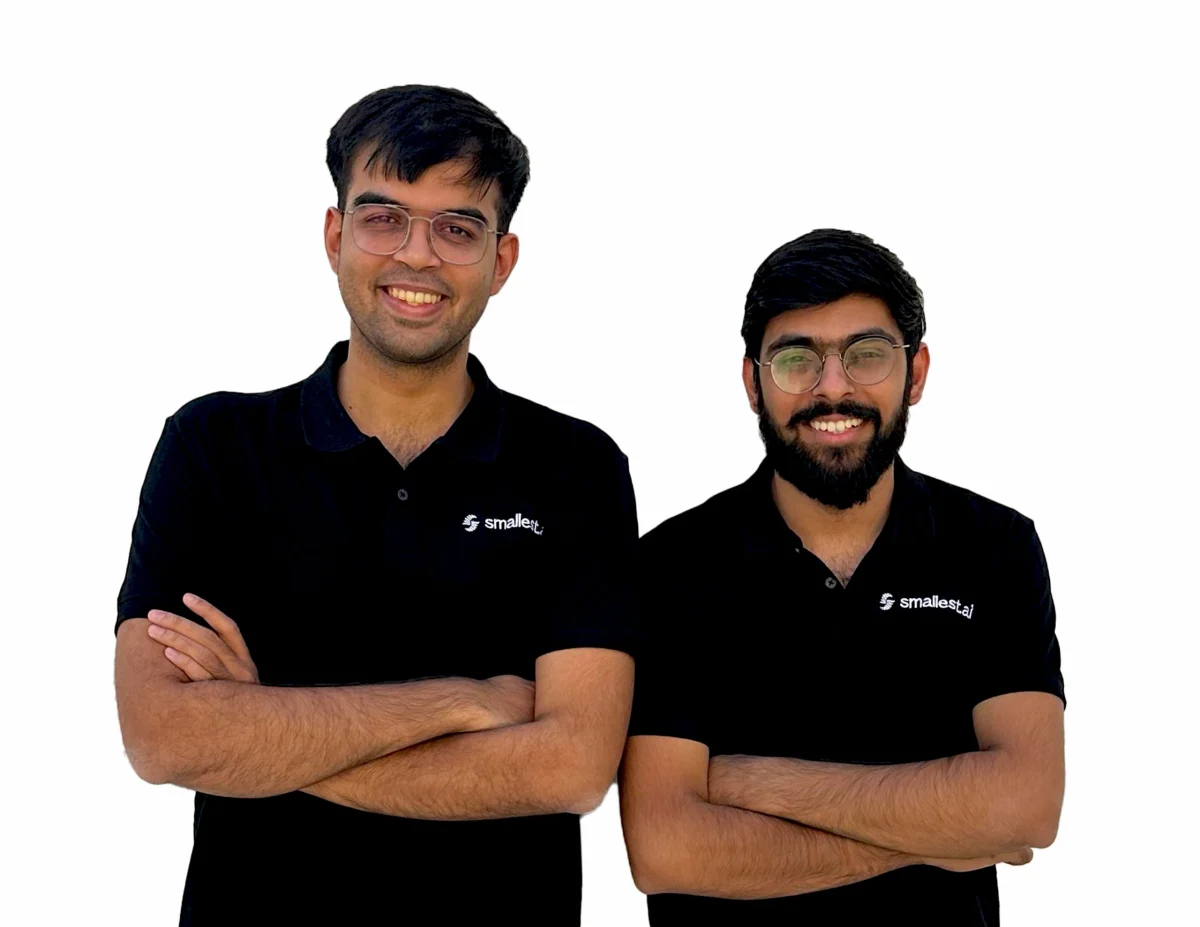
Smallest.ai, an innovative startup established in late 2024, has successfully closed a Series A funding round, securing $13 million to advance its mission of creating ultra-fast, genuinely human-sounding voice artificial intelligence. This significant capital infusion, led by Seligman Ventures with participation from Sierra Ventures and 3one4 Capital, elevates the company’s total funding to over $21 million, underscoring investor confidence in its distinct technological approach to conversational AI. The company is poised to redefine interactions with AI agents, aiming to make them virtually indistinguishable from conversations with a human.
The Persistent Challenge of Conversational AI
Despite rapid advancements in artificial intelligence, particularly in large language models (LLMs), a significant barrier persists in achieving truly natural and seamless voice interactions. For years, the experience of engaging with AI-powered customer support or virtual assistants has been marred by tell-tale signs of automation: robotic intonations, awkward pauses, and a general lack of the spontaneous give-and-take characteristic of human dialogue. While AI agents have grown increasingly capable of addressing customer inquiries and resolving complex problems, most individuals can still immediately discern when they are communicating with a machine rather than a person. This recognition often leads to frustration, diminished customer satisfaction, and a breakdown in trust, undermining the very efficiency gains AI is designed to deliver.
The fundamental issue lies in how many conventional AI systems process information for voice interactions. Large Language Models, while powerful for generating coherent text, typically operate on a sequential input-output paradigm. An entire query must be received before the model begins to "think" and formulate a response. While this latency might be acceptable in text-based chat, even a brief delay of a few hundred milliseconds in a voice conversation feels unnatural and disruptive. Human communication is inherently dynamic, characterized by simultaneous listening, processing, and speaking, often involving anticipatory responses and even polite interruptions. Replicating this intricate dance has been a formidable challenge for AI developers.
A Novel Architectural Approach
Smallest.ai posits that the next paradigm shift in voice agents will not come from simply making existing large language models faster, but from a fundamental re-architecture focusing on smaller, specialized models explicitly designed for human conversation dynamics. The company’s core strategy revolves around developing a compact voice model engineered to mimic the human brain’s ability to listen, process, and speak concurrently. This design enables a level of real-time responsiveness that bypasses the inherent latency of traditional LLM architectures.
Sudarshan Kamath, founder and CEO of Smallest.ai, articulates this philosophy by drawing a parallel to human interaction: "While I’m speaking to you, you’re already thinking, and you might interrupt me if I talk for too long." This simultaneous processing and predictive capability is precisely what Smallest.ai’s model aims to achieve. The startup envisions its small voice model acting as a real-time intelligence layer, facilitating natural customer conversations on predefined topics with virtually zero response lag.
However, Smallest.ai acknowledges that even the most specialized small model will have a limited knowledge base. For complex inquiries or subjects outside its immediate domain, the system employs a hybrid approach. It seamlessly hands off the query to a larger, foundational language model for in-depth processing. During this brief transition, the customer might be placed on a short hold, akin to a human agent needing a moment to "research" an issue. Kamath believes this hybrid architecture – a small, real-time voice model for fluid interaction combined with an "offline" LLM for complex problem-solving – represents the future standard for AI agents. This strategic division of labor ensures both speed for routine interactions and depth for intricate challenges.
Unlike general-purpose large foundational models, Smallest.ai’s specialized focus allows it to meticulously address voice-specific nuances that are critical for realistic human-like interaction. This includes robust handling of diverse accents, supporting dozens of languages, and maintaining clarity and responsiveness even in noisy environments. By concentrating solely on the intricacies of real-time conversational voice agents for enterprise clients, the company differentiates itself from competitors that might apply voice AI to broader use cases such as audio dubbing or podcasting.
Historical Context: The Evolution of Voice AI
The journey toward human-like conversational AI has been long and incremental, marked by both breakthroughs and persistent limitations. Early attempts in the 1960s, such as ELIZA, a rudimentary natural language processing computer program, demonstrated the potential for machines to simulate human conversation, albeit through simple pattern matching and scripted responses. These early systems, while fascinating, were far from truly understanding or generating nuanced dialogue.
The late 20th and early 21st centuries saw the proliferation of Interactive Voice Response (IVR) systems, which became ubiquitous in customer service. While they offered automation, IVR systems were often frustrating, characterized by rigid menus, limited vocabulary recognition, and an inability to handle complex or unscripted requests. The advent of personal voice assistants like Apple’s Siri (2011), Amazon’s Alexa (2014), and Google Assistant (2016) brought voice AI into mainstream consumer use. These platforms showcased significant advancements in speech recognition and natural language understanding, allowing users to perform tasks, ask questions, and control devices using voice commands. However, even these sophisticated assistants often struggle with sustained, free-flowing conversation, frequently exhibiting delays or misunderstandings that break the illusion of human interaction.
The recent explosion of Large Language Models (LLMs) has marked a pivotal moment, dramatically improving AI’s ability to generate coherent, contextually relevant, and even creative text. When integrated with text-to-speech capabilities, LLMs can produce remarkably articulate spoken responses. Yet, the core architectural challenge of latency in real-time voice dialogue persists. Smallest.ai’s strategy of leveraging specialized, smaller models represents a conscious departure from relying solely on the brute force of massive LLMs, aiming instead for efficiency and immediacy tailored to the demands of human-speed conversation.
Market Landscape and Competitive Edge
The market for voice AI solutions is robust and increasingly competitive, driven by enterprises seeking to enhance customer experience, improve operational efficiency, and scale their support operations. Smallest.ai finds itself competing with established players and innovative newcomers alike. Leaders in the voice AI space, such as ElevenLabs, known for its high-quality voice synthesis, alongside companies like Cartesia and regional players such as Sarvam (which focuses on local languages), represent the diverse competitive landscape. While some of these competitors may offer broader voice AI applications, Smallest.ai’s strategic differentiation lies in its singular focus on real-time conversational agents for enterprise customers, prioritizing the nuances of natural, low-latency dialogue above all else.
Existing customers of Smallest.ai include prominent companies in the voice communication sector, such as RingCentral and Truecaller. Kamath sees a vast potential customer base encompassing virtually any customer support company, including newer entrants like Sierra and Decagon, which are heavily invested in AI-driven support solutions. A key question arises: why would well-funded AI customer support companies not develop their own voice models in-house? Kamath argues that for these firms, becoming "extremely good at doing voice is a distraction from their core business." This perspective highlights Smallest.ai’s value proposition: providing a specialized, best-in-class voice interaction layer that allows customer support companies to focus on their primary mission of resolving customer issues, while outsourcing the complex engineering required for truly human-like voice AI.
Transforming Customer Experience and Beyond
The potential market and social impact of truly human-like voice AI are profound. In the realm of customer service, the ability for an AI agent to engage in fluid, natural conversation could revolutionize user experience. Reduced frustration, quicker resolution times, and a sense of being understood could significantly boost customer satisfaction and loyalty. Brands investing in such technology could gain a substantial competitive advantage by offering a superior, more empathetic automated experience.
Beyond customer support, the implications extend to various sectors. In healthcare, natural voice AI could facilitate more accessible and personalized patient interactions, from appointment scheduling to answering common medical questions, potentially easing the burden on human staff. Education could see the rise of highly engaging AI tutors capable of adaptive, real-time conversational instruction. Personal assistants could evolve from functional tools to genuinely intuitive companions, capable of understanding subtle emotional cues and engaging in more meaningful dialogue.
The cultural impact of such technology also warrants consideration. As AI voices become indistinguishable from human ones, our interactions with technology will fundamentally shift. The "uncanny valley" effect, where AI attempts at human likeness create discomfort, could finally be overcome for voice, leading to deeper integration of AI into daily life.
Ethical Considerations and the Future of Human-AI Interaction
As Smallest.ai aims to "break the Turing test" for voice interactions, where users cannot discern if they are speaking to an AI or a human, important ethical considerations come to the forefront. The ability of AI to perfectly mimic human voice and conversational patterns raises questions about transparency, trust, and potential deception. It becomes crucial for developers and deployers of such technology to establish clear ethical guidelines, potentially including disclosure mechanisms, to ensure users are aware they are interacting with an AI. Maintaining an objective journalistic tone, it’s important to note that while the technological goal is indistinguishability, the ethical imperative often leans towards clarity.
The long-term societal implications of pervasive, human-indistinguishable AI voices are still being explored. While the benefits in efficiency and accessibility are clear, there are debates about the impact on human connection, the nature of work, and even the definition of authenticity in communication. Smallest.ai’s CEO, Sudarshan Kamath, states their sole focus: "You should speak to our model and not know it’s AI or human." This aspiration highlights the technical challenge, but also implicitly invites broader discussions about the boundaries and responsibilities inherent in creating such advanced intelligent systems.
Looking Ahead
Smallest.ai’s successful funding round and its innovative approach signal a significant step forward in the quest for truly human-like conversational AI. By focusing on specialized, low-latency models and a hybrid architecture, the company addresses a critical gap in the current AI landscape. As the enterprise demand for sophisticated, natural voice interactions continues to grow, Smallest.ai’s strategy of delivering an indistinguishable voice experience could position it as a pivotal player in shaping the future of human-AI communication, pushing the boundaries of what is technologically possible while simultaneously prompting deeper reflection on the ethical dimensions of such powerful advancements.