Amir Mahmud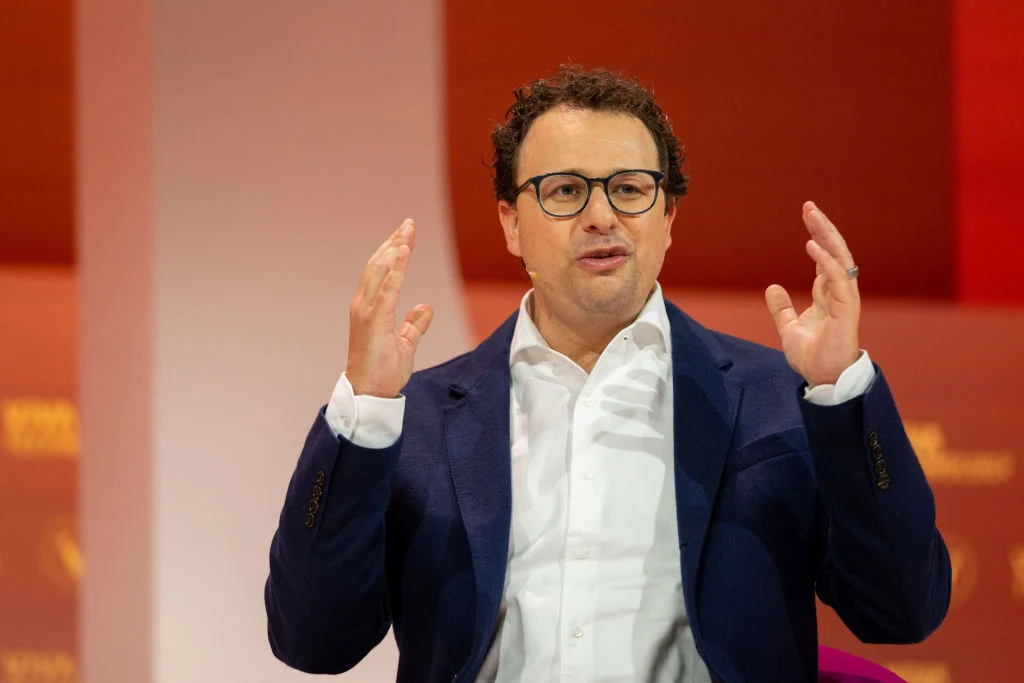
The landscape of artificial intelligence development is a complex tapestry woven with threads of innovation, economic ambition, and national security concerns. At the heart of this intricate web, Dario Amodei, co-founder and CEO of leading AI safety research company Anthropic, recently issued a critical clarification regarding his firm’s position on open-weight AI models. His statement, delivered amidst growing industry discourse and governmental scrutiny, sought to dispel persistent industry "murmuring" that Anthropic somehow advocated for U.S. government restrictions, particularly on models originating from China or open-weight architectures more broadly.
Amodei emphatically stated, "Anyone who has read my past writing should know that I don’t regard such bans as a useful measure, but let me state it clearly so that there is no doubt: Anthropic has never advocated for a ban on open-weights models." This assertion underscores a crucial distinction between fostering AI innovation and mitigating specific geopolitical threats, a nuance often lost in the heated debate surrounding advanced AI development.
The Open-Weight AI Debate: A Foundation for Innovation or a Security Risk?
To fully grasp the implications of Amodei’s statement, it’s essential to understand the technical and philosophical divide within the AI community regarding "open-weight" models. In the realm of AI, "weights" refer to the numerical parameters within a neural network that are adjusted during the training process. These weights, along with the model’s architecture, essentially define its learned capabilities.
An "open-weight" model is one where these crucial parameters are made publicly accessible, often alongside the model’s architecture and sometimes even the training data. This stands in contrast to "closed-weight" or proprietary models, where these components are kept confidential by the developing company. Proponents of open-weight AI, often termed "open source AI," argue that this approach democratizes access to cutting-edge technology, fostering rapid innovation, enabling startups and academic researchers to build upon existing models without prohibitive costs, and promoting transparency for security auditing and bug fixing. Companies like Meta, with its Llama series, have been significant drivers in the open-weight movement, releasing powerful models for broad use.
However, the open-weight paradigm also presents significant challenges, particularly concerning safety and misuse. Once the weights are released into the public domain, control over their application becomes virtually impossible. This raises concerns about malicious actors potentially modifying or deploying these models for harmful purposes, such as generating misinformation, developing sophisticated cyberattacks, or even designing biological agents.
Geopolitical Undercurrents: The U.S.-China AI Race
Amodei’s clarification arrived in the wake of an open letter spearheaded by Nvidia founder and CEO Jensen Huang, which rallied a formidable coalition of AI industry leaders including Hugging Face, Meta, Microsoft, and Mistral. This letter, shared publicly by Huang, urged policymakers to refrain from imposing broad, "premature restrictions" on open-weight AI models. While the letter itself avoided direct mention of China, the industry conversation it sparked was undeniably colored by escalating geopolitical tensions between the United States and China, particularly concerning technological supremacy.
For years, the U.S. and China have been locked in an intense rivalry to dominate the future of artificial intelligence. This competition is not merely economic; it is deeply intertwined with national security, military power, and global influence. Both nations recognize AI as a foundational technology capable of reshaping industries, defense capabilities, and societal structures. The U.S. government, through various agencies, has expressed increasing concern over China’s rapid advancements in AI, fueled by substantial state investment, a vast data ecosystem, and a large talent pool.
A central point of contention in this rivalry has been allegations of intellectual property (IP) theft. U.S. officials and industry figures frequently point to instances where Chinese entities are suspected of acquiring American technological innovations through illicit means, including cyber espionage, forced technology transfers, and reverse engineering. Within the AI context, one specific method gaining notoriety is "model distillation," where an AI system effectively learns the behaviors and capabilities of another, often proprietary, model by bombarding it with prompts and observing its responses. This process, while having legitimate applications in model optimization, can also be leveraged to replicate the functionality of advanced, closed-source models without direct access to their internal architecture or training data, effectively "stealing" their intellectual property.
Amodei’s Distinct Fear: Authoritarian AI Superiority
While unequivocally supporting the utility of open-weight models for benign applications – viewing them as a "public good" that offers value to businesses, developers, and researchers without significant cost beyond computational resources – Amodei’s primary anxieties lie elsewhere. He explicitly stated that his longstanding fears about AI are not centered on commercial entities utilizing open-weight models, even those originating from China.
Instead, Amodei articulated a profound concern that "authoritarian governments" could leverage AI to achieve "permanent military superiority" over democratic nations, or to severely repress their own populations. He identified the Chinese Communist Party (CCP) as the "most capable" among such governments, though not the only one of concern. This fear is rooted in the dual-use nature of advanced AI, where technologies designed for civilian benefit can also be weaponized for strategic advantage or control.
The potential for AI to transform warfare is immense, ranging from autonomous weapons systems and advanced surveillance capabilities to sophisticated cyber warfare and decision-making augmentation. An authoritarian regime possessing superior AI capabilities could theoretically gain an insurmountable advantage, altering the global balance of power irrevocably. Furthermore, AI’s capacity for surveillance, data analysis, and predictive policing raises alarms about its potential to enable unprecedented levels of state control and social engineering, eroding individual freedoms and human rights within such regimes.
Beyond military and social control, Amodei highlighted a more insidious threat: AI’s potential to enable "biological attacks," a risk he considers distinct from and potentially more dangerous than cybersecurity threats. The concern here is that highly capable AI models could accelerate the research and development of novel biological weapons, potentially even by non-state actors, by assisting in the design of pathogens or the synthesis of dangerous chemicals. In these scenarios, open-weight models, once released, pose a unique challenge because their widespread availability and the difficulty of imposing "guardrails" or monitoring their usage make containment and control exceptionally difficult. As he noted, citing a UK AI Security Institute report, "once open-weights are released they cannot be withdrawn." This perspective contrasts sharply with open-source advocates who argue that broad access to powerful open models, not controlled by a single entity, can paradoxically enhance defense by allowing a wider community to identify vulnerabilities and develop countermeasures.
Policy Prescriptions and the Pursuit of Global Safety
In response to his specific anxieties, Amodei outlined several policy actions he believes would effectively counter the perceived threat from China. These include:
- Restricting Access to Powerful Chips: This has been a cornerstone of U.S. policy, with successive administrations implementing export controls on advanced semiconductors and chip manufacturing equipment to limit China’s ability to develop cutting-edge AI. Amodei’s endorsement reinforces the strategic importance of this measure.
- Formal Crackdown on Distillation: Recognizing distillation as a potential vector for IP theft, Amodei advocates for more stringent measures against this practice. The U.S. has already threatened sanctions against Chinese AI models if concrete evidence of IP theft involving U.S. models emerges, indicating a growing governmental focus on this issue.
Perhaps most notably, Amodei expressed strong support for a burgeoning global effort to establish an AI model safety testing organization. This initiative, partially led by the U.S., aims to create a framework for evaluating the safety and potential risks of the most advanced AI models. Crucially, Amodei emphasized that for such an organization to be truly effective, it would require universal participation, including from China.
He views this idea as "close to a consensus," citing recent moves by the U.S. government and industry proposals that advocate for applying such rigorous testing to the most capable models, irrespective of their country of origin or whether they are open or closed-source. Less capable models, often developed by startups or academic institutions, would be exempt. The underlying logic is that existential risks, such as those posed by AI-enabled biological weapons, transcend national borders and political ideologies, creating a shared incentive for cooperation even among geopolitical adversaries. Amodei posits that "limited cooperation around preventing AI biological weapons may be possible because it is in China’s interest too."
This call for global collaboration mirrors sentiments expressed at international forums like the UK’s AI Safety Summit and within initiatives like the G7 Hiroshima Process, where world leaders have begun to grapple with the need for international governance and safety standards for frontier AI.
Market, Social, and Cultural Implications
The ongoing debate surrounding open-weight models, geopolitical AI competition, and safety regulations has profound implications across market, social, and cultural spheres.
- Market Impact: Restrictive policies on open-weight models could stifle innovation among startups and smaller players who rely on accessible foundational models to develop new applications. It could further concentrate power and resources within a few large corporations capable of developing proprietary, closed-source models. Conversely, a highly fragmented global AI landscape, driven by national security concerns, might lead to redundant development efforts and hinder the collaborative scientific progress that has historically driven technological leaps.
- Social Impact: The widespread availability of powerful open-weight models promises to democratize AI, making sophisticated tools accessible to a broader range of developers and users, potentially leading to unforeseen applications that benefit society. However, the misuse potential, as highlighted by Amodei, raises significant ethical questions about the responsibility of model developers and the mechanisms for preventing harm. The vision of AI-powered authoritarian control also poses a fundamental threat to human rights and democratic values globally.
- Cultural Impact: The narrative around AI is increasingly shaped by these debates. A focus on "AI arms races" and national security risks could foster a culture of fear and secrecy, potentially hindering public trust and engagement with AI development. Conversely, a global collaborative effort towards safety could build a shared understanding of AI’s potential and perils, fostering a more responsible and ethically conscious development culture.
Ultimately, Dario Amodei’s intervention serves as a crucial reminder that the future of AI is not a binary choice between absolute openness and total restriction. Instead, it demands a nuanced approach that carefully balances the immense potential for innovation and societal benefit with the pressing need to mitigate existential and geopolitical risks. As policymakers and industry leaders continue to navigate this complex terrain, finding common ground on global safety standards, even amidst fierce competition, may prove to be the most critical challenge for safeguarding the future of humanity in the age of advanced artificial intelligence.