Amir Mahmud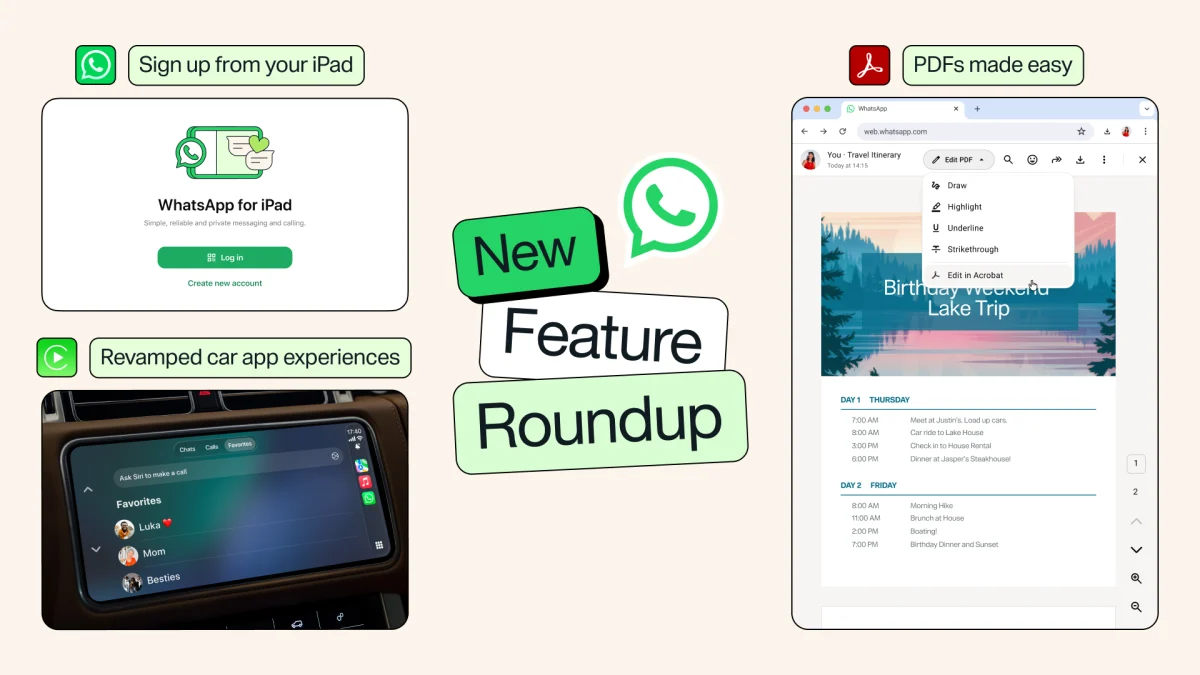
Meta’s flagship messaging application is rolling out a comprehensive suite of enhancements, signaling a significant evolution from its origins as a mobile-centric chat tool to a more expansive, cross-device communication ecosystem. These updates, encompassing a revamped in-car experience, direct tablet account registration, richer status functionalities, and integrated document management, underscore a strategic push by the tech behemoth to embed its platform more deeply into users’ daily digital lives across an array of devices.
Driving Towards Seamless Connectivity: Enhanced In-Car Experience
Central to this wave of updates is a substantial overhaul of WhatsApp’s integration with Apple CarPlay and Android Auto. These mirroring systems have become standard in modern vehicles, allowing smartphone apps to be safely accessed through the car’s infotainment display. While WhatsApp previously offered basic functionality within these environments, primarily limited to composing new messages via voice and initiating calls, the new iteration dramatically expands its utility.
Users can now engage with their messages more comprehensively, including hearing incoming texts read aloud and replying through voice commands, a critical feature for maintaining focus on the road. The update also introduces access to call history and the ability to connect directly with favorite contacts, transforming the in-car WhatsApp experience into a more robust communication hub. This development aligns with the broader industry trend of enhancing connected car capabilities, where seamless integration of personal devices and services is paramount. As vehicles become increasingly sophisticated, the expectation for digital continuity from home or office to the road grows. These improvements address a key user pain point, offering convenience without compromising safety, by leveraging the car’s built-in voice assistants and simplified user interfaces designed to minimize driver distraction. The move also positions WhatsApp more competitively against other communication apps that have sought to optimize their presence in the automotive sector, recognizing the significant portion of daily communication that occurs during commutes.
Beyond the Smartphone: Empowering Tablet Users
Another pivotal enhancement is the introduction of direct account registration for WhatsApp on iPads. For years, WhatsApp maintained a strict phone-number-centric model, requiring users to link their account to a primary smartphone. While the platform introduced multi-device support last year, allowing users to link companion devices like tablets and desktops, the ability to create a standalone account directly on an iPad marks a fundamental shift.
This feature enables users to set up a WhatsApp account and manage their profile directly through the iPad application, liberating them from the necessity of owning or tethering to a smartphone for initial setup. Although a phone number is still required to receive a one-time passcode for initial registration, once completed, the iPad app functions as an independent account. This is a significant departure from the previous model where the iPad app mirrored the phone’s activity. The demand for such a feature has been consistent, reflecting the growing role of tablets as primary computing devices for a diverse user base, from students and professionals to individuals who simply prefer a larger screen interface. This move broadens WhatsApp’s accessibility, catering to a demographic that might use a tablet as their main communication device or those who desire a more dedicated, untethered experience. It also places WhatsApp in a stronger position to compete with tablet-native messaging solutions, offering a more complete and independent user experience on Apple’s popular tablet lineup.
Expressing Identity: Richer Status Updates
In a nod to personal expression and social sharing, WhatsApp is now enabling users to directly share songs from Apple Music or Spotify to their WhatsApp Status. The "Status" feature, akin to "Stories" on other Meta platforms like Instagram and Facebook, allows users to post temporary updates comprising text, photos, videos, or GIFs that disappear after 24 hours. Integrating direct music sharing enriches this dynamic, providing users with a new avenue to convey their mood, share musical discoveries, or highlight cultural moments.
This feature taps into the deep cultural connection between music and personal identity. By allowing seamless sharing from popular streaming services, WhatsApp facilitates a more vibrant and interactive form of self-expression. It fosters discovery within social circles, as friends can easily see and react to what others are listening to, potentially leading to new musical explorations. This enhancement aligns with a broader trend across social media platforms to integrate multimedia content more deeply, understanding that rich, dynamic content drives engagement and user retention. It also reflects Meta’s strategy of fostering a cohesive ecosystem where similar, highly engaging features are available across its family of apps, maintaining user stickiness and encouraging cross-platform interaction.
Productivity on the Go: Integrated Document Handling
Recognizing the pervasive nature of document sharing in both personal and professional communications, WhatsApp has also introduced the capability to open and perform lightweight edits on PDF files directly within the app. Previously, users would typically need to download a PDF attachment and open it in a separate application to view or modify it.
Now, once a PDF is opened within a WhatsApp chat, users can highlight text or add annotations without ever leaving the conversation interface. This streamlined workflow is available on both the web and desktop versions of WhatsApp, significantly enhancing its utility as a productivity tool. This feature reduces friction in digital communication, particularly for users who frequently share reports, contracts, academic papers, or other essential documents. By eliminating the need to toggle between multiple applications, WhatsApp improves efficiency and convenience, making it a more comprehensive platform for managing various aspects of daily digital life. This move underscores WhatsApp’s evolution beyond casual messaging, positioning it as a more capable tool for business communication and collaboration, where the quick review and annotation of documents are often critical. The security implications of handling sensitive documents within the app are also a consideration, with WhatsApp’s end-to-end encryption providing a layer of confidence for users.
A Broader Strategic Vision: WhatsApp’s Evolution
These latest updates are not isolated features but rather integral components of Meta’s overarching strategy for WhatsApp. Acquired by Facebook in 2014, WhatsApp has steadily transitioned from a minimalist, ad-free messaging service to a more multifaceted platform. The company’s vision, as articulated through these developments, is to transform WhatsApp into a truly ubiquitous communication hub, accessible and functional across every device and context a user might encounter.
This push reflects a desire to move beyond the limitations of a single-device, mobile-first paradigm. Meta aims to create an interconnected digital experience across its family of apps—Facebook, Instagram, and WhatsApp—where users can seamlessly transition between devices and utilize the platform’s full capabilities without interruption. The focus on cross-device functionality, from in-car systems to tablets and desktops, highlights an ambition to capture more of the user’s digital footprint and integrate WhatsApp more deeply into their daily routines, whether for personal chat, professional collaboration, or content consumption. This strategic direction is crucial for Meta as it seeks to maintain its dominant position in the global messaging landscape amidst fierce competition and evolving user expectations.
The Competitive Landscape and User Expectations
In the highly competitive messaging app market, continuous innovation is key to retaining users and attracting new ones. WhatsApp’s recent enhancements can be viewed as a direct response to both user demand and the evolving capabilities of rival platforms. Competitors like Telegram, Signal, iMessage, and Google Messages continually introduce new features, from advanced encryption to enhanced media sharing and productivity tools.
Users today expect their messaging applications to be more than just text communicators; they demand rich media support, robust privacy features, seamless multi-device experiences, and tools that facilitate both personal and professional interactions. By expanding its reach into automotive infotainment, empowering independent tablet usage, and enhancing document management, WhatsApp is solidifying its position as a comprehensive communication solution. This strategic growth helps WhatsApp differentiate itself, especially in regions where it holds significant market share, ensuring that it remains the go-to platform for a wide array of communication needs. The challenge for WhatsApp, however, remains balancing feature expansion with its strong reputation for end-to-end encryption and user privacy, a core tenet that has historically set it apart.
Monetization and the Future of Messaging
The introduction of these free, user-centric features also complements Meta’s ongoing exploration of monetization strategies for WhatsApp. Just weeks prior, Meta launched "WhatsApp Plus," a subscription service offering premium features such as advanced profile customization, "super reactions," and story insights. This subscription model mirrors similar "Plus" offerings introduced for Instagram and Facebook, indicating a broader corporate strategy to diversify revenue streams beyond advertising.
The current wave of free feature rollouts suggests a dual approach: building an incredibly robust and feature-rich free tier to attract and retain a massive global user base, while simultaneously developing premium offerings for those who desire additional functionalities. This strategy allows WhatsApp to maintain its accessibility and widespread adoption, which are critical for its network effect, while exploring new avenues for revenue generation. Looking ahead, WhatsApp’s future trajectory is likely to involve deeper integration with artificial intelligence, further enhancements for businesses leveraging WhatsApp Business API, and potentially expanded payment functionalities, as Meta continues to experiment with how its platforms can facilitate commerce and other advanced digital interactions.
These expansive updates collectively signify WhatsApp’s evolution from a simple messaging application to a sophisticated, multi-platform communication utility. By broadening its device compatibility and enhancing its functional toolkit, Meta is strategically positioning WhatsApp to remain at the forefront of digital communication, catering to an ever-growing array of user needs and preferences across diverse digital environments.