Amir Mahmud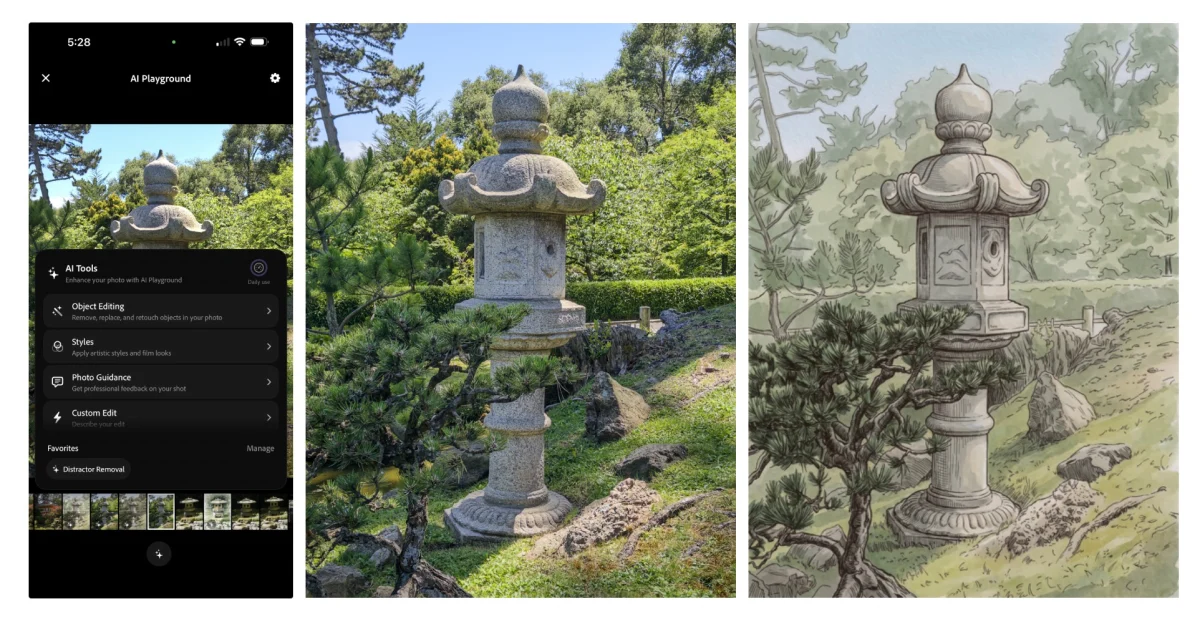
Adobe is significantly enhancing Project Indigo, its innovative iOS camera application launched last year, with a suite of new artificial intelligence capabilities. This experimental platform, which already offered advanced professional controls, multi-frame super-resolution, and diverse capture modes, is now integrating large language models (LLMs) to provide sophisticated critiques of photographs and actionable editing suggestions. The move represents a bold step by Adobe to push the boundaries of computational photography and empower mobile users with tools previously reserved for seasoned professionals.
Beyond interpretive feedback, Project Indigo is also introducing a range of other AI-driven features, including highly precise object removal, the dynamic generation of depth of field, and the ability to apply various artistic styles to images. These additions aim to streamline the photographic workflow, from initial capture to final polish, making advanced editing more accessible and intuitive for a broader audience.
The Vision Behind the AI: Marc Levoy’s Approach
At the helm of Adobe’s Project Indigo is Marc Levoy, a distinguished figure in the field of computational photography, renowned for his pivotal role in developing the acclaimed camera systems for Google’s Pixel smartphones. Levoy’s philosophy for Project Indigo emphasizes a departure from purely prompt-based generative AI tools, which often require users to master complex textual commands to achieve desired outcomes. He notes that the iterative process of finding the "perfect prompt" can be cumbersome and frustrating for many.
Instead, Levoy’s team has engineered many of Project Indigo’s new AI features as accessible, button-driven functionalities designed to yield more predictable and deterministic results. This approach aims to reduce the barrier to entry for advanced editing, allowing users to achieve professional-grade enhancements with greater ease and less trial-and-error. By focusing on direct, intuitive controls, Adobe seeks to empower users without overwhelming them with the intricacies of AI prompting.
This strategy contrasts with earlier attempts at AI-assisted photography, such as Google’s camera coach feature for Pixel phones, which tended to offer more general framing suggestions. Project Indigo’s features, by comparison, are engineered to deliver remarkably detailed and prescriptive advice. This granular level of insight could serve as a powerful educational tool, helping users develop a deeper understanding of photographic principles, even if they choose not to fully adopt every AI assessment. The goal is not just to fix photos but to teach the photographer.
Deep Dive into AI Critique and Suggestions
The core of Project Indigo’s new intelligence lies in its sophisticated critique and suggestion systems, segmented into two primary functionalities. The first is the direct "photo critique," which provides what Adobe describes as a "professional opinion" on various elements of an image. This includes an evaluation of the photograph’s framing, assessing composition and adherence to established rules like the rule of thirds. It also analyzes lighting, identifying areas of overexposure or underexposure, and suggesting improvements for dynamic range or mood. Color balance and harmony are scrutinized, with recommendations for adjustments to white balance, saturation, or contrast. Crucially, the AI also delves into the "emotional impact" of the image, offering insights into how the photograph might resonate with viewers and how its aesthetic elements contribute to its overall narrative.
The second feature set, "capture and edit suggestions," offers dynamic, real-time advice designed to improve both current and future photographic endeavors. For images being captured, the app provides tips on how to reshoot, suggesting alterations to framing, exposure settings, or even advising on the repositioning or removal of objects within the viewfinder. For instance, an example cited involved the app recommending the removal of a hexagonal white object from a test photograph, demonstrating its ability to identify and suggest improvements for distracting elements.
Furthermore, this section extends its utility to existing photographs, offering guidance on how to enhance them using controls found in Adobe Lightroom. This integration bridges the gap between raw capture and post-processing, giving users a comprehensive workflow that leverages AI at multiple stages. This blend of pre-capture guidance and post-capture refinement makes Project Indigo a holistic tool for photographic improvement.
Transformative Editing Capabilities
Beyond critical feedback, Project Indigo introduces truly transformative editing capabilities that leverage advanced AI. Object removal, a feature present in various photography applications like Apple Photos, Google Photos, and Adobe Photoshop for years, traditionally required users to manually select or "circle" unwanted elements, a process that often yielded imperfect results or noticeable artifacts.
Project Indigo elevates this functionality significantly. Its new feature provides pre-defined toggles for common extraneous elements, such as "people in the background," "trash and trash cans," "wires and poles," "fences," and "vehicles," among other general clutter. Users can also describe a custom object they wish to remove, providing unparalleled flexibility. The results of this enhanced object removal are remarkably precise, capable of seamlessly erasing complex elements without distorting the background or creating tell-tale visual discrepancies. One demonstration showed the app effortlessly removing a person and an object they were holding from the background of an image, leaving no strange artifacts.
Another powerful addition is the ability to use AI to generate depth of field. This feature simulates the professional bokeh effect achieved with high-end cameras and lenses, blurring the background to make the subject stand out. For smartphone photographers limited by smaller sensors and fixed apertures, this AI-driven depth generation offers a significant creative advantage, allowing them to achieve a cinematic look with ease.
The app is also experimenting with advanced "style transfer" capabilities. This feature enables users to transform their pictures into various artistic interpretations, such as watercolor paintings, pen and ink sketches, monochromatic studies, or images with a backlit subject aesthetic. While style transfer is not an entirely new concept, having been popularized by apps like Prisma in the mid-2010s, Adobe’s implementation leverages advanced models to produce highly refined and sophisticated outputs. While some might argue that style transfer might not be a "new or useful" feature in the same vein as object removal, its integration into Project Indigo reflects a broader trend of democratizing artistic expression through AI, offering creative avenues for users to explore beyond traditional photographic realism.
Historical Context: AI in Photography’s Evolution
The integration of AI into photography is not a sudden phenomenon but the culmination of decades of research and development in computer vision and machine learning. Early forays into digital image processing saw algorithms automate basic tasks like red-eye reduction and color correction. The advent of computational photography, spearheaded by innovations in smartphone cameras over the last decade, marked a significant turning point. Features like High Dynamic Range (HDR), panoramic stitching, and portrait mode (which artificially blurs backgrounds) leveraged complex algorithms to overcome the physical limitations of small mobile sensors.
Adobe, with its long-standing dominance in creative software like Photoshop and Lightroom, has been a central player in this evolution. Its Content-Aware Fill feature, introduced years ago, demonstrated early AI prowess in intelligently filling removed areas of an image. More recently, the company has heavily invested in generative AI, exemplified by its Firefly model, which creates images from text prompts and powers many of its latest creative suite features. Project Indigo represents the vanguard of Adobe’s strategy to bring these advanced AI capabilities directly into the capture phase of mobile photography.
The development of Large Language Models (LLMs), such as those powering Project Indigo’s critique function, marks a new frontier. These models, trained on vast datasets of text and images, can understand context, interpret artistic principles, and generate nuanced feedback, moving beyond simple image manipulation to genuine creative assessment. This shift transforms the camera app from a mere recording device into an intelligent creative partner.
Market Implications and Creative Futures
Project Indigo’s advancements position Adobe at the forefront of the mobile photography revolution, intensifying competition with tech giants like Google and Apple, which also heavily invest in computational photography for their devices. For Adobe, this experimental app serves as a crucial testing ground for future features that could eventually integrate into its more established products like Lightroom Mobile or even Photoshop Express. The success of Project Indigo could dictate the direction of mobile creative tools for years to come.
The cultural impact of such AI tools is profound. By providing personalized critiques and sophisticated editing capabilities, Project Indigo democratizes access to professional photography knowledge. It empowers amateur photographers to understand and apply complex compositional rules, lighting principles, and post-processing techniques that traditionally required years of study and practice. This could lead to a general uplift in the quality of user-generated content across social media platforms and personal archives.
However, this democratization also raises questions about authenticity and the nature of "original" photography. As AI becomes more adept at perfecting images, the line between reality and AI-enhanced reality blurs. The social impact of perpetually "perfect" images on self-perception and societal beauty standards is a topic of ongoing discussion. Project Indigo, by offering tools to remove imperfections and apply stylistic changes, contributes to this evolving landscape.
Navigating the "Slopland": Challenges and Opportunities
Marc Levoy’s cautionary reference to "slopland" highlights a critical concern in the era of generative AI: the potential for artificial intelligence to produce generic, uninspired, or even nonsensical outputs if not carefully guided. While Project Indigo emphasizes deterministic, button-based operations to mitigate this, it also includes a feature allowing users to describe custom edits via prompts. This dual approach acknowledges the power of natural language interfaces while recognizing the pitfalls of unchecked AI generation.
The challenge for Adobe, and for the broader AI community, is to strike a balance between automation and creative control. Can AI truly enhance human creativity, or does it risk homogenizing artistic expression? The "professional" critique offered by Project Indigo, for instance, is based on algorithms trained on existing photographic principles. While invaluable for learning, it raises questions about how much deviation or unconventional artistic vision AI might tolerate or even encourage. The subjective nature of art means that an AI’s assessment, while technically sound, might not always align with a photographer’s unique artistic intent.
Adobe’s choice to use Google’s Gemini-based Nano Banana for some of these features, while remaining open to integrating other models, including its own Adobe Firefly, demonstrates a pragmatic approach. This flexibility allows the company to leverage the best available AI models for specific tasks, ensuring optimal performance while maintaining a competitive edge. It also underscores the dynamic and rapidly evolving nature of the AI landscape, where partnerships and model interoperability are key to innovation.
Looking Ahead: The Experimental Frontier
These groundbreaking features, currently bundled under an "AI playground" tab within Project Indigo, are in an active testing phase. Access is presently limited to a select group of users, reflecting Adobe’s commitment to rigorous evaluation and refinement before a wider rollout. The experimental nature of Project Indigo means that not all features may ultimately reach a broader audience, and those that do may undergo significant modifications based on user feedback and performance data.
Nevertheless, Project Indigo represents more than just a new set of tools; it is a declaration of Adobe’s vision for the future of photography. It champions a future where AI acts not merely as an automation engine but as an intelligent mentor, guiding users toward a deeper understanding of photographic nuances. By offering insightful critiques and precise editing suggestions, Project Indigo aims to elevate the photographic literacy of its users, helping them move beyond simply capturing images to thoughtfully crafting visual stories. This commitment to education and empowerment, rather than just generating "more slop," is what truly sets Adobe’s latest AI endeavor apart. The journey of Project Indigo underscores the exciting, and sometimes challenging, frontier where human creativity meets artificial intelligence.