Amir Mahmud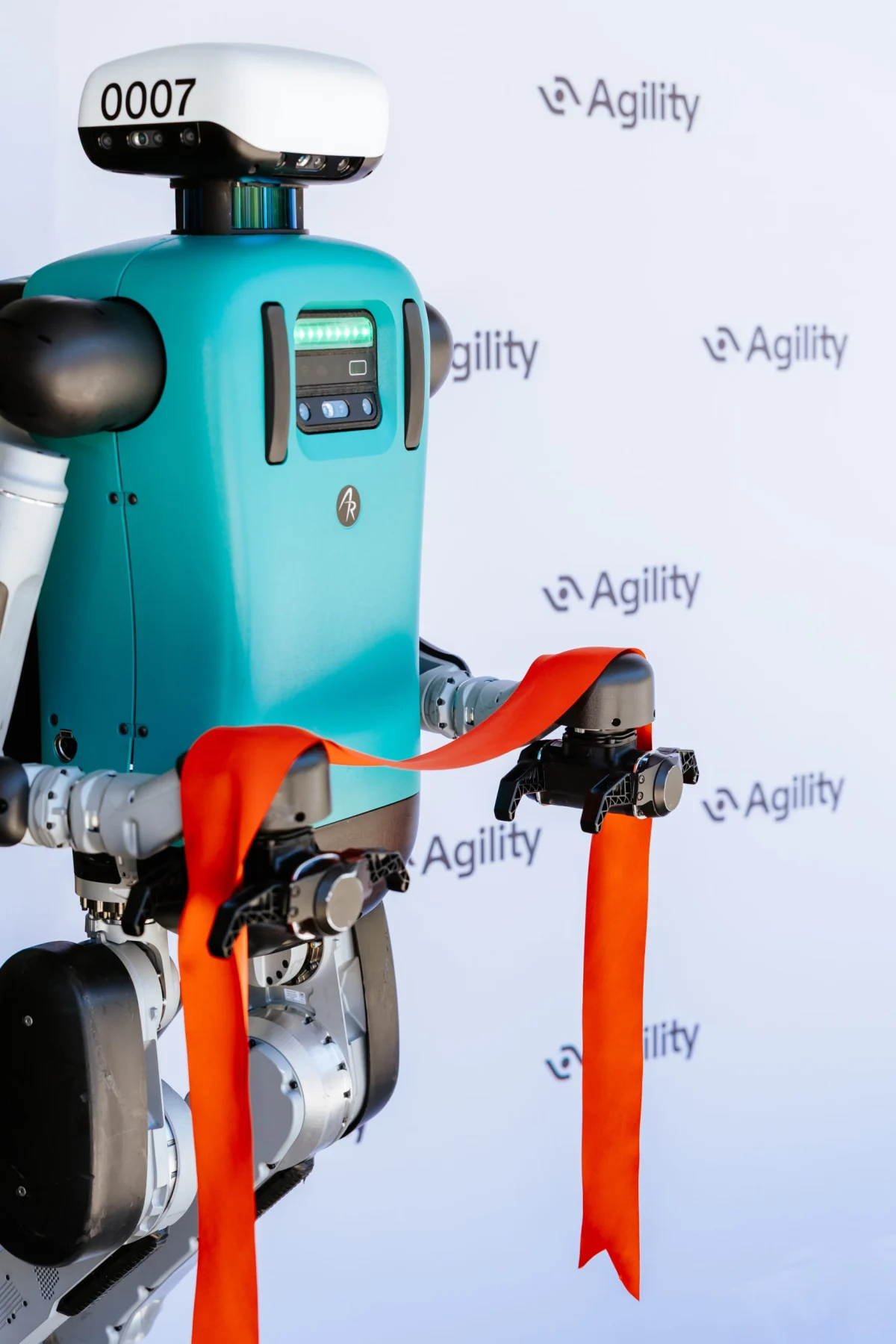
In a significant move poised to reshape the burgeoning humanoid robotics sector, Agility Robotics has inaugurated a sprawling 60,000-square-foot facility in Fremont, California. This strategic expansion places the company’s operations just a short distance from where Tesla is projected to commence manufacturing its Optimus robots, signaling an intensifying dynamic in the race to commercialize bipedal autonomous machines. The new hub is dedicated to the sophisticated training and development of Agility’s flagship humanoid robot, Digit, as the company ramps up its efforts to deploy these advanced systems across industrial and logistics environments.
A Strategic Foothold in the Robotics Hub
The decision by Agility Robotics to establish its new facility in Fremont is more than just a logistical choice; it’s a strategic declaration in the heart of Silicon Valley’s extended influence. Fremont, long a crucible for automotive innovation and high-tech manufacturing, particularly with Tesla’s prominent presence, is rapidly evolving into a focal point for advanced robotics. This proximity fosters a unique competitive landscape, where leading innovators in humanoid robotics operate within the same geographical orbit, potentially accelerating technological breakthroughs and commercial deployment across the industry. The new facility is designed not only for training Digit but also for refining its capabilities in environments meticulously simulated to mirror real-world industrial settings, ensuring seamless integration and operational efficiency upon deployment.
While Tesla’s foray into humanoid robotics with Optimus has captured considerable public imagination, propelled by CEO Elon Musk’s ambitious pronouncements, Agility Robotics has quietly been carving out a substantial lead in practical, revenue-generating applications. Musk has boldly predicted Optimus will become "the biggest product ever," envisioning its utility extending far beyond Tesla’s internal operations "sometime next year." This high-stakes vision underpins Tesla’s substantial investment in the field, highlighting the enormous perceived potential of general-purpose humanoid robots. However, Agility’s approach, characterized by a pragmatic focus on immediate commercial viability, offers a contrasting yet equally compelling narrative in the unfolding story of robotic evolution.
Agility’s Commercial Edge: Digit in Action
Agility Robotics distinguishes itself through its tangible progress in commercializing humanoid technology. Unlike many competitors still in early research or prototyping phases, Agility’s Digit robot is already performing valuable tasks in real-world industrial settings. This commercial readiness is a critical differentiator, translating directly into revenue generation and invaluable operational feedback. Customers such as Amazon, GXO Logistics, Schaeffler, and Toyota Motor Manufacturing Canada have integrated Digit into their manufacturing and warehouse operations, utilizing the robot to autonomously carry totes and bins, tasks that are often repetitive, physically demanding, and prone to human error.
The company has secured an impressive $300 million in contract orders for its robots, a testament to the market’s growing confidence in Digit’s capabilities. Peggy Johnson, CEO of Agility Robotics, expressed a nuanced perspective on the burgeoning competition, noting, "It’s great to have [Tesla] in the same area as us, because really, for a long time Agility was out there alone, and it’s good to have others in the humanoid space." She emphasized Agility’s hard-won experience: "We have commercialized. We now know what it takes to walk into these facilities and meet their safety bars, their regulatory bars, compliance, plug into their IT infrastructure, plug into their warehouse management system." This highlights the often-underestimated complexity of integrating advanced robotics into existing industrial ecosystems, a challenge Agility has demonstrably overcome.
While specific deployment figures remain undisclosed by Agility, industry observers estimate that dozens of Digits are currently engaged in pilot programs or revenue-generating operations. A notable example includes Digit’s performance at a GXO logistics facility, where the robot successfully moved over 100,000 totes. This metric underscores the robot’s capacity for sustained, high-volume work, demonstrating its potential to significantly enhance productivity and operational efficiency in logistics and manufacturing sectors grappling with labor shortages and increasing demands.
The Broader Humanoid Robotics Landscape
The journey of humanoid robotics is rooted in decades of academic research and engineering challenges, particularly around bipedal locomotion. Early efforts, often seen in research labs and competitions like the DARPA Robotics Challenge, focused on fundamental mobility and manipulation in complex environments. Agility Robotics itself was founded in 2015 by a group of researchers who pioneered new techniques for stable and safe bipedal walking, laying the groundwork for Digit’s robust physical capabilities. This historical emphasis on fundamental robotics engineering provided Agility with a strong foundation, distinguishing its approach from a newer wave of startups that emerged following the dramatic advancements in artificial intelligence, particularly large language models (LLMs) and transformer-based neural networks.
The current surge of interest and investment in humanoid robotics is undeniably fueled by these recent AI breakthroughs, which promise to unlock unprecedented levels of robotic behavior and adaptability. Companies like Figure, 1X, The Bot Company, and Sunday Robotics are among those leveraging these AI paradigms to accelerate their development. However, Agility’s strategy has been to capitalize on its established lead in physical robotics and real-world deployment, integrating AI judiciously rather than relying solely on its generative capabilities for critical functions.
Further solidifying its position, Agility Robotics is on track to become the first pure-play humanoid robot company to enter the public markets later this year, reportedly through a reverse-merger. This financial milestone will not only provide substantial capital for further expansion and research but also elevate the company’s profile, signaling a new phase of maturity and investor confidence in the commercial viability of humanoid robotics.
Navigating Autonomy and Safety with AI
Agility’s approach to artificial intelligence in robotics is pragmatic and safety-conscious. While recognizing the transformative potential of generative AI, the company maintains a clear distinction between AI’s role in task programming and its application in safety-critical systems. Damion Shelton, Agility co-founder and chairman, articulated this philosophy, drawing an analogy to autonomous vehicles: "When you think about self-driving cars, you know, as a non-humanoid example, you really don’t want the anti-lock brake controller under AI control. The analog with humanoids is all the safety stuff needs to go through a path that’s not generative AI, right? You don’t want to get creative with your safety stack." This underscores a commitment to deterministic, rigorously tested safety protocols for fundamental operations, where unpredictability could have severe consequences.
Conversely, AI, particularly generative AI, is seen as the key to unlocking scalability and versatility in task execution. Shelton recalled an early challenge: "One of the first times [Bruce Leak, the Quicktime inventor who serves on Agility’s board] asked us how we were going to go about coding applications for the robot, we didn’t really have a good answer. The number of things you can imagine a robot doing is far larger than the number of engineers who can program robots. And generative AI answers that question definitively." This perspective highlights AI’s crucial role in empowering robots to learn and adapt to a vast array of tasks without explicit, laborious manual programming for each scenario, thereby accelerating deployment and expanding market applications exponentially. It transitions the paradigm from bespoke robot programming to more generalizable, adaptable intelligence.
Scaling Operations and Future Horizons
The new Fremont facility is central to Agility’s strategy for accelerating robotic deployments. With over 30 customers reportedly in discussions about deploying Digit, the facility will serve as a critical learning ground where the six-foot-tall robot can acquire new skills and refine existing ones in environments that closely replicate its future workplaces. This iterative process of training, testing, and deployment is essential for scaling up operations and meeting the growing demand for automated solutions in industrial sectors.
Looking ahead, Agility Robotics is focusing its immediate efforts on the industrial and logistics sectors, a strategic choice that aligns with the current capabilities and safety considerations of humanoid robots. Unlike some newer entrants to the humanoid space, Agility is not planning to offer in-home humanoid robots anytime soon. This cautious approach resonates with the prevailing consensus among independent robotics experts, who generally agree that today’s most powerful robots are not yet safe enough or sufficiently robust for unconstrained consumer use in residential environments. The complexities of navigating unpredictable home settings, interacting with diverse objects, and ensuring the safety of untrained individuals present formidable challenges that require further technological maturation.
However, advancements are continuously being made. The upcoming version 5 of Digit, anticipated for unveiling this fall, is expected to feature enhanced capabilities, including the ability to sense and interact safely with humans. This development is crucial, as it will allow Digit to operate effectively without requiring dedicated, human-free zones, paving the way for more collaborative human-robot workspaces. Jonathan Hurst, co-founder and chief robot officer, painted an ambitious long-term vision for the company, starting with current tasks and progressively tackling more complex ones: "Let’s start with the bins and the totes, and then let’s do the picking and the kitting. And then let’s like start working on cardboard, which is really hard, and loading and unloading tractor trailers and things like that. Okay, now we’re at 100 million robots, you know? A trillion-dollar company." This expansive outlook underscores the immense potential Agility sees in addressing the vast unmet automation needs within the global supply chain and manufacturing industries.
Market Impact and Societal Considerations
The widespread adoption of humanoid robots like Digit has profound implications for various markets and society at large. In the logistics and manufacturing sectors, these robots promise significant productivity gains, improved efficiency, and enhanced safety by taking over dangerous or ergonomically challenging tasks. This can lead to more resilient supply chains, reduced operational costs, and the ability for human workers to shift towards more complex, supervisory, or creative roles, potentially mitigating the impact of labor shortages in critical industries.
However, the introduction of advanced robotics also necessitates a careful consideration of its social and cultural impact. The potential for job displacement, while often balanced by the creation of new roles in robot maintenance, programming, and oversight, remains a key concern for policymakers and labor organizations. The seamless integration of robots into human workspaces requires not only technological sophistication but also careful design of human-robot interaction protocols, ethical guidelines, and robust regulatory frameworks to ensure safety, fairness, and societal acceptance. As robots become more ubiquitous, cultural perceptions of automation will evolve, shaping how these machines are integrated into our daily lives and workplaces.
Agility Robotics’ strategic move in Fremont, coupled with its proven commercial traction and ambitious future plans, positions it as a key player in defining the trajectory of humanoid robotics. As the industry matures, the interplay between technological innovation, market demand, and societal adaptation will determine the ultimate impact of these remarkable machines on the global economy and human civilization.