Amir Mahmud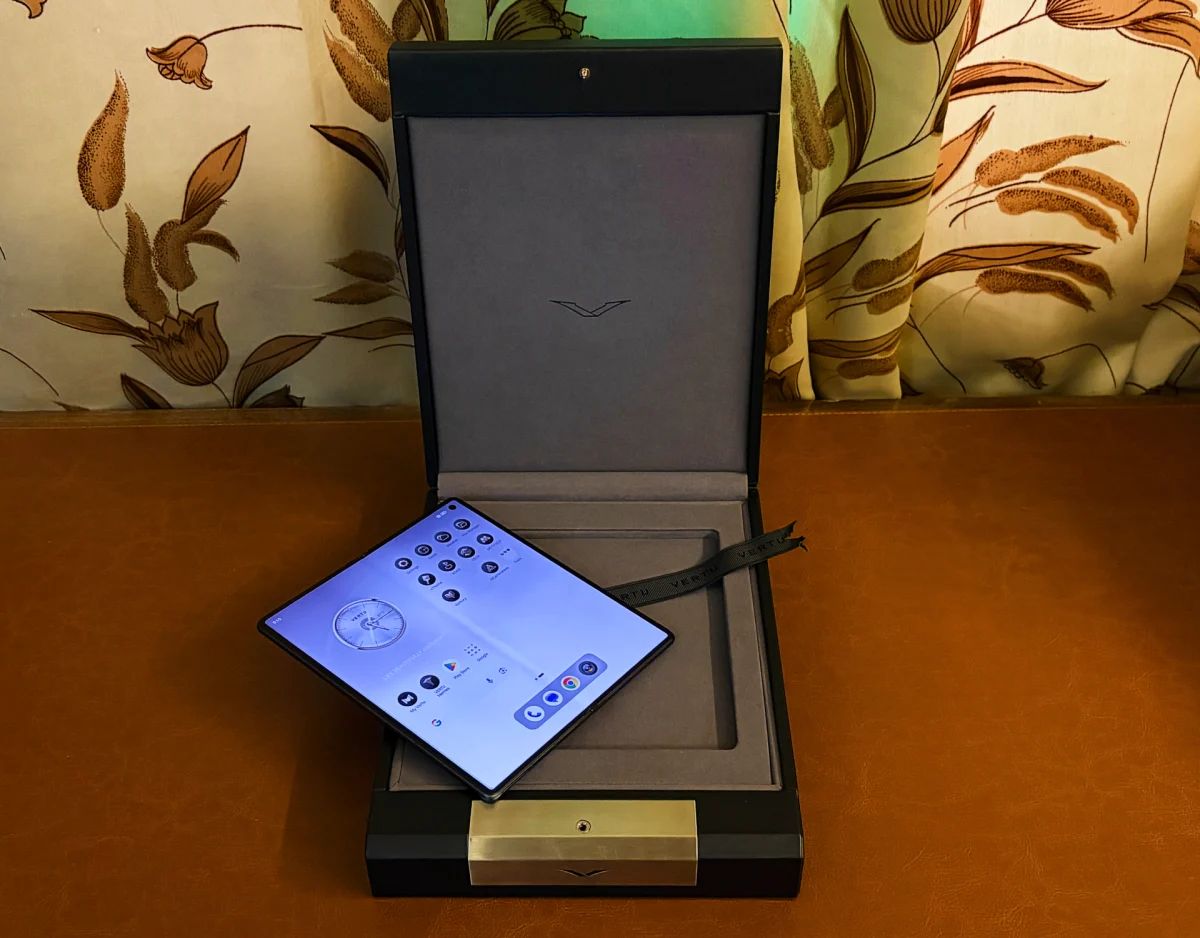
The smartphone landscape is currently witnessing a fervent race to integrate advanced artificial intelligence, with manufacturers striving to imbue their devices with intelligent capabilities designed to captivate a broad consumer base. Amidst this mainstream pursuit, Vertu, the British-born luxury mobile phone maker renowned for its meticulously handcrafted devices and often five-figure price tags, is charting a distinct course. The company has historically cultivated a business model centered on delivering aspirational status symbols to the ultra-affluent, rather than engaging in a specifications arms race. Its latest offering, the Alphafold, is squarely aimed at this elite demographic, particularly chief executives, by combining opulent materials with an embedded artificial intelligence agent engineered to streamline and automate significant portions of an executive’s demanding workday.
To truly assess this ambitious proposition, a departure from conventional smartphone review metrics was essential. Instead of scrutinizing benchmark scores, comparing camera performance, or evaluating media consumption capabilities—the usual benchmarks for consumer devices—the focus shifted to the Alphafold’s performance within its intended operational context. Over several days, the foldable device was utilized precisely as Vertu envisions its high-powered clientele would: managing complex documents, dissecting spreadsheets and legal contracts, orchestrating intricate business travel plans, automating repetitive administrative functions, and leveraging its AI agent as a constant digital companion throughout the professional day. The fundamental inquiry was not whether it functioned as a competent smartphone, but rather, its efficacy as a specialized executive instrument.
The Legacy of Luxury and the Dawn of AI
Vertu’s journey in the mobile phone industry is as unique as its products. Founded by Nokia in 1998, Vertu initially carved out a niche by focusing on unparalleled craftsmanship, exclusive materials, and a personalized concierge service. In an era dominated by mass-produced electronics, Vertu offered an alternative, positioning its phones as objets d’art and indispensable tools for the global elite. From sapphire screens to titanium frames and exotic leather finishes, Vertu phones were unmistakable statements of wealth and discernment. However, despite its early success and iconic status, the company faced significant challenges in adapting to the rapid technological shifts of the smartphone era, eventually changing ownership multiple times and enduring periods of financial instability. Yet, its brand cachet, particularly among certain luxury segments, has persisted.
The current technological zeitgeist, however, presents a new opportunity for differentiation: artificial intelligence. The integration of AI into smartphones has evolved dramatically from rudimentary voice commands to sophisticated on-device processing and cloud-powered large language models. This evolution has opened doors for more personalized, predictive, and proactive digital assistants. Vertu’s Alphafold enters this arena, not by competing on raw computational power, but by attempting to merge its established luxury ethos with cutting-edge AI utility specifically tailored for the executive suite. It represents a confluence of traditional craftsmanship and modern algorithmic power, seeking to create a device that is both a symbol of prestige and a potent productivity enhancer.
Crafting a Digital Executive Assistant
At the technological core of the Alphafold lies the Hermes Agent, a proprietary AI assistant pre-installed on the device. This agent is reportedly built upon the open-source Hermes project, a foundation that Vertu claims enables it to analyze diverse file types, automate multi-step tasks across various applications, maintain conversational context, and seamlessly escalate complex requests to a human concierge service when required. Unlike many contemporary smartphone AI assistants, which predominantly offer reactive responses to direct prompts, Hermes is engineered with the ambition of executing elaborate workflows autonomously on behalf of the user. This proactive capability is central to Vertu’s marketing strategy, positioning the AI agent as the device’s primary value proposition, rather than the foldable hardware itself.
The physical manifestation of the Alphafold, with a starting price of $6,880, unequivocally projects an aura of luxury. The review unit examined featured genuine calfskin leather wrapping its exterior, complemented by meticulously crafted titanium accents. This choice of materials immediately distinguishes it from the prevalent mainstream foldables, which typically employ glass or synthetic polymer finishes. The device is clearly designed for individuals who perceive their smartphone as both a critical professional instrument and an unequivocal emblem of their social and economic standing.
When juxtaposed with a reference device like the Samsung Galaxy Z Fold 7, the Alphafold, weighing in at 264 grams, presents a noticeably more substantial feel compared to Samsung’s 215-gram foldable. While this added weight is discernible during extended periods of use, it never renders the device unwieldy. The Alphafold’s ergonomically curved frame also facilitates a smoother unfolding action than the flatter edges characteristic of the Galaxy Z Fold 7. Conversely, Samsung’s design tends to feel sleeker and more comfortable for single-handed operation when in its folded configuration.
The Alphafold’s unboxing experience further underscores its luxury positioning. It arrives in packaging that more closely resembles a bespoke jewelry presentation case than a standard smartphone box. This oversized container opens to reveal precisely arranged drawers housing a suite of bundled accessories, including a finely crafted leather sleeve and charging cables, reinforcing the notion that Vertu is marketing an exclusive experience, rather than merely a communication device.
Beneath the Opulent Surface: A Hardware Revelation
However, a closer inspection beyond the luxurious exterior materials reveals a more complex narrative regarding the Alphafold’s underlying hardware. During the evaluation period, striking resemblances were observed between the Alphafold and the significantly more affordable ZTE Nubia Fold, a device typically retailing around $1,100. These similarities encompassed various design elements, including the hinge mechanism, overall dimensions, and the precise placement of speakers, microphones, and the fingerprint reader. The most overt visual distinction remained Vertu’s signature leather-clad rear panel. Furthermore, internal system information within the Alphafold’s software revealed residual ZTE identifiers, suggesting a deeper connection.
When confronted with these observations, Vertu confirmed its development strategy to TechCrunch. The company stated that the Alphafold was indeed developed through a specialized supply-chain partnership, leveraging ZTE/Nubia’s established hardware platform, component integration expertise, and production engineering capabilities. Vertu, in turn, asserted its responsibility for the premium luxury materials, the distinct software experience, rigorous quality control protocols, and comprehensive after-sales service. ZTE did not offer a comment on the matter.
This practice is not unprecedented for Vertu. A 2023 review of the MetaVertu by Wired similarly noted that the device appeared to be based on a ZTE Nubia handset, citing both hardware commonalities and analytical commentary from Counterpoint Research, which suggested Vertu’s ongoing strategy of adapting existing ZTE models with custom software and luxury embellishments. This approach highlights a common business model within the luxury tech sector, where brand value is often derived from design, exclusive services, and perceived prestige, rather than entirely bespoke hardware development. For the target audience, the underlying hardware source might be less significant than the overall brand experience, but for a device commanding such a premium, it raises questions about the fundamental value proposition and technological independence.
Evaluating the Autonomous Agent
Ultimately, the true measure of the Alphafold hinges not on its hardware origins, but on the performance of its AI agent. Vertu’s core premise is that executives will readily invest in an AI agent capable of significantly enhancing daily operational efficiency. The evaluation thus focused on real-world executive workflows, eschewing generic prompts for tasks that demanded analytical capabilities, proactive scheduling, and cross-application automation. This experience was then juxtaposed against the performance of Google’s Gemini running on a Samsung Galaxy Z Fold 7.
Initial software builds of the Hermes Agent exhibited some inconsistencies, particularly with file uploads, image analysis, and the connection to Vertu’s concierge service. However, following reports of these issues to Vertu, the company swiftly deployed server-side fixes, restoring the intended functionality and allowing for comprehensive testing.
The ensuing days of rigorous testing painted a nuanced portrait of Hermes Agent’s capabilities. It demonstrated impressive proficiency in analyzing local files and spreadsheets, an area where Gemini on Samsung’s foldable still predominantly relied on manual document uploads during the testing period. Hermes also displayed a greater inclination to automate actions across multiple applications and execute multi-step workflows with minimal user intervention. However, this increased autonomy was not without its drawbacks, occasionally leading to incomplete tasks or outputs that raised questions about the optimal balance between AI independence and the necessity for human clarification or oversight.
Simulating Executive Tasks
One critical test mimicked a common pre-airport departure scenario. Hermes Agent was instructed to notify a contact of a 20-minute delay, initiate navigation to the airport, activate Do Not Disturb mode, and set a reminder to call the hotel in 15 minutes. The agent successfully sent the message, enabled Do Not Disturb, and opened Google Maps with the airport destination pre-loaded. Crucially, however, it failed to automatically commence navigation and incorrectly scheduled the hotel reminder for 9:08 p.m., despite the request being made at 2:32 a.m. for a 15-minute interval.
Executing the identical request on the Samsung Galaxy Z Fold 7 with Gemini yielded a different outcome. Rather than attempting to complete every action immediately, Gemini engaged in a series of clarifying questions. It inquired about the specific airport destination and whether the reminder should be established within Google Tasks or Samsung Reminder. Once these details were confirmed, Gemini accurately created the reminder for the correct time. This contrast highlighted a fundamental difference in approach: Hermes prioritized autonomous action, while Gemini favored precise confirmation, ultimately leading to a more accurate, albeit less immediate, completion of the task.
Business Trip Planning
A more open-ended task involved instructing Hermes Agent to organize a business trip from Mumbai to Pune, including a morning flight, a hotel recommendation, and adding the itinerary to the calendar. The agent reported an absence of direct morning flights for the requested journey and presented a "Contact Butler" button to escalate the request to Vertu’s human concierge service. Additionally, it erroneously created a calendar entry for the wrong dates, scheduling the trip for July 7th instead of July 18-19, leaving the workflow incomplete.
Gemini on the Samsung Galaxy Z Fold 7 adopted an alternative strategy. After identifying the lack of a suitable direct morning flight, it proceeded to suggest alternative travel arrangements rather than simply deferring the entire task to a human assistant, demonstrating a more persistent problem-solving approach within its algorithmic capabilities.
Working with Business Documents
The performance with business documents presented a mixed bag. Both Hermes Agent and Gemini were tasked with analyzing a locally saved financial spreadsheet, summarizing its quarterly results, and confirming the inclusion of third-quarter sales figures.
During the initial phase of testing, Hermes accurately analyzed an uploaded sales spreadsheet and correctly summarized the Q2 figures. However, upon revisiting the same conversation several days later, the agent failed to recognize the previously shared document. Its response indicated, "I cannot access files stored directly on your local device. Please upload or attach the Sales spreadsheet here in the chat, and I will gladly analyze the Q2 data for you." This inability to retain context across sessions represents a significant limitation for executive use, where continuity in document analysis is paramount.
Gemini, while also requiring the initial upload of the spreadsheet, successfully retained the conversational context. Days later, it was still able to respond to follow-up inquiries about the document, accurately identifying the North region as generating the highest sales without necessitating another file upload.
Collectively, these tests suggested that Hermes Agent, while ambitious, remains an evolving platform rather than a fully refined one. Its propensity for autonomous action often conveyed a more "agent-like" feel compared to Gemini, yet this very characteristic occasionally resulted in incomplete workflows, inaccurate outputs, and inconsistent behavior. The observed pace of software updates during the review period indicates Vertu’s active commitment to refining the platform, implying that the user experience could significantly evolve in the coming months.
Beyond general assistance, Vertu has integrated a suite of specialist AI agents within Hermes, specifically targeting affluent professionals. These include agents focused on legal advice and investment insights, alongside the integral option to escalate certain requests to a human concierge. The overarching vision is to position the Alphafold as more than a premium smartphone, but rather as a comprehensive digital assistant ecosystem for executives. However, it is crucial to regard these specialist agents as initial guidance providers rather than definitive authorities. Their responses, being AI-generated, necessitate independent verification before being relied upon for legal, financial, or other high-stakes corporate decisions. The availability of the human concierge service implicitly acknowledges the current boundaries of AI agents, underscoring the enduring importance of human expertise.
Vertu further articulates the Alphafold’s potential as a business platform, not merely a consumer device. The company demonstrated an integrated enterprise resource planning (ERP) system, designed to provide executives with seamless access to critical business data and workflows directly from the device. However, this aspect of the testing was confined to a demonstration environment, precluding a comprehensive assessment of its real-world performance or its integration capabilities with diverse existing enterprise systems.
The Imperative of Data Security
For the Alphafold’s discerning target audience, data security stands as an equally, if not more, critical concern than the AI’s functional capabilities. Executives are highly unlikely to entrust an assistant with the analysis of sensitive contracts, proprietary financial reports, and strategic business plans if there is any ambiguity regarding the processing and storage locations of that confidential data.
Vertu explicitly states that all conversations with Hermes Agent are encrypted and are not utilized to train public AI models. The company also asserts that users retain the choice over where their data is processed, with enterprise deployments supporting private infrastructure options for organizations demanding heightened control over their sensitive information.
To substantiate these claims, Vertu incorporates a dedicated "A5" security chip, which it purports offers hardware-level protection for sensitive data, secures encrypted communications, and safeguards digital credentials. While these security assertions could not be independently validated during the testing phase, they form a foundational pillar of Vertu’s value proposition to both individual executives and corporate entities. The credibility of these security features is paramount for establishing trust within a segment where data breaches carry severe reputational and financial repercussions.
Living with the Alphafold Beyond AI
Setting aside its AI capabilities, the Alphafold largely performs akin to a contemporary flagship foldable device. Its battery life consistently exceeded a full day of typical usage during the testing period. However, a notable omission at this price point is the absence of wireless charging. This stands in stark contrast to devices like the Samsung Galaxy Z Fold 7, which offers convenient Qi wireless charging in addition to standard wired USB-C charging. Such a feature is often expected in premium devices, highlighting a potential gap in the luxury user experience.
The integrated camera application includes a "Smart AI" setting with a dedicated document scanning mode. This feature can intelligently recognize paperwork and save digitized versions with enhanced clarity, proving useful for quickly digitizing contracts, receipts, and other essential business documents. While a practical addition, Samsung also provides a comparable scanning experience through its native camera software, making this more of a parity feature than a unique differentiator.
The Verdict: Prestige, Performance, and the Price Tag
The Vertu Alphafold represents an ambitious endeavor to forge an AI-first luxury smartphone, yet its execution, at its current stage, struggles to fully justify its substantial price tag. Despite its lavish materials and access to exclusive services, the underlying core hardware offers limited differentiation from significantly more affordable foldable devices. Furthermore, the Hermes Agent, while promising, remains an evolving platform, rather than a definitively compelling reason to invest thousands more.
Ultimately, Vertu is asking consumers to pay a considerable premium for its distinctive branding, artisanal craftsmanship, and an integrated ecosystem of AI and concierge services built upon a largely established smartphone platform. Based on the conducted testing, that premium proves challenging to rationalize, particularly when the Samsung Galaxy Z Fold 7 delivers a more mature foldable experience with comparable, if not superior, day-to-day functionality at a mere fraction of the Alphafold’s cost. With Samsung’s next-generation Galaxy Z Fold 8 anticipated to launch in the near future, the Alphafold’s value proposition will likely face even greater scrutiny in an increasingly competitive market. The Alphafold is a statement, but whether it’s a wise investment in the rapidly evolving world of AI-powered mobile technology remains a question for the ultra-affluent to ponder.