Amir Mahmud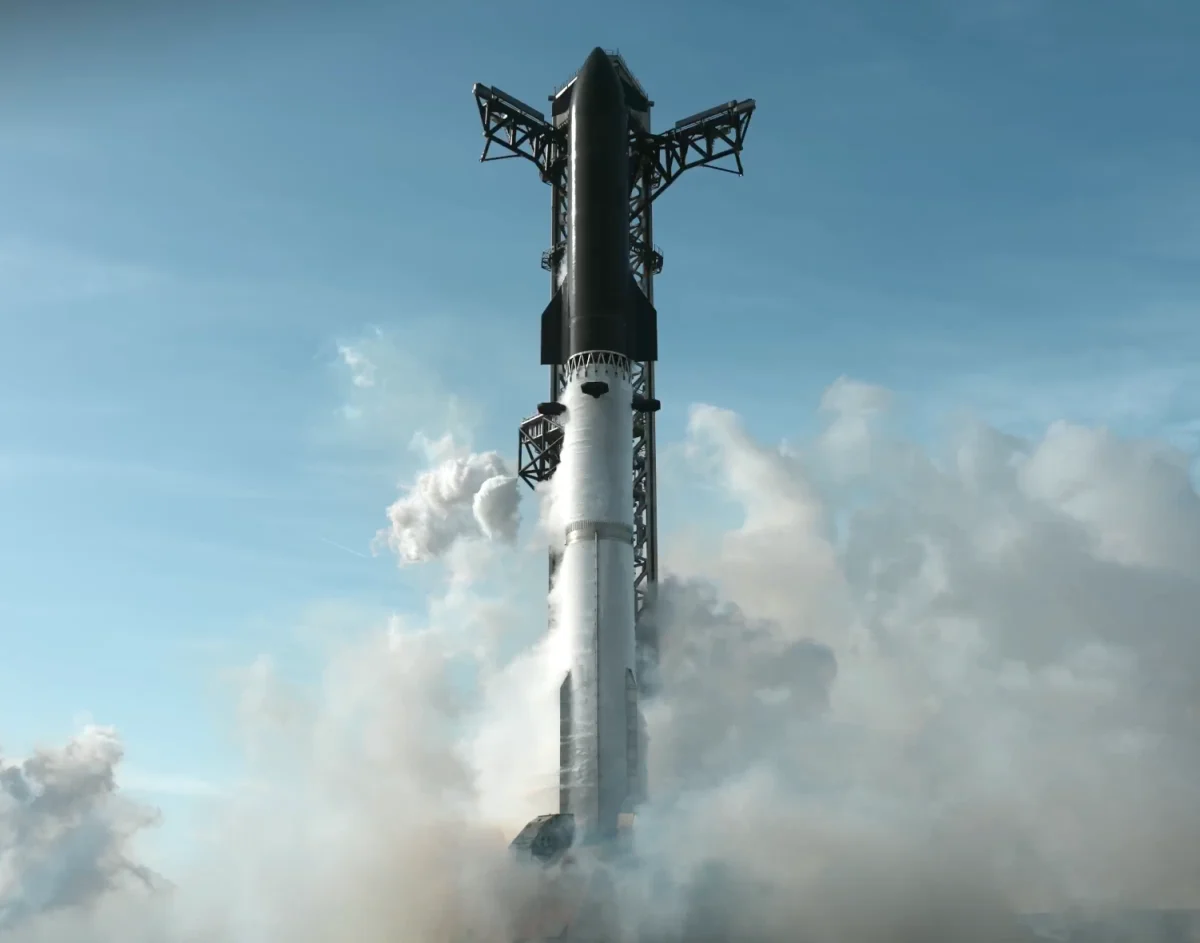
The ambitious second test flight of SpaceX’s upgraded Starship V3 rocket system was abruptly halted on Thursday, mere moments after its powerful booster engines began to ignite at the company’s sprawling Starbase facility in South Texas. The dramatic automatic abort, triggered by a partial engine ignition sequence, casts a temporary shadow over the aerospace giant’s rapid development pace and its recent historic entry into public markets.
Elon Musk, CEO of SpaceX, promptly addressed the incident on his social media platform, X, confirming that "some of the engines didn’t start, triggering an automatic launch abort." He indicated that the company plans to replace two of the booster’s formidable Raptor engines, pushing back the next launch attempt until the following week. This delay underscores the intricate challenges inherent in developing the world’s largest and most powerful rocket system, designed to redefine humanity’s reach into space.
The Ambition of Starship: A Gateway to Mars and Beyond
Starship represents the linchpin of SpaceX’s audacious long-term vision, a fully reusable, two-stage-to-orbit super heavy-lift launch vehicle designed for missions to the Moon, Mars, and beyond. Its primary goal is to transport both cargo and humans, fundamentally lowering the cost of space access and enabling the establishment of permanent off-world settlements. The V3 iteration of Starship is particularly significant, incorporating design enhancements aimed at improving reliability and performance. This specific flight was intended to carry the first third-generation Starlink satellites into space, albeit with a planned disposal burn around 20 minutes after deployment, as Starship has not yet achieved orbital velocity and re-entry capability in its test flights. These V3 Starlink satellites, even in their "burn-up" configuration for this test, signify a crucial step towards the concept of "orbital data centers"—a vision where the Starlink constellation itself evolves into a massively distributed computational network in low Earth orbit, offering unprecedented data processing capabilities and ultra-low latency internet access globally. This groundbreaking concept is viewed by SpaceX as not only technologically feasible but also economically transformative, positioning Starlink as a foundational infrastructure for future space-based industries.
A History of Iteration and Challenges
The development journey of Starship, initially known as the Big Falcon Rocket (BFR) and later the Interplanetary Transport System (ITS), has been characterized by an iterative, rapid prototyping approach, a hallmark of SpaceX’s engineering philosophy. Unlike traditional aerospace programs that often take decades to develop new rockets through exhaustive ground testing, SpaceX embraces a "build, test, fly, and learn" methodology, accepting that failures are inevitable steps in the learning process. Early prototypes, such as the Starhopper and subsequent Starship SN (Serial Number) vehicles, underwent numerous high-altitude test flights and spectacular landings (and occasional explosions) at Starbase, each providing invaluable data.
The road to orbital flight has been particularly arduous. Starship’s first integrated flight test in April 2023 saw the rocket achieve lift-off but ultimately fail to separate its stages, leading to a controlled destruction. A second integrated flight test in November 2023 successfully achieved stage separation, but both the Super Heavy booster and the Starship upper stage were lost during their respective flight profiles. These events necessitated extensive investigations by the Federal Aviation Administration (FAA), which oversees commercial space launches in the U.S. The FAA’s reviews are critical, ensuring public safety and environmental protection, and often require SpaceX to implement corrective actions before being granted clearance for subsequent flights.
The May 2024 launch of the first Starship V3 was itself a mission of mixed results, demonstrating the complex nature of this advanced system. While the successful lift-off and deployment of Starlink simulators marked a significant forward stride for the upgraded rocket, the Super Heavy booster experienced a failure before it could execute a simulated landing in the Gulf of Mexico. This incident prompted another FAA-mandated review. Separately, the Starship upper stage also encountered an engine anomaly during its ascent, though it successfully performed its own simulated landing over water. The FAA only recently cleared SpaceX to proceed with further Starship flights, following a thorough analysis of the booster failure and the implementation of identified corrective measures. The latest abort, therefore, comes shortly after regulatory approval, highlighting the persistent challenges in bringing such a complex system to full operational capability.
Financial Repercussions and Market Dynamics
This latest launch abort carries particular weight given SpaceX’s recent entry into the public market. On June 12, the company completed the largest initial public offering (IPO) in history, raising over $85 billion. This monumental transaction briefly propelled its valuation to levels comparable to technology titans like Amazon and Microsoft. However, the initial euphoria was tempered as the company’s stock experienced a steady decline over the subsequent month.
Thursday’s abort exacerbated this trend, with SpaceX’s stock price closing below its IPO price of $135 and sinking more than 4% in after-hours trading. Such immediate market reactions underscore the heightened scrutiny and investor sensitivity that now accompany every operational milestone—or setback—for the newly public company. While the long-term success of SpaceX hinges on its technological prowess and ambitious goals, short-term fluctuations are often driven by perceived operational efficiency and the absence of delays.
The financial health of SpaceX is intrinsically linked to its various ventures, with Starlink currently standing out as its largest revenue generator and, notably, its only profitable business segment. The company’s vision of an "orbital data center" is deeply intertwined with Starlink’s evolution, aiming to not only provide global internet but also to create new streams of income through advanced data services. Delays in Starship’s development, which is crucial for deploying the next generation of Starlink satellites efficiently and at scale, could impact Starlink’s expansion plans and profitability projections, thereby affecting overall investor confidence.
In the broader space market, SpaceX’s Starship program faces intense competition. Traditional aerospace contractors like United Launch Alliance (ULA) and newer entrants like Blue Origin are also developing heavy-lift launch vehicles. While none currently match Starship’s projected payload capacity or reusability ambitions, every setback for SpaceX offers potential opportunities for competitors to gain ground or refine their own strategies. The race to develop cost-effective, reliable access to space is a high-stakes endeavor, with significant geopolitical and economic implications.
The Dynamics of the Abort Sequence
The events leading up to Thursday’s abort unfolded with a familiar cadence for those accustomed to rocket launches. The countdown progressed smoothly, experiencing only a brief, standard hold at T-minus one minute before quickly resuming. As the countdown clock reached zero, the launchpad’s massive water deluge system, designed to suppress acoustic energy and heat, activated with a powerful roar. Simultaneously, the Super Heavy booster’s array of Raptor engines began their ignition sequence. Spectators and telemetry data alike observed visible signs of engine firing. However, the sequence was cut short. Graphics displayed on SpaceX’s broadcast indicated that four of the booster’s new Raptor engines failed to ignite properly, prompting the system’s sophisticated autonomous safety protocols to immediately abort the launch.
The automatic abort system is a critical safety feature, designed to prevent catastrophic failures by detecting anomalies in real-time and shutting down operations before a hazardous situation escalates. In this instance, it functioned as intended, preventing a potentially more severe incident. Following the abort, SpaceX engineers initiated the complex process of detanking the vast quantities of liquid oxygen and liquid methane propellants from both the Super Heavy booster and the Starship upper stage. This procedure is a lengthy and meticulous task, crucial for ensuring safety before ground crews can approach the vehicle to conduct a thorough investigation into the precise cause of the engine ignition failure.
The Path Forward: Persistence in the Face of Setbacks
While disappointing for SpaceX and its enthusiasts, launch aborts are an inherent part of rocket development, particularly for a vehicle of Starship’s unprecedented scale and complexity. The "fail fast, learn faster" philosophy that has propelled SpaceX to prominence means that each setback, while costly and time-consuming, provides invaluable data for engineers to analyze, iterate, and improve. The company’s rapid turnaround from previous incidents demonstrates its commitment to this approach.
The challenges are multifaceted: not only must SpaceX perfect the Starship vehicle itself, but it must also scale up its Starlink constellation, integrate it with the Starship launch platform, and demonstrate the viability of the "orbital data center" concept. Each element presents its own set of engineering and operational hurdles.
For investors, the recent IPO places SpaceX under a new microscope, where every technical hiccup can translate into market volatility. Yet, the long-term narrative of SpaceX remains one of ambitious innovation and transformative potential. The upcoming weeks will be crucial for the company as it analyzes the data from this abort, implements necessary fixes, and prepares for another attempt to send its upgraded Starship V3 soaring towards its ambitious goals. The journey to making humanity a multi-planetary species, and to realizing the full potential of space-based infrastructure, is undoubtedly fraught with challenges, but SpaceX’s history suggests a tenacious commitment to overcoming them.