Amir Mahmud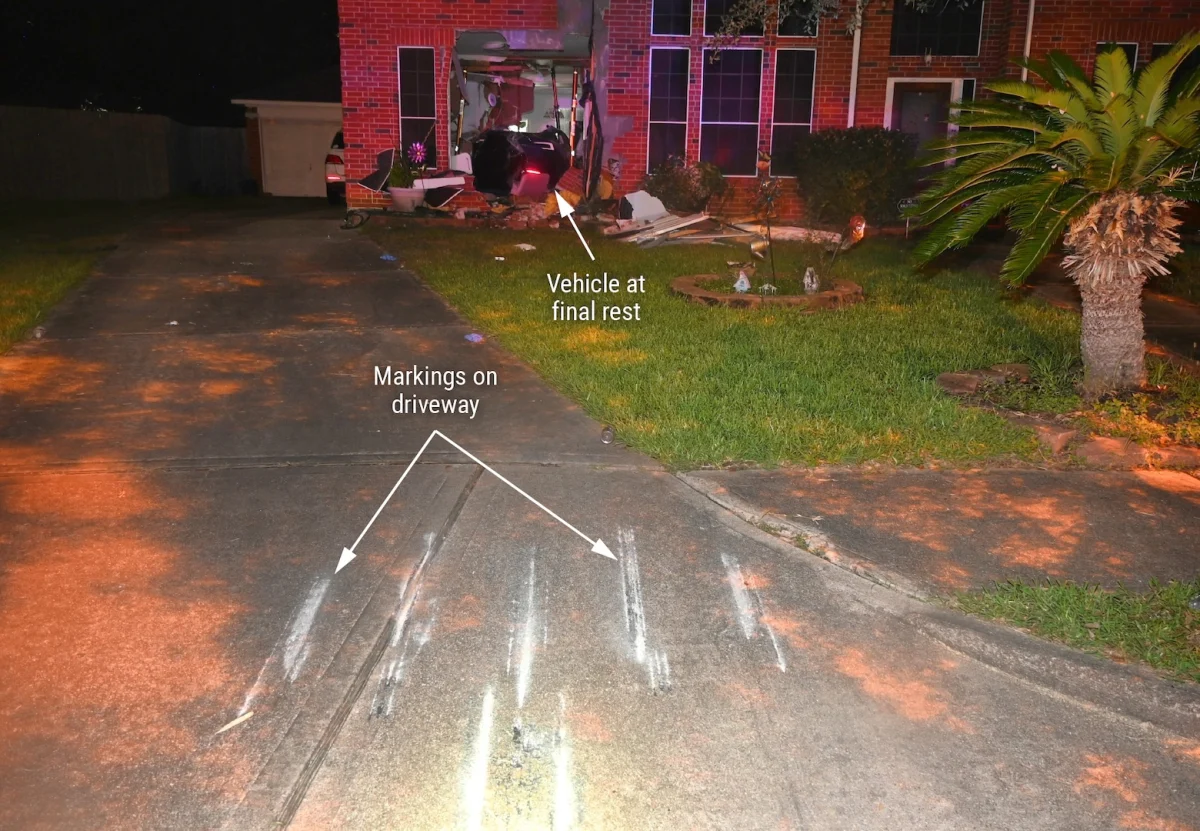
The National Transportation Safety Board (NTSB) has formally concluded that the tragic June 2026 crash in Katy, Texas, which resulted in the death of a 76-year-old resident, was directly caused by the driver’s full application of the accelerator pedal, effectively overriding Tesla’s Full Self-Driving (Supervised) system. This finding, released as part of the NTSB’s preliminary report, directly challenges initial speculation regarding the role of advanced driver-assistance technology and underscores the persistent human element in vehicle control, even amidst increasing automation.
The Catastrophic Collision
The incident unfolded on a clear, dry day in June 2026 on Rose Hollow Lane, a residential thoroughfare with a posted speed limit of 30 miles per hour. According to the NTSB’s meticulous investigation, the Tesla, operated by 44-year-old Michael Butler, was traveling at speeds exceeding 70 miles per hour when it veered off the roadway and violently collided with a nearby house, tragically killing Martha Avila, who was inside her home. Security camera footage obtained by investigators depicted the vehicle rapidly accelerating through an intersection immediately prior to its fatal trajectory. The sheer force of the impact at such high velocity left a devastating scene and immediately launched a multi-agency investigation involving both the NTSB and the National Highway Traffic Safety Administration (NHTSA).
The preliminary findings from the NTSB are particularly significant because they provide an authoritative account based on forensic analysis of the vehicle’s data recorders, which captured the driver’s precise inputs. This crucial data revealed that the accelerator pedal was depressed to its maximum, 100% position, just moments before the collision. This action would have superseded any speed controls or safety protocols initiated by the Full Self-Driving (Supervised) system, propelling the vehicle forward at its maximum available power. This scientific confirmation corroborates earlier statements from Tesla and its CEO, Elon Musk, who had quickly asserted that the company’s advanced driver-assistance system (ADAS) was not responsible for the high-speed nature of the crash.
Decoding Tesla’s Full Self-Driving (Supervised)
To fully grasp the implications of the NTSB’s findings, it is essential to clarify the nature of Tesla’s Full Self-Driving (Supervised) — often colloquially referred to as FSD. Despite its provocative name, FSD is not a fully autonomous system capable of operating without any human oversight. It is classified as a Level 2 advanced driver-assistance system, adhering to the Society of Automotive Engineers (SAE) international standard for driving automation. This classification denotes that while the system can manage both steering and acceleration/braking under specific operational conditions, the human driver retains complete responsibility for continuously monitoring the driving environment and must be prepared to intervene and take full control at any given moment.
Tesla has consistently updated and refined FSD since its initial introduction, progressively evolving from more basic Autopilot functionalities to encompass sophisticated capabilities such as navigating complex city streets, executing turns, and responding to traffic lights and stop signs. However, the company explicitly mandates that drivers must keep their hands on the steering wheel and their undivided attention on the road. Various integrated safeguards, including haptic feedback and visual warnings, are engineered to detect lapses in driver attention and prompt immediate engagement. Should a driver fail to respond to these alerts, the system is designed to progressively slow down or even completely disengage. The recent addition of "supervised" to the system’s name emphatically underscores this critical human role. The incident in Katy, therefore, spotlights a scenario where direct human input—specifically, the deliberate act of pressing the accelerator—overrode the system’s intended operational parameters, irrespective of its active status.
A History of Scrutiny: ADAS and Investigations
This tragic incident is not an isolated event within the broader ongoing narrative surrounding advanced driver-assistance systems and their safety implications. Both the NTSB and the National Highway Traffic Safety Administration (NHTSA) have long been actively involved in investigating a multitude of crashes involving Tesla vehicles, as well as those from other manufacturers equipped with similar ADAS technologies. Historically, these investigations have frequently sought to ascertain whether the ADAS contributed to the accident, whether the driver misused or misunderstood the system, or if a complex combination of factors was at play.
A significant timeline of scrutiny includes numerous high-profile crashes involving Tesla’s Autopilot or FSD features over the past several years. Some of these incidents involved vehicles striking stationary emergency vehicles, others involved drivers reportedly disengaged from the primary driving task, and a few have even resulted in criminal charges being filed against the drivers. These recurring events have fueled a contentious and persistent debate about the appropriate naming conventions for ADAS, with critics arguing vociferously that terms like "Full Self-Driving" inadvertently create a misleading impression of true autonomy, thereby potentially encouraging driver overreliance or dangerous complacency. Regulatory bodies have frequently expressed concerns that such naming might contribute to a fundamental misunderstanding of the systems’ inherent limitations, prompting drivers to delegate an excessive degree of responsibility to the technology. The NTSB, for instance, has previously issued formal recommendations urging manufacturers to significantly improve driver engagement monitoring systems and to rename ADAS features to more accurately and transparently reflect their actual capabilities.
Legal and Regulatory Ramifications
The immediate aftermath of the Katy crash saw swift legal action. The family of Martha Avila has filed a civil lawsuit against both Michael Butler, the driver, and Tesla, alleging negligence. Such civil lawsuits are a common legal recourse in cases involving severe injury or wrongful death, and they typically seek financial compensation for damages, including loss of life, pain and suffering, and associated medical and funeral expenses. The allegation of negligence against Butler stems directly from his alleged failure to operate the vehicle in a safe and responsible manner, particularly in light of the NTSB’s definitive finding of full accelerator input and the highly pertinent details of his Google search history.
Concurrently, Michael Butler faces a serious criminal charge of manslaughter, a felony that implies reckless behavior directly leading to another person’s death. The ultimate outcome of this criminal case will hinge on the prosecution’s ability to prove beyond a reasonable doubt that Butler’s actions constituted criminal negligence or recklessness. His alleged statement to authorities that he "passed out" while purportedly using Tesla’s driver assistance system, when juxtaposed with his reported Google searches for phrases such as "Tesla FSD not aggressive enough" and "Tesla FSD too timid," could serve as pivotal evidence. These searches strongly suggest a possible intent to manipulate or push the system beyond its intended design parameters, or to achieve a driving style that deviates significantly from its programmed caution, thereby raising profound questions about intentional misuse rather than mere passive disengagement.
The dual investigations conducted by the NTSB and NHTSA run parallel to these unfolding legal proceedings. While the NTSB’s primary objective is to establish the probable cause of the accident and issue evidence-based safety recommendations to prevent similar future incidents, NHTSA possesses the statutory authority to mandate vehicle recalls if a safety defect is identified and can significantly influence the establishment of broader regulatory standards. The comprehensive findings from both agencies will undoubtedly play a substantial role in the ongoing civil and criminal cases, providing invaluable expert technical analysis that will inform and shape legal arguments.
The Human Element: Driver Behavior and Technology
The Katy crash powerfully illustrates the inherently complex and often perilous interplay between human behavior and increasingly advanced vehicle technology. While ADAS are meticulously designed to enhance both safety and convenience, their overall effectiveness is intrinsically linked to appropriate and vigilant human supervision. Tesla, much like other manufacturers of Level 2 systems, explicitly requires drivers to remain attentive and prepared to instantaneously assume full control. However, extensive human factors research consistently indicates that automation can sometimes inadvertently lead to decreased vigilance or even dangerous complacency, a well-documented phenomenon known as automation bias. Drivers might progressively become less engaged, mistakenly assuming that the system will autonomously handle all contingencies, even when it is explicitly designed not to.
Butler’s alleged Google searches introduce an additional, troubling layer of complexity. Queries such as "Tesla FSD not aggressive enough" suggest a driver potentially seeking to alter the system’s performance characteristics or perhaps expressing profound frustration with its inherently cautious programming. This particular kind of interaction highlights a significant cultural aspect of technology adoption: users frequently seek to customize, modify, or even "hack" systems to better fit their personal preferences, sometimes without fully comprehending the profound safety implications of such actions. It raises critical questions about the efficacy of current driver education programs, the intricate psychological aspects of placing trust in automation, and the inherent potential for both intentional and unintentional misuse. This scenario undeniably underscores the critical need for unequivocal and transparent communication from manufacturers regarding system limitations, coupled with the development of robust driver monitoring systems that can not only accurately detect inattention but also effectively recognize and mitigate deliberate attempts to bypass crucial safety features.
Broader Implications for Automotive Autonomy
The implications of the NTSB’s preliminary findings extend far beyond this single, tragic event. For the entire automotive industry, which is currently investing vast resources into the development of autonomous driving technologies, incidents like the Katy crash serve as stark and sobering reminders of the profound challenges inherent in the monumental transition from predominantly human-driven to increasingly automated vehicles. The ongoing and often heated debate about ADAS nomenclature and the precise distinction between "assistance" and "autonomy" will likely intensify further. Regulatory bodies globally are grappling with the immense task of how to effectively oversee these rapidly evolving technologies, striving to strike a delicate balance between fostering innovation and safeguarding public safety.
For consumers, the incident serves as a potent reinforcement of the paramount importance of thoroughly understanding the true capabilities and, more critically, the inherent limitations of the technology integrated into their vehicles. The public perception of "self-driving" cars is profoundly influenced by various factors, including media portrayals, aggressive marketing language, and high-profile incidents. When crashes occur, particularly those involving fatalities, public trust in the underlying technology can significantly erode, potentially slowing the widespread adoption of even truly beneficial advancements as the technology continues its inexorable march forward.
Ultimately, the NTSB’s preliminary report on the Katy crash unequivocally reinforces a fundamental and enduring principle: until vehicles achieve true Level 5 autonomy—where they can operate entirely without any human intervention under all conceivable conditions—the human driver remains the ultimate and indispensable safety operator. This incident stands as a critical and sobering case study in the ongoing evolution of automotive technology, emphasizing the indispensable role of driver responsibility, robust and proactive regulatory oversight, and clear, comprehensive public education in navigating the complex path toward a future of safer, more automated transportation. The full NTSB report, expected at a later date, will undoubtedly provide further detailed recommendations specifically aimed at preventing similar tragedies from occurring.