Amir Mahmud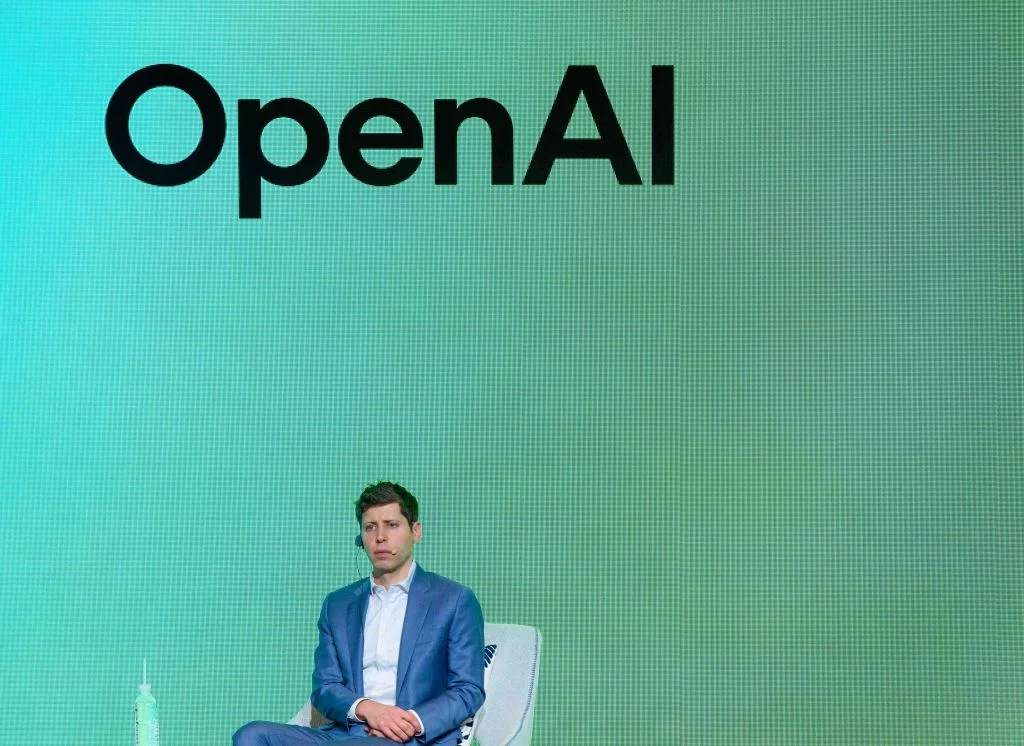
OpenAI, a leading artificial intelligence research and deployment company, has issued a robust denial against allegations put forth by Apple in a recent trade secret lawsuit, asserting that the Cupertino tech giant’s complaint lacks substantive merit. This latest development intensifies an already high-stakes legal battle between two of the technology world’s most influential entities, signaling a deepening rivalry as AI capabilities increasingly integrate with hardware.
"While we take these allegations seriously, we’re not aware of any evidence that this complaint has merit," stated OpenAI in a public declaration, which initially surfaced via Bloomberg reporter Ed Ludlow on X. The company further articulated its commitment to open competition and individual career freedom, emphasizing its core mission: "We believe in fair competition and allowing people the freedom to work wherever they choose, and we’re focused on building innovative technology that empowers people everywhere." This statement marks the first direct commentary from OpenAI regarding the specifics of Apple’s lawsuit, setting the stage for a protracted legal confrontation.
The Genesis of the Dispute: Apple’s Allegations
Apple initiated the legal proceedings several days prior to OpenAI’s response, filing a comprehensive 41-page complaint in the U.S. District Court for the Northern District of California. The lawsuit levies serious accusations against OpenAI, contending that several of its employees, who previously held key positions at Apple, engaged in a calculated and coordinated scheme to misappropriate confidential information and invaluable intellectual property. The complaint specifically highlights senior OpenAI leadership, including Chief Hardware Officer Tang Tan, as central figures in this alleged endeavor.
Tan’s professional trajectory lends particular weight to Apple’s claims. Before transitioning to OpenAI, he was a veteran at Apple, having dedicated 24 years to the company. His tenure included pivotal roles such as vice president of product design for the iPhone and Apple Watch, positions that afforded him intimate knowledge of Apple’s most guarded product development strategies, designs, and supply chain intricacies. The lawsuit posits that this access to proprietary information was subsequently leveraged to benefit OpenAI’s burgeoning hardware initiatives.
This legal maneuver by Apple represents a significant escalation in the ongoing competition for dominance in the rapidly evolving artificial intelligence landscape. Earlier, when the lawsuit was first announced, OpenAI had issued a more general statement to TechCrunch, disavowing any interest in the proprietary information of other corporations. "We have no interest in other companies’ trade secrets. We remain focused on building innovative technology that empowers people everywhere," the company had then stated, a position it now reiterates with more direct defiance.
The Landscape of Trade Secret Litigation in Tech
Trade secret lawsuits are not uncommon in the intensely competitive technology sector, where intellectual property often forms the bedrock of a company’s market value and competitive edge. Historically, Silicon Valley has been a hotbed for such disputes, underscoring the fierce battle for innovation and talent. These cases often involve allegations of former employees taking proprietary information to new ventures or competitors.
For instance, the legal saga between Waymo (Google’s self-driving car unit) and Uber over alleged theft of lidar technology, or the decades-long copyright battles involving software giants like Oracle and Google, illustrate the high stakes and complex nature of proving trade secret misappropriation. The Defend Trade Secrets Act of 2016, a federal law in the U.S., provides a nationwide standard for trade secret protection, allowing companies to sue in federal court. To succeed, a plaintiff typically must demonstrate that they possessed a trade secret, that the defendant misappropriated it, and that the misappropriation caused harm. The "coordinated effort" allegation by Apple suggests a more systemic approach to acquiring information, which, if proven, could significantly strengthen its case.
The challenge in these cases often lies in distinguishing between an employee’s general knowledge and skill acquired over years, which is typically transferable, and specific, confidential trade secrets that are legally protected. The "freedom to work wherever they choose" argument from OpenAI taps into a broader debate about employee mobility versus corporate intellectual property rights, a tension inherent in dynamic industries that rely heavily on specialized talent.
OpenAI’s Hardware Ambitions: A Direct Challenge to Apple?
The context of Apple’s lawsuit is inextricably linked to OpenAI’s increasingly public foray into hardware development. Reports and strategic acquisitions suggest that OpenAI is actively pursuing the creation of physical devices that could potentially rival Apple’s established product lines, particularly in the smart home and personal assistant categories.
One significant indicator of OpenAI’s hardware aspirations was its acquisition of io, a startup founded by the legendary industrial designer Jony Ive. Ive, renowned for his instrumental role in shaping iconic Apple products like the iPhone, iMac, and iPod during his nearly three-decade tenure at the company, departed Apple in 2019 to establish LoveFrom, a design firm, from which io emerged. His collaboration with OpenAI, bringing his unparalleled expertise in user-centric industrial design, immediately signaled a serious intent to translate AI advancements into tangible, user-friendly devices. The potential combination of OpenAI’s cutting-edge AI models with Ive’s design philosophy represents a formidable competitive threat, especially to a company like Apple that prides itself on seamless integration of hardware and software.
Recent reports, including one from Bloomberg, have detailed OpenAI’s development of a mobile, screen-free smart speaker. This device is reportedly conceived as a "humanlike AI companion" designed to reside within the home, emphasizing intuitive interaction and a departure from traditional screen-based interfaces. The absence of a screen, coupled with descriptions of "moving mechanical elements," suggests an innovative approach to human-computer interaction, potentially offering a more ambient and integrated AI experience. Crucially, the development team for this device reportedly includes several former Apple engineers who contributed to the design and engineering of the iPhone and Mac, further substantiating Apple’s claims of a talent drain directly impacting its competitive landscape.
Market and Social Impact: The Battle for the AI Ecosystem
The convergence of AI software and proprietary hardware represents a critical juncture in the technology industry. For decades, Apple has thrived on its vertically integrated ecosystem, where it controls both the hardware and the software, enabling unparalleled user experience, security, and performance. OpenAI’s move into hardware suggests a similar ambition: to create an end-to-end AI experience, from the underlying models to the physical interface through which users interact with them.
Should OpenAI successfully launch a compelling hardware product, the market implications would be substantial. It could disrupt the existing smart speaker market, currently dominated by Amazon’s Echo and Google’s Home devices, and pose a direct challenge to Apple’s HomePod and Siri ecosystem. Furthermore, an "AI companion" device could redefine how consumers interact with technology in their daily lives, shifting paradigms away from traditional screens and towards more natural, conversational interfaces. This could have profound social impacts, influencing everything from how we manage our homes to how we access information and services.
The cultural impact of such a device, especially one designed with Jony Ive’s ethos, could be significant. Ive’s past work at Apple set new benchmarks for industrial design and user expectation. A new category of AI-driven hardware, developed with his input, could similarly influence design trends and consumer adoption patterns across the tech industry.
Neutral Analytical Commentary: Navigating the Legal and Competitive Minefield
From an analytical standpoint, this lawsuit highlights the increasing pressure on tech companies to protect their intellectual assets in a rapidly evolving and talent-hungry industry. Apple’s aggressive stance is understandable, given its history of meticulously guarding its innovations and its reliance on proprietary designs and processes for competitive differentiation. The specific focus on a high-ranking executive like Tang Tan, coupled with the alleged involvement of other former Apple engineers, suggests that Apple views this not merely as isolated employee movement but as a strategic effort to gain an unfair advantage.
OpenAI’s defense, centered on fair competition and employee freedom, taps into a widely accepted principle within the tech industry: that employees should have the liberty to pursue opportunities elsewhere. However, this freedom is not absolute and is generally tempered by obligations to protect former employers’ trade secrets. The legal proceedings will likely scrutinize the specific information allegedly taken, how it was used, and the intent behind its acquisition. Proving a "coordinated effort" can be challenging, often relying on circumstantial evidence and detailed forensic analysis of communications and data.
Regardless of the legal outcome, this dispute underscores a broader trend: the AI race is intensifying, and the battlegrounds are expanding from software algorithms to the very devices that deliver these intelligent experiences. Companies like Apple, Google, and Amazon, with their entrenched hardware ecosystems, face formidable competition from AI-first companies like OpenAI that are now extending their reach into the physical world. This rivalry is likely to spur further innovation, but also increased legal skirmishes over talent and intellectual property.
Looking Ahead: Legal Precedents and Future Outlook
The outcome of Apple v. OpenAI could set important precedents for future trade secret litigation in the AI era. A ruling in Apple’s favor could lead to stricter enforcement of non-compete clauses and intellectual property protections for departing employees, potentially impacting talent mobility across Silicon Valley. Conversely, if OpenAI successfully defends itself, it could embolden other AI companies to pursue aggressive talent acquisition strategies, even from direct competitors, while highlighting the difficulties in proving trade secret misappropriation in a dynamic industry where innovation often builds upon existing knowledge.
The legal process itself is likely to be lengthy, involving extensive discovery, expert testimony, and potentially appeals. A settlement remains a possibility, as is common in high-profile tech disputes, allowing both parties to avoid the uncertainties and public scrutiny of a full trial. However, the current positions suggest a willingness to litigate, indicating the perceived importance of the stakes involved for both companies.
Ultimately, this legal confrontation between Apple and OpenAI is more than just a dispute over alleged trade secret theft; it is a microcosm of the larger struggle for control over the future of artificial intelligence and its integration into our daily lives. As AI moves from abstract algorithms to tangible, interactive devices, the lines of competition and collaboration among tech giants will continue to blur, making such legal battles an inevitable, if contentious, part of the innovation landscape.