Amir Mahmud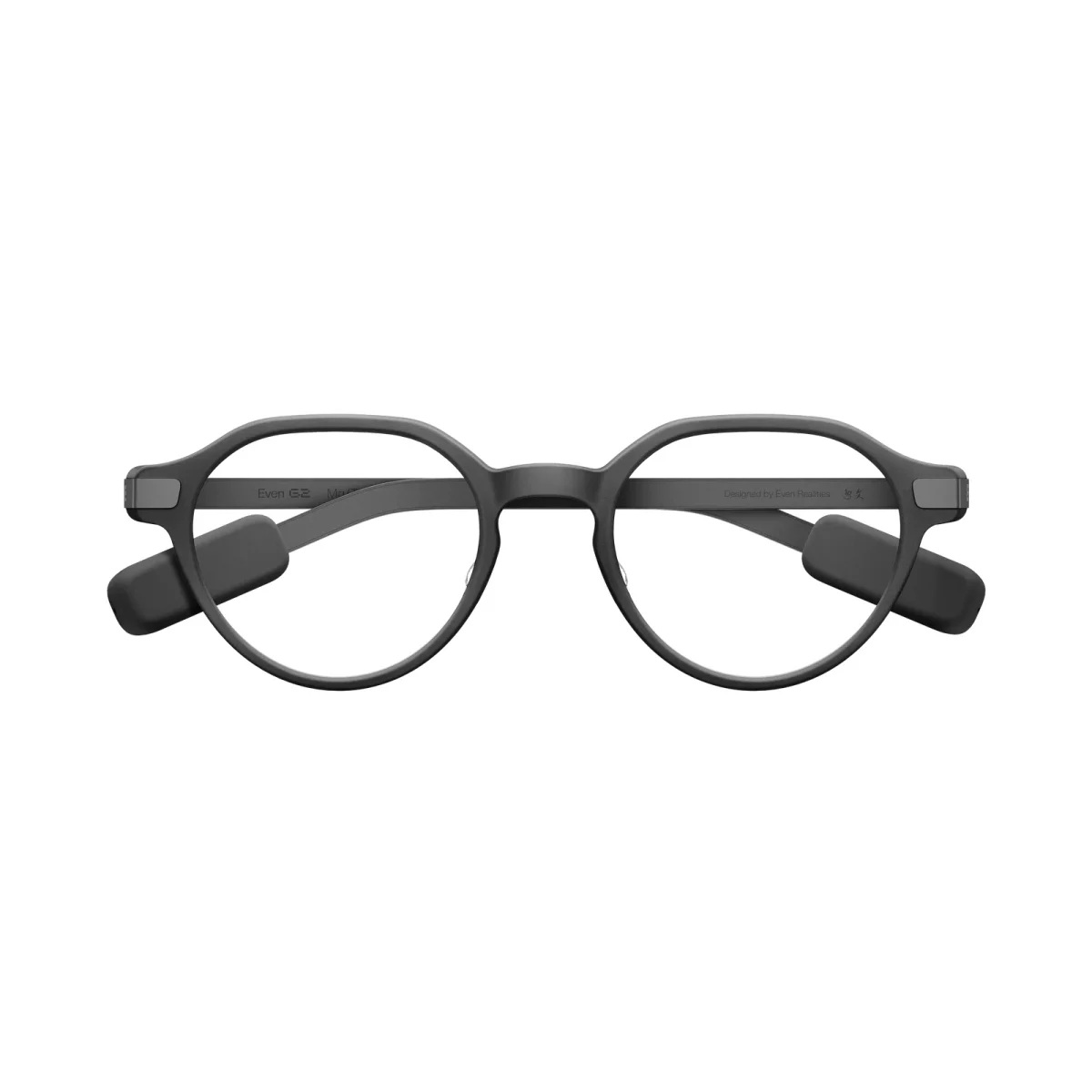
The pursuit of the next major computing interface has long captivated the technology industry, with many executives positing that smart glasses could eventually supplant smartphones as our primary digital companions. Yet, despite significant advancements in wearable technology, many of today’s intelligent eyewear devices remain heavily tethered to their mobile phone counterparts, often struggling with independent functionality and seamless integration. In this evolving landscape, Even Realities introduces its G2 smart glasses, a premium offering that, while still reliant on phone connectivity, carves out a distinct niche through its deliberate omission of cameras and speakers, prioritizing user privacy and enhanced productivity over multimedia capture and consumption.
A Privacy-First Philosophy in Wearable Tech
The design ethos behind Even Realities’ G2 smart glasses stands in stark contrast to that of many competitors, such as Meta’s offerings. Rather than integrating cameras and speakers, features often associated with social sharing and immersive experiences, the G2 focuses on a heads-up display that presents information discreetly. This strategic decision is a direct response to the privacy concerns that have historically plagued the smart glasses sector. Early iterations of consumer smart glasses, most notably Google Glass in the mid-2010s, faced significant public backlash and earned the pejorative "Glasshole" moniker due to fears of ubiquitous, unconsented recording. Even Realities consciously sidesteps these controversies, aiming to foster trust and acceptance by ensuring that individuals in the wearer’s vicinity need not worry about being inadvertently filmed or recorded. This approach positions the G2 as a tool for personal augmentation and professional efficiency, rather than a device for broadcasting one’s experiences.
The G2 features a monochrome display that projects text and data in a vibrant green hue, reminiscent of classic neon signage. This visual style is not only distinctive but also engineered for clarity, offering a bright 1,200-nit output that ensures legibility across diverse lighting conditions. This marks a notable upgrade from its predecessor, the G1, which offered a 1,000-nit display and a less fluid 20Hz refresh rate. The G2 boasts a smoother 60Hz refresh rate and a 75% larger display area, contributing to a more comfortable and informative visual experience.
Historical Context and Market Dynamics
The journey of smart glasses from futuristic concept to tangible product has been fraught with challenges and innovations. The early 2000s saw a burgeoning interest in augmented reality (AR) and wearable displays, but it was Google Glass’s consumer launch around 2013-2014 that brought the concept into mainstream consciousness. While technologically impressive for its time, its perceived invasiveness and high cost ultimately led to its commercial struggles. Following this, companies like Snap introduced Spectacles, focusing on casual photo and video capture, while Meta partnered with Ray-Ban for similar camera-equipped eyewear.
The broader market for smart glasses today is segmented, ranging from fully immersive virtual reality (VR) headsets that create entirely digital environments, to augmented reality (AR) devices that overlay digital information onto the real world, and simpler heads-up displays like the G2. While giants like Apple are rumored to be developing sophisticated AR glasses, and companies like Magic Leap and Microsoft continue to push the boundaries of enterprise AR, Even Realities occupies a distinct space. Its focus on text-based information delivery with a privacy-conscious design aligns it more closely with a niche market segment alongside a few other manufacturers, predominantly from Asia, such as Rokid and Inmo, who also explore the neon-style display for more utilitarian applications. Even Realities’ decision to focus on productivity and privacy is a calculated gamble, betting that a significant segment of users prioritizes utility and discretion over advanced multimedia features.
Design, Comfort, and Power Management
The physical design of the Even Realities G2 prioritizes comfort and aesthetics, crucial factors for any wearable device intended for extended use. Weighing in at a mere 35 grams, these glasses are remarkably lightweight, mitigating the fatigue often associated with wearing technology on one’s face. The frame is constructed from a robust magnesium alloy, while the temples – the arms extending over the ears – are crafted from titanium alloy, contributing to both durability and a premium feel. Available in two distinct frame designs, the G2 aims to blend seamlessly with everyday eyewear. Additionally, the lenses incorporate built-in UV protection, offering practical benefits even when the smart features are not actively engaged, making them suitable for outdoor wear.
Battery life is a critical concern for portable electronics, and the G2 addresses this with a claimed two-day battery life under typical usage scenarios. This longevity is further enhanced by an accompanying protective case, which not only safeguards the glasses but also functions as a portable charging station, capable of recharging the G2 up to seven times before requiring its own power replenishment. While the case is sizable, making it unsuitable for a pocket, its sturdy construction ensures secure storage and reliable charging on the go, crucial for professionals who might be constantly on the move.
Core Functionality and User Experience
The G2 smart glasses are designed to function as a personal digital assistant, providing immediate access to critical information without requiring users to constantly pull out their phones. Users can activate the glasses through intuitive tap-based controls located on the stems. A double-tap reveals a customizable dashboard, displaying essential data such as upcoming appointments, stock market updates, and headline news. While the G2 can also relay real-time phone notifications, this feature’s reliability has been inconsistent, and its utility is somewhat diminished for users who keep their smartphones readily accessible.
The true potential of the G2, particularly for its target demographic of business professionals, lies in its suite of specialized applications, accessible via a long-press on the temple control. This menu offers a notifications tray, along with dedicated functions for Translate, Conversate, Teleprompt, a to-do list, and Navigation.
The AI Assistant and Enhanced Productivity
At the heart of the G2’s advanced capabilities is Even AI, the integrated voice assistant. Activated by a wake word, this AI aims to streamline tasks and information retrieval. While the concept of a hands-free assistant is compelling, its execution can be inconsistent. The AI has shown a propensity to misinterpret to-do list requests, and for general inquiries, it often delivers lengthy textual responses that scroll across the display without options for interruption or expedited viewing. Furthermore, despite incorporating four microphones, the Even AI struggles in noisy environments, such as bustling urban settings, frequently failing to activate or mishearing commands. This highlights a persistent challenge in voice-controlled interfaces, where ambient noise remains a significant hurdle to reliable performance.
One of the most innovative features is "Conversate," which initially provided a live transcript of discussions. While useful for documentation, its functionality has evolved significantly to offer "prep notes." This advanced feature allows users to pre-load documents or manually add notes relevant to an upcoming meeting. During the conversation, the AI can then reference these materials, offering contextually relevant information or generating concise explainer bubbles for complex concepts as they arise. For example, in a discussion about renewable energy, the AI might display a bubble defining "Green Hydrogen," with a tap revealing a more detailed explanation. This contextual assistance can be genuinely valuable for information retention and active participation, though the continuous stream of information might prove overwhelming for casual conversations.
Navigating the World: Translation and Directions
The G2’s translation feature is particularly impressive for its ability to facilitate cross-cultural communication. Users can set a target language and engage in conversations, with the translated text appearing directly on the heads-up display. Early tests, including interactions at international tech events, demonstrated sufficient accuracy for following along with spoken Chinese, French, and Spanish. A current limitation, however, is that the translated output is only visible to the wearer, meaning the other party requires the Even Realities app to understand the wearer’s language. Despite this, for individuals frequently engaged in international business or travel, this hands-free translation capability offers a distinct advantage over traditional phone-based translation apps.
Navigation is another promising feature, projecting turn-by-turn directions directly onto the display. This could be particularly beneficial for cyclists or motorcyclists who need directions without diverting their gaze from the road. The current iteration, however, is limited by its reliance on the proprietary Even Realities app for route planning, rather than integrating with popular mapping services like Google or Apple Maps. More critically, the app has demonstrated issues with address accuracy, diminishing its reliability for unfamiliar routes. Addressing these accuracy and integration challenges will be key to unlocking the full potential of this feature.
The Ecosystem: G2 and the R1 Companion Ring
Even Realities also introduced the R1 smart ring as a companion device to the G2 glasses. The R1 is designed to offer an alternative control interface, allowing users to interact with the glasses via a touch-sensitive surface on the ring, rather than the temple controls on the glasses themselves. While the ring performs its control functions effectively, its overall utility is questionable, especially given its $249 price tag. The primary controls on the glasses already provide adequate functionality, making the R1 largely redundant for this purpose.
Furthermore, the R1 incorporates a suite of health tracking features, including heart rate monitoring, calorie expenditure, step counting, sleep analysis, and blood oxygen (SpO2) levels. While comprehensive, this positions the R1 in direct competition with established dedicated health trackers like Oura or Ultrahuman rings, which often offer more specialized health insights and a more refined user experience for fitness enthusiasts. For individuals already utilizing a separate fitness tracker, the R1’s health features become superfluous, further undermining its value proposition. A more compelling offering might involve a lower-priced control ring that also integrates a microphone for enhanced AI assistant commands, which could genuinely augment the G2 experience. As it stands, the R1 struggles to justify its cost and functionality as a standalone accessory.
Market Landscape and Future Outlook
The Even Realities G2, priced at $599, offers a compelling hardware package within a lightweight and aesthetically pleasing frame. The company has expressed intentions to expand its ecosystem by supporting third-party applications, though currently, there are no offerings compelling enough to significantly boost daily engagement. The G2 is undoubtedly an intriguing piece of hardware, appealing to early adopters and tech enthusiasts who enjoy exploring novel gadgets.
Even Realities’ strategic decision to omit cameras and speakers, betting on productivity and privacy, is a sound directional choice, especially given the historical challenges faced by camera-equipped smart glasses. However, to transition from a "nice-to-have" novelty to an indispensable daily device, particularly after achieving unicorn status and securing significant funding, the company must prioritize the development of more robust, first-party software. The hardware foundation is solid, but the absence of compelling, everyday use cases beyond niche professional applications like constant translation or teleprompting remains a significant hurdle. The future success of the G2 and Even Realities hinges on transforming its privacy-focused design into a truly indispensable productivity platform through enhanced software experiences that seamlessly integrate into users’ daily lives.