Amir Mahmud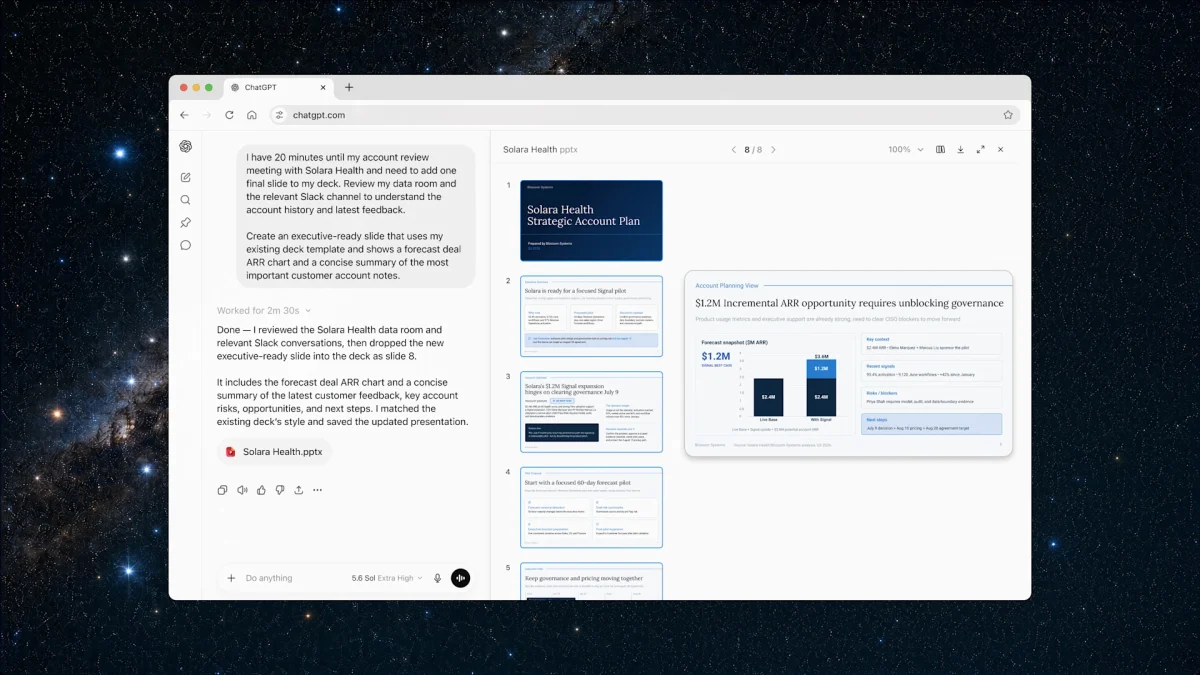
OpenAI, the vanguard artificial intelligence research and deployment company, is embarking on a significant strategic pivot, discontinuing its experimental AI-powered browser, Atlas. Launched just last October with the promise of revolutionizing web interaction through an integrated ChatGPT core, Atlas is now being sunsetted as the company reallocates its innovative agentic browsing features. This move signals a refined approach: rather than attempting to cultivate a new standalone browsing platform, OpenAI will integrate these capabilities directly into widely adopted environments, specifically enhancing its ChatGPT desktop application and introducing a powerful extension for Google Chrome.
The Genesis of AI Browsers and OpenAI’s Entry
For much of the preceding year, the technological landscape witnessed a burgeoning "browser war" with a distinct AI twist. This latest iteration of competition sought not merely to improve rendering speeds or user interfaces but to fundamentally redefine how individuals navigate and extract value from the vast expanse of the internet using artificial intelligence. Companies like Perplexity introduced Comet, while The Browser Company garnered attention with Dia, each aiming to challenge the entrenched dominance of Google Chrome and Apple Safari by offering a more intelligent, proactive browsing experience. Even established players like Google and Microsoft responded by integrating advanced AI functionalities into their respective browsers, Chrome and Edge, recognizing the shifting user expectations.
Historically, web browsers have served as the primary gateway to digital information, evolving from rudimentary text-based interfaces in the early 1990s to sophisticated, multimedia-rich platforms today. The emergence of large language models (LLMs) and generative AI introduced a new paradigm: the potential for browsers to move beyond passive display to become active, intelligent assistants. The vision was compelling—a browser that could not only fetch information but also understand context, summarize lengthy articles, answer complex questions directly from web content, and even automate multi-step online tasks on behalf of the user. This concept of "agentic browsing" formed the bedrock of Atlas and its contemporaries, promising to alleviate information overload and enhance productivity. OpenAI’s entry with Atlas, despite its brief tenure, underscored the industry-wide belief in this transformative potential, positioning the company as a key player in shaping the future of digital interaction.
A Strategic Reassessment: From Standalone to Integrated
OpenAI’s decision to retire Atlas, mere months after its debut, reflects a broader strategic realignment within the company. This move follows a directive issued by Fidji Simo, OpenAI’s CEO of applications, urging teams to concentrate resources on core initiatives and prune "side quests." This philosophy previously led to the shutdown of other experimental projects, such as the initial iteration of its AI video-generation tool, Sora. Such rapid iteration and occasional retraction are characteristic of the fast-paced AI industry, where companies constantly experiment, learn from user feedback, and pivot to optimize resource allocation and market fit.
The central insight driving this pivot appears to be a realization that, in the current digital ecosystem, the browser itself is more effectively positioned as a feature within a broader AI-powered workflow, rather than an end destination. Users are deeply embedded in their existing browsing habits and ecosystems, making the leap to an entirely new browser a significant hurdle, regardless of its advanced features. Instead of compelling users to adopt a new platform, OpenAI is now focusing on bringing its AI capabilities directly to where users already spend their time online. This pragmatic shift acknowledges the immense network effects and user inertia associated with established browsers like Chrome, opting for integration over disruption at the platform level. This approach minimizes the friction of adoption, leveraging familiarity while still delivering enhanced AI functionalities.
The New AI-Powered Toolkit: Chrome Extension and Desktop Evolution
OpenAI’s renewed strategy manifests in two primary deployments designed to weave advanced AI directly into the fabric of daily digital life.
First, the company is launching a sophisticated ChatGPT extension for Google Chrome. This extension grants ChatGPT contextual awareness of the webpage a user is currently viewing. This immediate access to content empowers users to engage in a variety of agentic tasks without ever leaving their browser window. Capabilities include asking targeted questions about the page’s content, generating concise summaries of lengthy articles, or initiating more complex, multi-step tasks directly from the browser interface. This marks a direct and significant challenge to similar offerings, such as Google’s Gemini Side Panel, intensifying the competition in the realm of in-browser AI assistance. The Chrome extension is designed to be a seamless, omnipresent AI co-pilot, enhancing information consumption and productivity by providing on-demand intelligence directly within the user’s current context.
Second, OpenAI is substantially bolstering its ChatGPT desktop application. This enhancement transforms the desktop app into a more robust, self-contained workspace, integrating a powerful browser that allows users to perform web-based tasks without needing to open a separate browser application. Users will be able to browse websites, securely log into accounts, download files, and interact with web pages—all within the ChatGPT environment. Complementing this, a separate "cloud browser" runs remotely on OpenAI’s secure servers. This remote browser acts as a dedicated environment where the app’s AI agents can autonomously complete intricate tasks on a user’s behalf. This architecture enables the AI to perform actions that might require navigating multiple pages, filling out forms, or processing information without consuming local resources or directly exposing user browsing activities on their local machine. Together, these updates aim to cultivate ChatGPT into a continuous, intelligent workspace that fluidly spans across the familiar Google Chrome browser, the dedicated desktop application, and an increasingly sophisticated AI agent layer.
The Broader Landscape: A Reshaped AI Browser War
OpenAI’s strategic pivot has profound implications for the ongoing "AI browser war." By abandoning a standalone browser and focusing on integration, OpenAI is not retreating but rather redefining its battleground. Instead of competing for browser market share, it is now directly vying for the "intelligence layer" within existing browsers and operating systems. This move intensifies the competition with Google, which has its own robust AI capabilities integrated into Chrome and the broader Google ecosystem through Gemini. Microsoft, with its Copilot integrated into Edge and Windows, also represents a formidable competitor in this evolving landscape of pervasive AI assistance.
This shift suggests that the future of AI in browsing might not be about replacing Chrome, but about augmenting it. The winners might not be new browser companies, but those who can most effectively embed AI intelligence into the tools users already depend on. This could lead to a future where browsers become less about their rendering engine and more about the intelligent services layered on top. For users, this means a wider array of choices for AI assistance, but also a potential for feature overlap and the need to navigate different AI ecosystems. For developers, the challenge will be to ensure web content remains accessible and functional as AI agents become more prevalent in mediating user interaction.
Implications for Users, Developers, and the Future of Web Interaction
The implications of OpenAI’s new strategy extend across various facets of the digital world. For users, the promise is a more efficient, intelligent, and personalized web experience. The ability to instantly summarize articles, ask clarifying questions about content, or automate tasks directly within their existing browser or desktop app could significantly boost productivity and reduce information overload. However, this also raises critical questions about data privacy and user control. When an AI extension has access to the "context of the page," it implies the processing of potentially sensitive browsing data. Maintaining user trust through transparent data handling policies and robust privacy controls will be paramount for OpenAI and its competitors.
For web developers and content creators, the rise of agentic browsing presents a mixed bag. On one hand, AI agents could help users discover and engage with content more deeply, potentially driving traffic. On the other hand, if AI models are primarily summarizing content or answering questions without directing users to the original source, it could impact traditional monetization models reliant on page views and advertising. The industry will need to adapt to a world where AI increasingly mediates the interaction between users and web content, perhaps necessitating new standards for AI-friendly content creation and attribution.
Culturally, the widespread integration of AI agents could subtly alter how we consume information and form opinions. While agents can distill complex information, there’s a potential for over-reliance on AI summaries, which might inadvertently lead to a less nuanced understanding or even reinforce existing biases present in the training data. The "continuous workspace" vision, where AI agents seamlessly handle tasks across applications, points towards a future where digital interaction becomes less about direct human-computer interface and more about human-AI collaboration.
Navigating the Path Forward
OpenAI’s pivot away from a standalone browser signifies a mature understanding of the complexities of user adoption and market dynamics. By focusing on integrating its powerful AI capabilities directly into established platforms, the company aims to meet users where they are, rather than asking them to migrate. This pragmatic approach allows OpenAI to leverage its core strength in AI model development while sidestepping the formidable challenges of building and popularizing a new browser from scratch.
The success of this strategy will hinge on several factors: the seamlessness of integration, the actual utility and reliability of the AI agents, and OpenAI’s ability to differentiate its offerings in an increasingly crowded market. As the lines blur between operating systems, applications, and AI, the future of web interaction is poised for continuous evolution. OpenAI’s latest move is not an admission of defeat but a strategic recalibration, charting a course towards a future where AI is not just an add-on, but an intrinsic, intelligent layer woven throughout our digital lives. The ultimate goal remains the same: to empower individuals with more ambitious and efficient ways to interact with the vast information and services of the internet, fundamentally reshaping the digital experience for everyone.