Amir Mahmud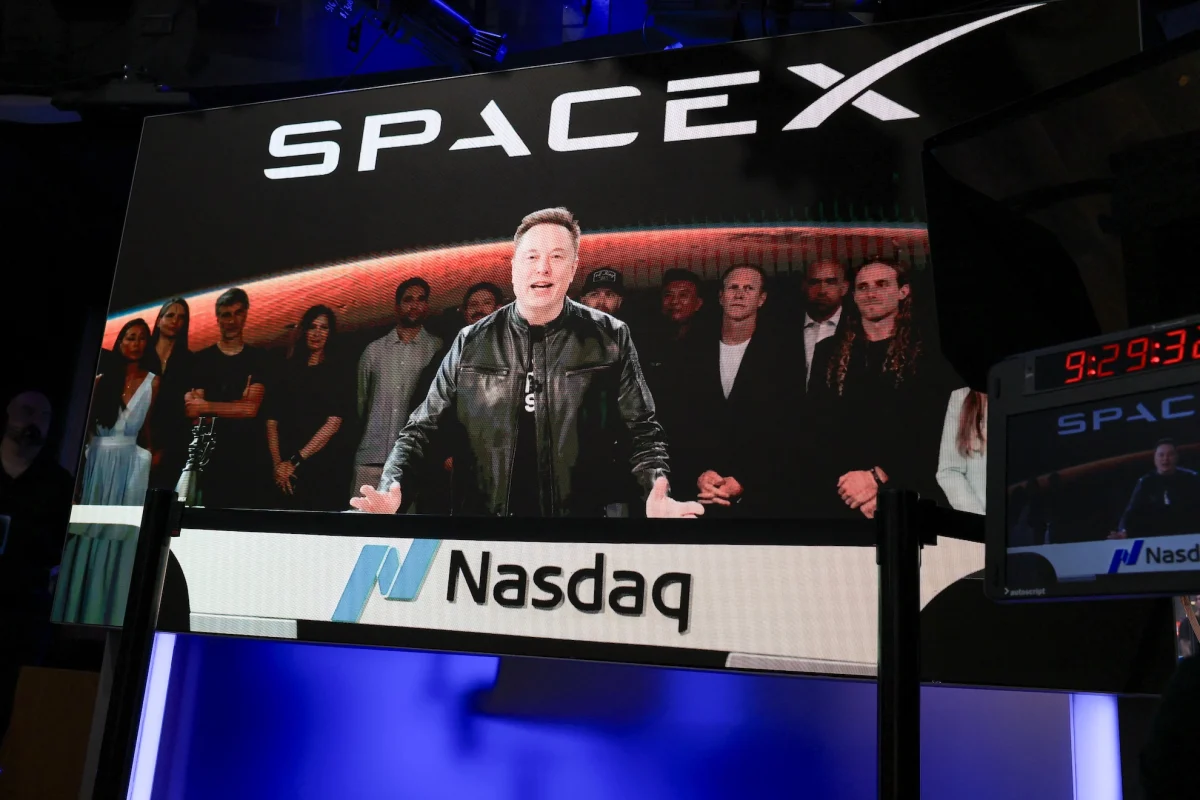
A novel development in the financial sector offers investors an unprecedented opportunity to align their portfolios with personal values, specifically by avoiding companies associated with the prominent entrepreneur, Elon Musk. This innovative approach comes in the form of two new exchange-traded funds (ETFs), launched by Subversive Capital, designed to systematically exclude enterprises founded, controlled, or significantly influenced by Musk. The introduction of these funds marks a notable moment in the evolution of investment products, reflecting a growing demand among a segment of the investing public to divest from figures whose public actions or statements may not resonate with their personal or ethical principles.
The Genesis of Exclusion: Responding to a Polarizing Figure
Elon Musk, a figure synonymous with audacious technological advancement and disruptive innovation, has undeniably reshaped industries from electric vehicles and space exploration to artificial intelligence and social media. As the driving force behind Tesla, SpaceX, Neuralink, and The Boring Company, and the controversial owner of X (formerly Twitter), his ventures command immense market capitalization and influence. For many, Musk embodies a visionary future, pushing boundaries in engineering and entrepreneurship. However, his highly public persona, characterized by frequent and often provocative pronouncements on social media and other platforms, has increasingly drawn criticism and sparked widespread debate.
Over recent years, a series of incidents and statements have contributed to a polarizing perception of Musk. His involvement with Dogecoin, a cryptocurrency initially created as a joke, has been scrutinized for its potential impact on market stability and for fostering a culture of speculative trading. On X, his platform of choice, Musk’s public comments on political and social issues, coupled with changes in content moderation policies, have led to significant controversy, alienating some users, advertisers, and investors. Additionally, past actions, such as a contentious gesture at a public event and disputes with regulatory bodies, have further cemented a divisive image. These cumulative events have fostered a significant cohort of individuals who, despite acknowledging his business acumen, find themselves at odds with his public conduct, leading to a desire for investment options that do not financially support his enterprises.
The Investment Conundrum: Avoiding the Giants
For the average investor, deliberately sidestepping companies like Tesla and SpaceX within a diversified portfolio presents a considerable challenge. These corporations, particularly Tesla, are behemoths in their respective sectors and are widely included in broad market indices such as the S&P 500 and the Nasdaq 100. Consequently, individuals investing in popular index funds or many large-cap mutual funds inherently gain exposure to Musk’s ventures. SpaceX, though not yet publicly traded on major exchanges, has its valuation reflected in private market transactions and has been included in certain global indices like the FTSE Russell and MSCI, making its indirect presence felt even before a potential initial public offering (IPO).
Tesla, in particular, has long been a darling of growth-oriented and large-cap mutual funds, consistently ranking among their top holdings due to its market dominance in electric vehicles and its high growth potential. An investor committed to a passive investment strategy, which typically involves tracking these broad indices, would find it nearly impossible to avoid indirect investment in Musk’s companies without actively selecting individual stocks or utilizing specialized funds. This dynamic has created a gap in the market for those who wish to maintain diversified exposure to the broader economy but explicitly exclude specific, highly influential entities based on non-financial criteria.
Subversive Capital’s Niche: Pioneering Thematic Investing
Addressing this specific market need is Subversive Capital, an exchange-traded fund creator known for its innovative and often provocative thematic investment products. Operating under the brand Subversive Markets Lab LLC, with legal registration facilitated by Tidal Trust I, the firm has previously garnered attention for ETFs designed to allow retail investors to "invest like the oligarchy." These earlier funds famously tracked the stock portfolios of Democratic and Republican members of Congress and their spouses, offering a unique lens into the investment activities of political insiders. This history demonstrates Subversive Capital’s penchant for identifying and capitalizing on niche market sentiments, often with a touch of satirical commentary on the financial landscape.
The launch of the "Ex-Elon" funds aligns with this distinctive strategy, moving beyond traditional sector or geographical classifications to focus on a specific individual’s impact. It signifies a maturation of thematic investing, where investor preferences extend beyond industry trends to encompass deeply personal and ethical considerations regarding corporate leadership. By offering such targeted products, Subversive Capital is not merely providing a financial instrument but is also making a statement about the evolving priorities of a segment of the investing community.
A Deeper Dive into the Ex-Elon ETFs
The two newly registered ETFs are specifically named the Nasdaq-100 Ex-Elon Enterprises ETF (ticker: QQNE) and the S&P 500 Ex-Elon Enterprises ETF (ticker: SPNE). Their explicit design is to mirror the performance of their respective underlying indices—the Nasdaq-100 and the S&P 500—while meticulously filtering out companies with primary ties to Elon Musk. As detailed in the prospectus filed with the U.S. Securities and Exchange Commission (SEC), the initially excluded entities are Tesla (TSLA) and Space Exploration Technologies Corp. (SPCX).
The scope of exclusion for these funds is broad and forward-looking. The official documentation states that the Ex-Elon funds aim to "provide capital appreciation through exposure to a broad universe of large-capitalization U.S. equity securities, while excluding the equity securities of companies that are founded, controlled, or led by Elon Musk, or with which Mr. Musk is otherwise primarily associated." This expansive definition suggests that should other Musk-led ventures like Neuralink or The Boring Company eventually go public, or if he becomes primarily associated with other publicly traded entities, those too would fall under the exclusion criteria of these specialized ETFs. This adaptive framework ensures that the funds remain true to their core mission of providing an investment avenue completely devoid of Musk’s direct corporate influence.
The Broader Landscape: ESG and Value-Driven Investing
The emergence of these Ex-Elon ETFs can be understood within the broader context of the accelerating growth of Environmental, Social, and Governance (ESG) investing. What began as "socially responsible investing" (SRI) in the latter half of the 20th century, primarily focused on negative screening against "sin stocks" like tobacco, alcohol, and firearms, has evolved into a sophisticated framework that integrates a wide array of non-financial factors into investment decisions. Today, ESG considers a company’s environmental footprint, labor practices, diversity, supply chain ethics, and executive compensation, among other criteria.
The Ex-Elon funds represent a novel application of negative screening, extending beyond traditional industry classifications to target the influence of a single, highly visible individual. While ESG funds typically assess corporate behavior, these new ETFs focus on the personal brand and public conduct of a specific leader. This development suggests a maturation of investor demand for personalization and values alignment, where the "S" (Social) and "G" (Governance) aspects of ESG can now encompass concerns about individual leadership and its perceived ethical implications. It highlights a cultural shift where the personal actions of prominent CEOs are increasingly weighed by investors as a material factor, alongside traditional financial metrics.
Market Implications and Investor Sentiment
The success and impact of the Nasdaq-100 Ex-Elon Enterprises ETF and the S&P 500 Ex-Elon Enterprises ETF remain to be seen. It is too early to determine if these funds, with their tickers QQNE and SPNE, will attract significant capital or whether they will outperform or underperform their benchmark indices that include Musk’s companies. However, their very existence speaks volumes about evolving investor sentiment.
On one hand, some analysts might argue that purposefully excluding high-growth, innovative companies like Tesla and SpaceX could lead to underperformance, potentially sacrificing returns for ethical alignment. These companies have historically been significant drivers of market growth, and their absence could create a drag on portfolio returns. On the other hand, a segment of the investor community might view Musk’s unpredictable public behavior and the controversies surrounding his ventures as a form of risk, leading to a preference for portfolios shielded from such volatility. For these investors, the Ex-Elon funds offer a means to mitigate perceived "headline risk" or "personality risk."
The creation of these funds also reflects a broader cultural movement where consumers and investors alike are increasingly scrutinizing the ethical dimensions of their choices. This extends beyond product consumption to financial investments, with a growing desire to ensure that capital is not inadvertently supporting entities or individuals whose values conflict with their own. The funds may appeal to investors who prioritize a clear conscience over potentially higher returns, or those who believe that strong ESG principles, including responsible leadership, correlate with long-term financial stability.
The Future of Personalized Portfolios
The launch of the Ex-Elon ETFs could herald a new frontier in personalized investing, where funds are tailored not just by sector or geography, but by specific social, ethical, or even personal aversion criteria. If these funds prove successful, it might pave the way for similar offerings targeting other high-profile, polarizing figures whose influence extends across multiple public companies. This trend could exert subtle pressure on corporate leaders to be more mindful of their public image and the potential financial ramifications of their personal conduct on their companies’ investor base.
Ultimately, these novel investment products underscore the increasing sophistication of the financial market in responding to nuanced investor demands. They offer a tangible mechanism for individuals to vote with their dollars, not just on the performance of a company, but on the perceived integrity and public impact of its leadership. While the financial outcomes are yet to unfold, the conceptual impact of these Ex-Elon ETFs on the dialogue between ethics and finance is already evident, signaling a potential shift towards a more value-conscious investment landscape.