Amir Mahmud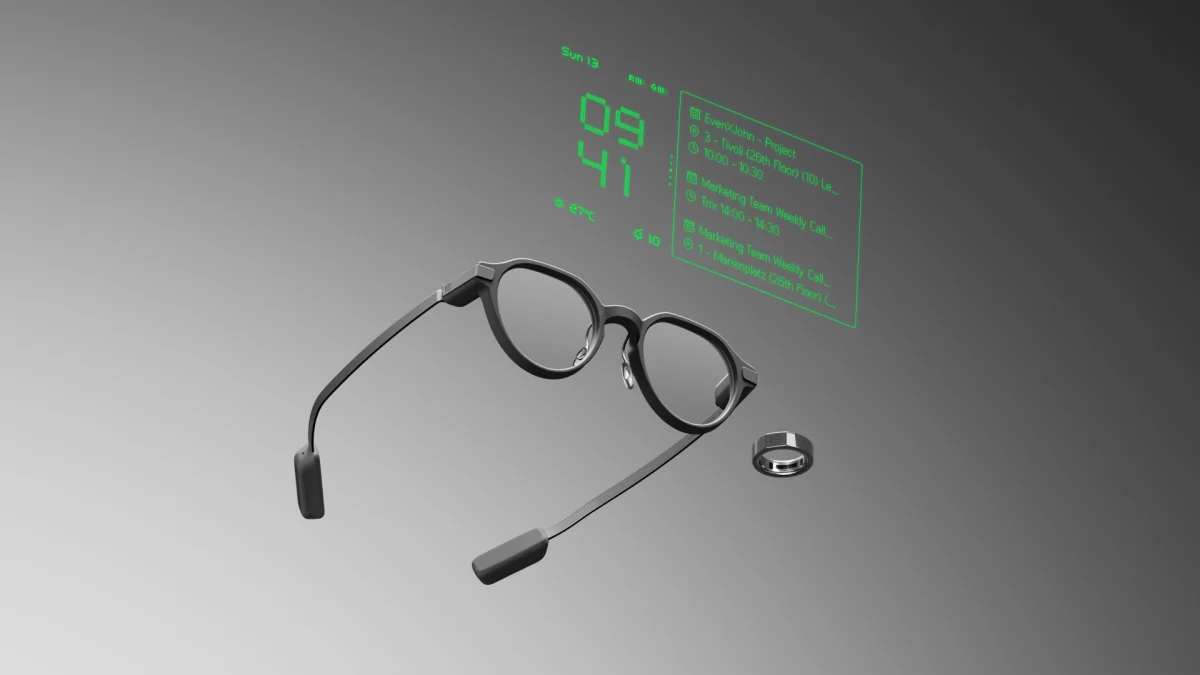
Shenzhen-based startup Even Realities has achieved a significant milestone, announcing a pre-Series B funding round that values the company at an impressive $1 billion. The $150 million investment, co-led by Chinese internet giants Meituan and existing investor Tencent, underscores a burgeoning confidence in the wearable technology sector, particularly for companies carving out distinct niches amidst a crowded and evolving market. This substantial capital injection positions Even Realities as a formidable challenger in the smart glasses arena, a space traditionally dominated by tech behemoths but now seeing innovative approaches from agile startups.
The Wearable Tech Landscape: A Brief History and Current Trends
The concept of integrating computing power directly into eyewear is not new, but its journey has been marked by both ambitious breakthroughs and notable setbacks. Google Glass, launched to much fanfare in 2013, was arguably the most prominent early attempt at mainstream smart glasses. While technologically groundbreaking for its time, it faced considerable public backlash due to privacy concerns surrounding its integrated camera, leading to the infamous "glasshole" moniker and its eventual withdrawal from the consumer market. This early experience left a lasting impression, highlighting the critical importance of user acceptance and privacy considerations in wearable tech.
Following Google Glass, other players entered the fray, often focusing on enterprise applications where specific utility could outweigh privacy anxieties, such as Microsoft’s HoloLens or Magic Leap’s augmented reality headsets. However, the consumer market for smart glasses remained largely nascent, struggling to find a compelling use case that balanced functionality with social acceptability and privacy.
More recently, the landscape has witnessed a renewed push from major tech companies. Meta, with its Ray-Ban Stories, and Snap, with its Spectacles, have reintroduced camera-equipped smart glasses, often positioning them as tools for hands-free content capture and social sharing, albeit with varying degrees of success and continued public debate over privacy. These devices typically integrate cameras and AI assistants, aiming to extend the smartphone experience directly onto the user’s face. The broader vision of the "metaverse" or "spatial computing" has further fueled interest, with companies envisioning a future where digital information seamlessly blends with the physical world through advanced eyewear. Against this backdrop of intense competition and evolving consumer expectations, Even Realities’ strategic pivot towards a display-first, privacy-centric design represents a significant departure from prevailing trends.
Even Realities’ Differentiated Approach: Privacy and Display Prowess
Even Realities, founded in 2023 by a team of former Apple engineers, including CEO Will Wang who previously contributed to the Apple Watch and iPhone, has consciously chosen a different path. While many rivals prioritize cameras for content creation and AI for ambient capture, Even Realities is betting on "display-first" glasses. Their core philosophy revolves around seamlessly beaming information directly into the wearer’s line of sight, augmenting reality without compromising personal privacy. This strategic choice is not merely a technical decision but a profound philosophical one, directly addressing the privacy anxieties that have plagued earlier iterations of smart glasses.
The company’s flagship product, the G2, which launched last November, notably eschews a camera entirely. Instead, it features a sophisticated heads-up display embedded within the frames, delivering information discreetly. Interaction with the device is managed via a companion smart ring, the Even R1, allowing users to navigate content and controls through intuitive taps and swipes. This design choice fundamentally redefines the user experience, shifting it from a recording device to a personal information display.
Wang emphasizes that the absence of a camera is central to their privacy philosophy, though not its sole component. Recognizing smart glasses as perhaps the most intimate computing device an individual can wear, Even Realities has meticulously engineered privacy into both its hardware and software. Features like real-time conversation transcription, such as their "Conversate" copilot, process audio into text without storing recordings. Furthermore, user data is encrypted, and the company’s infrastructure is built to adhere to stringent privacy standards, including those prevalent in Europe, which are among the strictest globally. This commitment aims to foster user trust and mitigate the social friction often associated with wearable cameras, making the device comfortable not only for the wearer but also for those around them.
Technological Innovation at the Core
A significant portion of Even Realities’ strategic investment has been directed towards advancements in optics. CEO Will Wang highlights this focus as the critical differentiator for smart glasses compared to other consumer electronics. Unlike smartphones or smartwatches, which rely on conventional OLED or LCD screens, smart glasses necessitate a completely distinct technological stack centered on optical displays. This involves the integrated design of microchips, waveguides, and the entire optical system.
To address this complex challenge, Even Realities developed a proprietary optical technology named Even HAO, or Holistic Adaptive Optics. This end-to-end design methodology ensures that the microchip, waveguide, and prescription support are all integrated from the initial stages of development, rather than being assembled from separately designed components. This holistic approach reportedly allows for superior optical performance, leading to clearer, brighter, and more energy-efficient displays. The G1, their first product launched in 2024, was touted as the lightest waveguide smart glasses on the market at the time, demonstrating the company’s early success in optical miniaturization and design. This focus on fundamental hardware innovation in optics is crucial for delivering a comfortable, high-quality visual experience that is essential for widespread adoption of smart glasses.
The rapid growth in the company’s workforce, swelling from 30-40 staff in 2024 to 300-400 today, further underscores the intensity of their R&D efforts and the complexity of their hardware-centric approach. This expansion is largely fueled by the need for specialized engineering talent in optical physics, materials science, and microelectronics, areas critical for advancing their core technology.
Strategic Funding and Global Market Expansion
The $150 million funding round, co-led by Meituan and Tencent, is not merely a financial injection but a strategic validation of Even Realities’ vision. Tencent, a previous backer, doubling down on its investment signals strong confidence in the startup’s trajectory. Meituan, a dominant player in China’s on-demand service sector, also brings significant strategic value, potentially opening doors for future integration with its vast ecosystem, though Even Realities is not yet selling in mainland China. The list of earlier high-profile Chinese investors, including Hillhouse, Sequoia China, and Northern Light Venture Capital, further cements the company’s strong ties to leading venture capital firms in the region.
Despite being headquartered in Shenzhen and manufacturing its devices across multiple factories in China, Even Realities has strategically prioritized international markets for its sales. More than half of its user base and the bulk of its developer community reside in the United States, which the company identifies as its fastest-growing market. Other key markets include Japan, South Korea, the Middle East, and Europe. This decision to focus on overseas markets first, despite domestic manufacturing capabilities, might be attributed to several factors: a desire to establish a strong brand identity and market share in mature tech markets, potentially less intense domestic competition in the niche they are targeting compared to the broader consumer electronics space in China, or a strategic build-up of operational readiness before a major domestic launch. Wang’s comment, "The demand there is significant, so we want to make sure we’re prepared first," suggests a cautious and calculated approach to market entry.
Targeting the Professional User
Even Realities has identified a specific demographic for its products: male professionals aged between 30 and 50, with a notable one-third of their users being company executives. This demographic typically seeks productivity enhancements, values discreet technology, and often has the disposable income for premium devices. The company’s business model reflects this high-value target audience. Its frames retail for $599 before tax, and with the addition of prescription lenses or the companion smart ring, the average order value approaches $1,000. This premium pricing strategy, coupled with reported "real volume" sales, positions Even Realities as a profitable player in the smart glasses sector, a rare feat in a market often characterized by high R&D costs and initial losses.
The "Conversate" copilot feature directly caters to this professional segment. By reading conversations in real-time, explaining unfamiliar jargon, suggesting follow-up points, and syncing summaries to a smartphone, the feature acts as an intelligent assistant for meetings, negotiations, and everyday interactions. This functionality enhances productivity and information retention, offering tangible benefits that resonate with executives and professionals who need to stay informed and efficient in fast-paced environments. The discreet, camera-free design further appeals to this demographic, allowing them to utilize the technology without drawing undue attention or raising privacy concerns in professional settings.
Challenges and the Road Ahead
While Even Realities has achieved significant financial backing and demonstrated early market traction, the journey for smart glasses to become a truly mainstream consumer device remains challenging. The inherent complexities of integrating advanced optics, microelectronics, and intuitive user interfaces into a socially acceptable form factor are immense. Public perception and cultural acceptance continue to be major hurdles, even for privacy-focused designs. The "wearable stigma" from past attempts still lingers, requiring careful marketing and user education to overcome.
The competitive landscape is also heating up significantly. While Even Realities focuses on display-first, the broader market will likely see continued innovation from giants like Apple, Meta, and others, potentially converging on hybrid models that offer both display and camera functionalities. Even Realities will need to continuously innovate, not only in hardware but also in software and user experience, to maintain its competitive edge. Expanding its developer community will be crucial for building a rich ecosystem of applications that can fully leverage its unique display capabilities.
The decision to postpone sales in China, a massive domestic market, presents both an opportunity and a risk. While it allows the company to refine its products and market strategies in other regions, it also means foregoing immediate access to a vast consumer base and potentially allowing domestic competitors to emerge. When Even Realities eventually enters the Chinese market, it will need a well-prepared strategy to navigate local consumer preferences and regulatory environments.
Ultimately, Even Realities’ ascent to unicorn status with its distinctive privacy-centric, display-first approach offers a compelling narrative in the evolving world of wearable technology. By addressing one of the most significant historical barriers to smart glass adoption – privacy – and pairing it with advanced optical engineering, the company is attempting to forge a new path towards a future where digital information can seamlessly augment our daily lives, comfortably and discreetly. Its success will be a critical indicator of whether the market is ready for a more personal, less intrusive form of spatial computing.