Amir Mahmud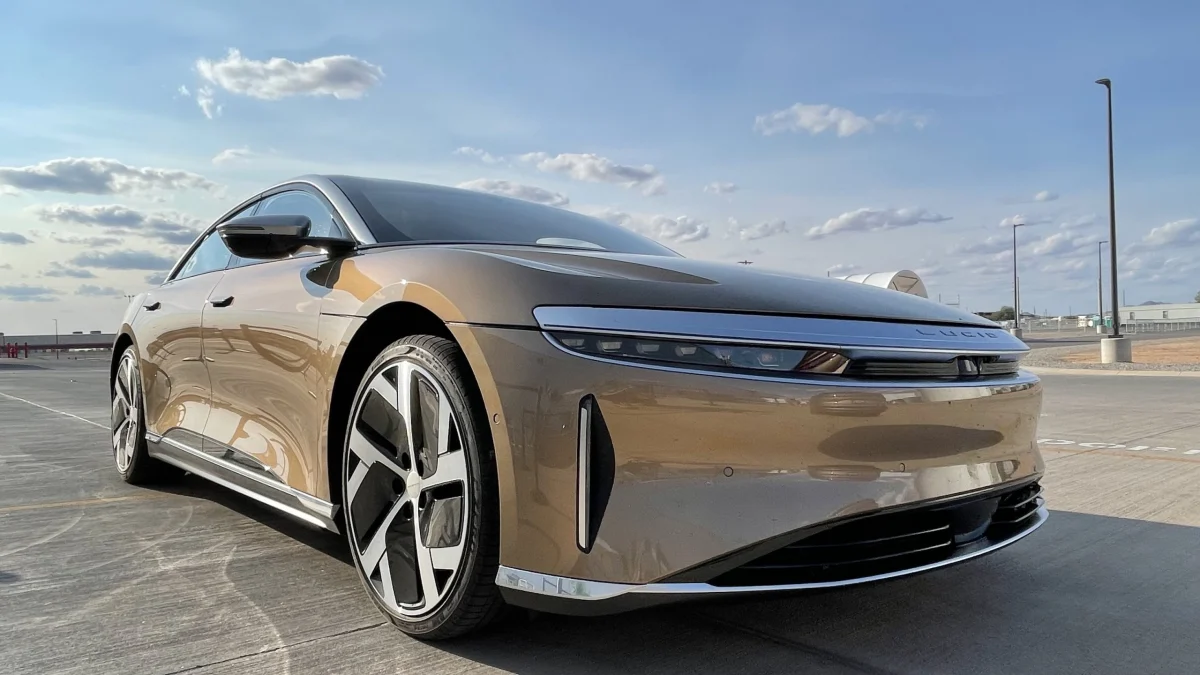
Lucid Motors, the luxury electric vehicle manufacturer, is undergoing a profound leadership transformation, spearheaded by its new Chief Executive Officer, Silvio Napoli. The latest development in this comprehensive restructuring effort is the impending departure of Chief Financial Officer Taoufiq Boussaid, an announcement made public by the company on Thursday. This executive change is not an isolated incident but rather a critical component of a broader organizational overhaul designed to streamline operations, enhance collaboration, and sharpen the company’s competitive edge in a challenging automotive landscape.
Napoli, who recently assumed the top leadership role after an extensive search, has wasted no time in implementing significant changes across the enterprise. His strategic vision involves not only personnel adjustments at the highest levels but also a fundamental re-evaluation of the company’s operational structure and market approach. The departure of key executives, coupled with hundreds of job cuts announced last month, underscores the urgency and scale of this internal recalibration as Lucid endeavors to navigate persistent market headwinds and chart a sustainable path to profitability.
A Legacy of Ambition and Initial Promise
To fully grasp the magnitude of the current changes at Lucid Motors, it is essential to revisit the company’s origins and its journey into the competitive electric vehicle market. Founded in 2007 as Atieva, primarily focusing on battery technology, the company rebranded to Lucid Motors in 2016 with a clear aspiration: to redefine luxury electric vehicles and directly challenge established players like Tesla. At the helm for much of this formative period was Peter Rawlinson, a former chief engineer for Tesla’s Model S, who brought a wealth of engineering expertise and a grand vision for Lucid’s technological prowess and performance.
Lucid’s initial product, the Air sedan, quickly garnered attention for its striking design, impressive range, and blistering performance, positioning it as a premium contender. The company’s innovative in-house developed powertrain and battery technology promised to set new benchmarks in the industry. This ambitious vision attracted significant investor interest, culminating in a high-profile reverse merger with a special purpose acquisition company (SPAC), Churchill Capital Corp IV, in 2021. This transaction propelled Lucid onto the public market with a valuation that reflected immense optimism for its future. The SPAC boom of the early 2020s saw numerous EV startups go public through similar means, often with substantial future production and revenue projections that, in many cases, have proven difficult to meet. For Lucid, the infusion of capital from this merger was intended to fuel its production ramp-up and global expansion.
A cornerstone of Lucid’s financial stability and strategic direction has been the substantial investment from Saudi Arabia’s Public Investment Fund (PIF). The PIF, a sovereign wealth fund, has poured billions into Lucid, becoming its majority shareholder. This strategic partnership aligns with Saudi Arabia’s Vision 2030, which aims to diversify the kingdom’s economy away from oil and invest in future-oriented industries like advanced manufacturing and technology. The PIF’s backing has provided Lucid with a crucial financial safety net, enabling it to weather market volatility and invest heavily in research, development, and manufacturing infrastructure, including plans for a production facility in Saudi Arabia itself. However, this deep financial reliance also places considerable pressure on Lucid to deliver tangible results and demonstrate a clear path to commercial success.
Executive Refresh and Organizational Streamlining
The current leadership restructuring represents a decisive pivot under CEO Silvio Napoli. The departure of Taoufiq Boussaid from the Chief Financial Officer position is a significant move, given the CFO’s critical role in managing capital allocation, investor relations, and guiding a capital-intensive manufacturing company like Lucid through its growth phase. The company wasted no time in naming a successor, signaling a commitment to maintaining financial leadership stability.
Beyond the CFO transition, the scope of the executive changes is broad and strategic. Lucid has announced the appointment of several new C-suite executives, including a Chief Technology Officer, Chief Customer Officer, Chief Digital Officer, and Chief Transformation Officer. These roles are designed to inject fresh perspectives and specialized expertise into critical areas of the business. The creation of a Chief Transformation Officer position, in particular, highlights Napoli’s intent to drive fundamental changes in how Lucid operates, focusing on efficiency, agility, and responsiveness to market demands.
Further emphasizing his commitment to a leaner, more collaborative management structure, Napoli has reportedly reduced the number of direct reports by half. This move is intended to flatten the organizational hierarchy, accelerate decision-making, and foster a more integrated approach across different departments. Concurrently, several other senior executives, including the Senior Vice Presidents of revenue and marketing, and the Vice President of program management, are also departing. Lucid stated these departures are for personal reasons, allowing the executives to remain closer to their families and communities. The collective impact of these changes is a significant overhaul of Lucid’s top leadership, aiming to align the team more closely with Napoli’s vision of a simplified, execution-focused company.
The extensive search for Peter Rawlinson’s successor, which spanned over a year after his abrupt resignation in February 2025, underscores the challenges of securing stable leadership in a rapidly evolving and high-stakes industry. Napoli’s arrival signals a new chapter, one characterized by aggressive structural adjustments intended to recalibrate Lucid’s operational framework and strategic priorities.
Navigating Turbulent Market Waters
Lucid Motors’ internal restructuring unfolds against a backdrop of significant shifts and challenges within the broader electric vehicle market. After an initial period of rapid growth and surging demand, the EV industry is experiencing a period of recalibration, particularly in the premium segment. Factors such as high interest rates, inflationary pressures, concerns over charging infrastructure availability, and increasing competition from both legacy automakers and new entrants have contributed to a slowdown in consumer adoption rates for some electric models.
The company’s latest production and delivery figures highlight these market pressures. For the second quarter, Lucid reported delivering 3,953 vehicles. While slightly higher than the same period a year prior, this figure falls short of the ambitious growth trajectories projected during its public market debut. Critically, the performance of the Gravity SUV, Lucid’s highly anticipated follow-up to the Air sedan, has not met initial expectations. Its reception in the market has been more subdued than anticipated, indicating that expanding beyond its niche luxury sedan market is proving more challenging than foreseen. This contrasts sharply with some competitors, such as Rivian, which recently raised its sales forecast for the year, demonstrating varied success stories within the segment.
In response to these demand-side challenges, Lucid had already implemented significant cost-cutting measures. Last month, the company announced its second major workforce reduction this year, eliminating hundreds of positions. This decision was directly linked to the need to "align production plans with anticipated demand." Further cost-saving initiatives include the elimination of a second shift at its manufacturing facility in Arizona, a move expected to yield approximately $158 million in annual savings. While these measures are crucial for improving financial efficiency, they also reflect a difficult reality: Lucid’s production capacity currently outstrips market demand for its high-priced luxury vehicles. Such workforce adjustments, though financially necessary, invariably impact employee morale and the company’s internal culture.
A Glimpse into Lucid’s Future Strategy
Despite the immediate challenges, Lucid Motors is actively pursuing strategies to broaden its market appeal and diversify its revenue streams. A key component of this forward-looking approach is the upcoming introduction of the "Cosmos" SUV. Positioned at a more accessible price point, estimated around $50,000, the Cosmos represents Lucid’s strategic pivot towards a potentially larger mass market segment. This move acknowledges the limitations of an ultra-luxury-only strategy and seeks to tap into a broader demographic of EV buyers, crucial for achieving higher sales volumes and economies of scale. The success of the Cosmos will be a critical determinant of Lucid’s ability to transition from a niche luxury brand to a more mainstream player.
In parallel, Lucid is exploring innovative partnerships to leverage its advanced EV platform and technology beyond traditional vehicle sales. The company has forged collaborations with autonomous vehicle technology firm Nuro and ride-hail giant Uber to develop a luxury robotaxi service. This ambitious project aims to launch in San Francisco later this year, with plans for expansion to Houston in 2027. This venture represents a significant strategic diversification, allowing Lucid to tap into the burgeoning autonomous mobility sector. By combining Lucid’s luxury EV experience with Nuro’s self-driving expertise and Uber’s extensive ride-hailing network, the partnership seeks to create a premium, driverless transportation offering. Success in this nascent market could unlock new revenue streams and showcase Lucid’s technological capabilities in a different context, though it also presents its own set of regulatory, technological, and operational hurdles.
The Path Ahead: Transformation and Accountability
CEO Silvio Napoli has articulated a clear vision for the company’s future, stating that the restructuring is intended to "simplify the company, sharpen execution, and position Lucid to become more competitive over time." He emphasized a focus on core priorities: "customers, quality, and innovation," believing that these pillars will drive long-term success. The caliber of the new leadership team, Napoli asserted, is a testament to the inherent value of Lucid’s business and its promising future.
The comprehensive changes underway at Lucid Motors underscore a critical juncture for the company. While the financial backing from the Saudi PIF provides a vital lifeline, the pressure to demonstrate commercial viability and sustainable growth remains intense. The EV market is evolving rapidly, with increasing competition, shifting consumer preferences, and the relentless pursuit of technological advancement. Lucid’s ability to successfully implement its new leadership structure, streamline operations, and effectively launch its upcoming products like the Cosmos, while simultaneously navigating the complex robotaxi landscape, will be paramount. These strategic realignments represent not just a change in personnel, but a fundamental re-engineering of Lucid Motors’ trajectory, aiming to transform it into a more agile, customer-centric, and ultimately, profitable enterprise in the highly dynamic global electric vehicle industry.