Amir Mahmud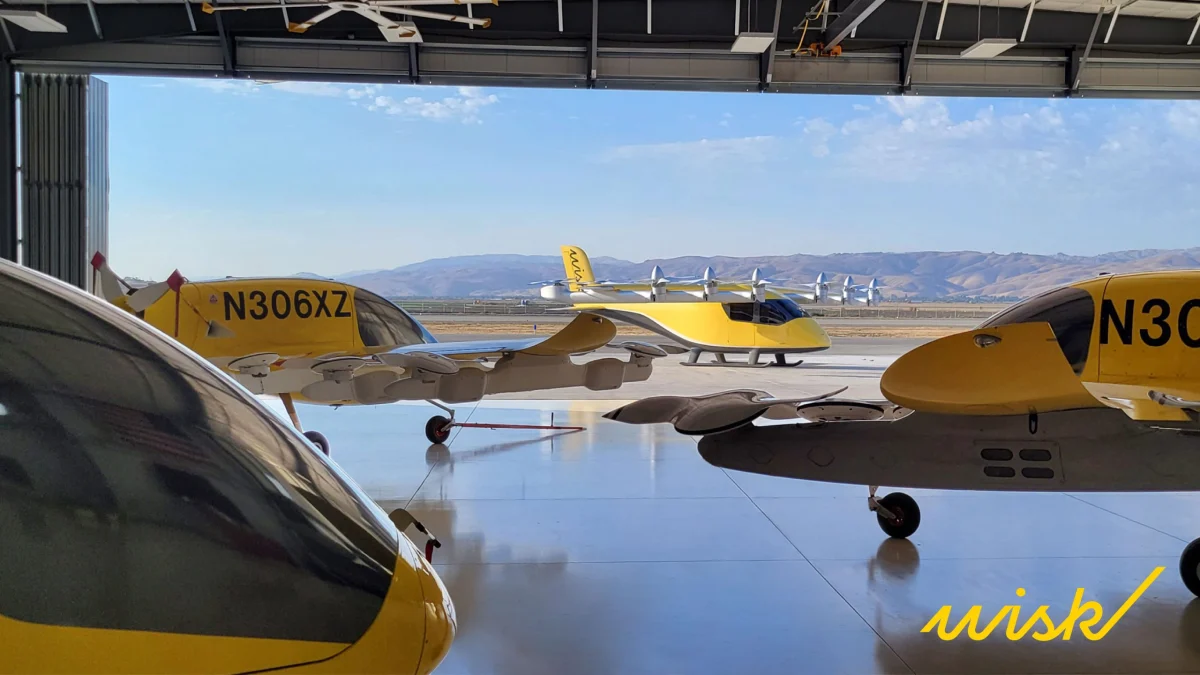
A prominent developer in the burgeoning electric vertical takeoff and landing (eVTOL) aircraft sector, Wisk Aero, finds itself at the center of a legal dispute following allegations from a former employee. The company, fully owned by aerospace giant Boeing, is being sued by its former software engineering manager, Briahna O’Neill, who claims she was wrongfully terminated after raising critical safety concerns related to the accelerated testing protocols for the company’s autonomous air taxi software.
Filed in Santa Clara Superior Court earlier this week, O’Neill’s lawsuit outlines charges of discrimination and wrongful termination, asserting that her dismissal came just weeks after she submitted a second internal report detailing her apprehensions. According to the complaint, Wisk Aero engineers were allegedly directed to curtail the scope of software testing mandated by the Federal Aviation Administration (FAA) to ensure the company could meet an aggressive 2025 test flight deadline. These serious allegations cast a spotlight on the intense pressures within the advanced air mobility industry as companies race to bring their innovative aircraft to market while adhering to stringent safety standards. The Seattle Times initially broke the news of the lawsuit, noting that Boeing chose not to comment on the ongoing legal matter. Wisk Aero has not yet issued a public response to the allegations.
Pioneering the Skies: The eVTOL Revolution
Wisk Aero is a key player in the transformative field of electric vertical takeoff and landing (eVTOL) aircraft, an industry poised to revolutionize urban transportation and regional air travel. These innovative vehicles are designed to take off and land vertically, much like helicopters, but are powered by electric motors, promising quieter operation, zero operational emissions, and potentially lower operating costs. The vision is to enable on-demand air travel, bypassing congested ground routes and offering a new dimension of mobility in urban and suburban environments.
The concept of vertical flight has a long history, dating back to early helicopter designs in the mid-20th century. However, the convergence of advancements in battery technology, electric propulsion systems, distributed electric propulsion (multiple small motors), and sophisticated flight control software has propelled the eVTOL industry into a rapid development phase over the past decade. Companies like Joby Aviation, Archer Aviation, Lilium, Volocopter, and EHang are all vying for market leadership, each pursuing slightly different designs and operational models.
Wisk Aero distinguishes itself with a singular focus on fully autonomous flight from its inception. While many competitors initially plan to launch with piloted operations, gradually transitioning to autonomy as regulations and public acceptance evolve, Wisk has committed to an uncrewed future for its aircraft. This approach presents both immense opportunities and significant challenges. On one hand, full autonomy promises greater operational efficiency, potentially lower costs by eliminating pilot salaries, and a scalable model for widespread deployment. On the other hand, it introduces unparalleled hurdles in terms of software complexity, redundant systems, fail-safe mechanisms, and regulatory approval, not to mention the crucial task of building public trust in aircraft without human pilots onboard.
Wisk’s journey began with its roots in Zee.Aero, a company founded by Google co-founder Larry Page, which later merged with Kitty Hawk’s Flyer project to form Wisk in 2019. Its subsequent acquisition by Boeing in 2022 underscored the growing interest and investment from traditional aerospace giants in this nascent sector. Boeing’s backing provides Wisk with substantial resources, engineering expertise, and market leverage, but it also places Wisk under the intense scrutiny often directed at its parent company.
Regulatory Hurdles and the Cornerstone of Aviation Safety
The development of any new aircraft, particularly one introducing novel technologies and operational paradigms like autonomous eVTOLs, is inextricably linked to the rigorous oversight of regulatory bodies. In the United States, the Federal Aviation Administration (FAA) is the ultimate authority responsible for ensuring the safety of air travel. Its certification process is notoriously comprehensive and meticulous, designed to prevent catastrophic failures and protect public safety.
Central to this process are extensive testing requirements for all components, systems, and software. Software, in particular, is a critical element in modern aircraft, controlling everything from flight dynamics and navigation to communication and safety monitoring. FAA-mandated software testing involves a multi-layered approach, including unit testing, integration testing, system testing, and ultimately, flight testing. The goal is to identify and mitigate every conceivable bug, vulnerability, or failure mode before an aircraft is deemed airworthy. Reducing the amount of such testing, as alleged in the lawsuit, would represent a severe deviation from established safety protocols and could potentially compromise the integrity of the aircraft’s operational systems.
The FAA is actively working to integrate eVTOL aircraft into the national airspace system, a complex undertaking that involves developing new certification standards, air traffic management procedures, and pilot licensing requirements (even for remote operators). Earlier this year, Wisk Aero was one of eight companies approved by the FAA to participate in a three-year program aimed at accelerating the testing and integration of eVTOL aircraft. This program is designed to facilitate collaboration between the FAA and industry leaders, helping to iron out regulatory frameworks and address technical challenges proactively. However, participation in such a program does not lessen the fundamental requirement for stringent safety validation; rather, it underscores the need for it.
The tension between innovation and regulation is a constant in the aerospace industry. Companies are driven by competitive pressures and investor expectations to develop and launch their products quickly, while regulators must prioritize safety above all else, often leading to lengthy and demanding certification timelines. This inherent conflict highlights the importance of robust internal safety mechanisms and a culture that empowers employees to raise concerns without fear of retaliation.
Under Boeing’s Wing: A Legacy of Scrutiny
Boeing’s ownership of Wisk Aero places the autonomous air taxi developer under a particular kind of spotlight. The iconic American aerospace manufacturer has faced significant challenges to its reputation in recent years, particularly in the aftermath of two fatal crashes involving its 737 MAX aircraft in 2018 and 2019. Investigations into these accidents revealed serious flaws in software design, certification processes, and internal communication, leading to widespread criticism, billions in financial losses, and a complete overhaul of some of its safety protocols.
This recent history means that any allegations of compromised safety testing within a Boeing-owned entity, even a subsidiary like Wisk, are likely to attract heightened scrutiny from regulators, the public, and the media. The perception that deadlines might be prioritized over safety, or that internal safety warnings could be ignored or lead to punitive action, resonates strongly with the narrative that emerged from the 737 MAX crisis. For Boeing, ensuring Wisk maintains the highest safety standards is not just about the integrity of its subsidiary’s product but also about its own ongoing efforts to rebuild trust and reinforce its commitment to safety across its entire portfolio.
The aerospace industry as a whole is intensely safety-focused, given the catastrophic potential of aircraft failures. Companies operate under the understanding that even a single serious incident can derail an entire program, damage public confidence for years, and lead to significant financial and legal repercussions. This makes the allegations against Wisk particularly damaging, as they strike at the very core of aviation’s safety culture.
The Whistleblower’s Stand: Safety vs. Deadlines
Briahna O’Neill’s lawsuit brings to the forefront the critical role of whistleblowers in safeguarding public interest, especially in high-stakes industries like aviation. Whistleblowers are individuals who report wrongdoing within an organization, often at significant personal risk. Their actions can expose systemic failures, prevent disasters, and hold corporations accountable. However, they frequently face retaliation, including termination, demotion, or ostracization, underscoring the courage required to come forward.
In the United States, various laws, such as the Whistleblower Protection Act and provisions within the Sarbanes-Oxley Act, offer some protections to employees who report certain types of misconduct. However, the efficacy of these protections can vary, and employees often face an uphill battle in proving retaliation. O’Neill’s claims of wrongful termination and discrimination suggest she believes her dismissal was a direct consequence of her internal safety reports, placing the burden on Wisk Aero to demonstrate otherwise.
The ethical dilemma highlighted by this case is universal in industries driven by innovation and tight deadlines: how to balance the imperative to develop groundbreaking technology rapidly with the non-negotiable requirement for absolute safety. Aggressive project timelines can create immense pressure on engineers and managers, potentially leading to shortcuts or a reluctance to voice concerns that could delay progress. A healthy corporate culture, conversely, fosters an environment where safety concerns are not only welcomed but actively encouraged, and where mechanisms exist to address them thoroughly without fear of negative repercussions for the reporter. The outcome of O’Neill’s lawsuit could serve as a significant precedent regarding how companies in the advanced air mobility sector manage this delicate balance.
Future Trajectories: Legal Battles and Market Aspirations
The legal proceedings initiated by Briahna O’Neill against Wisk Aero are now set to unfold in Santa Clara Superior Court. The process will likely involve discovery, where both sides gather evidence, followed by potential settlement negotiations or a trial. The outcome could have significant implications for Wisk Aero, not only financially but also in terms of its public image and its relationship with regulators. A finding against Wisk could severely impact its ongoing certification efforts with the FAA, potentially delaying its 2025 test flight deadline and broader market entry.
For the wider eVTOL industry, this lawsuit serves as a stark reminder of the paramount importance of safety and ethical conduct. As these companies move closer to commercial operations, public trust will be a critical factor in their success. Allegations of compromised safety testing and whistleblower retaliation could erode that trust, making it more challenging for the industry to gain acceptance for autonomous air travel.
Wisk Aero, with Boeing’s substantial backing, remains a formidable contender in the race to develop and deploy autonomous air taxis. Its commitment to full autonomy positions it uniquely within the market, but it also places a heavier burden on its software and safety validation processes. The resolution of this lawsuit will undoubtedly be watched closely by competitors, investors, regulators, and the public, all eager to see how the industry navigates the complex intersection of groundbreaking innovation and the unwavering demands of aviation safety. The future of urban air mobility hinges not just on technological prowess, but equally on a steadfast dedication to the highest standards of safety and integrity.