Amir Mahmud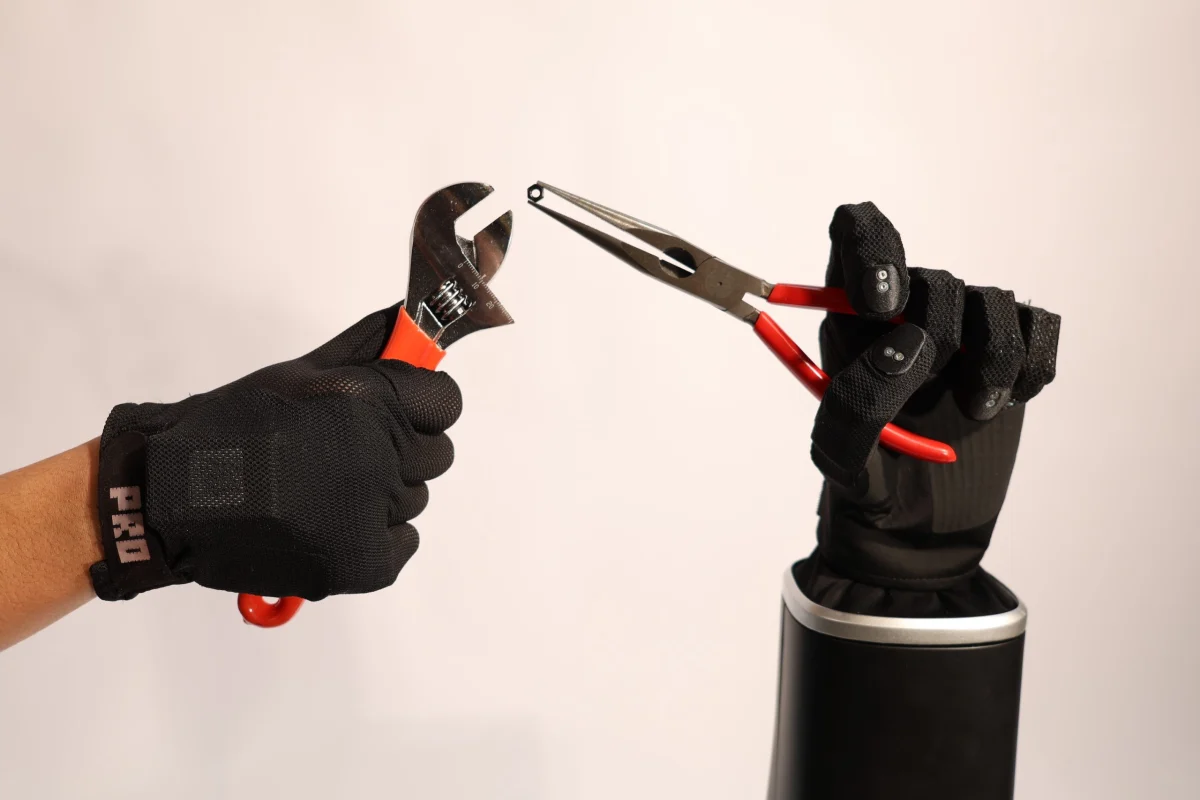
A significant development in the burgeoning field of advanced robotics has seen Proception, a startup specializing in highly dexterous robotic hands, resolve a high-profile trade secret lawsuit filed by automotive and technology giant Tesla. The settlement, which led to the dismissal of the lawsuit earlier this month, coincides with Proception’s announcement of an $11 million seed funding round. This financial injection, led by First Round Capital with participation from Y Combinator and BoxGroup, is poised to accelerate the company’s ambitious mission to create robotic hands capable of mimicking human dexterity, a long-standing challenge in artificial intelligence and robotics.
Jay Li, the founder of Proception and a former technical lead on Tesla’s Optimus humanoid robot program, reflected on the legal ordeal, characterizing it as a demanding "resilience test." While acknowledging the difficulty of navigating a lawsuit from a major corporation during a startup’s formative stages, Li suggested the experience ultimately strengthened the company, echoing the sentiment that adversity can foster growth. With the legal entanglements behind them, Proception is now fully focused on what Li describes as an even more formidable challenge: achieving truly human-like manipulation capabilities in robotic systems.
The Genesis of a Legal Challenge
The roots of the dispute trace back to last year when Tesla initiated legal action against Li, alleging he had misappropriated trade secrets related to its Optimus humanoid robot program to establish Proception. Such intellectual property disputes are not uncommon in the highly competitive technology sector, particularly when former employees of innovative companies venture out to start their own enterprises in similar domains. Companies like Tesla heavily invest in research and development, and protecting proprietary information is paramount to maintaining their competitive edge. For a startup, however, facing litigation from a corporate behemoth can be an existential threat, diverting crucial resources and attention away from product development and fundraising.
Tesla’s Optimus project, unveiled by CEO Elon Musk with grand ambitions for a future where humanoid robots perform a wide range of tasks from factory work to household chores, represents a significant undertaking in the robotics world. The program aims to develop general-purpose, human-like robots that can operate autonomously in human environments. Given the strategic importance and potential market value of such technology, any perceived threat to its intellectual property would likely be met with robust legal action. The specifics of the settlement between Tesla and Proception remain undisclosed, a common practice in such agreements, allowing both parties to move forward without further public disclosure of sensitive details.
The Unsolved Frontier of Dexterous Manipulation
The core problem Proception seeks to address—making robotic hands function with the agility and versatility of human hands—is widely acknowledged as one of the most complex engineering hurdles in modern robotics. For decades, robotic manipulators have been a staple in industrial settings, primarily performing repetitive, high-precision tasks like assembly, welding, and material handling. These grippers, while efficient, lack the nuanced control, adaptability, and sensory feedback necessary for intricate tasks in unstructured environments that humans perform effortlessly.
Elon Musk himself has frequently highlighted the extraordinary difficulty of this challenge, often citing it as a critical bottleneck for the widespread adoption and utility of humanoid robots. While Musk has expressed optimism about Optimus robots potentially working in factories within a few years, the broader consensus among robotics experts is that achieving truly human-equivalent dexterity is still many years, if not a decade or more, away. Dr. Kevin Lynch, director of Northwestern University’s Center for Robotics and Biosystems, has previously articulated this timeline, suggesting that it will take considerable time for robotic hands to become "functional and useful and able to do some of the things that humans do" in complex, real-world scenarios.
The human hand is a marvel of biomechanical engineering, boasting 27 bones, numerous joints, muscles, tendons, and an incredibly dense network of nerve endings providing exquisite tactile feedback. Replicating this complexity in a robotic system requires breakthroughs in materials science, actuator technology, sensor integration, and advanced artificial intelligence for perception and control. Current robotic hands often struggle with tasks that involve delicate manipulation, varying object properties, or unpredictable environments, which are everyday occurrences for humans.
Proception’s Innovative Approach to Data and Hardware
Proception believes it can significantly accelerate this timeline by tackling the problem from a novel perspective, particularly concerning data collection and hardware integration. The traditional method for training humanoid robots often involves teleoperation, where a human operator, typically wearing a virtual reality headset, controls a robot’s movements in real-time, allowing the robot to learn from these commands. While effective for certain tasks, this approach has inherent limitations. The teleoperator often lacks haptic feedback—the sense of touch and force—from the objects the robot is interacting with, hindering the collection of rich, nuanced interaction data. Furthermore, this method is inherently constrained by the number of physical robots available for training, limiting scalability.
Proception’s differentiating solution revolves around a sophisticated, sensor-laden glove. This glove is designed to be worn by human testers, allowing the company and its clients to capture extensive "human hand interaction data without requiring a robot in the loop." This means that instead of relying on a robot to generate data, Proception can directly observe and record how humans interact with objects, capturing the subtle forces, movements, and tactile sensations that are crucial for dexterous manipulation. This approach promises a wealth of high-fidelity, real-world data, significantly reducing the cost and complexity of data acquisition compared to robot-centric teleoperation.
Crucially, this same sensor-packed glove technology also forms the "skin" of Proception’s robotic hand. The company’s high-dexterity robotic hand boasts 22 degrees of freedom and multiple joints per finger, enabling a remarkably wide range of complex motions. By integrating the data collection mechanism directly into the robot’s design, Proception aims to create a closed-loop system where the hardware is intimately informed by human interaction data, and the data collection method is highly scalable. Li emphasizes this dual focus: "You need both hardware and data, and those need to come hand-in-hand to get [dextrous manipulation] to work. A lot of companies solely focus on hardware, or like hardware plus non-scalable data [collection]. We’re working on this highly dexterous hardware plus highly scalable data. We believe that’s a key combination to solve this problem."
A Broader Robotics Ecosystem and Market Impact
Proception’s strategic objective is to become the premier supplier of advanced robotic hands to other companies that are building humanoid robots or require sophisticated manipulation capabilities but lack the resources or expertise to develop their own. This "picks and shovels" approach positions Proception as a critical enabler within the broader robotics ecosystem, much like specialized component manufacturers in the automotive or aerospace industries. By providing a best-in-class hand, Proception allows other robotics firms to focus on their core competencies, such as locomotion, overall system integration, or high-level AI reasoning.
The market for such components is substantial and growing rapidly. The global robotics market is experiencing an unprecedented surge in investment and innovation, driven by advancements in artificial intelligence, sensor technology, and more powerful, compact actuators. While much of the public and media attention focuses on complete humanoid robots, the underlying components, especially those that solve fundamental engineering challenges like dexterous manipulation, represent a significant economic opportunity.
Potential applications for highly dexterous robotic hands span numerous sectors. In manufacturing, they could enable robots to handle delicate components, perform intricate assembly tasks, or adapt to varied product lines. In logistics, they could revolutionize parcel sorting and handling, especially for irregular or fragile items. Healthcare could see robots assisting with complex surgical procedures, patient care, or laboratory tasks requiring fine motor skills. Beyond industrial applications, the long-term vision includes service robots for hospitality, elder care, and even domestic assistance, where the ability to interact safely and effectively with everyday objects is paramount. The social impact of such advancements could be transformative, from augmenting human labor and improving workplace safety to providing assistance for individuals with disabilities, though it also raises important questions about job displacement and ethical considerations that continue to be debated.
Future Prospects and Investor Confidence
The recent $11 million seed round underscores significant investor confidence in Proception’s technology and leadership. Bill Trenchard, a partner at First Round Capital who led the investment, praised Proception’s integrated approach. "We think they will have the best hand in the market, maybe the most sophisticated hand today, and the underlying data and models to support that," Trenchard stated. He further emphasized the critical role of dexterous manipulation: "Dexterous manipulation is a very, very, very important part of the whole humanoid story going forward, and as many people have said, it’s sort of the last mile of getting these robots to be truly performant."
Trenchard also commended Jay Li’s composure and leadership during the challenging period of the Tesla lawsuit. "He was very upfront with us when this came out, and I think the team did an amazing job of keeping their heads down," Trenchard noted, highlighting Li’s strength as a leader.
Proception has already begun shipping its first batch of high-dexterity robotic hands to researchers and robotics companies, indicating a readiness to bring its innovation to market. The company is now opening up to wider orders, signaling its ambition to rapidly scale its operations and impact.
Looking ahead, Li remains remarkably confident in Proception’s trajectory. Having successfully navigated a legal challenge from Tesla’s formidable litigation department, he even mused about a future where Tesla itself might seek Proception’s advanced manipulation solutions. "I think it will happen," Li asserted, reflecting a strong belief in his company’s ability to not only solve a monumental technical problem but also to establish itself as an indispensable player in the rapidly evolving world of robotics. This blend of technical innovation, strategic market positioning, and resilience positions Proception as a compelling startup to watch in the race to build the next generation of intelligent, human-like robots.