Amir Mahmud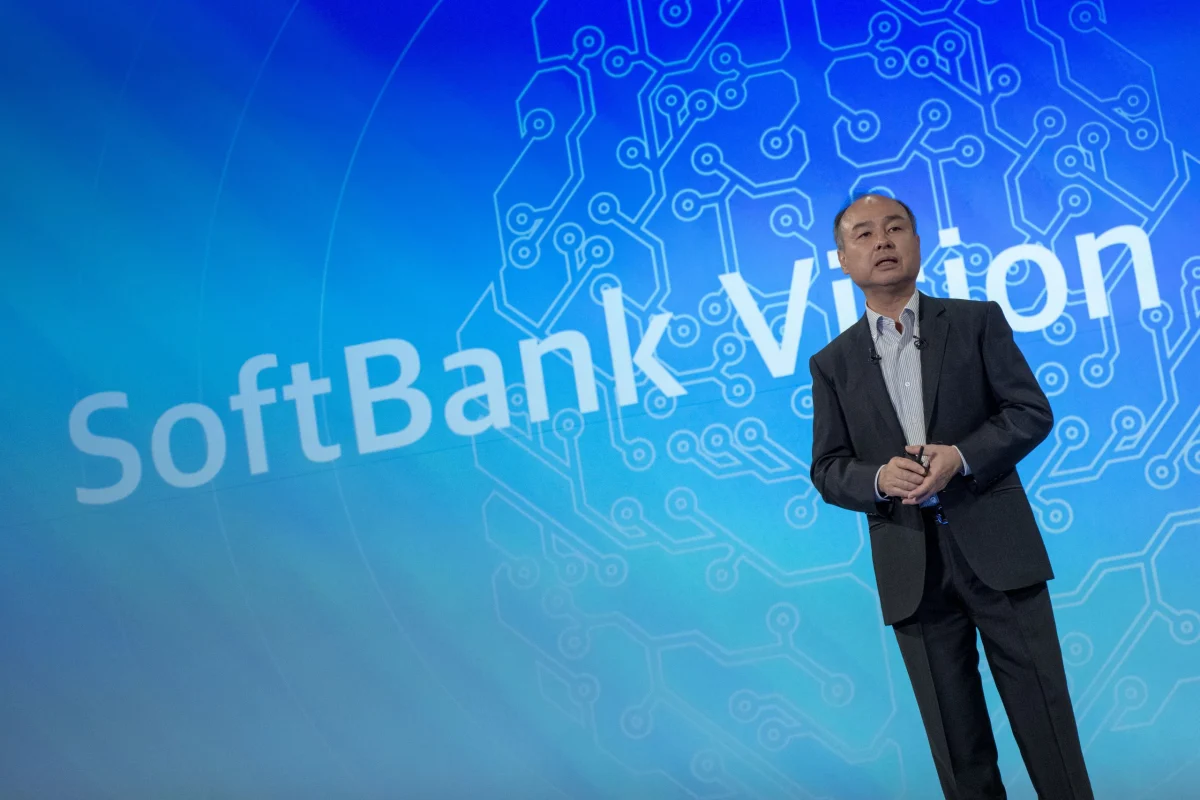
The burgeoning demand for artificial intelligence capabilities has ignited an unprecedented global race for computational power, pushing technological boundaries and sparking audacious proposals for future infrastructure. Amidst this frenetic quest for "neo-cloud" dominance, Elon Musk’s vision of establishing data centers in Earth’s orbit has emerged as a particularly ambitious, and controversial, concept. This idea, put forth by the CEO of SpaceX, suggests a future where the critical infrastructure underpinning AI resides not on terra firma, but among the stars. However, not everyone in the upper echelons of the tech world is convinced, with Masayoshi Son, the influential founder and CEO of SoftBank, recently voicing significant skepticism regarding the practicality and timing of such a venture.
Son, speaking at a recent shareholder meeting, articulated a core concern: the immense costs and protracted timelines associated with developing orbital data centers render them largely irrelevant to the immediate, cutthroat competition for AI supremacy. He stressed that the next few years are paramount in the AI battle, making projects that might materialize a decade or more down the line a strategic misdirection. This perspective, coming from a titan of technology known for his own history of bold, often high-risk, investments, has amplified the debate surrounding the future of AI infrastructure.
The Accelerating AI Compute Crunch
To understand the context of this debate, it is crucial to grasp the escalating demand for computing power that underpins the current AI revolution. The rise of sophisticated large language models (LLMs), advanced deep learning algorithms, and increasingly complex neural networks has created an insatiable appetite for specialized hardware, particularly Graphics Processing Units (GPUs). Training and running these models requires vast arrays of computational resources, consuming enormous amounts of electricity and generating substantial heat, necessitating advanced cooling systems and extensive physical space.
Traditional data centers, typically built on land, are facing significant constraints. Suitable land is becoming scarcer and more expensive, especially in urban areas with robust network connectivity. Energy supply is another critical bottleneck; powering these facilities demands immense amounts of electricity, often straining local grids and raising environmental concerns about carbon footprints. Furthermore, the sheer speed of AI development means that even newly built data centers can quickly become outdated, requiring constant upgrades and expansions. This "compute constraint" has become a central challenge for companies across the tech spectrum, from startups to established giants, all vying for access to the processing muscle needed to innovate and compete.
SpaceX’s Vision: Data Centers Among the Stars
Elon Musk’s proposal for orbital data centers represents a radical departure from conventional solutions. While specific technical details remain somewhat speculative, the general concept envisions constellations of satellites, equipped with advanced processors and storage, forming a network of space-based computational hubs. Proponents argue that such a system could circumvent many of the terrestrial challenges. In space, there are no "Not In My Backyard" (NIMBY) protests over land use, and the vacuum of space offers a natural, albeit challenging, environment for heat dissipation. Access to solar power could potentially provide a renewable energy source, reducing reliance on terrestrial grids.
For SpaceX, the venture aligns strategically with its core competencies. The company already operates Starlink, a vast constellation of internet-beaming satellites, demonstrating its capability to deploy and manage large-scale orbital networks. An orbital data center would essentially be an extension of this infrastructure, albeit with significantly more powerful processing capabilities. Moreover, constructing, launching, and maintaining such a constellation would guarantee a massive, long-term revenue stream for SpaceX’s launch services, which are already heavily reliant on internal Starlink missions. Indeed, SpaceX has already begun leveraging its existing compute resources by renting them out to AI firms like Google, Anthropic, and Reflection AI, indicating a strategic pivot towards becoming a significant player in the AI infrastructure market.
Masayoshi Son’s Earthbound Realism
Despite the theoretical allure of space-based compute, Masayoshi Son’s critique injects a dose of practical realism into the discussion. His primary argument centers on the timeline. In the fiercely competitive AI landscape, where breakthroughs and market dominance can be decided in months, a project requiring years or even a decade to become fully operational is simply too slow. The "next few years" are critical, he contends, for establishing leadership in AI, making immediate, terrestrial solutions paramount.
Furthermore, the economic viability of orbital data centers remains highly questionable. The cost of launching payloads into space, even with SpaceX’s reusable rockets, is substantial. Maintaining satellites in orbit, protecting them from radiation, mitigating space debris risks, and replacing units that inevitably fail or become obsolete would entail astronomical ongoing expenses. While Musk aims to drive down these costs, the current economic model for space-based infrastructure is still far from competitive with terrestrial alternatives, especially when considering the sheer scale required for AI compute.
The irony of Son’s skepticism is not lost on industry observers. SoftBank, under Son’s leadership, has a well-documented history of making colossal, sometimes controversial, investments in highly speculative ventures, famously through its Vision Fund. Projects like WeWork, for example, showcased SoftBank’s willingness to bet big on audacious ideas. This history makes Son’s cautious stance on orbital data centers particularly noteworthy, suggesting that even for a seasoned risk-taker, Musk’s vision might push the boundaries of current feasibility too far.
Other prominent figures echo Son’s reservations. Sam Altman, CEO of OpenAI and a former collaborator (and now litigant) with Elon Musk, has also reportedly expressed skepticism about the immediate practicality of space-based data centers. Altman’s focus, and that of OpenAI, has been on optimizing and securing terrestrial compute resources, including developing custom AI chips in partnership with companies like Broadcom. The historical friction between Musk and Altman adds another layer of intrigue to this divergence of opinion, underscoring the personal stakes often intertwined with technological debates at this level.
The Broader "Neo-Cloud" Rush
The debate over space versus earth data centers is part of a larger phenomenon: the frantic scramble for compute capacity, which some are terming the "neo-cloud" era. The intense demand has transformed the landscape, drawing in diverse players and sparking unprecedented investment. Companies that traditionally focused on software or specific hardware are now pivoting or expanding into providing raw computational power.
For instance, OpenAI’s move to design its own custom chips, rather than relying solely on off-the-shelf solutions from giants like Nvidia, highlights the strategic importance of controlling the underlying hardware. Similarly, AI chipmaker Groq recently secured $650 million in funding, demonstrating investor confidence in alternative silicon architectures that can compete with Nvidia’s dominant GPUs. Even seemingly unrelated sectors are being impacted, with anecdotal (and sometimes satirical) examples like a hypothetical pivot of a shoe company like Allbirds into a "neo-cloud provider" serving to underscore the widespread belief that "compute is the new oil." This pervasive drive reflects a market where anyone with a plausible path to lease out computing power is aggressively pursuing it, illustrating the critical bottleneck that AI development currently faces.
Strategic Interests and "Talking Your Own Book"
A crucial lens through which to view these pronouncements is the concept of "talking your own book." In the high-stakes world of tech, executives’ public predictions and opinions are rarely dispassionate observations; they are often strategically aligned with their companies’ interests and investment portfolios.
For Elon Musk, promoting orbital data centers serves multiple purposes. It reinforces SpaceX’s image as a visionary leader pushing the boundaries of space technology, and critically, it directly benefits SpaceX’s core launch business. Every satellite in an orbital data center constellation, and every replacement satellite needed over its lifespan, translates into guaranteed launches for his company. This self-reinforcing business model is a powerful motivator.
Conversely, Masayoshi Son’s skepticism about space-based solutions can be understood in the context of SoftBank’s substantial investments in terrestrial data center projects, particularly in Europe. If space-based data centers prove to be a viable, cost-effective alternative in the long run, they could potentially disrupt SoftBank’s existing and planned ground-based infrastructure investments. Thus, highlighting the challenges and impracticalities of orbital solutions aligns with protecting and promoting SoftBank’s current strategic direction.
Similarly, Sam Altman’s focus on terrestrial chip development and data center optimization reflects OpenAI’s immediate need for efficient, scalable compute. His reservations about space-based solutions, irrespective of his complex history with Musk, are consistent with a strategy that prioritizes near-term, actionable solutions for AI advancement. This dynamic underscores that in the absence of objective, impartial observers, every major player’s stance is filtered through the lens of their own tremendous financial and strategic baggage.
The Enduring Challenge
The debate over orbital data centers encapsulates a fundamental tension in the current technological landscape: the conflict between ambitious, long-term visions and the pressing, immediate demands of a rapidly evolving industry. While the allure of space as a frontier for technological expansion remains potent, the practicalities of cost, timeline, and engineering complexity pose formidable hurdles for truly viable orbital compute infrastructure.
The AI race is accelerating at an unprecedented pace, and the need for scalable, affordable, and reliable compute is more urgent than ever. Whether the answer lies in optimized terrestrial data centers, custom-designed chips, or, eventually, in the vast expanse of space, remains to be definitively seen. What is clear is that the conversation around Elon Musk’s orbital data center concept, amplified by the skepticism of figures like Masayoshi Son, highlights the critical decisions and strategic investments that will shape the future of artificial intelligence for decades to come. The ultimate victor in this compute frontier will likely be determined not just by technological innovation, but by economic viability and strategic foresight in the face of relentless competition.