Amir Mahmud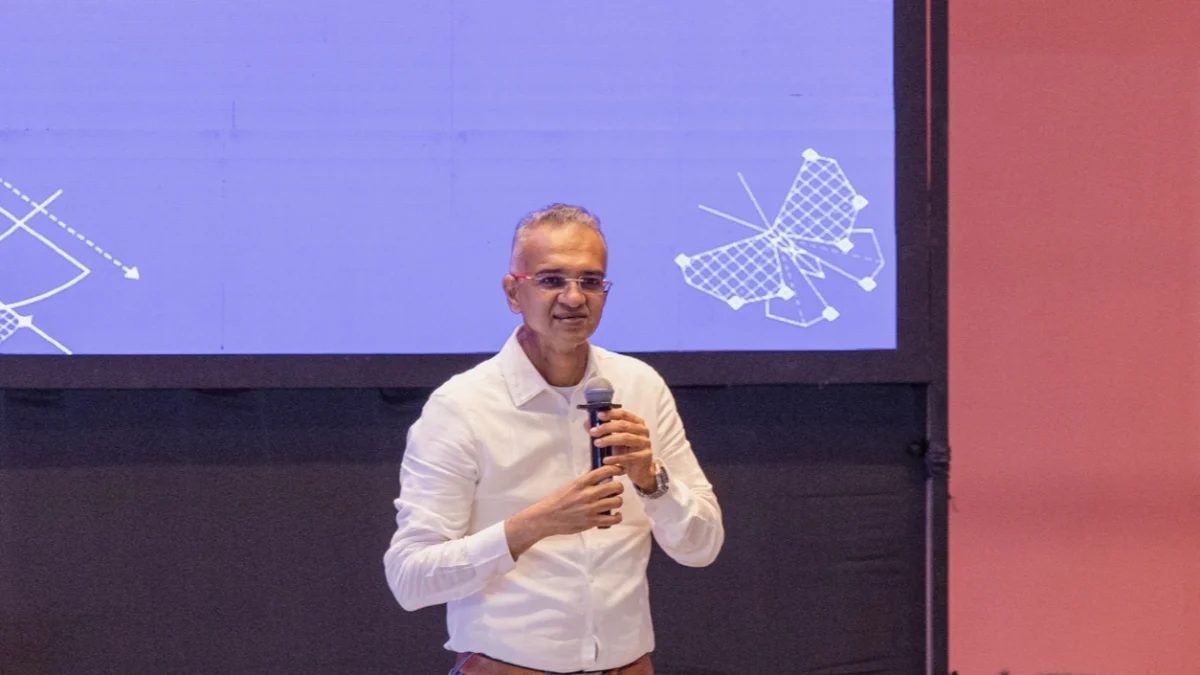
India’s formidable digital payments ecosystem, already a global benchmark, is poised for its next major evolutionary leap, with artificial intelligence (AI) slated to play a pivotal role. This forward-looking perspective comes from Dilip Asbe, Managing Director and CEO of the National Payments Corporation of India (NPCI), the entity that operates the ubiquitous Unified Payments Interface (UPI). Asbe articulated this vision during an interview at Mumbai Tech Week (MTW) 2026, highlighting AI’s potential to significantly expand user adoption, fortify security measures against fraud, and revolutionize credit distribution across the vast Indian populace.
The Unprecedented Rise of Digital Payments in India
To fully appreciate the scope of Asbe’s vision, it is essential to understand the foundation upon which it is built. India has undergone a remarkable digital payment revolution over the past decade. The country’s digital payment share has surged exponentially, largely propelled by the advent of the Unified Payments Interface (UPI). Launched in 2016, UPI is a real-time payment system that facilitates instant inter-bank peer-to-peer and person-to-merchant transactions through mobile applications. Its design, emphasizing simplicity, interoperability, and low-cost transactions, quickly resonated with a diverse user base, from urban professionals to rural vendors.
The statistics underscore this incredible journey: UPI currently processes over 750 million transactions daily. This staggering volume not only reflects widespread adoption but also signifies a fundamental shift in how millions of Indians manage their finances and conduct daily commerce. The NPCI’s ambitious target is to surpass one billion daily transactions, a goal that, if achieved, would solidify India’s position as a global leader in digital payment innovation. This growth has not been accidental; it’s the result of concerted efforts by the government, the Reserve Bank of India, and various financial technology (FinTech) players to foster a digital-first economy. UPI has democratized financial access, enabling even small street vendors to accept digital payments, thereby bringing a significant portion of the informal economy into the digital fold and reducing reliance on cash.
AI as the Catalyst for Future Expansion
Asbe’s commentary at Mumbai Tech Week underscored that the trajectory from 750 million to over a billion daily transactions, and indeed, the journey to onboard the next half a billion users, will be heavily influenced by AI. He envisions a collaborative effort between the NPCI, India’s central bank, and the government to harness AI’s capabilities across multiple dimensions of the payment ecosystem.
"AI will be employed with great effectiveness as we look toward the next wave of UPI," Asbe stated, emphasizing its pervasive application. "This encompasses all facets, including reaching out to new users. We must leverage AI effectively to safeguard our existing citizens, to detect fraudulent activities, and to identify ‘mules’ involved in illicit money transfers. Furthermore, AI is indispensable for extending credit to all users and merchants who possess a digital transaction history. We must also utilize AI to develop voice-based and multilingual solutions to streamline the onboarding process."
Fortifying Security and Combating Fraud
One of AI’s most critical applications, according to Asbe, lies in enhancing the security architecture of digital payments. As transaction volumes escalate, so does the sophistication of cyber threats and fraudulent schemes. AI algorithms excel at analyzing vast datasets to identify unusual patterns, anomalies, and potential indicators of fraud in real-time. This capability can move beyond reactive measures to proactive prevention, flagging suspicious transactions before they cause financial harm.
The identification of "mules"—individuals unwittingly or wittingly used to transfer illegally obtained money—is another area where AI can provide significant assistance. By cross-referencing transaction data with behavioral analytics, AI can help pinpoint accounts or networks involved in such activities, thereby bolstering the integrity and trustworthiness of the payment system. This not only protects individual users but also contributes to the broader fight against financial crime and money laundering, building greater confidence in digital transactions.
Democratizing Credit Access through Digital Footprints
Perhaps one of the most transformative applications of AI in India’s financial landscape is its potential to democratize credit access. Historically, a significant portion of India’s population, particularly those in informal sectors or rural areas, has been excluded from formal credit channels due to a lack of traditional credit history or collateral. However, the widespread adoption of UPI has created a rich tapestry of digital transaction data for millions of individuals and small businesses.
AI can analyze these "digital footprints"—transaction frequency, average ticket size, payment reliability, and merchant activity—to build alternative credit scores. This enables financial institutions to offer tailored micro-loans, working capital, or other credit products to previously underserved segments. By leveraging AI to assess creditworthiness based on actual economic activity rather than conventional metrics, India can significantly advance financial inclusion, empowering small entrepreneurs and individuals to access capital for growth and emergencies, thereby stimulating economic activity at the grassroots level.
Simplifying Onboarding and User Experience with Voice AI
Addressing India’s linguistic diversity and varying levels of digital literacy is crucial for continued growth. Asbe pointed to the potential of voice and multilingual solutions powered by AI to simplify the onboarding process and enhance user experience. Voice as an interface holds immense promise in a country where not everyone is comfortable with text-based digital interactions.
While many companies have explored voice as an important interface for interacting with systems, Asbe acknowledges that it is still in its nascent stages, requiring more accurate voice models. NPCI itself launched a voice assistant-based interactive system, "Hello UPI," in 2023, designed to facilitate transactions through voice commands. While adoption has yet to fully take off, Asbe believes that with the right use cases and technological refinements, voice will become an indispensable component of the payment ecosystem, making digital transactions more accessible to a broader demographic, particularly those less familiar with smartphone interfaces or specific local languages.
Global Trends and India’s Regulatory Foresight
The integration of AI into finance is a global phenomenon. In markets like the United States, FinTech startups and established public companies are rapidly incorporating AI. Platforms such as Coinbase and Robinhood are exploring agent-based trading, while AI models like ChatGPT are being adapted to provide financial advice by allowing users to load personal account data. NPCI has also showcased its own demonstrations of "agentic commerce and payments" in collaboration with companies like Razorpay, indicating its keen interest in these advanced capabilities. However, a broader rollout of these functionalities in India has been approached with caution.
Asbe’s perspective emphasizes the critical need for a robust regulatory framework to accompany the adoption of AI-powered finance. He stressed the importance of adequate user protection and comprehensive risk mitigation strategies. In an environment where AI agents might perform actions on behalf of users, it is paramount that systems can meticulously track user instructions and consent. This approach reflects a proactive stance by Indian regulators to ensure that technological innovation does not compromise user trust or financial stability, setting a precedent for responsible AI deployment in a large-scale financial ecosystem.
Cultivating Indigenous AI Capabilities: Small Language Models
Beyond merely utilizing existing AI models, Asbe sees a unique opportunity for the Indian finance ecosystem to develop its own specialized AI capabilities, particularly in the realm of small language models (SLMs). He highlighted India’s "very rich data set" within its digital payment ecosystem as a distinct advantage.
"We believe that models will differentiate themselves based on the datasets available to them," Asbe explained. "Given our incredibly rich dataset, there is a substantial opportunity for Indian companies—including banks, FinTechs, and the broader ecosystem—to develop small language models that are sharp, highly specific, and as deterministic as possible." Unlike large, general-purpose language models, SLMs can be trained on domain-specific data, making them more efficient, accurate, and potentially more secure for specific financial applications, while also addressing data privacy concerns.
NPCI has already demonstrated this potential with "FIMI" (First AI Language Model for India’s Payments), which it launched last year specifically to resolve user disputes. FIMI is currently serving over a million users, assisting in canceling mandates and resolving various issues, and is scaling rapidly. This indigenous development serves as a powerful example of how specialized AI can address specific challenges within the Indian context.
Navigating Market Concentration and Competition in UPI
While focusing on future innovation, the NPCI also remains committed to fostering a healthy competitive landscape within the existing UPI framework. Historically, NPCI has advocated for robust competition among UPI applications. However, data indicates a significant market concentration, with Walmart-owned PhonePe and Google Pay collectively holding over 80% of the market share. This duopoly raises concerns about potential stifling of innovation and equitable market dynamics.
In response to this, the regulator’s plan to cap any single app’s market share at 30% is slated to take effect on December 31, 2026. This measure aims to encourage new players and prevent the entrenchment of monopolies, though the deadline has been deferred in the past, suggesting ongoing discussions and challenges in its implementation.
Asbe noted that UPI apps generally have very low switching costs, and most core features are standardized across platforms. He attributed the dominance of PhonePe and Google Pay to their substantial investments in customer acquisition, marketing, and ecosystem building. He argued that the emergence of new players and a more balanced market share hinges on the availability of viable commercial models within the FinTech ecosystem. "I believe that there are multiple issues contributing to this concentration risk, and a significant reason is the absence of a sustainable commercial model," Asbe commented. "The moment we observe viable commercial models becoming accessible to the ecosystem, I anticipate a surge in investment from newer players."
In 2024, NPCI spun off its own BHIM UPI app into a wholly-owned subsidiary, NPCI BHIM Services, with the objective of making it more competitive and expanding its usage. While BHIM’s transaction volume has increased, its overall market share remains modest, around 1%. Asbe clarified that NPCI is not targeting a specific market share for BHIM. Instead, the aim is to establish it as a sovereign and secure alternative to other private apps, ensuring a state-backed option exists within the diverse payment landscape.
Conclusion: A Blueprint for a Digitally Empowered Future
India’s journey as one of the world’s largest digital economies continues to attract global investor attention, particularly regarding its dynamic regulatory landscape and burgeoning FinTech sector. Dilip Asbe’s vision for integrating AI into the heart of India’s digital payment infrastructure paints a compelling picture of a future defined by greater efficiency, enhanced security, deeper financial inclusion, and unparalleled user experience. This strategic embrace of AI, coupled with a commitment to robust regulation and a competitive market, positions India not just as an adopter of technology, but as a global leader in shaping the future of intelligent digital transactions. The coming years will reveal how this ambitious blueprint translates into tangible advancements, further solidifying India’s role on the global digital stage.