Amir Mahmud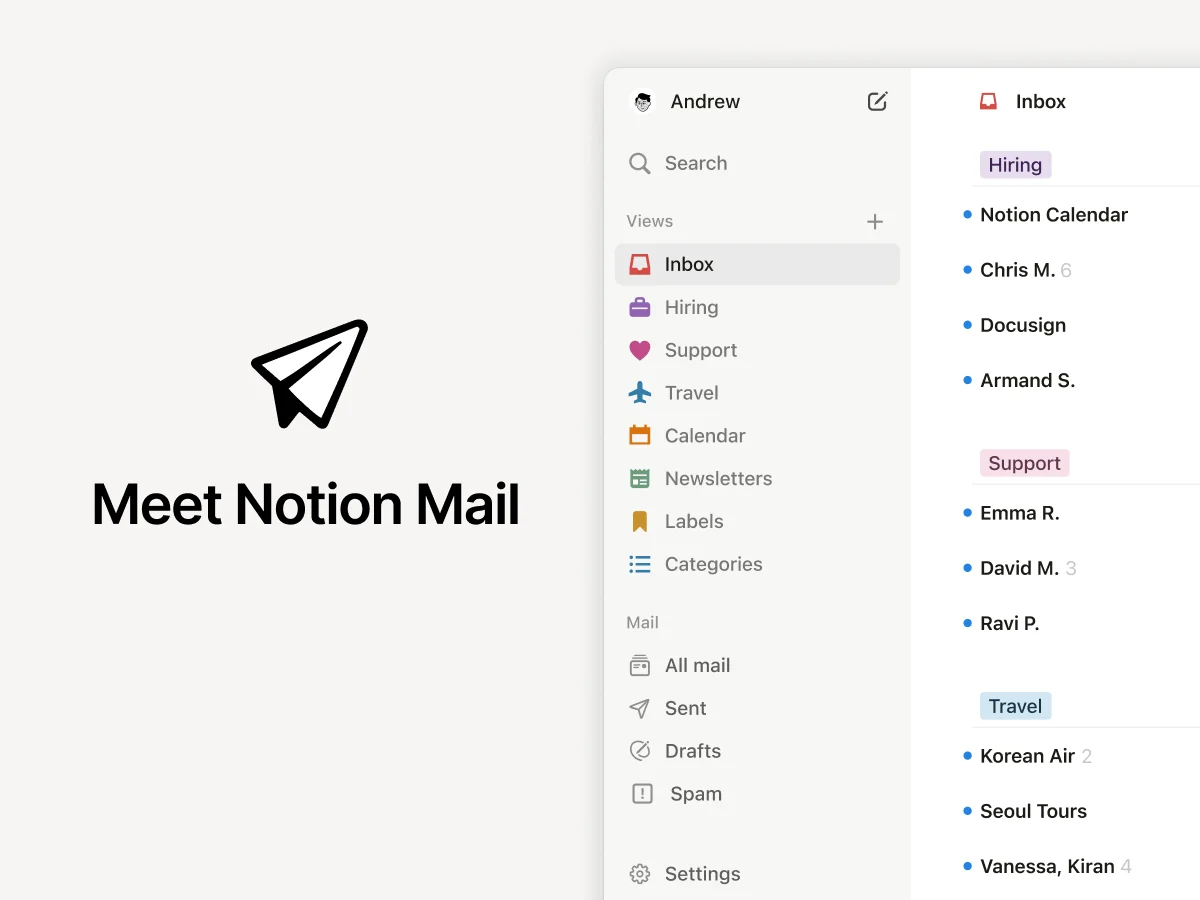
Notion, the popular productivity software company, has announced the imminent shutdown of its standalone email product, Notion Mail, effective September 22, 2026. This decision marks a significant strategic pivot for the company, signaling an intensified commitment to its artificial intelligence (AI) agent offerings as the primary solution for managing digital communication. The move comes as Notion observes a growing trend among its user base, where a substantial portion of email workflows are being delegated to AI agents, often negating the need for direct interaction with a traditional inbox interface.
Notion’s Strategic Pivot Towards AI Autonomy
The company articulated its rationale in a statement released on X (formerly Twitter), highlighting a fundamental shift in user behavior. "As Notion agents have gotten more capable, we’ve seen more users hand off email workflows to them. Today, more than half of Notion Mail users manage emails without ever opening their inbox. So, we’re going all in on using agents to run your inbox," the post elaborated. This declaration underscores a vision where AI agents don’t merely assist but autonomously manage complex tasks, transforming the user’s relationship with their digital workspace. For Notion, this isn’t just an enhancement but a redefinition of productivity itself, moving from a human-driven, tool-assisted paradigm to an AI-driven, human-oversight model.
The core of Notion’s offering has always been its flexible, all-in-one workspace designed to integrate notes, tasks, wikis, and databases. Its initial foray into AI, launched in 2023, was met with considerable enthusiasm, offering capabilities like automated summarization, content generation, and intelligent organization within the existing Notion environment. The integration of AI agents specifically for email management, with features such as auto-labeling, intelligent filtering, and automated scheduling, was a natural extension of this strategy. The company’s observation that over half of Notion Mail users now rely on these agents to process emails without ever opening the inbox suggests a powerful validation of this AI-first approach. It indicates a readiness among a segment of users to fully delegate a historically manual and often overwhelming task to automated systems.
A Brief History of Notion Mail
Notion Mail’s journey was relatively brief but strategically important. The product emerged from Notion’s acquisition of Skiff, a privacy-focused productivity startup, in late 2023. Skiff had carved out a niche for itself by offering an end-to-end encrypted email service, along with calendar, drive, and pages products, appealing to users with strong privacy concerns. Notion’s acquisition was seen as a dual play: gaining a robust email infrastructure and potentially integrating Skiff’s privacy-centric features, while also accelerating its expansion into the broader communication and productivity space.
Following the acquisition, Notion announced its email product in preview mode in late 2024. The initial vision was to seamlessly blend email functionality with Notion’s existing AI capabilities. This meant an email client that wasn’t just a place to send and receive messages but an intelligent hub capable of understanding context, prioritizing communications, and even drafting responses or scheduling meetings based on email content. The public rollout of Notion Mail followed in April 2025, positioning it as a competitor to other "smart" email clients like Superhuman and Fyxer, which also aimed to streamline inbox management through advanced features and intelligent automation. Notion Mail sought to differentiate itself by leveraging the deep integration with the broader Notion ecosystem, promising a unified workspace experience where email was just another data point for Notion AI to manage.
However, the rapid evolution and adoption of Notion’s AI agents appear to have outpaced the utility of a dedicated email client. The company’s decision suggests that the value proposition of a separate email interface diminished significantly as users increasingly preferred to interact with their inbox indirectly, through the lens of AI agents that could process, prioritize, and even act on emails without human intervention.
The Rise of AI Agents in Productivity
The shutdown of Notion Mail is a microcosm of a larger trend sweeping across the technology landscape: the ascendancy of AI agents. These intelligent software entities are designed to perform tasks autonomously, often learning and adapting over time. In the context of productivity, they represent a profound shift from tools that assist users to systems that execute on their behalf. The concept of an "agent-first" approach implies that the primary interaction point for many digital tasks will no longer be a direct user interface, but rather a set of instructions or preferences given to an AI agent that then manages the underlying applications.
For email, this means an agent could, for example, filter spam with unprecedented accuracy, categorize incoming messages into relevant projects or clients, draft replies based on past correspondence and user intent, schedule meetings by cross-referencing calendars, and even generate summaries of long email threads. The promise is a dramatically reduced cognitive load for the user, freeing up time and mental energy for higher-level strategic work.
This evolution is not without its complexities. The development of robust AI agents requires significant advancements in natural language understanding, contextual awareness, and the ability to interface seamlessly with various applications. Furthermore, user trust is paramount. For individuals and organizations to hand over control of sensitive communications, they need assurance regarding accuracy, privacy, and security. Notion’s emphasis on its email-based agents continuing to function post-Notion Mail shutdown underscores its confidence in the underlying AI technology and its commitment to this new paradigm.
Market Implications and Competitor Landscape
Notion’s bold move carries significant implications for the competitive landscape of productivity tools and email clients. Companies like Superhuman, known for its speed and keyboard-centric approach, and Fyxer, another player in the smart inbox space, have invested heavily in optimizing the human-computer interaction for email. While they offer AI-powered features, their core offering remains a sophisticated email client. Notion’s decision to eliminate the client altogether for an agent-driven model could be seen as either a risky gamble or a visionary leap.
On one hand, it validates the broader trend towards AI automation in email. Newer startups like AgentMail are explicitly building email services designed from the ground up for AI agents, aligning perfectly with Notion’s new thesis. This indicates a burgeoning market segment focused purely on the automated processing of email, rather than enhancing the manual user experience. These emerging players are likely to see Notion’s move as a powerful endorsement of their own strategic direction.
On the other hand, the move might alienate users who prefer a more hands-on approach to their inbox, even with AI assistance. There is a segment of users who value direct control, the ability to quickly scan an inbox, and the nuances of human judgment in managing communications. For these users, a fully agent-managed inbox might feel too opaque or lacking in immediate oversight. This could create an opportunity for competitors who continue to offer a compelling, AI-enhanced email client experience. The market will likely bifurcate, with some users embracing full automation and others preferring sophisticated tools for manual management.
User Transition and Data Management
For existing Notion Mail users, the shutdown necessitates a transition. Notion has clarified that all emails in the inbox, being connected with Gmail, will remain intact within their respective Gmail accounts. This is a crucial detail, as it mitigates concerns about data loss for the primary email content. However, users are advised to export any drafts and scheduled emails they wish to retain, as these are likely stored within the Notion Mail application itself.
The company has also indicated that users will be able to export "snippets and auto-label instructions" for use elsewhere. This demonstrates a commitment to ensuring that the intelligence users have built into their Notion Mail workflow through customization can be ported, at least in part, to other systems or, more likely, integrated directly into Notion’s continuing email-based agents. The continuity of Notion’s email-based agents post-shutdown is key, as it means the underlying AI functionality that many users have come to rely on will persist, simply without the dedicated Notion Mail interface. This implies a deeper integration of email management directly into the broader Notion workspace, where email tasks are treated as just another type of item to be processed by AI within the user’s Notion pages and databases.
The Broader Vision for AI-Driven Workflows
Notion’s decision to sunset Notion Mail is more than just discontinuing a product; it’s a clear declaration of its strategic direction. It suggests that the company envisions a future where the interface for managing many digital tasks becomes less about opening specific applications and more about interacting with intelligent agents within a unified workspace. This aligns with a broader industry push towards "ambient intelligence" and "proactive computing," where technology anticipates user needs and handles routine tasks without explicit commands.
In this future, a Notion user might simply create a task item in their workspace, and an AI agent, having access to their emails, calendar, and project databases, could autonomously identify relevant communications, draft follow-ups, schedule meetings, and update project statuses, all without the user ever having to open an email client. The "unopened inbox" becomes not a sign of neglect, but a testament to the agent’s efficiency.
This ambitious vision presents both exciting possibilities and significant challenges. On the one hand, it promises unprecedented levels of productivity and freedom from digital drudgery. On the other, it raises questions about data governance, the potential for AI errors, and the evolving role of human oversight in increasingly automated workflows. As AI agents become more sophisticated, the line between assistance and autonomy will continue to blur, reshaping how individuals and organizations interact with their digital tools.
Looking Ahead
The shutdown of Notion Mail is a bold move that underscores Notion’s belief in the transformative power of AI agents. It represents a pivot away from competing in the crowded "smart email client" market towards pioneering a new paradigm of AI-first inbox management. As the September 22, 2026 deadline approaches, the industry will be watching closely to see how users adapt to this agent-driven approach and how Notion continues to evolve its AI offerings to fulfill its ambitious vision for the future of productivity. This strategic shift may well serve as a bellwether for the broader trajectory of productivity software in an increasingly AI-centric world.