Amir Mahmud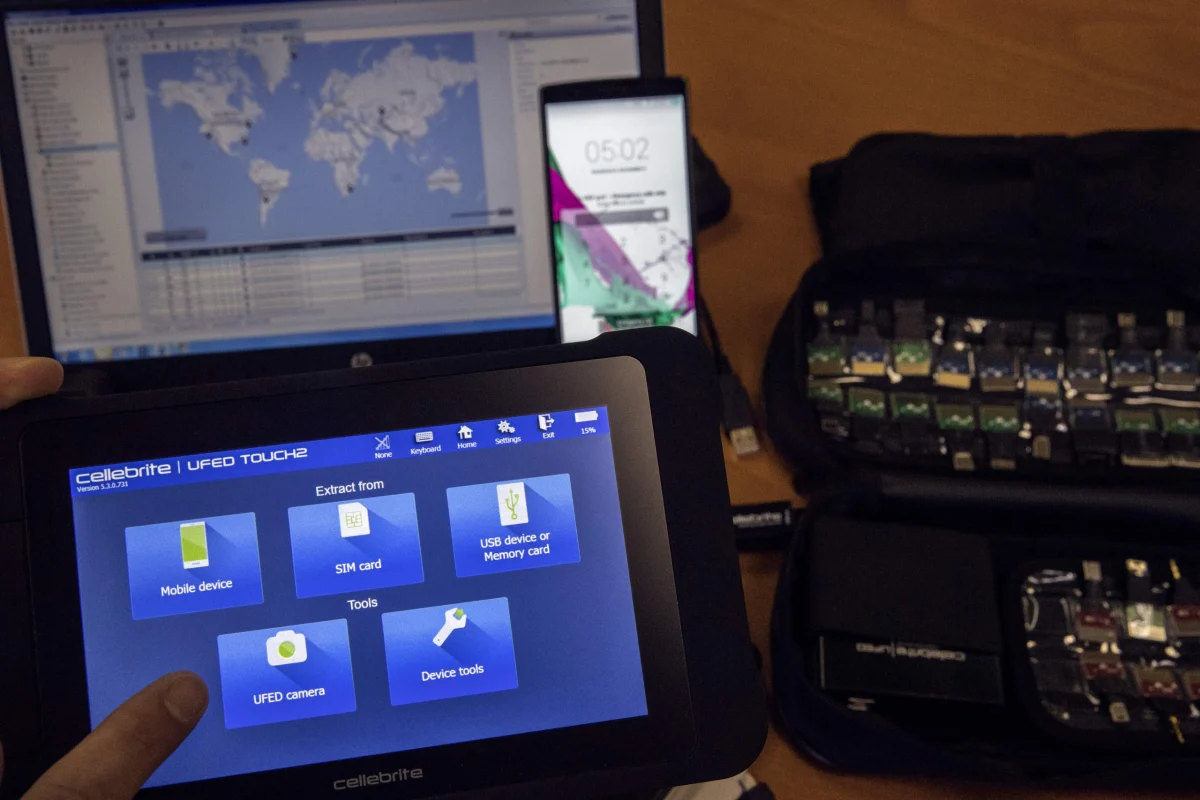
A recent investigation has revealed that Russian authorities utilized sophisticated digital forensics technology to access the mobile phone of a prominent political opponent, Andrey Pivovarov, in June 2021. This occurred despite the technology’s Israeli-American manufacturer, Cellebrite, having publicly announced months prior its decision to cease all sales and services to government agencies within Russia. The incident, brought to light by researchers at The Citizen Lab, a renowned digital rights organization based at the University of Toronto, casts a stark spotlight on the enduring challenges technology companies face in controlling the application of their powerful tools once they are deployed in the field, particularly in geopolitical landscapes marked by conflict and authoritarianism. It ignites critical questions about corporate responsibility, the efficacy of sanctions, and the ethical labyrinth surrounding the global trade of surveillance technology.
The Citizen Lab’s Revelation and Cellebrite’s Stated Stance
The forensic evidence uncovered by The Citizen Lab painted a clear picture of the violation. Researchers meticulously examined the iPhone 12 belonging to Andrey Pivovarov, a vocal human rights dissident and opposition politician, after Russian authorities detained him and confiscated his devices in May 2021. Their analysis confirmed the use of Cellebrite’s Universal Forensic Extraction Device (UFED) — a proprietary tool designed for extracting data from mobile phones — to breach the device. Further corroboration came from court documents shared by Pivovarov himself, detailing how Russia’s Criminalist Expert Center employed Cellebrite UFED to extract sensitive data, including messages from encrypted platforms like WhatsApp and Telegram. The documents also indicated that authorities searched the phone for politically charged terms and names of opposition figures, underscoring the targeted nature of the operation against perceived state adversaries.
This revelation directly contradicted Cellebrite’s earlier public commitments. In March 2021, just three months before the reported hack, Cellebrite had issued a press release affirming its decision to "immediately" halt the sale of its digital intelligence offerings to customers in both the Russian Federation and Belarus. The company, an industry leader with a significant global footprint and dual headquarters in Israel and Virginia, further claimed on its official website that, following such disengagement, it possessed the technical capability to prevent its devices from functioning or receiving crucial software updates. The apparent failure of these mechanisms in Pivovarov’s case has sparked widespread concern and renewed skepticism regarding the ability of technology vendors to enforce their ethical policies and control the post-sale lifecycle of their products, especially when these products are designed for powerful state intelligence and law enforcement operations.
The Broader Context of Digital Forensics and State Surveillance
Digital forensics tools, such as those developed by Cellebrite, constitute a critical component of modern law enforcement and intelligence gathering worldwide. These technologies are designed to extract, analyze, and interpret digital evidence from electronic devices, playing an indispensable role in legitimate criminal investigations, counter-terrorism efforts, and intelligence operations. Their capabilities range from bypassing device passcodes and encryption to recovering deleted data and mapping digital communication networks. For democratic governments adhering to the rule of law, these tools are often subject to judicial oversight and stringent privacy regulations, balancing security needs with individual rights.
However, the dual-use nature of such powerful technologies presents a profound ethical dilemma. While indispensable for legitimate crime-fighting, they can be weaponized against political dissidents, journalists, human rights activists, and minority groups in regimes with questionable human rights records or authoritarian tendencies. The global market for digital forensics and surveillance technology is vast and often opaque, fueled by the demand from governments seeking to enhance their investigative capabilities. This market dynamics can inadvertently create a fertile ground for abuse, as companies navigate complex geopolitical landscapes, balancing commercial interests with ethical considerations. The social and cultural impact of such technology, particularly when misused, is far-reaching, fostering an environment of fear, suppressing dissent, and eroding trust in digital communication, thereby undermining fundamental civil liberties and the very fabric of open societies.
A History of Controversy: Cellebrite and Human Rights
Cellebrite’s involvement in the Russian incident is not an isolated event but rather part of a recurring pattern of scrutiny regarding the end-use of its products. Over the years, the company has faced significant criticism from human rights organizations and digital privacy advocates for instances where its technology was allegedly deployed against vulnerable populations or political opposition figures. Researchers have meticulously documented cases of Cellebrite tools being used in contexts raising serious human rights concerns across various jurisdictions.
For example, reports emerged detailing the use of Cellebrite technology against dissidents and activists in Hong Kong during the pro-democracy protests. Similar allegations surfaced concerning its application in Kenya and Jordan, where activists and journalists found their devices compromised. In response to mounting pressure and credible reports of misuse, Cellebrite has, on several occasions, taken steps to sever ties with specific clients or countries. The company has publicly announced the cessation of sales to Bangladesh, China, Hong Kong, Myanmar, and Serbia, citing concerns over the abuse of its phone unlocking tools. These past actions underscore a recognized ethical challenge within the company, indicating an awareness of the potential for misuse and a willingness, at times, to disengage. Yet, the persistence of its tools in Russia, despite a clear policy directive, suggests that such disengagement strategies may be insufficient to fully mitigate the risks once the technology has left the manufacturer’s control. This history raises crucial questions about the effectiveness of retrospective policy changes versus proactive, robust controls embedded from the outset of product design and distribution.
Challenges of Control: The "Tools in the Wild" Dilemma
The case of Andrey Pivovarov highlights a fundamental and uncomfortable truth about powerful surveillance technologies: once they are acquired and disseminated, even under strict contractual terms, their ultimate control often slips from the hands of their creators. This "tools in the wild" dilemma poses significant technical, legal, and ethical challenges for technology companies.
Technically, while Cellebrite claims the ability to remotely disable or prevent updates to its devices post-disengagement, the practicalities are complex. Older versions of the software or hardware might continue to function indefinitely, especially if they are used in an "air-gapped" environment, disconnected from the internet and thus impervious to remote commands. Furthermore, devices could be transferred, resold, or reverse-engineered, circumventing intended restrictions. The absence of robust, mandatory "kill switch" mechanisms or indelible digital watermarks makes it difficult to definitively trace or neutralize unauthorized use.
Legally and contractually, enforcing end-user license agreements or sales terms against sovereign nations, particularly those operating outside conventional international norms, is exceedingly difficult. A company’s contractual obligations may simply be disregarded once geopolitical circumstances shift or a regime decides to act unilaterally.
Eitay Mack, an Israeli human rights lawyer and vocal critic of surveillance technology makers like Cellebrite and NSO Group, has long argued that merely ceasing sales or revoking software licenses does not adequately address the potential for continued abuse. He emphasizes the critical gap in Cellebrite’s announcements, noting the company’s refusal to disclose whether it mandates or verifies the dismantling of hacking tools by former customers. This omission leaves a substantial loophole, allowing potentially harmful capabilities to persist. John Scott-Railton, a senior researcher at The Citizen Lab, echoes these concerns, advocating for more proactive measures. He suggests that Cellebrite should implement remote-disabling capabilities for deployments identified with credible reports of abuse and integrate "cryptographically-signed watermarks" into all data extracted by its tools. Such watermarks would create a traceable digital fingerprint, linking extracted data back to the specific device and software version used, thereby enhancing accountability and making plausible deniability much harder to maintain.
The Case of Andrey Pivovarov: A Personal Impact
Andrey Pivovarov’s experience serves as a poignant illustration of the human cost of unchecked surveillance technology. As the former director of Open Russia, a pro-democracy organization founded by exiled oligarch Mikhail Khodorkovsky, Pivovarov was a leading figure in Russia’s dwindling political opposition. Open Russia was eventually declared an "undesirable organization" by the Kremlin, forcing its closure in 2021 as part of a broader crackdown on dissent that intensified significantly in the years leading up to and following Russia’s full-scale invasion of Ukraine.
Pivovarov’s detention in May 2021, as he attempted to depart Russia, was a high-profile event, signaling the authorities’ determination to silence critical voices. The subsequent forensic analysis of his phone, facilitated by Cellebrite’s technology, specifically targeted his communications and political associations. The extraction of WhatsApp and Telegram messages, coupled with searches for political terms and opposition figures, demonstrates a clear intent to gather intelligence for political prosecution. This episode is emblematic of a broader trend in Russia, where advanced surveillance techniques are increasingly deployed to monitor, suppress, and prosecute individuals perceived as threats to the state’s authority.
The legal repercussions for Pivovarov were severe. In July 2022, he was sentenced to four years in prison on charges of "undesirable organization" activities, a conviction widely condemned by international human rights groups as politically motivated. His eventual release in August 2024, as part of a complex prisoner exchange between Russia and Western nations that also saw the release of Wall Street Journal reporter Evan Gershkovich, underscores the geopolitical weight of his detention and the personal sacrifices made by those who challenge authoritarian regimes. His case stands as a stark reminder of how sophisticated digital tools, even those ostensibly designed for legitimate law enforcement, can be instrumentalized in campaigns of political repression.
Looking Ahead: The Future of Responsible Tech Sales
The revelations surrounding Cellebrite’s tools in Russia ignite a renewed debate about the ethical responsibilities of technology companies operating in a globally interconnected yet fragmented world. The incident serves as a cautionary tale for the broader tech industry, highlighting the inherent complexities of selling powerful, dual-use technologies to state actors. It underscores the urgent need for a re-evaluation of current practices, moving beyond mere declarations of disengagement to implementing robust, verifiable controls.
The market for digital intelligence tools is poised for continued growth, driven by evolving cybersecurity threats and sophisticated criminal enterprises. However, this growth must be tempered by a heightened commitment to human rights and democratic values. International pressure, alongside potential regulatory frameworks, could play a crucial role in pushing companies towards greater transparency and accountability. Investors and consumers are also increasingly scrutinizing the ethical supply chains and end-user policies of tech firms, potentially influencing market behavior.
Moving forward, best practices for responsible tech sales should include stringent pre-sale due diligence, continuous post-sale monitoring, and the development of effective, non-circumventable remote disabling mechanisms for instances of confirmed misuse. Furthermore, cryptographic watermarking, as suggested by The Citizen Lab, could provide an indispensable layer of traceability, deterring abuse and enhancing accountability. The ethical landscape of surveillance technology is constantly evolving, demanding continuous vigilance, adaptive policies, and a steadfast commitment from all stakeholders to ensure that powerful tools designed for security do not become instruments of oppression. The persistent shadow cast by banned forensics tools in Russia serves as a potent reminder of this ongoing, critical challenge.