Amir Mahmud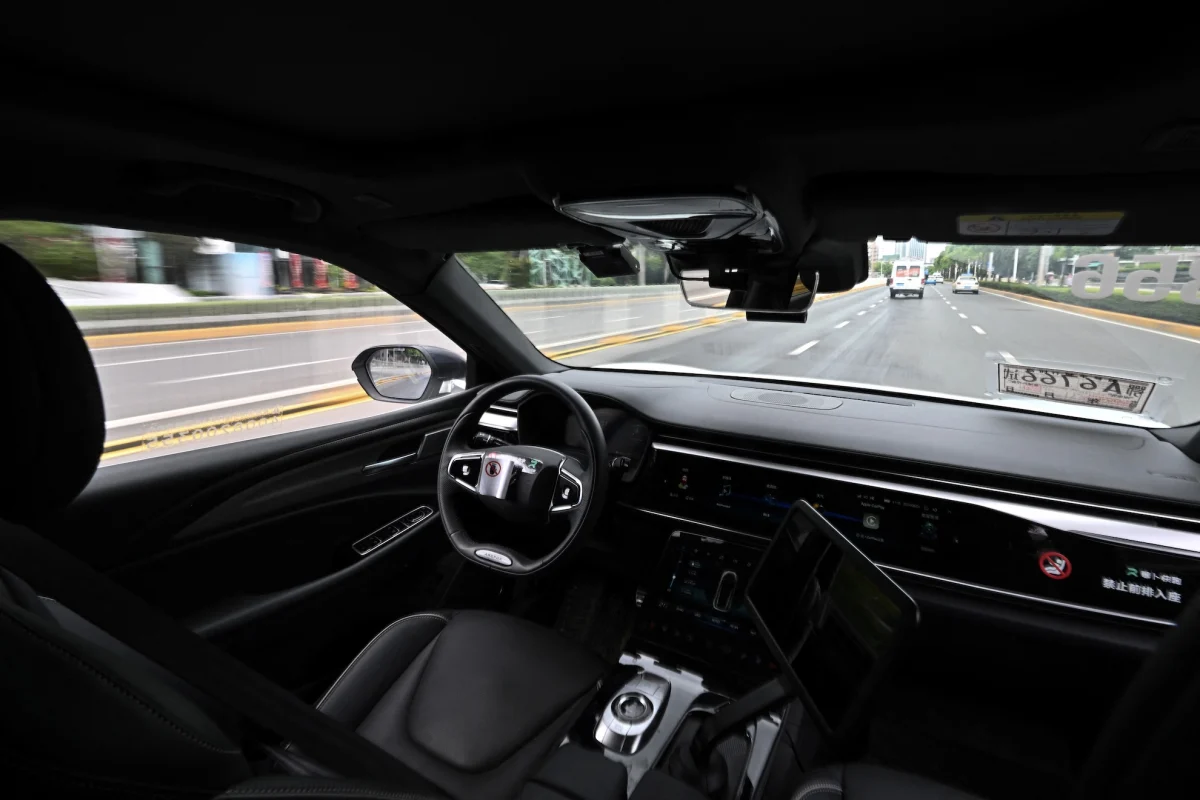
For nearly a decade, the pursuit of fully autonomous vehicles has captivated technologists, investors, and the public alike, often framed as a high-stakes global "race" with an elusive finish line. Yet, a fundamental challenge has persisted: the absence of a standardized, reliable mechanism to objectively measure progress and identify leaders in this rapidly evolving domain. This void, characterized by early-stage demonstrations, significant capital injections, and proprietary information, has made it difficult for industry observers and the general public to discern genuine advancements from aspirational hype. Now, a new benchmarking system developed by advisory and research startup Autnmy AI aims to bring unprecedented clarity to this competitive landscape, revealing a surprising shift in global leadership.
The Elusive Race for Autonomy: A Decade of Ambition
The genesis of the modern autonomous vehicle movement can be traced back to the early 2000s, notably with DARPA’s Grand Challenge series, which galvanized academic and engineering talent to tackle driverless technology. By the 2010s, with advancements in AI, sensor technology, and computing power, the vision of self-driving cars transitioned from research labs to commercial development. Tech giants like Google (later Waymo), traditional automakers, and a swarm of well-funded startups began pouring billions into R&D, promising a future of safer, more efficient transportation.
This period was marked by intense speculation about who would "win" the race. Companies often highlighted their unique technological approaches—whether camera-centric, LiDAR-heavy, or a hybrid—and showcased impressive, albeit often limited, demonstrations. However, a lack of transparency regarding operational scale, actual revenue, safety records, and the true complexity of their deployments made direct comparisons challenging. Most data remained proprietary, shared selectively to highlight strengths while masking developmental hurdles. The industry grappled with defining what constituted "winning" – was it the first to market, the safest, the most scalable, or the most profitable? The absence of a unified scoring system left these questions largely unanswered, fostering an environment where perception often outweighed verifiable progress.
Autnmy AI’s Novel Benchmarking Approach
Addressing this critical need for objective evaluation, Autnmy AI has launched its "Road to Autonomy Index," a groundbreaking benchmarking system powered by a generative AI platform. This sophisticated tool meticulously scours relevant global public databases, encompassing federal and state reports, Securities and Exchange Commission (SEC) filings, public exchanges, and other verifiable data sources. Unlike rudimentary data scraping, Autnmy AI co-founder Rob Grant emphasized that their platform adheres to strict data ethics, utilizing only publicly available information or data acquired through licensing agreements, ensuring both accuracy and legitimacy.
The system comprehensively evaluates autonomous vehicle companies across a spectrum of critical metrics: operational footprint, deployment scale, revenue generation, strategic commercial partnerships, manufacturing capabilities, and, crucially, safety records. This multi-faceted assessment is dynamically updated every 12 hours, providing a near real-time snapshot of the industry’s competitive standing. The index is further segmented into four distinct categories, ranking robotaxis, autonomous driving licensing companies, autonomous trucks, and delivery bots, offering granular insights into specific market segments. For investors, this index provides a more transparent basis for capital allocation. For policymakers, it offers data-driven insights to inform regulatory frameworks. And for the public, it demystifies the progress of a technology poised to redefine mobility.
China Takes the Lead: A Deep Dive into Robotaxi Dominance
One of the most striking revelations from the inaugural Road to Autonomy Index is the pronounced strength of Chinese companies across several categories, particularly in the highly competitive robotaxi sector. As of the index’s initial release, the global leader in robotaxi deployment was not the long-standing U.S. frontrunner Waymo, but China’s Baidu Apollo Go program. While the margin was slim, Baidu’s ascent to the top spot signals a significant shift in the global autonomous vehicle landscape. Waymo secured the second position, closely followed by two more Chinese entities, Pony.ai and WeRide, placing them firmly within the top four. Tesla, a prominent player with its "Full Self-Driving" (FSD) software, ranked fifth globally.
This strong showing by Chinese firms is not coincidental but rather the culmination of several strategic advantages. The Chinese government has actively fostered the development of its domestic AV industry through substantial state-backed investments, supportive regulatory sandboxes, and a national strategy that views autonomous technology as key to future economic growth and urban development. Companies like Baidu, Pony.ai, and WeRide benefit from a vast domestic market, enabling them to accumulate immense amounts of real-world driving data—a critical ingredient for AI training—at an unparalleled pace. Furthermore, the cultural acceptance of new technologies and a less fragmented regulatory environment compared to the United States have facilitated faster deployment and scaling of pilot programs. This competitive edge suggests a potential future where distinct technological ecosystems might emerge, with Chinese standards and platforms gaining significant traction within Asia and potentially beyond.
U.S. Market Expansion and Regulatory Nuances
While China’s influence grows, the U.S. market continues its own dynamic expansion, albeit with distinct regulatory and operational challenges. Recent data from the Texas automated vehicle tracker tool, which launched in May, illustrates a significant ramp-up in autonomous vehicle fleets within the state. Waymo, for instance, saw its registered autonomous vehicles increase by approximately 7.5% in less than a month, from 577 to 620 units. Tesla demonstrated an even more aggressive expansion, boosting its registered autonomous vehicles by 64%, from 42 to 69. Zoox also expanded its fleet, increasing from 35 to 43 registered vehicles. Other players like Avride, Nuro, and Volkswagen’s MOIA maintain substantial fleets, holding steady at 317, 47, and 12 vehicles respectively.
Texas has emerged as a favored testing ground due to its relatively progressive regulatory environment, which generally allows for autonomous vehicle testing and deployment without extensive municipal-level restrictions seen in some other states. The expansive geography and diverse driving conditions also provide invaluable data for system refinement. However, increased fleet size does not automatically equate to commercial operation. Companies like Zoox, while testing custom-built robotaxis, cannot yet charge customers as they await crucial federal exemptions to operate commercially. This distinction between testing, often with human safety drivers, and fully driverless commercial deployment highlights the multi-layered regulatory hurdles and the cautious, iterative approach necessary for widespread adoption in the U.S.
Strategic Alliances and Funding Fueling the Ecosystem
The autonomous vehicle ecosystem continues to attract significant investment and foster strategic partnerships, reflecting the immense capital requirements and interdisciplinary nature of the technology. Recent deals underscore a multifaceted approach to market development:
- Cargofy, a logistics firm leveraging AI for freight automation, successfully raised $11 million in a Series A funding round, indicating strong investor confidence in AI-driven efficiency for supply chains.
- The Singapore-based online car marketplace Carro expanded its footprint by acquiring Australian used-car platform CarPlace, illustrating the broader integration of digital solutions across the automotive retail sector.
- Gatik, a pioneer in self-driving trucks for middle-mile logistics, announced a multi-year partnership with PepsiCo. This collaboration, already seeing driverless trucks operating in Arkansas, Arizona, and Texas, solidifies PepsiCo’s commitment to autonomous freight and Gatik’s commercial viability.
- QuantumScape, a leader in solid-state battery technology, entered a joint research agreement with Honda R&D Co., signaling the critical importance of next-generation energy storage solutions for the future of electric and autonomous vehicles.
- A powerful alliance formed between automaker Stellantis, self-driving startup Wayve, and ride-hailing giant Uber to jointly develop and deploy driverless robotaxis, showcasing a trend towards strategic pooling of resources and expertise to accelerate commercialization.
- XDOF, a startup specializing in robot training data, secured a substantial $70 million from prominent investors, highlighting the foundational role of high-quality data in the advancement of AI and robotics.
These diverse investments and partnerships reveal a vibrant, yet complex, industry landscape. No single entity can master all aspects of autonomous technology, from hardware and software to data collection, regulatory navigation, and market deployment. Strategic alliances are becoming the norm, distributing risks and leveraging specialized capabilities to push the technology forward.
Navigating the Complexities: Safety, Perception, and Technological Hurdles
Despite rapid advancements, the journey toward widespread autonomous mobility is punctuated by continuous challenges, particularly concerning safety, public perception, and ongoing technological refinement. A recent incident in Dallas, captured on video, showed a human driver running a stop sign and colliding with an Avride robotaxi operating via the Uber app. While no injuries were reported, such events trigger intensive safety reviews, underscoring the complexities of operating autonomous systems within unpredictable human-driven traffic environments. The presence of a human safety operator in such situations remains a critical layer of redundancy.
Meanwhile, Tesla owners in China have reportedly devised a workaround to the vehicle’s distracted driving monitor using tiny plastic heads, raising serious safety concerns and highlighting the ongoing battle between technological safeguards and user behavior. This also prompts questions about regulatory oversight and the enforcement of autonomous driving guidelines in different markets. In San Francisco, a Tesla was spotted with a limousine permit, prompting clarification from SFO that this permit was for traditional human-driven operations, not autonomous ones, emphasizing the careful distinction between different levels of vehicle automation in public perception and regulatory approval.
Strategic shifts within the industry are also notable. Mobileye, long established as a supplier of autonomous vehicle technology, has announced plans to launch its own robotaxi service in a U.S. city by 2027. This move positions Mobileye as both a technology provider and an operator, reflecting a strategic pivot aimed at capturing more value within the AV ecosystem, a strategy Mobileye’s CEO Amnon Shashua had hinted at years prior. On the other hand, established players continue to face technical hurdles. Waymo recently recalled nearly 4,000 robotaxis due to a software issue that caused them to drive into highway construction zones. While the vehicles were taken off freeways weeks prior, the fact that the software fix remains "under development" highlights the iterative and often challenging nature of perfecting autonomous systems for every conceivable real-world scenario.
The Road Ahead: A Global Perspective on Autonomous Mobility
The emergence of Autnmy AI’s Road to Autonomy Index provides a much-needed lens through which to view the global race for self-driving dominance. It clarifies that this is not a singular contest but a multi-faceted competition across diverse applications and geographies. China’s current leadership in robotaxi deployment underscores the significant impact of national strategic support, vast market scale, and rapid data accumulation. However, the consistent expansion of U.S. fleets, the flurry of strategic partnerships, and ongoing technological refinements by companies globally demonstrate that the competition remains fierce and dynamic.
The future of autonomous mobility will likely be shaped by a combination of technological breakthroughs, evolving regulatory landscapes, public acceptance, and the ability of companies to scale operations safely and profitably. As the industry matures, transparent benchmarking tools like the Road to Autonomy Index will become indispensable, not only for tracking progress but also for fostering accountability and guiding the immense investments required to bring the promise of autonomous vehicles to full fruition. The journey is far from over, but the path forward is becoming increasingly clear.