Amir Mahmud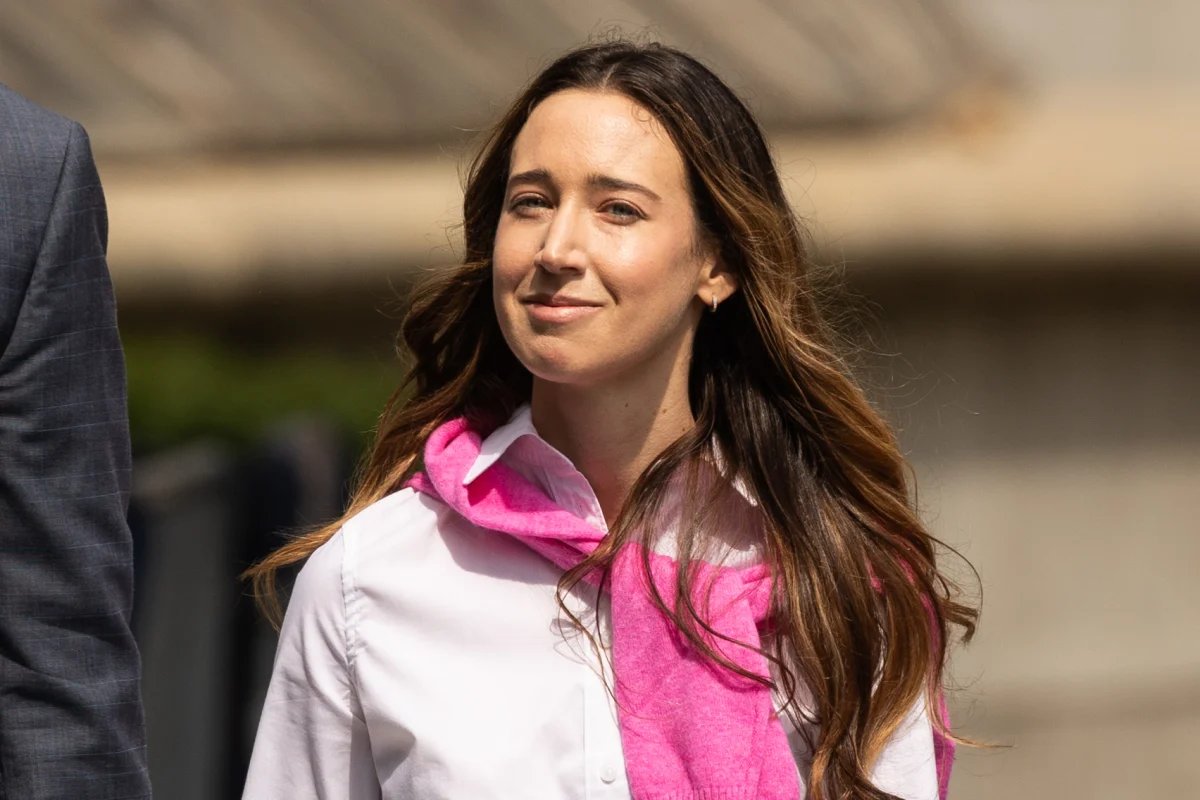
Charlie Javice, the entrepreneur behind the now-defunct student financial aid startup Frank, is reportedly making quiet overtures to individuals within former President Donald Trump’s sphere of influence, signaling a potential bid for a presidential pardon. This development emerges as Javice serves a federal prison sentence following her conviction for orchestrating a massive fraud that misled JPMorgan Chase during its $175 million acquisition of her company. The unfolding narrative intertwines the high-stakes world of fintech, the complexities of corporate acquisitions, and the politically charged power of executive clemency, drawing parallels to other high-profile white-collar defendants also reportedly seeking presidential intervention.
The Ascent and Abrupt Fall of Frank
Frank, launched in 2017 by Charlie Javice, positioned itself as a revolutionary platform designed to simplify the daunting process of applying for federal student aid. Javice, often hailed as a prodigy, cultivated an image of a compassionate innovator dedicated to alleviating the financial burdens of higher education. The startup promised to streamline the Free Application for Federal Student Aid (FAFSA) process, connecting students with scholarships and financial resources. This mission resonated deeply in a nation grappling with a burgeoning student debt crisis, attracting significant investor interest and media attention.
The allure of Frank was its supposed vast user base, which Javice claimed numbered in the millions, primarily young adults seeking financial assistance for college. This demographic was particularly attractive to large financial institutions looking to cultivate relationships with future customers early in their financial lives. JPMorgan Chase, one of the world’s largest banks, saw immense potential in Frank’s reported reach, viewing it as a strategic gateway to a generation of students who would eventually need banking services, loans, and investments. The acquisition, finalized in 2021, was intended to bolster JPMorgan’s digital offerings and expand its footprint in the lucrative youth market.
However, the promising facade of Frank began to crumble shortly after the acquisition. JPMorgan’s due diligence, which apparently intensified post-acquisition, revealed a startling discrepancy between Frank’s claimed user numbers and reality. It soon became clear that the millions of customer accounts Javice had presented to the bank were largely fabricated. Prosecutors later alleged that Javice, along with a co-conspirator, created a synthetic dataset using fake names, dates of birth, and other identifying information, which was then provided to JPMorgan to inflate Frank’s valuation. The alleged deception was not merely an exaggeration but a calculated construction of fictitious data points designed to mislead the acquiring entity into believing Frank commanded a substantial, active user base.
The Legal Quagmire and Conviction
The unraveling of the fraud led to a swift and severe legal response. Federal prosecutors charged Charlie Javice with multiple counts, including wire fraud, bank fraud, and securities fraud. The indictment detailed how Javice and her co-conspirator allegedly went to elaborate lengths to deceive JPMorgan, even fabricating evidence during the acquisition process to substantiate the inflated user figures. The charges painted a picture of a deliberate scheme to defraud a major financial institution, exploiting the very trust that underpins mergers and acquisitions in the tech and finance sectors.
Javice’s trial, which concluded in September of the previous year, culminated in her conviction on all counts. The jury found her guilty of systematically defrauding JPMorgan, confirming the prosecution’s narrative of a startup founder who prioritized personal gain over ethical conduct. Following her conviction, Javice received a sentence exceeding seven years in federal prison, a significant penalty reflecting the gravity and scale of the financial deception. Throughout the legal proceedings, Javice maintained her innocence, asserting that the case against her was fundamentally unfair and that she was a scapegoat in a complex corporate transaction. She has since initiated an appeal of her conviction, a standard legal recourse for defendants seeking to overturn judicial outcomes they believe to be unjust. The appeal process typically involves challenging legal interpretations, procedural errors, or the sufficiency of evidence presented during the trial, potentially a lengthy and intricate path.
The Intricacies of Presidential Pardons
The quest for a presidential pardon represents an alternative, albeit politically charged, avenue for clemency. The power to grant pardons and commutations is vested in the President of the United States by Article II, Section 2 of the Constitution. This executive prerogative allows the president to forgive federal crimes, reducing or eliminating sentences, fines, and forfeitures, or restoring civil rights lost as a result of a conviction. Historically, presidents have exercised this power for various reasons, including acknowledging rehabilitation, correcting perceived injustices, rewarding political loyalty, or simply as an act of mercy.
The process for seeking a pardon typically involves submitting a formal application to the Department of Justice’s Office of the Pardon Attorney, which then investigates the request and provides a recommendation to the president. However, presidents are not bound by these recommendations and can grant pardons outside of this formal channel, often relying on personal discretion or advice from close advisors. This informal pathway is frequently employed during the final days of an administration, leading to a flurry of controversial pardons for politically connected individuals or those whose cases align with the president’s ideology.
Reports indicate that the current administration is considering a substantial number of pardons, potentially around 250, to coincide with America’s upcoming 250th birthday. This milestone could serve as a backdrop for a wide-ranging clemency initiative, attracting a surge of requests from various defendants, including those convicted of white-collar crimes. The inclusion of high-profile figures like Charlie Javice and even Sam Bankman-Fried, the disgraced founder of FTX, on the list of individuals reportedly angling for a pardon underscores the increasing prominence of executive clemency as a potential escape route for those convicted of financial malfeasance.
A Web of Influence: Politics, Finance, and Clemency
Charlie Javice’s reported pursuit of a pardon is not occurring in a vacuum; it is embedded within a complex web of political connections and financial influence. Among her notable supporters is Marc Rowan, the CEO of Apollo Global Management, a powerful figure in the world of private equity and an early investor in Frank. Rowan not only testified on Javice’s behalf during her trial but also possesses significant political sway, having contributed substantially to former President Trump’s campaigns and, following his reelection, to Republican congressional groups. Such affiliations often play a critical role in gaining access to the decision-makers within a political administration, especially when seeking a discretionary act like a presidential pardon.
For JPMorgan Chase, the victim of Javice’s elaborate fraud, the prospect of a presidential pardon for their defrauder would undoubtedly be an unwelcome development. The bank has its own complicated history with former President Trump. In early 2021, shortly after the January 6 Capitol riot, JPMorgan closed accounts associated with Trump and his businesses. This action led to a contentious lawsuit by Trump against JPMorgan and its CEO, Jamie Dimon, seeking $5 billion in damages, alleging "debanking" driven by political motives. JPMorgan has consistently denied any political motivation for its actions, asserting they were based on standard risk assessments. The potential granting of a pardon to Javice could thus be seen by some as a politically motivated slight against a bank that has had a fraught relationship with the former president, further complicating the optics of executive clemency.
This situation highlights a recurring theme in American politics: the perceived influence of wealth and connections in the justice system. When individuals with powerful allies seek pardons, it often sparks public debate about fairness, equal justice under the law, and whether access to political figures can circumvent judicial outcomes. Critics argue that such pardons undermine the rule of law and create a two-tiered system where justice is not applied equally to all, while proponents might argue for the president’s right to exercise constitutional powers based on a broader view of justice or rehabilitation.
Broader Market and Social Ramifications
The saga of Frank and its founder’s post-conviction actions carries significant implications for various sectors, particularly the fintech industry and the broader public’s trust in financial innovation. The high-profile nature of Javice’s fraud, following other prominent failures like FTX, has undoubtedly cast a shadow over the "move fast and break things" ethos that once characterized the startup world. Investors, venture capitalists, and large corporations considering acquisitions are now likely to exercise heightened scrutiny in their due diligence processes, demanding more robust verification of user data, financial metrics, and operational claims. This increased caution could slow down the pace of innovation and M&A activity in the startup ecosystem, as the risks associated with unverified claims become more apparent and costly.
Moreover, the perception of justice for white-collar crimes versus other offenses often fuels public cynicism. When individuals convicted of large-scale financial fraud, especially those with powerful connections, seek and potentially receive pardons, it can erode public trust in both the legal system and political institutions. Many might perceive such outcomes as evidence of a system rigged in favor of the wealthy and well-connected, deepening societal divisions and skepticism about the principle of equal justice. This sentiment can have cultural impacts, influencing how the public views entrepreneurship, corporate ethics, and the accountability of powerful individuals.
The very act of seeking a pardon while simultaneously appealing a conviction also presents a unique legal and ethical conundrum. It suggests a multi-pronged strategy to escape the consequences of a federal conviction, leveraging both the judicial appellate process and the executive’s clemency power. This dual approach underscores the lengths to which individuals with substantial resources are willing to go to overturn or mitigate their legal penalties, regardless of the judicial findings.
Conclusion
Charlie Javice’s reported pursuit of a presidential pardon represents a compelling intersection of ambition, alleged fraud, legal consequence, and political maneuvering. As the former Frank CEO serves her sentence and simultaneously appeals her conviction, her quiet campaign for clemency brings into sharp focus the intricate dynamics of power, influence, and justice in contemporary America. Whether her efforts will yield a presidential pardon remains uncertain, as does the broader impact of such a decision on the financial industry, the public’s perception of fairness, and the historical legacy of executive clemency. The situation serves as a potent reminder of the enduring debate surrounding accountability for white-collar crime and the powerful, sometimes controversial, role of the presidency in shaping individual fates and societal norms.