Amir Mahmud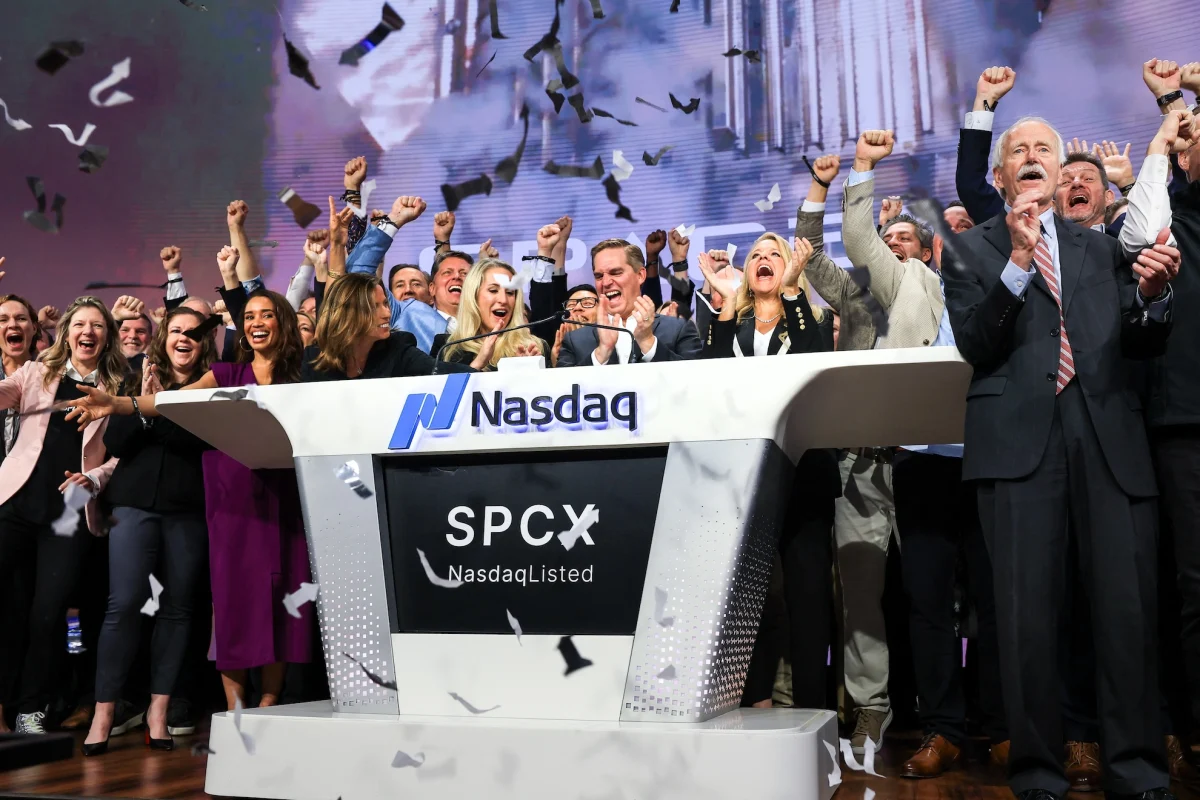
The financial landscape experienced a seismic shift this week with SpaceX’s monumental initial public offering, a move that not only set records as the largest IPO in history but also propelled its CEO, Elon Musk, to the unprecedented status of the world’s first trillionaire. This landmark event, however, is merely the opening act in what analysts predict will be a bustling summer for public market debuts, particularly within the burgeoning artificial intelligence sector. With leading AI developers like OpenAI and Anthropic reportedly filing confidentially for their own IPOs, a broader narrative is emerging: the public markets are undergoing a fundamental reorientation, driven by the insatiable demand for innovation in deep technology and AI.
A Landmark Public Debut and its Broader Implications
SpaceX’s public market entry was more than just a financial milestone; it represented a significant validation of high-risk, high-reward ventures in the realm of space exploration and advanced technology. The company, renowned for its ambitious goals in rocketry and satellite internet services like Starlink, has increasingly emphasized its substantial investments and capabilities in artificial intelligence. This dual identity—a space pioneer with a robust AI backbone—positions SpaceX as a bellwether for a new class of public companies. Its successful IPO, which commanded an astounding valuation, not only injected a massive chunk of available capital into the company for its future endeavors but also signaled a potential shift in how investors perceive and value enterprises at the cutting edge of technological development. The financial prowess demonstrated by Musk, now commanding a personal fortune that redefines historical wealth benchmarks, underscores the immense speculative and real value currently attributed to companies perceived to be at the forefront of transformative technologies.
The AI Public Market Surge: A New Era for Tech IPOs
The immediate aftermath of SpaceX’s IPO has been marked by fervent speculation regarding other high-profile tech companies poised to follow suit. OpenAI and Anthropic, two titans in the field of generative AI, have reportedly initiated the confidential filing process for their public listings. This move signals a significant acceleration in the commercialization of artificial intelligence, a sector that has captivated global attention and investment following breakthroughs in large language models and other AI applications. For several years prior, the IPO market had been relatively subdued, characterized by investor caution and a preference for private funding rounds. The sudden flurry of activity, particularly from such high-valuation, high-potential entities, suggests a robust reopening of public markets, eager to absorb the next wave of technological innovation. This anticipated "hot IPO summer" is not just about individual company debuts but signifies a collective re-evaluation of where future economic growth and technological leadership will originate.
Shifting Investment Paradigms: From FAANG to MANGOS
The evolving landscape of public market leaders is perhaps best encapsulated by an emerging acronym: MANGOS. This new moniker—representing Meta, Anthropic, NVIDIA, Google (Alphabet), OpenAI, and SpaceX—reflects a profound reordering of the tech hierarchy, supplanting the long-dominant FAANG group (Facebook/Meta, Amazon, Apple, Netflix, Google/Alphabet). The shift is indicative of a market pivot away from consumer-centric services and social networks, which defined the previous decade, towards a greater emphasis on deep technology, artificial intelligence research, and infrastructure.
The displacement of Netflix, a streaming giant, from the top tier underscores this transition. While consumer-facing platforms remain vital, the lion’s share of investor interest and capital is now gravitating towards companies building the foundational layers of the next digital era. AI labs, with their potential to revolutionize industries from healthcare to manufacturing, along with deep tech innovators like SpaceX, are now seen as the primary drivers of future economic expansion. This analytical shift reflects a broader societal recognition of AI’s transformative potential, moving beyond mere convenience to fundamental re-engineering of work, commerce, and daily life. It presents both opportunities for significant returns and challenges related to market concentration and the sustainability of these elevated valuations.
The Ripple Effect: Broader Market Transformations
The impact of this AI-driven IPO wave extends far beyond the direct participants, creating a palpable ripple effect across the entire market. Other startups and established companies are actively seeking to "ride the wave," either by securing private funding based on the burgeoning interest in related fields or by pursuing their own public market entries, often through Special Purpose Acquisition Companies (SPACs). SPACs, a popular alternative to traditional IPOs, allow private companies to go public by merging with an already listed shell company, offering a potentially faster route to market. Quantum Space, for instance, a company focused on orbital data centers, is reportedly leveraging a SPAC merger, explicitly aiming to capitalize on the excitement generated by SpaceX’s successful debut and the broader interest in space-related infrastructure.
The concept of orbital data centers itself is gaining traction, promising benefits such as enhanced security, reduced latency for specific applications, and access to unique environmental conditions for processing. This nascent industry, while still highly speculative, exemplifies the innovative ventures attracting capital in the wake of deep tech’s public market ascendance.
Even legacy industries are feeling the pressure and opportunity to pivot. Automotive giants like Ford and General Motors, traditionally focused on vehicle manufacturing, are exploring new revenue streams by leveraging their existing assets. Notably, both companies have announced plans to reconfigure unused battery production capacity to develop energy storage solutions for data centers and the broader electrical grid. This strategic maneuver, driven by the exponential energy demands of AI infrastructure, showcases a pragmatic effort to diversify and align with the burgeoning tech economy. While such pivots can generate immediate stock market enthusiasm, as seen with Ford’s announcement, they also highlight a critical analytical question: whether these established companies can successfully emulate the disruptive, often high-risk, strategies of agile tech innovators, or if they risk overextending their core competencies in pursuit of speculative trends. The history of corporate diversification is replete with examples of both brilliant foresight and ill-fated ventures.
Navigating the Future: Challenges and Considerations
Amidst the euphoria surrounding these historic IPOs and the broader AI boom, several critical questions and potential challenges warrant neutral analytical commentary. The sheer volume of capital flowing into a relatively concentrated sector raises concerns about the sustainability of current valuations. Analysts debate whether the market’s enthusiasm is based on realistic long-term projections or if it harbors elements of speculative excess, reminiscent of past tech bubbles. The "race" among AI companies like OpenAI and Anthropic to go public before their competitors also speaks to a finite pool of investor interest and capital, suggesting that early movers might secure more favorable terms, while later entrants could face diminished appetite or lower valuations. This short-term competitive pressure, while driving rapid innovation, might also incentivize companies to prioritize immediate market appeal over long-term strategic development.
Furthermore, the governance model exemplified by SpaceX, where a single individual maintains substantial control over a publicly traded entity, presents a "stress test" for traditional corporate structures. While strong founder leadership can drive audacious innovation, it also introduces unique risks regarding decision-making, accountability, and investor influence. Future AI companies considering public listings will likely grapple with how much control founders retain versus the expectations of a broader shareholder base.
The overarching question remains the durability of this "AI remaking the economy" narrative. While AI’s transformative potential is undeniable, its actual economic impact and the timeline for its full realization are still subjects of intense debate. The current market fervor is undoubtedly reshaping investment patterns and industrial strategies, but whether these changes are durable and sustainable in the long run or merely a transient period of heightened speculation is yet to be seen. Companies, both established and nascent, must carefully weigh the allure of following market trends against the imperative of developing sound, long-term business strategies rooted in fundamental value.
In conclusion, the SpaceX IPO and the anticipated public market debuts of leading AI companies mark a pivotal moment in technological and financial history. This period signals a clear shift in market priorities towards deep tech and artificial intelligence, drawing immense capital and reshaping investment paradigms. While offering unprecedented opportunities for growth and innovation, it also presents complex challenges related to valuation sustainability, corporate governance, and the strategic perils of rapid market emulation. The coming months will be crucial in determining whether this wave represents a solid foundation for the next era of economic expansion or if the market’s enthusiasm will require a dose of reality.