Amir Mahmud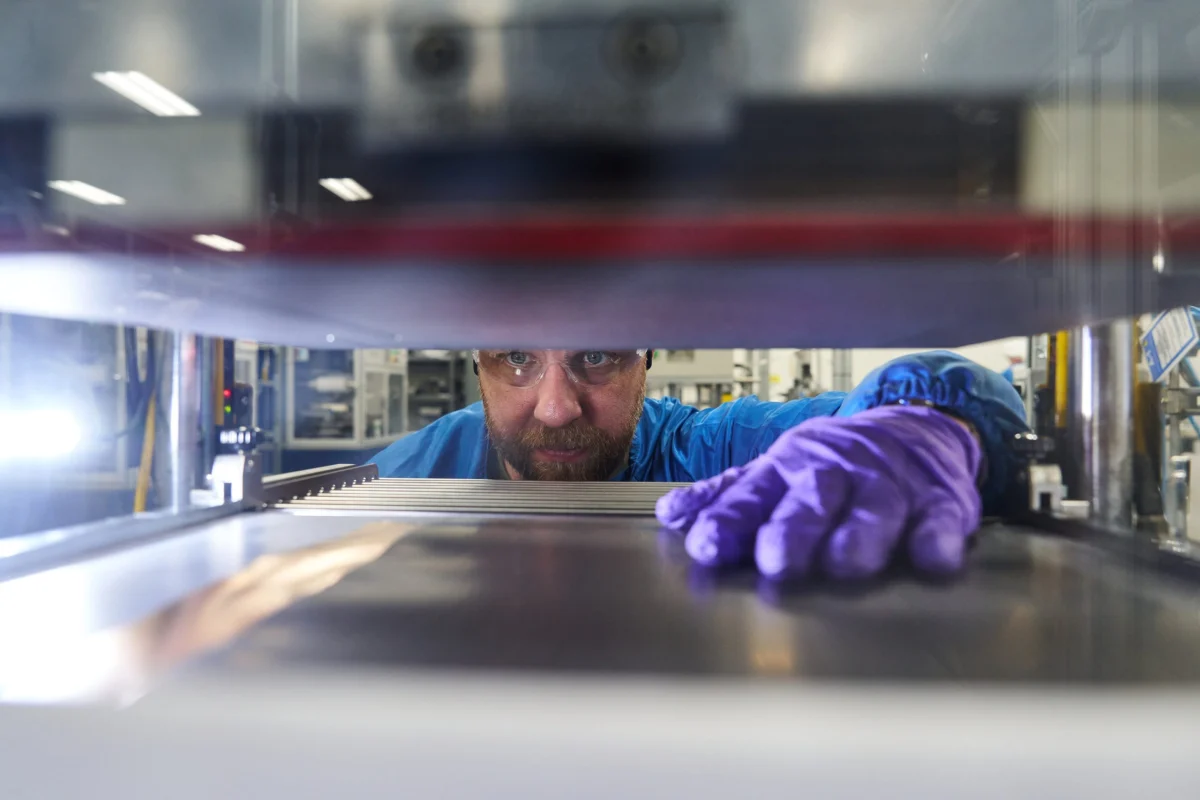
Amidst the sprawling innovation landscape of General Motors’ Warren Technical Center, a new, unassuming facility stands as a critical pillar in the automaker’s ambitious $900 million investment in its electric vehicle (EV) future. This 500,000-square-foot complex, known as the Battery Cell Development Center (BCDC), might appear architecturally modest, yet it harbors the technological advancements poised to significantly reduce the cost of GM’s electric vehicles by approximately 10%. This strategic move comes at a pivotal moment, as several automotive manufacturers are recalibrating their EV strategies in response to shifting market dynamics, underscoring GM’s commitment to accelerate its transition with a new generation of more affordable batteries.
A Shifting Tide in the Electric Vehicle Landscape
The automotive industry is currently navigating a complex transition. For decades, internal combustion engine (ICE) vehicles dominated the market, with automakers perfecting intricate powertrain technologies. The advent of electric propulsion, while promising a cleaner future, has introduced a new set of challenges, primarily centered around battery technology, manufacturing scalability, and consumer acceptance. General Motors, a titan of American industry with over a century of automotive heritage, has been at the forefront of this shift, albeit with a journey marked by both pioneering efforts and strategic adjustments. From the experimental EV1 in the 1990s to the more recent Chevrolet Bolt and the comprehensive Ultium platform, GM’s engagement with electric mobility reflects the industry’s evolving understanding of what it takes to electrify transportation.
However, the path has not been without turbulence. The U.S. EV market has recently shown signs of softening, characterized by a slower adoption rate than initially projected by some industry forecasts. Factors contributing to this deceleration include persistent concerns over charging infrastructure availability, range anxiety among potential buyers, the relatively high upfront cost of many EV models compared to their gasoline counterparts, and fluctuating interest rates. Last year, GM itself reported a $1.6 billion charge linked to a reassessment of its EV production capacity, which unfortunately led to workforce reductions at some battery facilities. Reports also indicated a temporary delay in the refresh cycles for its full-size electric trucks and SUVs, signaling a period of strategic re-evaluation for the Detroit-based giant.
Despite these headwinds, the global EV market continues its expansion, registering a 20% growth last year. This dichotomy underscores the long-term inevitability of the transition away from fossil fuels, driven by environmental mandates, escalating oil prices, and the ongoing decline in battery manufacturing costs. For GM to not only compete but thrive in this evolving landscape, a fundamental shift in its battery strategy became imperative.
The Quest for the "Bread and Butter" Battery Chemistry
At the heart of GM’s renewed EV strategy is a significant pivot in battery chemistry, championed by Kurt Kelty, GM’s vice president of battery and sustainability. Kelty, a veteran in battery technology who previously held a leadership role at Tesla, has made the development of a new chemistry, known as Lithium-Manganese-Rich (LMR), his signature focus since joining GM two years ago. "That is really going to be our bread and butter," Kelty emphasized, highlighting LMR as the cornerstone of GM’s future product line.
This emphasis on LMR marks a strategic departure from the industry’s prevalent reliance on Nickel-Manganese-Cobalt (NMC) chemistries, which underpin GM’s current Ultium platform. While NMC batteries offer high energy density, providing excellent range and power, their production is often constrained by the high cost and geopolitical sensitivities surrounding key raw materials like cobalt. China’s significant control over the processing of critical minerals has further exacerbated these challenges, pushing EV prices higher than many consumers are willing to pay. Consequently, GM intends to reserve NMC for its premium, high-performance vehicles where maximum energy density is paramount.
The LMR chemistry is designed to strike a crucial balance: offering energy density nearly comparable to NMC while achieving manufacturing costs closer to the more affordable Lithium-Iron-Phosphate (LFP) batteries. LFP chemistries, while less energy-dense, are cheaper and more robust, commonly found in entry-level EVs like the Chevrolet Bolt. GM’s internal projections suggest that LMR could significantly slash EV production costs, potentially by at least $6,000 for a truck like the Chevrolet Silverado EV, without compromising its impressive 400-mile range. Such a cost reduction would bring the price of a mid-range electric Silverado much closer to that of its gasoline-powered equivalent, a critical step toward broader market adoption.
Bridging the Innovation Gap: The BCDC’s Critical Role
Developing a promising new battery chemistry in a research laboratory is one achievement; scaling its production to meet the gigawatt-hour demands of the automotive industry is an entirely different, and far more complex, challenge. With aggressive targets to integrate LMR into vehicles by 2028, GM faces immense pressure to accelerate the transition from concept to mass production. This urgency is amplified by fierce global competition from established battery titans like CATL and rapidly ascending EV manufacturers such as BYD, both largely based in China. The BCDC facility is purpose-built to address this critical need, serving as the essential link in GM’s battery innovation ecosystem.
Opened in conjunction with the Wallace Battery Cell Innovation Center and GM’s initial Ultium gigafactories in 2022, the BCDC completes the comprehensive infrastructure required to transform laboratory breakthroughs into viable production processes. While the Wallace Center focuses on early-stage research and development, producing small batches of experimental cells, the BCDC acts as an advanced pilot line. Its role is to bridge the chasm between fundamental scientific discovery and industrial-scale manufacturing.
When fully operational, the BCDC will be capable of producing approximately 2,500 battery cells per day, translating to roughly half a gigawatt-hour annually. This capacity, while modest compared to a full-scale gigafactory, is perfectly suited for its purpose: validating new battery chemistries and optimizing their manufacturing processes. It takes the "coin cells" and small-batch prototypes from the Wallace Center—typically 30 to 50 cells per day—and scales them up to the larger, "cutting board-sized" cells required for EV battery packs, meticulously assessing their readiness for high-volume production.
Scaling Challenges and the Power of Simulation
The transition from laboratory-scale experiments to commercial production is fraught with technical hurdles. Many promising battery chemistries fail at this stage, unable to maintain performance, consistency, or cost-effectiveness when scaled up. Industry analysis, such as a report by McKinsey, suggests that a new chemistry must achieve an 85% yield on a production line within 18 months to be considered commercially viable. This challenge is akin to attempting to scale a gourmet recipe designed for a small family dinner to feed a wedding reception of hundreds—ingredients behave differently, processes require re-engineering, and quality control becomes exponentially more complex.
Kurt Kelty elaborates on this challenge: "Once you learn how to make the recipe in Wallace, then you’ve got to figure out, well, how do you make this in high volume? You really learn a lot going from that coin cell to the large format because it doesn’t transfer perfectly." The BCDC is engineered precisely to mitigate this "painful" scaling process. A single test run at the BCDC costs approximately $200,000, a fraction of the expense incurred at a full-size Ultium plant. This cost-effective intermediate step allows GM’s engineers to refine manufacturing parameters, identify potential bottlenecks, and troubleshoot issues before committing to full-scale production. The equipment in the BCDC closely mirrors that of the larger Ultium factories, ensuring a smoother "handoff" once a chemistry and its production process are deemed ready.
While significantly larger than the Wallace Center, the BCDC is still orders of magnitude smaller than a full-fledged Ultium gigafactory, such as the 2.8 million-square-foot facility in Tennessee, which produces around 300,000 cells per year, equivalent to 45 gigawatt-hours. The BCDC operates fewer production lines, manufactures about a hundredth of the cells, and its mixing tanks hold 40 liters compared to the 2,000 liters of its industrial counterparts. As Mo Gallegos, head of BCDC at GM, succinctly puts it, "The BCDC is intended to bridge the gap."
To further accelerate development and minimize costs, GM has made substantial investments in advanced computing power and artificial intelligence (AI) models. This "national lab-scale" computing capability is leveraged to simulate various processes, from material interactions at the atomic level to the flow dynamics within mixing tanks. Radu Theyyunni, director of global virtual electrification and powertrain at GM, noted the intensity of this effort: "On LMR, we’ve logged over 150 million CPU hours. Most engine programs do not use that many core hours." These physics-based models predict how changes in chemistry or production parameters will influence battery performance, durability, and safety.
Beyond abstract simulations, GM has created a comprehensive "digital twin" of the entire BCDC facility. This virtual replica includes every piece of equipment, control board, wiring, and even the blades within the mixing tanks. This digital twin has proven invaluable for a myriad of tasks, from optimizing facility layout for operational efficiency and maintenance access to simulating equipment control systems to ensure flawless operation. This predictive capability significantly reduces debugging time and accelerates ramp-up. Gallegos affirms that these simulations have collectively saved GM millions of dollars, providing the speed and precision necessary in a highly competitive market.
The Broader Market Context and Future Outlook
GM’s aggressive investment in the BCDC and LMR battery chemistry reflects a deep understanding that the future of automotive mobility is electric, and that cost-effectiveness is paramount for mass market penetration. While the U.S. EV market currently experiences a period of recalibration, the long-term trends—driven by climate imperatives, global regulatory frameworks, and technological advancements—point unequivocally toward electrification. The successful deployment of LMR could position GM to offer highly competitive EVs that address two of the primary consumer concerns: upfront cost and range anxiety. Gallegos anticipates the first batches of LMR cells to emerge from the BCDC later this year, marking a significant milestone in this ambitious endeavor.
In the coming decades, the ability to innovate and efficiently scale battery technology will be as strategically vital to automakers as engine development was throughout the 20th century. GM’s future success in the EV sector hinges on its capacity to smoothly transition new battery chemistries from the theoretical realm of R&D to the tangible reality of mass production. Kurt Kelty’s philosophy of developing "the right battery for the right application" resonates with GM’s historical ethos of offering "a car for every purse and purpose." LMR may be the BCDC’s inaugural, high-stakes test, but it is undoubtedly just the beginning of a continuous journey of innovation that will define General Motors’ role in the electric age.